

Ever bought a blanket online, only for it to arrive too short to tuck in or so long it puddles on the floor? You’re not alone. Finding the right single bed size blanket can feel like guesswork, but getting it right is the secret to a perfectly cozy and stylish bed. Let's solve this puzzle for good.
In Australia, the standard dimension for a single bed blanket is 180cm x 230cm. This size is expertly designed to fit a standard single mattress, giving you a generous drape over the sides without messy floor drag. This guide will give you actionable steps to choose the perfect blanket, from measuring your mattress to picking the right fabric for your climate.
Why the Right Single Bed Size Blanket Matters
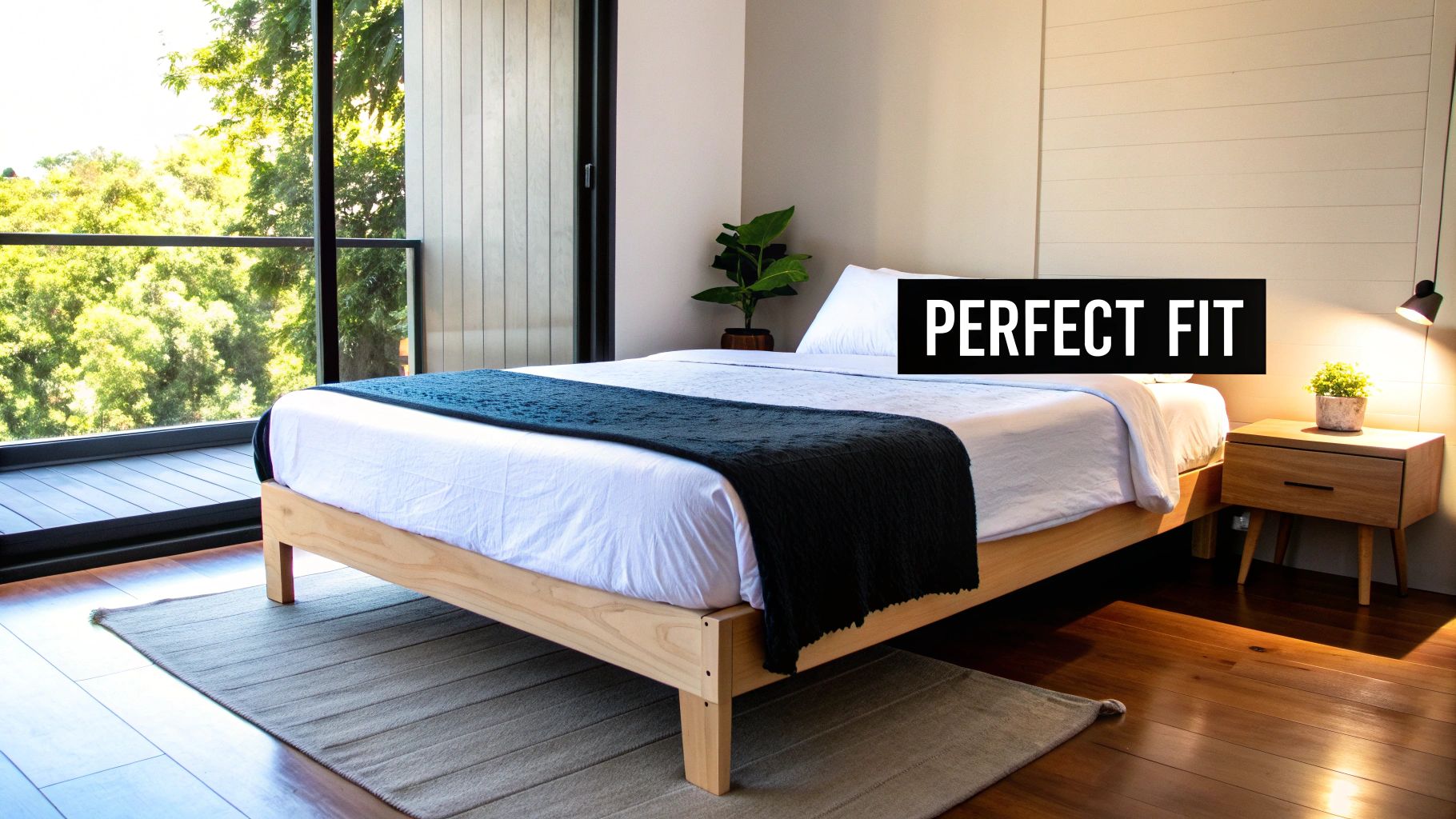
Choosing the right blanket goes beyond just warmth; it’s about creating a comfortable and visually appealing bed. A well-fitting blanket turns your bed into an inviting centrepiece. The goal is to find a size that’s generous enough for full coverage but tailored enough to look neat and tidy.
Nail the Perfectly Made Bed
A blanket that fits properly gives your bed a clean, polished look. It ensures enough overhang to neatly cover the mattress sides, which is especially important with today's deeper pillow-top mattresses.
A standard Australian single mattress measures 92cm x 188cm. A 180cm wide blanket provides a generous 44cm overhang on each side, which is ample for a neat tuck or a relaxed drape. To learn more about mattress dimensions, check our guide on the single mattress size in Australia.
Comparing International Blanket Dimensions
Shopping online opens up a world of choice, but international sizing can be confusing. An Australian "single" is not the same as a UK "single" or a US "twin." Understanding these small but critical differences is key to finding the perfect single bed size blanket without any surprises.
These subtle variations can lead to a blanket that barely covers the mattress or one that drowns it in fabric. For example, a US Twin mattress is wider than an Aussie Single, which changes the amount of drape you get. Knowing these details lets you buy with confidence.
A Quick Look at Global Sizes
To simplify things, here's a breakdown of common measurements. These differences might seem minor, but they significantly impact how a blanket fits.
In fact, research shows a well-made bed can contribute to a better sense of well-being and productivity. Getting the blanket size right is a simple step toward that daily win.
International Single Bed Blanket Size Comparison
This table shows typical mattress dimensions and recommended blanket sizes in Australia, the UK, and the US. Note the width differences, as this is where you'll see the biggest impact on drape.
| Region | Mattress Name | Mattress Size (cm) | Recommended Blanket Size (cm) |
|---|---|---|---|
| Australia | Single | 92 x 188 cm | 180 x 230 cm |
| United Kingdom | Single | 90 x 190 cm | 175 x 230 cm |
| United States | Twin | 99 x 191 cm | 168 x 229 cm |
As you can see, the Australian single blanket is designed with a generous width for a luxurious, tucked-in feel. The US Twin blanket is narrower to suit their slightly wider mattress.
Why These Differences Matter
Choosing the right size is about achieving the perfect blend of comfort and style. A poorly fitting blanket can make a bed look messy and interrupt your sleep if you're fighting for cover.
To see how these sizes compare to doubles, queens, and kings, explore our comprehensive mattress size comparison guide.
How to Measure for the Ideal Blanket Drape
The secret to an inviting, hotel-style bed is often the blanket's 'drape'—the elegant overhang on the sides. Getting this right means moving beyond standard labels to find a single bed size blanket that fits your specific mattress.
Measuring is simple. You just need a tape measure. Note your mattress's width, length, and depth. Remember to include the height of any mattress toppers, as they can add several centimetres.
Calculate Your Ideal Blanket Width
Use this simple formula to determine the perfect blanket width for your desired look. This ensures you have enough fabric to cover the mattress sides, whether for a crisp tuck or a relaxed flow.
The Formula:
- Step 1: Double your mattress depth (Mattress Depth x 2).
- Step 2: Add this number to your mattress width.
- Step 3: For a generous tuck, add an extra 15-30 cm.
Practical Example:
Your single mattress is 92 cm wide and 25 cm deep.
- Depth Calculation: 25 cm x 2 = 50 cm
- Total Width Needed: 92 cm (mattress) + 50 cm (depth) = 142 cm
- Add Overhang: 142 cm + 20 cm = 162 cm
In this case, a standard 180 cm wide blanket is perfect, providing ample coverage for a luxurious finish.
For a complete rundown of Australian sizes, our bedding size chart is a helpful resource.
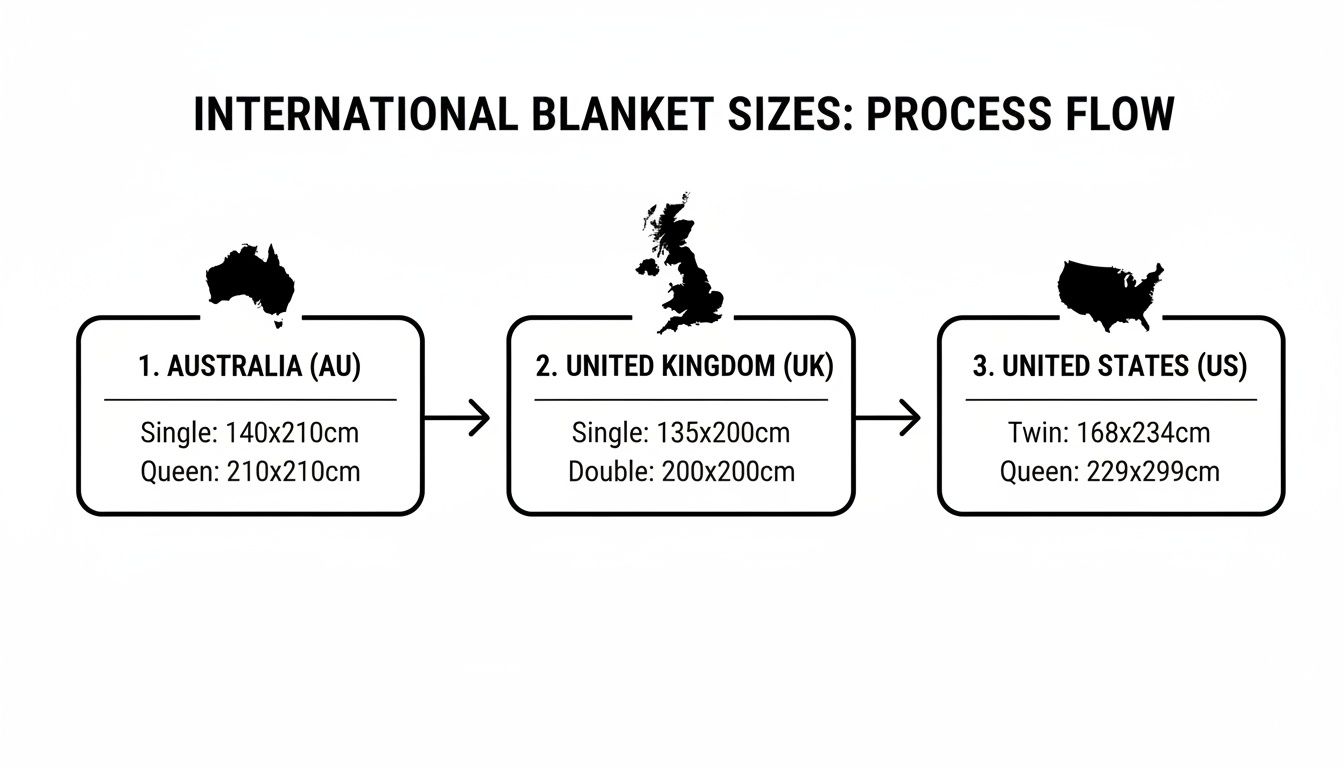
Australian single blankets are often wider by design to give you that generous, cosy drape. By measuring your bed, you can choose the right size every time.
Choosing the Right Fabric for Your Climate
Once you know the size, the next step is choosing a fabric. The material determines your comfort, and in Australia’s varied climate, it’s a crucial decision. A good choice can mean the difference between a restless night and deep, restorative sleep.
Natural fibres are ideal because they offer breathability and temperature regulation that synthetics can't match.
Year-Round Comfort with Natural Fibres
Materials like bamboo, cotton, or feather and down work with your body's temperature. They wick away moisture when you're warm and trap heat when it's cold, creating a comfortable microclimate under the covers.
A study from the University of Sydney found that wool bedding can improve sleep quality, suggesting that natural, breathable fibres play a key role in regulating body temperature for more restful sleep.
For a deeper look, this comprehensive guide to different fabric types is a great resource.
Comparing Popular Natural Materials
Here’s a quick rundown of popular natural choices to help you find the perfect match.
- Bamboo: Incredibly soft, naturally hypoallergenic, and perfect for sensitive skin. It's highly breathable and wicks moisture, making it a dream for hot sleepers.
- Cotton: A timeless classic. Cotton is lightweight, breathes well, and is easy to care for, making it a perfect all-rounder for layering.
- Feather and Down: For ultimate winter luxury, nothing beats a feather and down quilt. It provides exceptional warmth without the weight, trapping heat to keep you snug.
Breathability is key. It allows air to circulate, preventing the clammy feeling that disrupts sleep. We explore this in our article on why breathable fabrics improve sleep quality.
How to Care for and Style Your Blanket
A great blanket is an investment in your comfort. Proper care will preserve its softness and colour for years. Taking care of your single bed size blanket is usually straightforward, especially for natural fibres like those in our Sienna Living Bamboo Quilt.
Simple Washing and Care Tips
Always check the care label first. However, these general rules work well for most materials.
- Bamboo and Cotton: Use a gentle, cool wash cycle with a mild liquid detergent. Avoid fabric softeners, as they can reduce the fibres' natural breathability.
- Feather and Down: These need extra care. Use a front-loading machine and dry on low heat with a few wool dryer balls to break up clumps and restore fluffiness.
The Art of Stylish Layering
Layering creates a bed that looks like it's from a design magazine and is practical for year-round comfort.
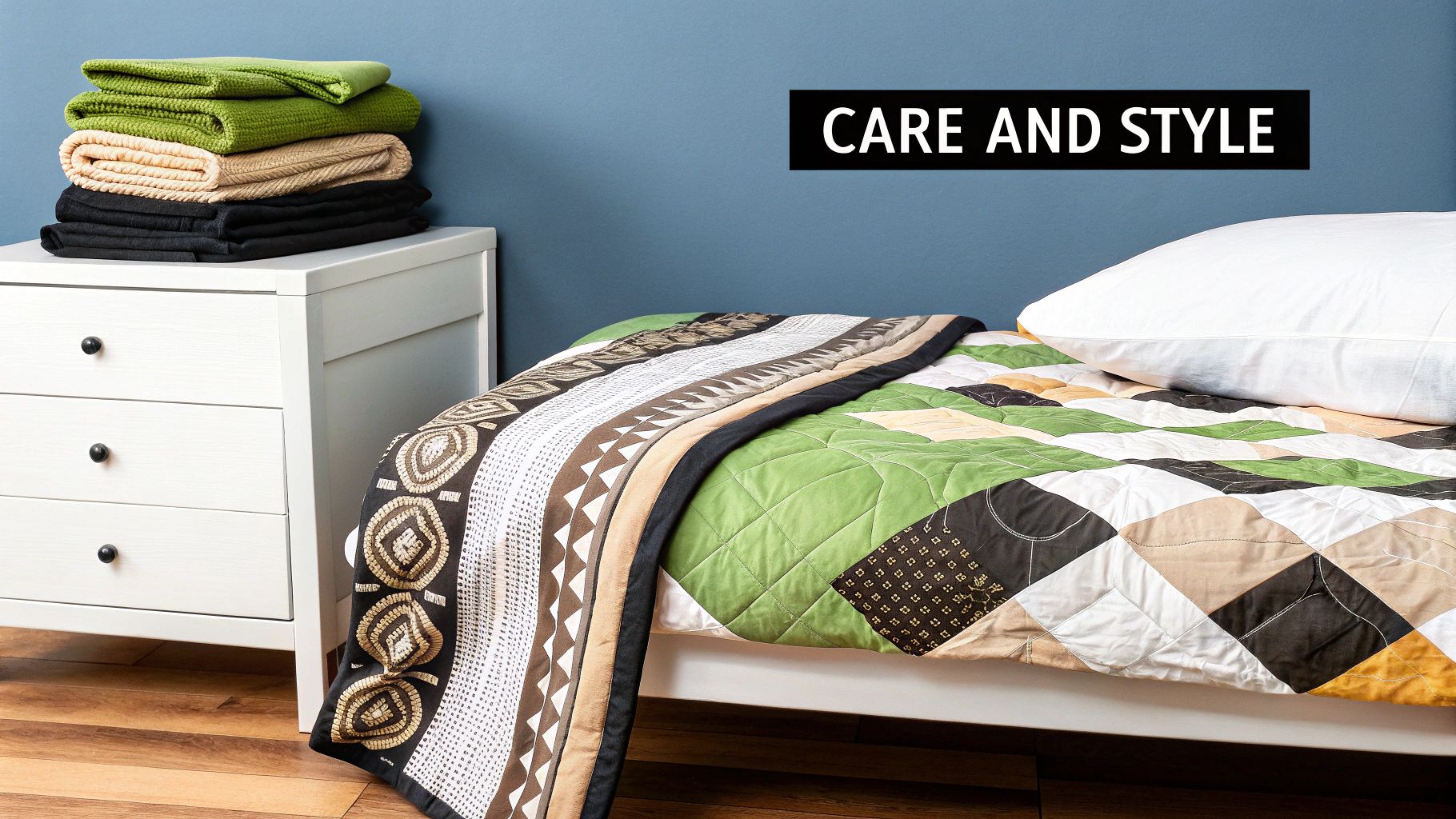
Start with your main quilt folded back to show off your sheets. Then, drape a lighter blanket or a textured throw across the foot of the bed. It adds visual interest and is easy to grab on a chilly night. Pull colours from your room's decor to create a cohesive look. For more tips, check our Comprehensive Bedding Care Guide.
Your Blanket Questions Answered
Still have questions about finding the perfect single bed size blanket? Here are quick answers to the most common queries we receive.
Can I Use a Double Blanket on a Single Bed?
While it might seem like a way to get extra cosiness, a double blanket on a single bed often results in too much fabric. It can look messy and drag on the floor, collecting dust. Sticking to a proper single blanket size provides a much neater, more tailored look.
What's the Difference Between a Blanket and a Quilt?
A blanket is typically a single layer of fabric, like woven cotton or wool, designed to add a layer of warmth. A quilt (often called a doona in Australia) has an outer shell filled with insulating material like bamboo fibre or down. Quilts provide more substantial warmth and are usually the primary covering on a bed.
What Should I Look for in a Child's Blanket?
For a child's single bed, safety and comfort are top priorities.
- Breathable Materials: Natural fabrics like cotton or bamboo help prevent overheating.
- The Right Fit: Ensure the blanket provides enough coverage without being so large that it poses an entanglement risk for younger children.
- Easy Care: Choose a durable, machine-washable blanket for easy and stress-free cleanup.
Conclusion: Find Your Perfect Match Today
Choosing the right single bed size blanket doesn't have to be complicated. By understanding standard dimensions, measuring your own mattress, and selecting a breathable, high-quality fabric, you can transform your bed into a perfect sanctuary for rest. You now have all the tools and insights needed to make a confident choice.
Ready to find the blanket that ticks all your boxes?