

Tossing and turning on a hot, sticky night? You're not alone. The secret to reclaiming your sleep isn't cranking up the air-con—it's upgrading what you sleep on. For a truly restful night, you need the right bedding, and this guide will show you how to find the best cool sheets Australia has to offer. We'll cut through the confusion and give you clear, actionable advice to transform those sweaty nights into cool, deep slumber.
Why Your Sheets Are Sabotaging Your Sleep
Struggling with the heat at night is more than just an annoyance; it's a major cause of broken sleep that leaves you feeling groggy and unrested. Standard cotton sheets often act like an insulator, trapping your body heat and creating a personal sauna under the covers.
Cooling sheets are a game-changer. They are specifically designed with two key features:
- Breathability: The weave allows air to circulate freely, preventing heat from building up around your body.
- Moisture-Wicking: The fibres actively pull sweat away from your skin, spreading it across the fabric so it can evaporate quickly.
This combination keeps you cool and dry all night long. Research shows that our sleep environment is critical; according to one study, 40% of Australians report their sleep is regularly disrupted by being too hot or too cold. This makes choosing the right bedding a health decision, not just a style choice.
The ideal temperature for sleep is between 18°C and 22°C. Cooling sheets are brilliant at helping your body stay in that optimal zone by managing both heat and humidity, which is critical for hitting deep, restorative sleep cycles.
While the right sheets are your first line of defence, exploring other practical tips to cool a room without AC can give you a complete strategy for beating the heat.
The Best Fabrics for a Cool Night's Sleep
When it comes to cooling sheets, the fabric you choose is everything. Think of it like buying activewear—the material's job is to work with your body to keep you comfortable. Let's break down the top contenders.
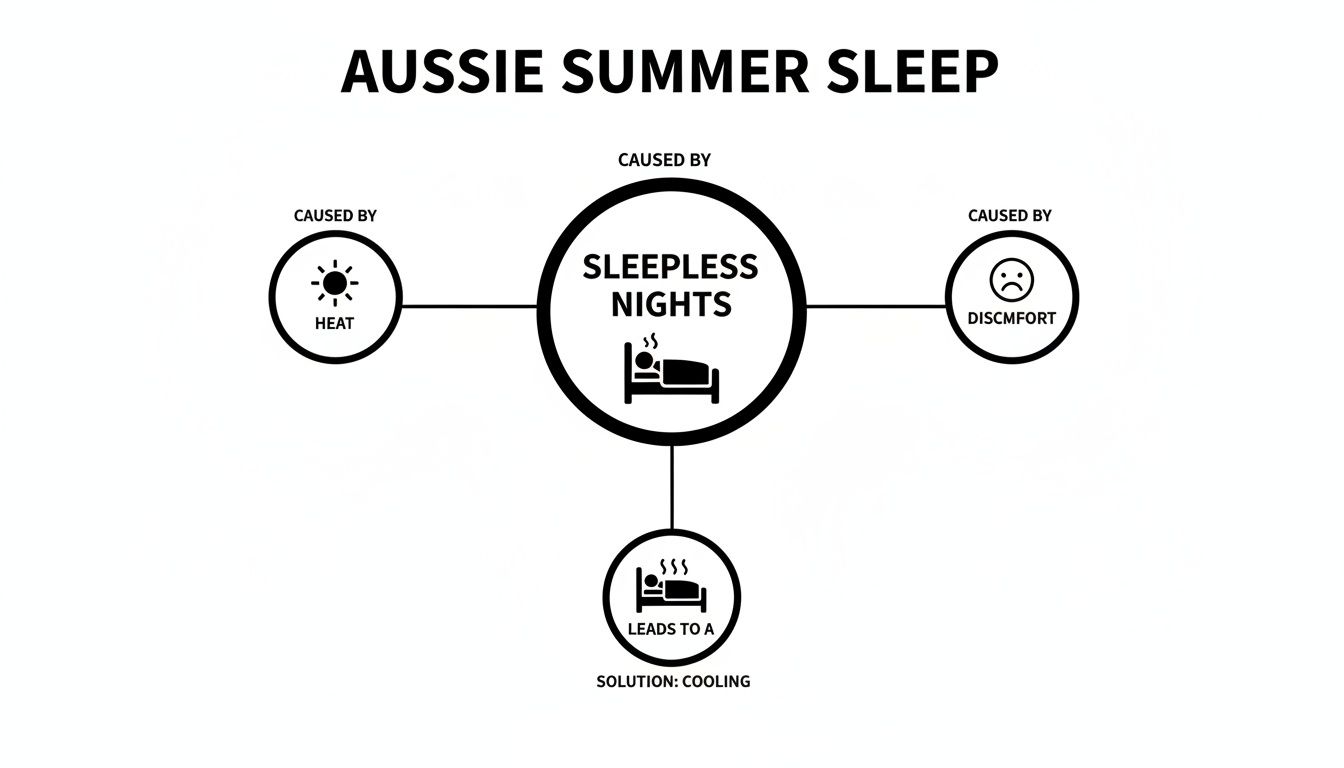
This infographic paints a clear picture of the all-too-common struggle with Aussie summer nights: heat and humidity leading to tossing, turning, and a serious lack of sleep. The solution? Bedding designed to keep you cool.
Here’s a quick overview of how the most common cooling fabrics stack up.
A Quick Comparison of Cooling Sheet Fabrics
| Fabric Type | Breathability | Moisture-Wicking | Feel | Best For |
|---|---|---|---|---|
| Bamboo | Very High | Excellent | Silky, smooth, soft | Humid nights & sensitive skin |
| Linen | Exceptional | Good | Textured, airy, relaxed | Dry heat & maximum airflow |
| Cotton (Percale) | High | Moderate | Crisp, light, cool | Those who love a classic hotel feel |
This table gives you a bird's-eye view, but the real magic is in the details.
Bamboo: The Silky-Smooth Champion
Bamboo-derived sheets feel incredibly soft and silky, often compared to high-end silk but without the fussy care instructions. Where they truly excel for hot sleepers is in managing humidity.
- Exceptional Moisture-Wicking: Bamboo fibres are incredibly absorbent. They pull sweat away from your skin far more effectively than regular cotton, keeping you dry.
- Naturally Breathable: The structure of bamboo fibre is full of micro-gaps, which creates natural ventilation, letting body heat escape.
- Hypoallergenic Properties: For a naturally gentle option, explore the benefits of our eco-friendly bamboo sheets, which are also resistant to dust mites.
Real-World Example: If you live in humid Sydney or Brisbane, bamboo is your best friend. Its ability to wick moisture stops that clammy feeling, creating a natural cooling effect you can feel.
Linen: The Undisputed King of Breathability
Linen is the original performance fabric. Woven from flax, its naturally loose and open weave allows for maximum airflow, which is the key to its cooling power. The fabric doesn't cling to your skin, feeling wonderfully light and airy.
- Unbeatable Airflow: The hollow structure of linen fibres guarantees constant air circulation, making heat build-up a thing of the past.
- Incredible Durability: Linen is one of the strongest natural fibres. A quality set of linen sheets is an investment that can last for decades.
- Gets Softer with Time: Unlike other fabrics, linen softens beautifully with every wash, developing a relaxed, lived-in texture.
Real-World Example: For someone in a dry heat climate like Adelaide or Perth, linen is ideal. Its supreme airflow stops heat from getting trapped in the first place.
Cotton Percale: The Crisp and Cool Classic
Not all cotton is created equal. For a cool sleep, the star is percale. It’s a simple, one-thread-over, one-thread-under weave that creates a light, crisp fabric with a cool, matte finish.
This weave gives percale its signature cool-to-the-touch feel, much like the fresh sheets at a luxury hotel. The structure promotes excellent airflow, allowing heat to dissipate with ease. You can learn more about what makes percale cotton a great choice for warm nights.
What to Look for Besides Fabric
While picking the right material is a massive first step, a few other details separate good sheets from great ones. To find the best cool sheets Australia has, look beyond the label at weave, thread count, and health benefits.
Demystifying Thread Count and Weave
For years, we've been told that a higher thread count means better sheets. When you’re trying to stay cool, this is a myth. Thread count is simply the number of threads per square inch. When that number is too high, the threads are packed so tightly that air can't circulate, trapping heat.
A moderate thread count, between 300 and 500, offers the perfect balance of softness and breathability. We explain why you should be wary of high thread count sheets in our detailed guide. The weave is more important for cooling. A percale weave is light and airy, while a sateen weave is denser and less breathable.
The Importance of Hypoallergenic Properties
Australia's humid climates can turn bedrooms into a haven for allergens. This makes the health aspect of your sheets a huge deal, especially if you have sensitive skin or allergies.
Sheets that are naturally hypoallergenic help create a cleaner sleep space.
- Dust Mite Resistance: Materials like bamboo are naturally inhospitable to dust mites, a primary trigger for allergies.
- Mould and Mildew Prevention: Moisture-wicking fabrics stop mould and mildew from growing in damp environments.
- Gentle on Skin: These fabrics are typically made without harsh chemicals, reducing the risk of skin irritation.
By focusing on weave, a sensible thread count, and health benefits, you can find sheets that deliver a healthier, more restorative sleep.
Choosing Sheets for Your Local Climate

Now for the crucial part: matching sheets to where you live. Choosing the right cool sheets Australia-wide isn't a one-size-fits-all game. What works in humid Cairns could be wrong for a dry Adelaide heatwave.
A Practical Checklist for Aussie Homes
Use this quick checklist to nail your decision:
- Match Fabric to Humidity: In tropical and subtropical spots (QLD, NT, northern NSW), prioritise moisture-wicking fabrics like bamboo. For dry heat zones (SA, WA), focus on maximum airflow from linen or percale.
- Check Your Mattress Depth: Modern mattresses can be deep. Measure yours before you buy and check the pocket depth of the fitted sheet to ensure a snug fit.
- Look for Health Certifications: Keep an eye out for the OEKO-TEX® STANDARD 100 label. This guarantees every component is free from harmful substances.
Thinking about your local climate first is what separates buying just any 'cool sheets' from buying the right cool sheets for your bedroom. It's a simple mindset shift that pays off big time in sleep quality.
At the end of the day, the best sheets fit your life perfectly. If you have sensitive skin, bamboo is a huge win. If you crave that crisp, hotel feeling, you can't go wrong with cotton percale. For more tailored tips, check our guide on the best sheets for summer.
How to Care for Your Sheets to Keep Them Cool
You've invested in a fantastic set of cooling sheets. Now, let's make sure that investment lasts. A few simple tweaks to your laundry routine can keep your cool sheets feeling soft, breathable, and effective.
The golden rule? Be gentle. Harsh chemicals and high heat can damage the delicate fibres, ruining their cooling abilities.
Washing and Drying Best Practices
Always use a cold, gentle machine wash. Cold water (around 30°C) is essential for materials like bamboo because it prevents shrinking or weakening.
Next, ditch the fabric softener and bleach.
- Avoid Fabric Softener: These products leave a waxy film that clogs the fabric's pores, destroying its breathability and moisture-wicking power.
- Skip the Bleach: Harsh chemicals weaken natural fibres and shorten the life of your sheets.
When it's time to dry, line drying in the shade is the best method. If you must use a dryer, choose the lowest heat setting or a "cool air" cycle. Our guide on how to care for your bamboo sheets has more tips to keep them feeling new.
Conclusion: Upgrade Your Sleep Tonight
You now have all the information you need to choose the perfect cooling sheets and transform your sleep. By focusing on the right fabric for your climate, understanding key features like weave and thread count, and caring for them properly, you can finally say goodbye to restless, sweaty nights.
Ready to experience the difference for yourself? Our signature Sienna Living bamboo sheets are designed right here in Sydney to tackle the unique challenges of the Australian climate. They offer superior temperature regulation, are naturally hypoallergenic, and feel incredibly luxurious.
For an even cooler sleep, consider pairing your sheets with the perfect pillow. Explore our guide to the best cooling pillows to complete your setup. It's time to invest in your rest.