

Ever slid into a luxury hotel bed and wondered how the sheets feel so incredibly crisp, cool, and clean? That five-star experience isn't an accident. The secret is almost always percale cotton, a premium fabric designed for the perfect night's sleep. Understanding what is percale cotton is the first step to bringing that refreshing feeling home.
This guide cuts through the fluff to give you clear, actionable insights. We’ll explore what makes this fabric unique, how it feels, and why it might be the key to unlocking your best sleep ever.
What Exactly Is Percale Cotton?
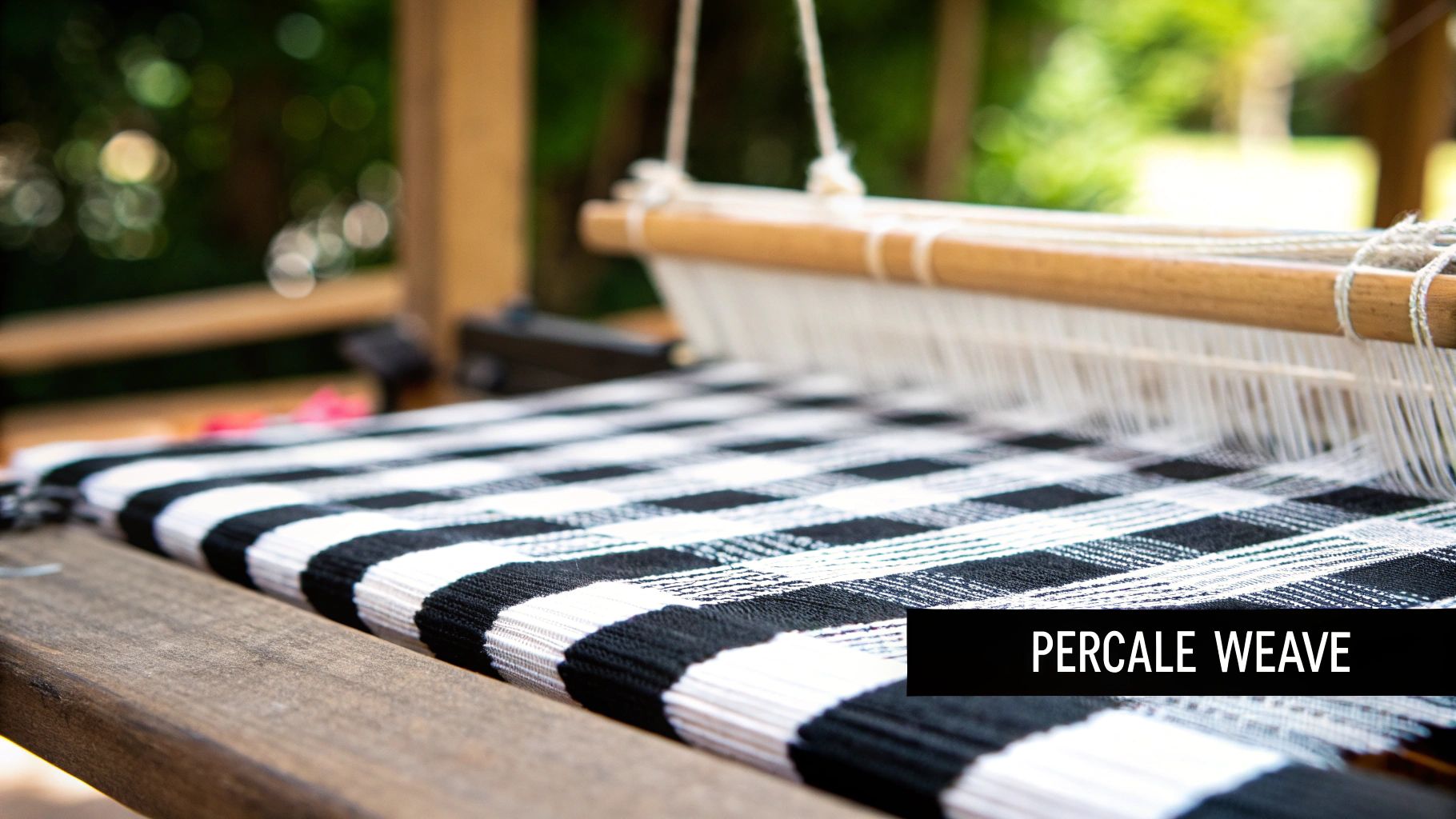
First, let's clear up a common mix-up. Percale isn’t a type of cotton; it’s a specific style of weave.
Imagine a simple basket weave: one thread goes over, and one thread goes under. This creates a tight, grid-like pattern that’s remarkably strong and breathable. This straightforward structure is the key to percale's signature feel: crisp, cool to the touch, and smooth, much like a freshly ironed dress shirt.
Unlike the silky sheen of sateen, percale has a classic matte finish. This clean, hotel-quality crispness is its most defining trait.
Key Characteristics of Percale
This table summarises what makes percale a standout choice for bedding.
| Characteristic | Description |
|---|---|
| Weave | A simple one-yarn-over, one-yarn-under grid pattern. |
| Feel | Crisp, cool, and smooth to the touch. |
| Finish | A classic, non-shiny matte appearance. |
| Breathability | Excellent airflow, making it ideal for hot sleepers. |
| Durability | Strong and resistant to pilling, gets softer with each wash. |
These traits all stem from that fundamental weave, which is where the magic happens.
The Magic Is in the Weave
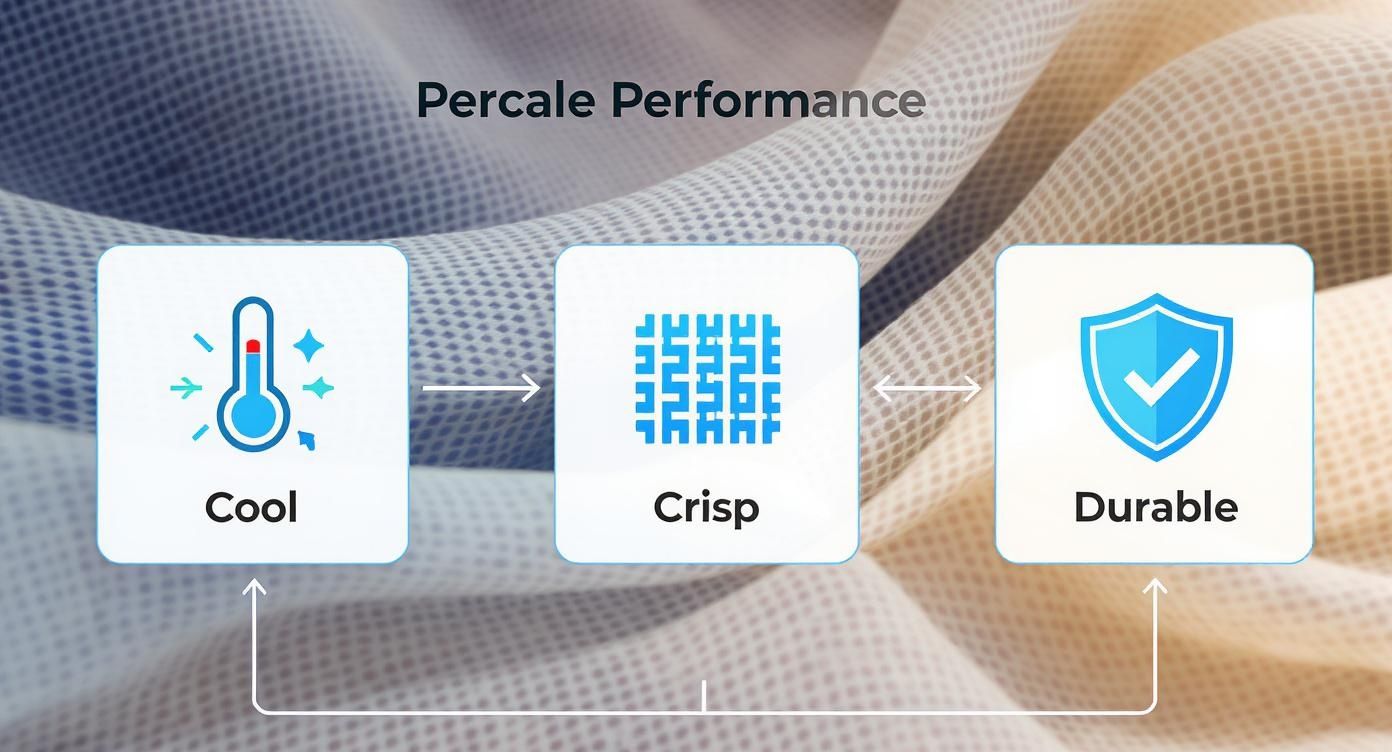
That simple one-over, one-under weave allows air to circulate freely through the fabric—a game-changer for anyone who sleeps warm. This breathability helps regulate your body temperature all night, preventing overheating.
This construction also makes percale incredibly durable. The tight weave resists pilling and stands up to repeated washing, meaning your sheets will last for years. In fact, high-quality percale actually gets softer and more comfortable with every wash, without losing its signature crispness.
Key Takeaway: Percale is defined by its weave, not the cotton itself. That classic cool and crisp feel always comes from that simple crisscross pattern.
Percale's Popularity in Australia
Here in Australia, percale is a go-to choice, especially for our warmer climate. A recent study found that nearly 40% of people identify as "hot sleepers," making breathable fabrics a top priority. Percale’s durability and exceptional comfort make it a natural fit for our lifestyle.
Local demand is supported by Australia's robust cotton industry. To learn more, you can discover more insights about Australian cotton production and see how this strong sector ensures a steady supply of high-quality raw materials.
What Do Percale Sheets Feel Like?
The real magic of percale isn’t something you see; it’s something you feel. It’s a distinct sensation—a perfect blend of cool, crisp, and clean that can completely change how you sleep.
The first thing you’ll notice is its remarkable cool and crisp feel. Think of the satisfying snap of a freshly pressed shirt against your skin—that's the essence of percale. This is a direct result of its simple, tight, one-over-one-under weave.
This grid-like structure creates microscopic pockets that let air move freely. Unlike denser fabrics that trap body heat, percale actively pulls warmth away from you, making it incredibly breathable. Keeping your body cool is vital for deep, restorative sleep, and your bedding plays a huge role.
Perfect for Cool Comfort
If you’ve ever kicked off the covers on a hot night, percale is the solution. For example, someone in Brisbane during summer would find percale sheets a lifesaver for staying cool and dry. Its incredible airflow makes it the perfect choice for hot sleepers or anyone living in warmer climates.
The fabric doesn't cling. Instead, it rests lightly on your skin, allowing for constant ventilation that prevents that clammy feeling that disrupts sleep. You can learn more about why breathable fabrics improve sleep quality and see how they contribute to a truly restful night. This cooling property is baked into the weave, so it won’t wash out or fade over time.
Built to Last: The Durability Factor
Beyond its cool feel, percale is a workhorse. That same strong weave makes the fabric highly resistant to pilling—those annoying little balls of fibre on lower-quality sheets. This means your sheets will keep their smooth finish for years.
Think of it like a great pair of denim jeans. They might feel a little stiff at first, but with every wash, they soften up perfectly without losing their structure. Percale sheets follow a very similar path.
Percale's strength comes from its simple weave. The tight crisscross pattern distributes stress evenly, preventing the thinning and tearing that can plague less durable materials.
This resilience makes percale a smart long-term investment. While other sheets might look tired after a few dozen washes, well-made percale stands up to regular use, offering dependable performance year after year.
How Percale Gets Better with Age
One of the most loved traits of percale is how it evolves. When you first unbox them, the sheets have a definite crispness. But they don't stay that way—they get better.
With each wash, the cotton fibres relax, gradually transforming the fabric into something even more comfortable. This softening is the hallmark of high-quality percale. It becomes more supple and inviting without sacrificing its core structure or breathability.
- Initial Feel: Crisp, structured, and cool to the touch.
- After a Few Washes: Begins to soften while keeping its cool, airy quality.
- Long-Term Feel: Hits a perfect balance of lived-in softness and classic crispness.
This beautiful evolution means your bedding doesn’t just last; it improves, becoming more comfortable with every night that passes.
Percale vs Sateen: Which Is Right for You?
When hunting for new sheets, it often comes down to two players: percale and sateen. While both are made from cotton, their different weaves create two completely different sleep experiences.
Percale uses a simple one-thread-over, one-thread-under weave, creating a crisp, cool, and breathable fabric. Sateen, on the other hand, uses a four-threads-over, one-thread-under pattern. This technique places more thread surface on top, giving it a silky, smooth feel and a noticeable sheen.
Think of it this way: percale is like your favourite crisp cotton shirt—structured and classic. Sateen is more like a silk blouse—draping and lustrous.
Feel and Texture
Percale has a signature light crispness—that unmistakable feeling of high-end hotel sheets. It's smooth, but with a definite structure. Sateen is a world away, with a buttery-soft, silky texture that drapes closely around you.
Appearance and Finish
Percale has a clean, matte finish with zero shine, perfect for minimalist or classic bedrooms. Sateen has a subtle, elegant lustre that adds a touch of opulence. If that silky elegance sounds right, you can dive deeper into sateen cotton sheets.
Temperature and Breathability
This is where the two fabrics really differ.
Percale’s grid-like weave is a powerhouse of breathability. Air moves through it freely, making it the clear winner for hot sleepers or warm climates.
Sateen's denser weave traps more air, making it feel warmer and cosier. It's a great choice for people who get cold at night or for cooler months.
Comparing Weaves: A Quick Glance
Here’s a simple comparison of what sets these two popular weaves apart.
| Feature | Percale | Sateen |
|---|---|---|
| Feel | Crisp, cool, and light | Silky, smooth, and soft |
| Appearance | Matte, no-sheen finish | Lustrous, subtle sheen |
| Breathability | Highly breathable, excellent airflow | Less breathable, traps more warmth |
| Ideal For | Hot sleepers and warm climates | Cold sleepers and cooler climates |
| Durability | Extremely durable, resists pilling | More delicate, can snag |
So, Which Should You Choose?
The right answer is all about your personal comfort.
- Choose Percale If: You're a hot sleeper, live somewhere warm, or love that crisp, clean feel of classic hotel bedding.
- Choose Sateen If: You crave a silky, luxurious feel, tend to get cold at night, or want your bed to have an elegant sheen.
For example, a person in Hobart looking for cosy winter sheets would likely prefer the warmth and smooth drape of sateen. By thinking about how you sleep, you can confidently pick the weave that will give you the best night’s rest.
Why Thread Count Isn't the Whole Story
You've probably heard that a higher thread count means better sheets. But when it comes to what is percale cotton, that's a myth. Thread count is just one small, and often misleading, part of the story.
Thread count is simply the number of threads woven into one square inch of fabric. While it sounds like a solid benchmark, quality is far more important than quantity.
The Percale Sweet Spot
For high-quality percale, the ideal thread count is between 200 and 400. This range hits the perfect balance: it's tight enough to feel smooth and durable, yet open enough for that famously cool breathability.
Beware of exceptionally high thread counts. Some manufacturers use multi-ply yarns—twisting weaker, thinner fibres together—to inflate the number. This results in a heavier, less durable fabric that traps heat.
Think of it like a chef's knife. You care more about the quality of the steel in the blade than the number of rivets in the handle. The quality of the cotton fibre is far more important than how many threads are crammed into a square inch.
Why Fibre Quality Is the Real Hero
The most crucial factor in your sheets' quality is the staple length of the cotton fibre.
- Long-Staple Cotton: This is the good stuff. Fibres from varieties like Egyptian or Pima cotton are longer, stronger, and silkier. They create a fabric that's incredibly soft and resists pilling.
- Short-Staple Cotton: Shorter fibres create a weaker, coarser yarn. These sheets are much more likely to pill and wear out quickly.
This is why a 300-thread-count sheet made from long-staple cotton will feel far more luxurious and last longer than an 800-thread-count sheet made from inferior fibres. Chasing high thread count sheets often leads you astray. Instead, look for labels that proudly state "100% long-staple cotton."
How to Care for Your Percale Bedding
You’ve invested in beautiful percale sheets. Now, let’s make sure they last and feel even better over time. The good news? Percale is a durable workhorse that doesn't demand a fussy routine.
Simple Washing Instructions
Gentle care is key to protecting the cotton fibres and classic weave.
- Use a Gentle Cycle: Wash your sheets on a gentle or delicate setting.
- Keep it Cool: Use cool or warm water (around 30-40°C). Hot water can cause shrinking and fading.
- Choose a Mild Detergent: A gentle, pH-neutral liquid detergent is best.
Pro Tip: Avoid fabric softeners and bleach. Fabric softeners coat the fibres, clogging the weave and ruining percale's amazing breathability. Bleach is too harsh and weakens the natural fibres.
Drying for the Perfect Crisp Feel
- Line Drying: This is the gold standard. Hanging sheets outside gives them an unbeatable fresh scent and helps lock in that crisp texture.
- Tumble Drying: Use a low heat setting. High heat is cotton’s enemy. Pull the sheets out while still slightly warm to prevent wrinkles from setting in.
For more expert advice, check out these 6 ways to make your bedding last longer.
A Quick Word on Wrinkles
Let's be clear: 100% cotton percale is meant to wrinkle a little. This isn’t a flaw—it’s the hallmark of a genuine, natural fabric free from anti-wrinkle chemicals. Many people love this relaxed, lived-in look.
If you prefer a smoother finish, pull them from the dryer immediately and fold them while warm or put them straight onto the bed. For a pristine, hotel-style look, a quick pass with a warm iron does the job.
How to Choose the Best Percale Sheets
Choosing the best percale sheets is simple once you know what to look for. Use this practical checklist to invest in lasting comfort.
1. Prioritise Fibre Quality
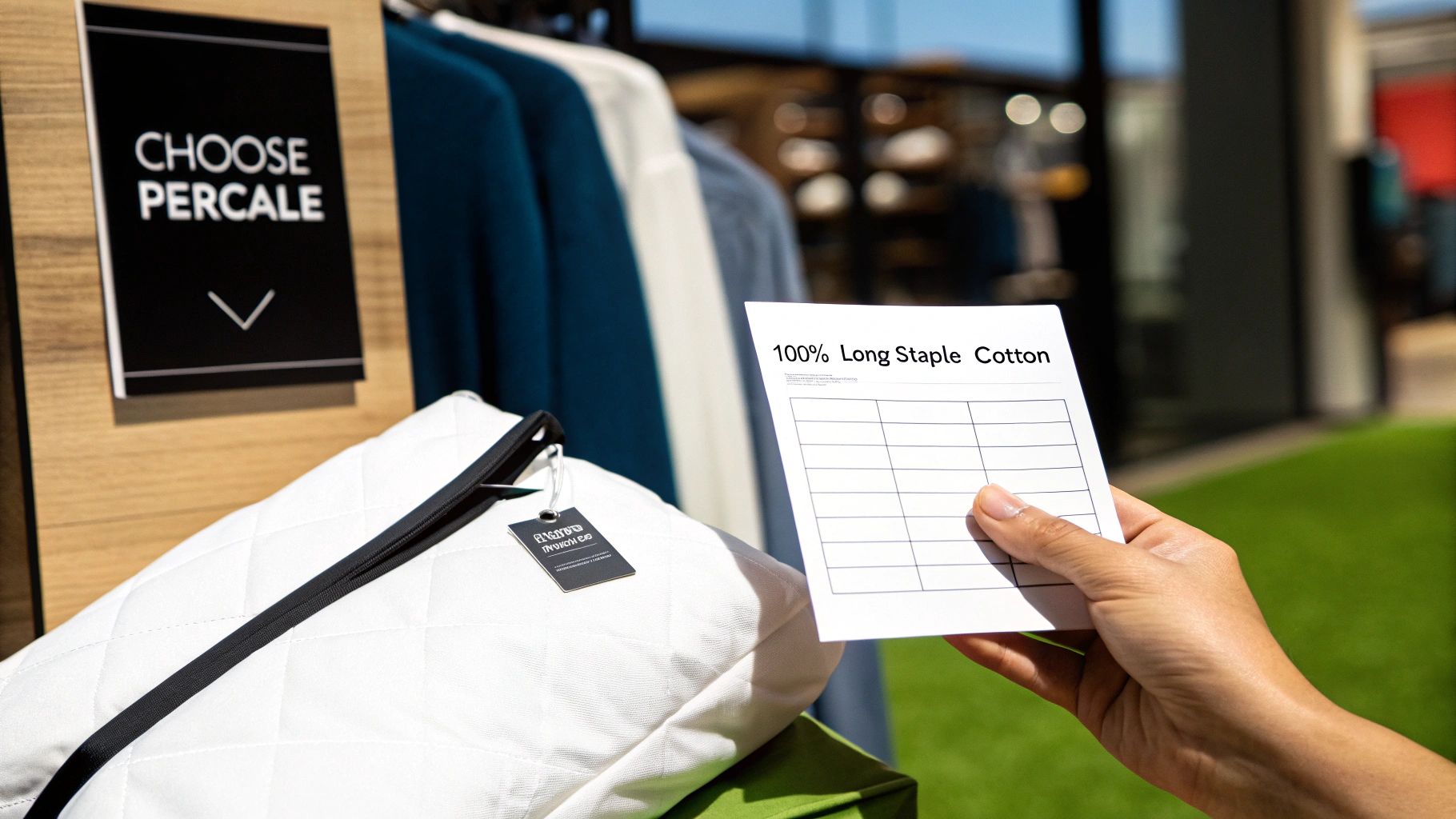
Always look for 100% long-staple cotton on the label. This is your single best guarantee of quality. Long-staple fibres are smoother, stronger, and far more durable. Sheets made from long-staple cotton resist pilling and get softer with every wash.
2. Look for Independent Certifications
Keep an eye out for labels like OEKO-TEX STANDARD 100. This certification means every component has been tested and found free from harmful substances. It offers peace of mind, especially for those with sensitive skin, ensuring your product is clean, safe, and responsibly made.
3. Choose Pure Cotton Over Blends
You’ll often see percale sheets labelled as a "cotton-polyester blend." While cheaper, this convenience costs you comfort.
- Pure 100% Cotton Percale: Offers maximum breathability, keeping you cool all night.
- Cotton-Polyester Blends: Polyester is a synthetic fibre that traps heat and moisture, undermining the very breathability that makes percale so desirable.
For the best night's sleep, always go for 100% cotton. To see how different materials stack up, check our guide to the best bed sheets in Australia.
Your Questions Answered
Let's tackle some of the most common questions about percale cotton.
Does percale wrinkle easily?
Yes, and that’s a good sign. That slight crinkle is the hallmark of genuine 100% cotton that hasn't been treated with harsh anti-wrinkle chemicals. To manage it, simply pull your sheets from the dryer while still warm.
Is percale a good choice for hot sleepers?
It’s one of the best choices you can make. The one-over, one-under weave is incredibly breathable, allowing air to move freely to pull heat away from your body. This is a game-changer for anyone who battles the heat at night.
How does percale feel compared to linen?
Both are great for staying cool, but they feel very different.
- Percale: Smooth, light, and distinctly crisp, like a high-quality dress shirt.
- Linen: Starts with a more rustic, textured feel that softens beautifully over time into a casual, rumpled drape.
If you want that classic, crisp hotel bed experience, choose percale. If you prefer a more relaxed, natural texture, linen is an excellent alternative.
Conclusion: Experience the Difference of Percale
Now that you know what percale cotton is, you understand that its magic lies in a simple weave that delivers unmatched coolness, crispness, and durability. By prioritising long-staple cotton fibres and proper care, you can invest in bedding that not only lasts for years but actually improves with every wash. It’s the perfect choice for hot sleepers, lovers of classic style, and anyone ready to upgrade to a truly refreshing night’s sleep.
Ready to feel the cool, crisp difference for yourself? Explore our range of luxury bedding at Sienna Living and transform your sleep tonight.