

Ever pull your favourite white pillowcases from the wash, only to find them dull and tinged with stubborn yellow patches? It’s a common frustration, but it doesn't mean you're doing anything wrong. Restoring that crisp, brilliant white is easier than you think. Learning how to whiten pillow cases effectively starts with understanding what causes those stains and using targeted, simple methods to remove them.
The truth is, this discolouration is a gradual buildup of sweat, natural body oils, and even remnants of your nightly skincare routine. While regular washing keeps things fresh, it often can't cut through these specific residues. The good news? You can banish those yellow stains and get your bedding looking brand new again with a few simple techniques.
What Causes Yellow Stains on Pillowcases?
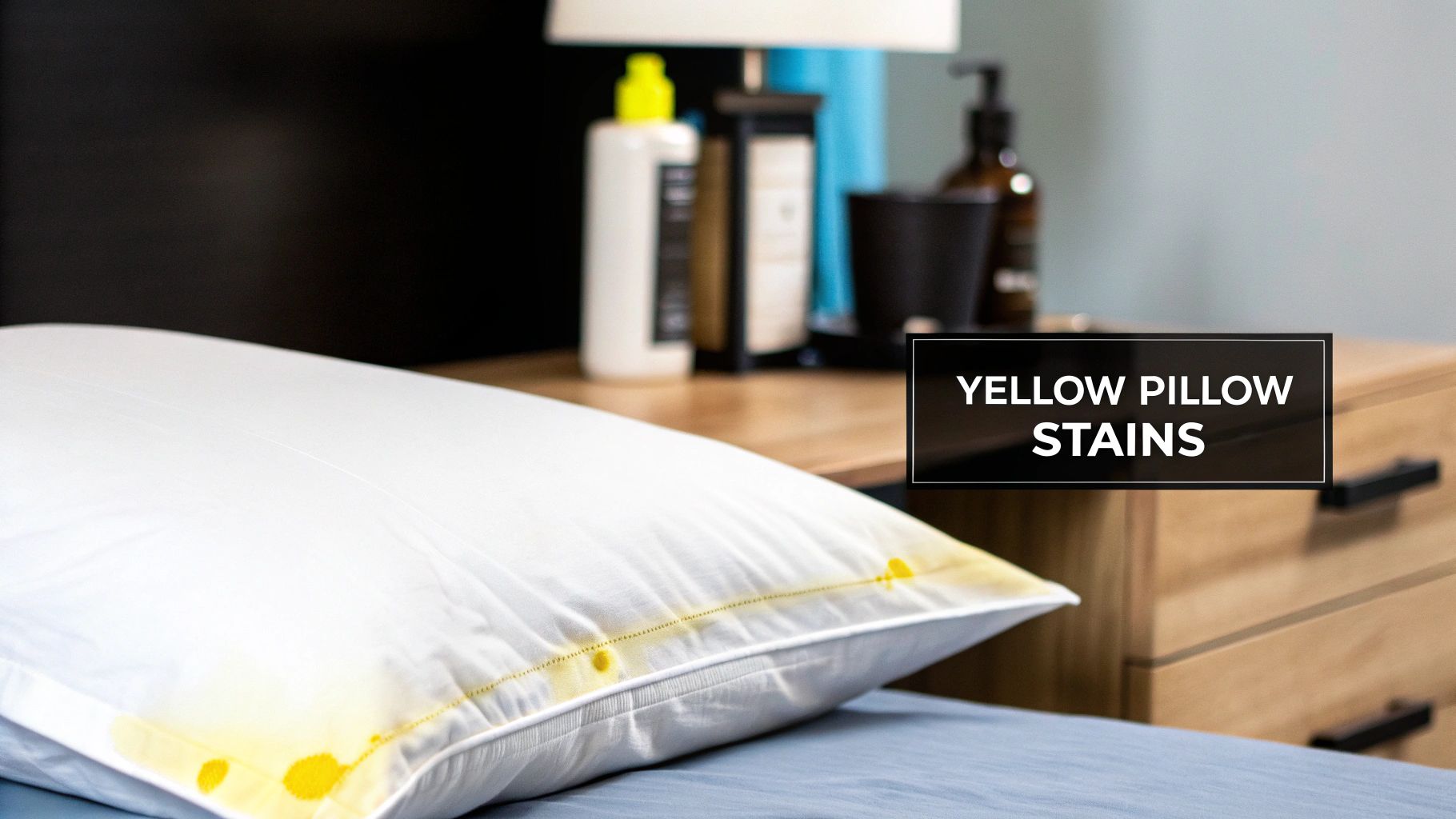
That gradual yellowing is a natural chemical reaction called oxidation. Over time, the mix of moisture and oils from our skin and hair oxidises when exposed to air, slowly staining the fabric fibres. Think of how a sliced apple turns brown on the counter—it's a very similar process happening right on your bedding.
This is why even freshly washed pillowcases can start to look dull. Your standard laundry detergent is great for general dirt, but it often struggles to break down these stubborn, set-in oily compounds.
The Main Culprits
A few everyday habits are usually the main offenders. Pinpointing them is the first step toward keeping your pillowcases bright for good.
- Skincare and Hair Products: Your night creams, serums, and hair oils leave an oily signature on your pillowcase that is notoriously tough to lift in a normal wash.
- Moisture Buildup: Sweat, drool, or even going to bed with damp hair creates a perfect environment for bacteria and speeds up the oxidation of oils, accelerating the yellowing. This is a big reason why breathable fabrics improve sleep quality.
- Infrequent Washing: Allowing oils and sweat to sit on fabric for more than a week lets them settle deep into the fibres, making stains much harder to shift. A 2022 study revealed that after just one week, a pillowcase can harbour thousands of times more bacteria than a toilet seat.
How Fabric Type Plays a Role
Not all fabrics react to stains the same way. Natural fibres like high-quality cotton and linen are incredibly absorbent, which is great for comfort but means they can soak up oils and moisture more easily than synthetics, making them more prone to yellowing. This is why knowing your fabric is key before you start any whitening treatment.
Natural Ways to Whiten Your Pillowcases
You don't need harsh chemicals to get your pillowcases looking brilliant again. Some of the best whitening solutions are probably in your pantry right now. These natural methods are tough on stains but gentle on your fabrics. For more on this, check out our ultimate guide to non-toxic bedding for a healthier home.
The Classic Baking Soda and Vinegar Pre-Soak
This duo is a cleaning powerhouse. Baking soda gently breaks down grease, while vinegar dissolves mineral deposits and detergent residue. Together, they create a powerful, safe whitening solution.
- Real-world Example: Your favourite cotton pillowcases are looking a bit yellow. Fill a tub with warm water, stir in half a cup of baking soda and half a cup of white vinegar. Submerge the pillowcases and let them soak for at least an hour before washing as usual. You’ll see a noticeable difference in brightness.
The Gentle Power of Oxygen Bleach
Forget harsh chlorine bleach, which can damage fibres and even worsen yellowing over time. Oxygen bleach is a far safer alternative that releases tiny oxygen bubbles to gently break apart stains.
- Mix: Dissolve the recommended amount of oxygen bleach powder in a bucket of hot water.
- Submerge: Add your pillowcases, ensuring they're completely underwater.
- Soak: Leave them for at least four hours, or overnight for stubborn stains.
- Wash: Wring them out and wash them on a warm cycle with your regular detergent.
Harnessing the Sun's Natural Bleaching Power
Never underestimate sunlight. The sun's UV rays are a natural whitener that can brighten fabrics without a single chemical. After washing, simply hang your pillowcases on the line on a sunny day. The sunlight will naturally break down any remaining stain particles. For an extra boost, spritz the damp pillowcases with lemon juice before hanging them out.
A Fabric-Specific Guide to Whitening Pillow Cases
To effectively whiten pillow cases without causing damage, you must know what you’re working with. Cotton, bamboo, and silk have different needs, so a one-size-fits-all approach won’t work. First, decide on your game plan using this simple guide.
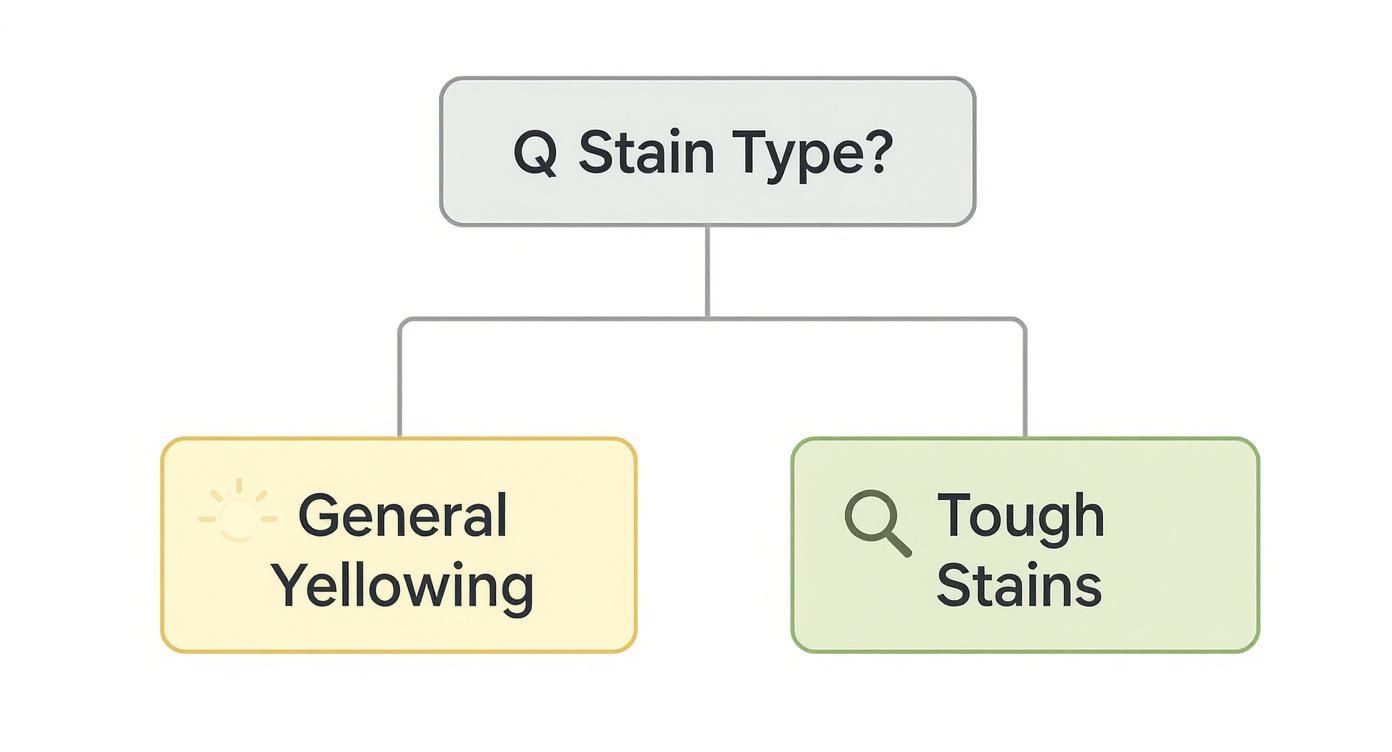
Durable Cotton and Linen
Cotton and linen are tough and can handle more aggressive whitening. A warm or even hot wash helps break down body oils. Feel free to use a pre-soak with oxygen bleach or a baking soda and vinegar solution.
- Pro Tip: For stubborn yellowing on Egyptian cotton pillowcases, a 4-hour soak in an oxygen bleach solution followed by a 60°C wash cycle is highly effective at restoring brightness without damaging the fibres.
Gentle Care for Soft Bamboo
Bamboo fabric is incredibly soft but delicate, so high heat and harsh chemicals are off-limits. Always wash bamboo in cool water (30°C) on a gentle cycle. Oxygen bleach is generally safe in cool water for a short soak, but never use chlorine bleach, as it will damage the fibres. Line dry in the shade to prevent brittleness.
The Delicate Touch for Silk
Silk's protein-based fibres are extremely sensitive. Handwashing in cool water with a pH-neutral, silk-specific detergent is always the safest option. For whitening, aggressive stain removers are out. A very diluted mix of white vinegar and water can sometimes help lift residue. For a complete walkthrough, see our guide on how to wash silk pillowcases.
How to Remove Stubborn, Set-in Stains
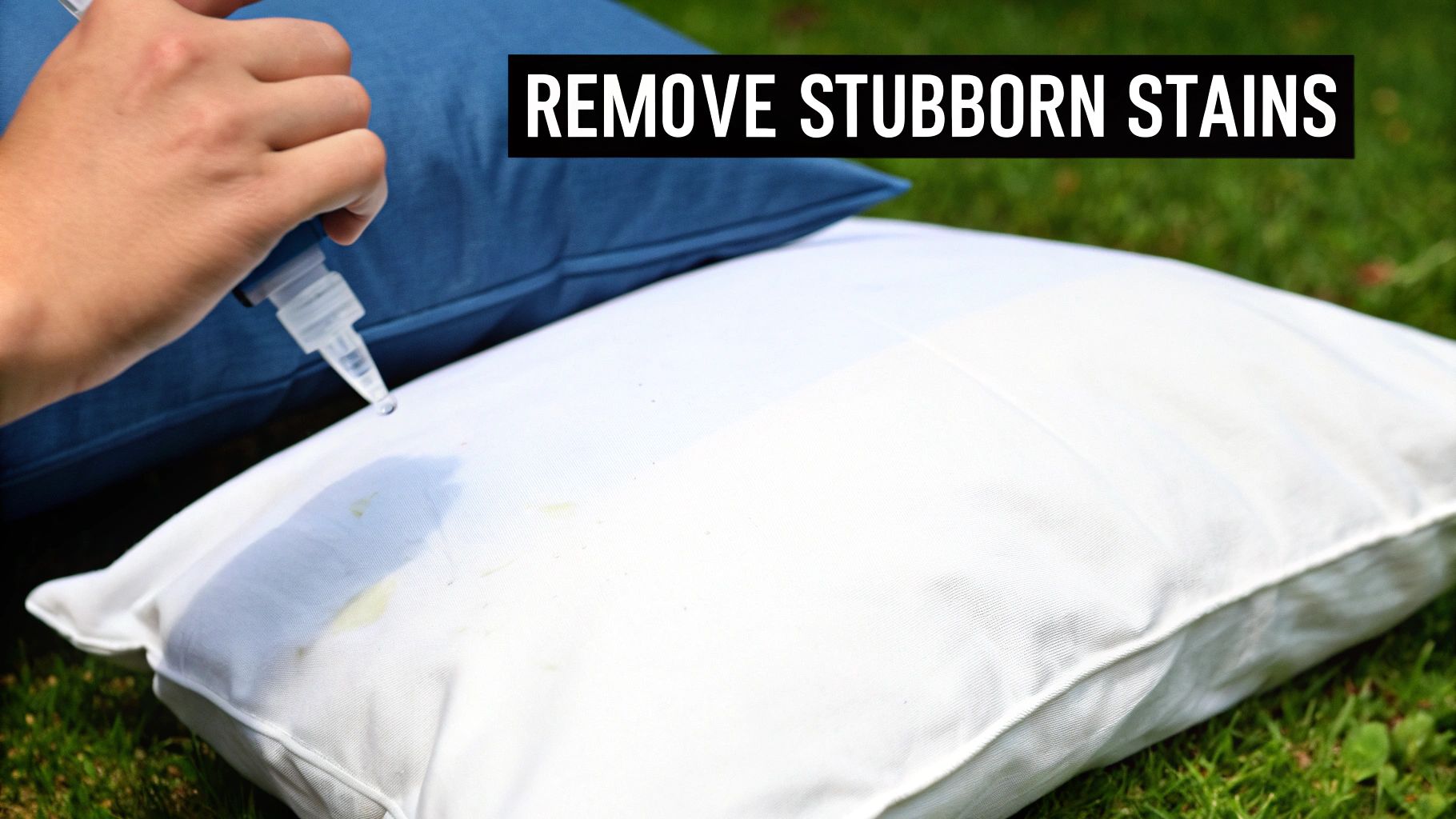
Sometimes, you're dealing with more than general yellowing. Specific stains from makeup, blood, or hair products require a targeted pre-treatment before they go into the washing machine.
Tackling Oily and Greasy Stains
Oil-based stains from makeup or skincare won't budge with water alone. The secret is to use a pre-treatment that breaks down the grease first. Your best tool here is simple dish soap.
- Apply a small amount of dish soap directly to the oily spot.
- Gently work it into the fabric with your fingers.
- Let it sit for about 15 minutes to break down the oil.
- Rinse the area with cool water before washing the pillowcase as usual.
Dealing with Blood and Protein Stains
The golden rule for bloodstains is to always use cold water. Hot water will "cook" the protein, setting the stain permanently. For fresh stains on durable fabrics like cotton, a dab of 3% hydrogen peroxide is incredibly effective. It will fizz as the oxygen breaks down the blood cells. Blot, rinse with cold water, and repeat if needed before washing.
Caution: Hydrogen peroxide can act as a bleach, so always test it on a hidden spot first. For more comprehensive strategies, this guide on how to remove yellow stains from white clothes offers invaluable techniques. For more tips on tackling all kinds of bedroom blemishes, our guide on how to clean bed stains has you covered.
How to Keep Your Pillowcases Brighter for Longer
The best way to deal with yellowing is to prevent it in the first place. A few simple habits can stop the build-up of oils and sweat that lead to discolouration.
Simple Habits for Lasting Brightness
Consistency is key to stopping stains before they start.
- Wash Weekly: This is non-negotiable. A weekly wash prevents body oils, sweat, and skincare products from settling deep into the fabric.
- Shower Before Bed: Rinsing off the day's grime means less of it transfers onto your pillowcase overnight.
- Let Skincare Absorb: Give night creams and serums at least 20-30 minutes to sink into your skin before your head hits the pillow. This minimises the oily residue that causes stubborn yellow stains.
Smart Washing and Drying
How you wash and dry your bedding also plays a huge role. A clean machine delivers cleaner laundry, so ensure you're maintaining a clean washing machine soap dispenser and running regular cleaning cycles.
Avoid over-drying your pillowcases on high heat, which can "bake in" faint stains. Use a lower heat setting or, even better, line-dry them in the sun. And don't forget what's inside the case! Our guide on how to wash a pillow has all the details you need to keep it fresh.
Your Whitening Questions, Answered
Here are answers to some of the most common questions about keeping pillowcases bright and white.
How often should I whiten my pillowcases?
Wash your pillowcases weekly, but a deep whitening treatment is only needed every one to two months, or whenever you notice them looking dull. Consistent weekly washing is the best way to prevent stubborn, set-in stains.
Is chlorine bleach a good idea for my pillowcases?
It’s best to avoid chlorine bleach. It's harsh and can weaken natural fibres like cotton and linen. Ironically, it can also react with the proteins in sweat and cause even more yellowing. Oxygen bleach is a far gentler and more reliable choice.
Why do my pillowcases still look dingy after washing?
If your pillowcases still look dull, mineral buildup from hard water or leftover detergent residue is likely the culprit. To fix this, run them through an extra rinse cycle, adding half a cup of white vinegar. The vinegar will break down and dissolve the dulling film, restoring brightness.
Ready for bedding that stays naturally fresh and bright with less effort? The beautiful bamboo sheets from Sienna Living are designed to resist odours and stay fresh longer, making laundry day a whole lot easier. Explore our collection today.