

Struggling to decode the difference between a duvet and a quilt? You're not alone. Choosing the right bedding can feel complex, but understanding the duvet vs quilt debate is the first step to creating your perfect sleep sanctuary. The core difference is simple: a duvet is a two-part system—a fluffy insert and a separate cover—while a quilt is a single, complete piece of bedding. This distinction changes everything from how your bed looks to how easy it is to clean.
Let's cut through the confusion so you can choose the perfect option for your home.
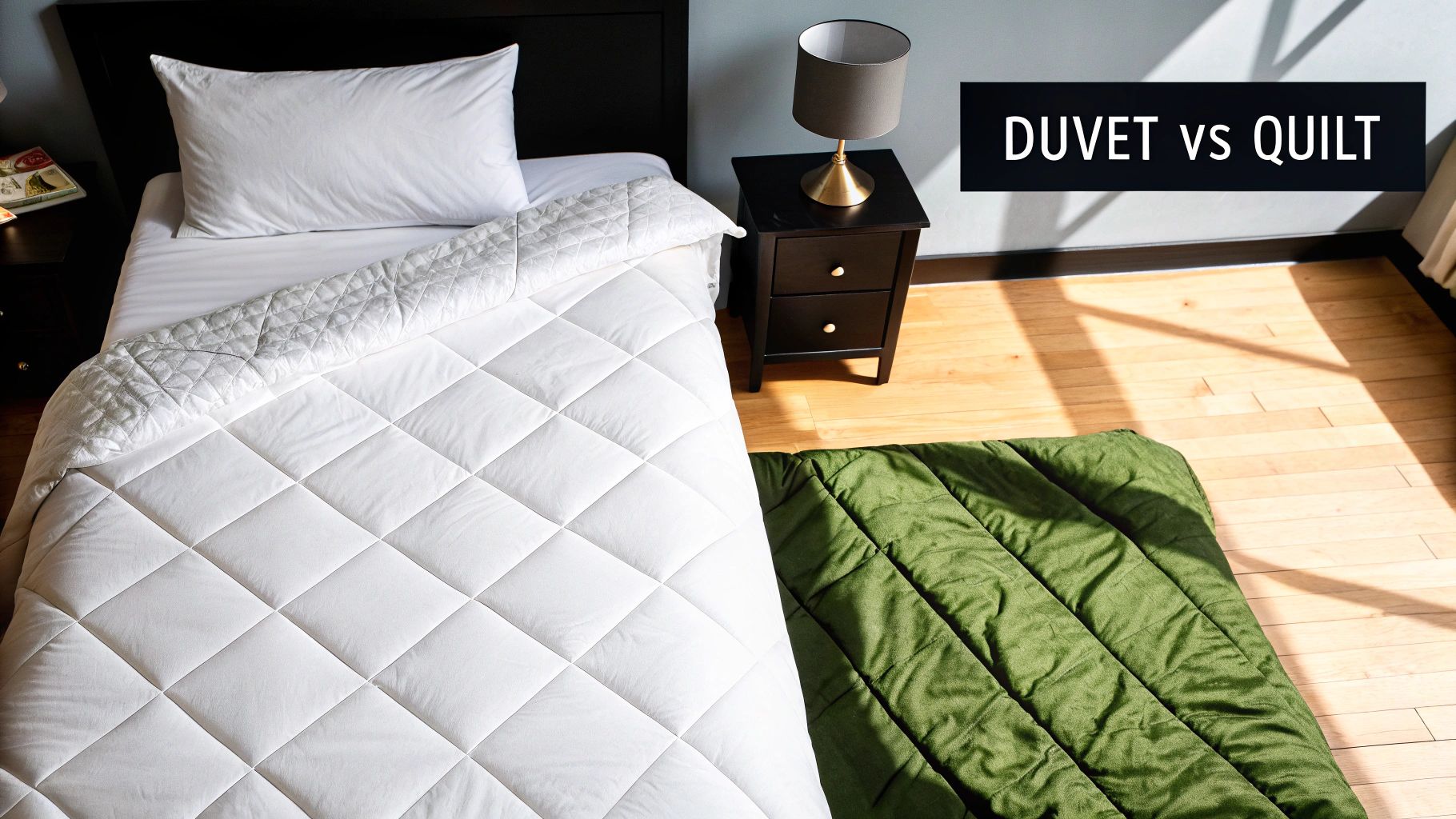
What is the Main Difference?
The key to choosing between them lies in their construction. This single factor impacts their look, feel, and how you care for them.
A duvet system consists of:
- An insert: This is the soft, filled part we often call a 'doona' in Australia.
- A cover: A separate, decorative fabric case that protects the insert.
A quilt, however, is a single, all-in-one item made of three layers stitched together:
- A decorative top fabric.
- A thin inner filling (batting).
- A solid backing fabric.
This construction difference is the most important piece of information you need. A duvet's two-part system makes it easy to change your bedroom's style and wash the cover. A quilt offers a neat, layered look in one complete package.
Duvet vs Quilt: Key Differences at a Glance
For a quick breakdown, this table cuts straight to the chase. It’s a handy reference for seeing the main distinctions side-by-side.
| Characteristic | Duvet | Quilt |
|---|---|---|
| Construction | A two-part system: a plain insert (doona) plus a separate cover. | A single, integrated piece with three layers stitched right through. |
| Appearance | Lofty, plush, and cloud-like. Style is changed by swapping the cover. | Thinner and flatter, often featuring detailed stitch patterns and designs. |
| Warmth | Varies widely based on fill; generally fluffier and traps more air. | Offers moderate, often denser warmth. Perfect for layering. |
| Washing | Easy. Slip off the cover and wash it with your sheets. The insert is cleaned rarely. | The entire quilt needs washing, often requiring a large machine. |
Practical Takeaway: If you value easy cleaning and redecorating your room in minutes, a duvet is your best bet. If you prefer a traditional aesthetic and a single layer of moderate warmth, a quilt is a perfect match.
If you're curious about other bedding, our guide on the comforter vs quilt explores more options.
Construction and Materials: What's Inside Matters
The difference between sinking into a cloud-like duvet and resting under a neat quilt comes down to how they're made. Understanding their construction is the first step in settling the duvet vs quilt debate for your bedroom.
A duvet insert is essentially a fabric bag filled with an insulating material. This filling is what gives the duvet its personality. It could be goose down for that classic five-star hotel softness or natural wool for incredible temperature regulation. You can explore our premium feather & down duvet inserts for that luxurious feel.
A quilt is a single, complete piece with a traditional three-layer structure. A thin layer of batting—usually cotton or polyester—is sandwiched between two fabrics. These layers are then stitched all the way through, creating the signature patterns that give quilts their character.
The Feel of the Fill
What's inside a duvet directly impacts its weight, warmth, and breathability. Down and feather inserts are famously light and lofty, trapping air to provide amazing insulation without weighing you down.
For those with allergies or who prefer plant-based options, modern alternatives are fantastic. You have plenty of choices when exploring down vs alternative down materials, including hypoallergenic bamboo, which feels silky-soft and breathes beautifully.
Real-World Example: Imagine you're a hot sleeper. A duvet filled with breathable bamboo will help regulate your temperature better than a dense synthetic fill, which might trap heat. The material inside makes all the difference.
The Structure of a Quilt
A quilt’s stitched construction gives it a flatter feel that lies closer to the body. Because the batting is thin and held in place, it offers consistent, medium-weight warmth that’s less 'puffy' than a duvet. The stitching itself stops the batting from clumping and adds texture.
- Duvet Experience: You feel completely enveloped and cushioned. It’s like being hugged by a warm cloud.
- Quilt Experience: You feel a more grounded, reassuring weight that gives the bed a crisp, neat finish.
According to industry reports, Australian consumers are increasingly prioritising quality and sustainability. In 2024, bed linen made up a massive 38.3% of all revenue in the home textile market. This trend shows a clear demand for premium materials in both duvets and quilts. You can find more details on these Australian home textile trends on mordorintelligence.com.
Comparing Warmth Across Australian Seasons
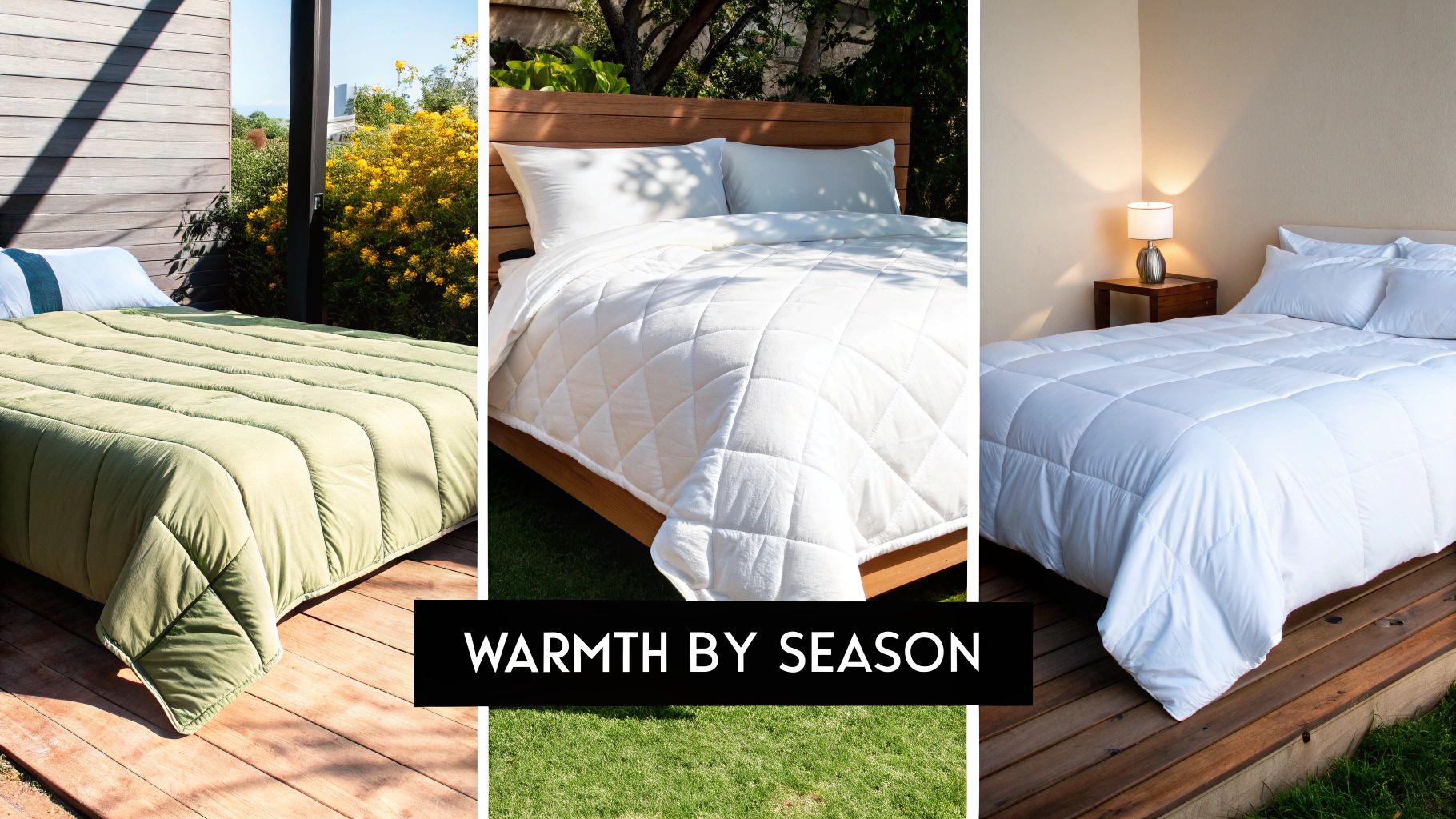
In Australia, the duvet vs quilt debate really heats up when you consider a humid Brisbane summer versus a frosty Melbourne winter. Duvets and quilts approach warmth differently.
A duvet's magic is in its loft. The fill, whether down or a synthetic alternative, traps air to create a lightweight insulating cloud. We measure this warmth using tog. A low-tog duvet (around 1-4) is perfect for summer, while a high-tog option (10+) delivers serious winter warmth without feeling heavy.
Quilts offer a more grounded warmth. Their insulating power is measured in GSM (grams per square metre)—a measure of density. A higher GSM means a thicker, warmer quilt. Because they aren't as lofty, they feel slightly heavier on the body, which many find comforting.
Actionable Guide for Your Climate
Properly adjusting your bedding for changing seasons is the secret to year-round comfort. Here’s a practical guide:
- Hot Sleepers or Tropical Climates (e.g., Darwin): A low-GSM cotton or bamboo quilt is often all you need. For a fluffy feel without the heat, choose a low-tog (1-4) duvet with a breathable cover.
- Moderate Climates (e.g., Sydney): A mid-range duvet (7-10 tog) is incredibly versatile. Alternatively, a quality quilt works perfectly; just add a blanket on cooler nights.
- Cold Climates (e.g., Hobart): A high-tog (10.5+) down or wool duvet is your best friend. For extra insulation, layer a dense wool quilt over your duvet.
Real-World Example: Sarah lives in Melbourne. She uses a high-tog wool duvet during winter. In summer, she swaps to a lightweight linen quilt. For the transitional months of autumn and spring, she layers the quilt over a low-tog duvet, giving her flexible warmth.
The Power of Layering
The smartest approach for most of us is layering. A quilt can be a brilliant partner to a duvet. Use a lightweight duvet as your main cover and keep a quilt folded at the end of the bed, ready to be pulled up if the temperature drops. This gives you the cloud-like comfort of a duvet with the practical warmth of a quilt.
Achieving Your Ideal Bedroom Style
Your choice between a duvet and a quilt is a core design decision. Each one sets a completely different tone for your bedroom.
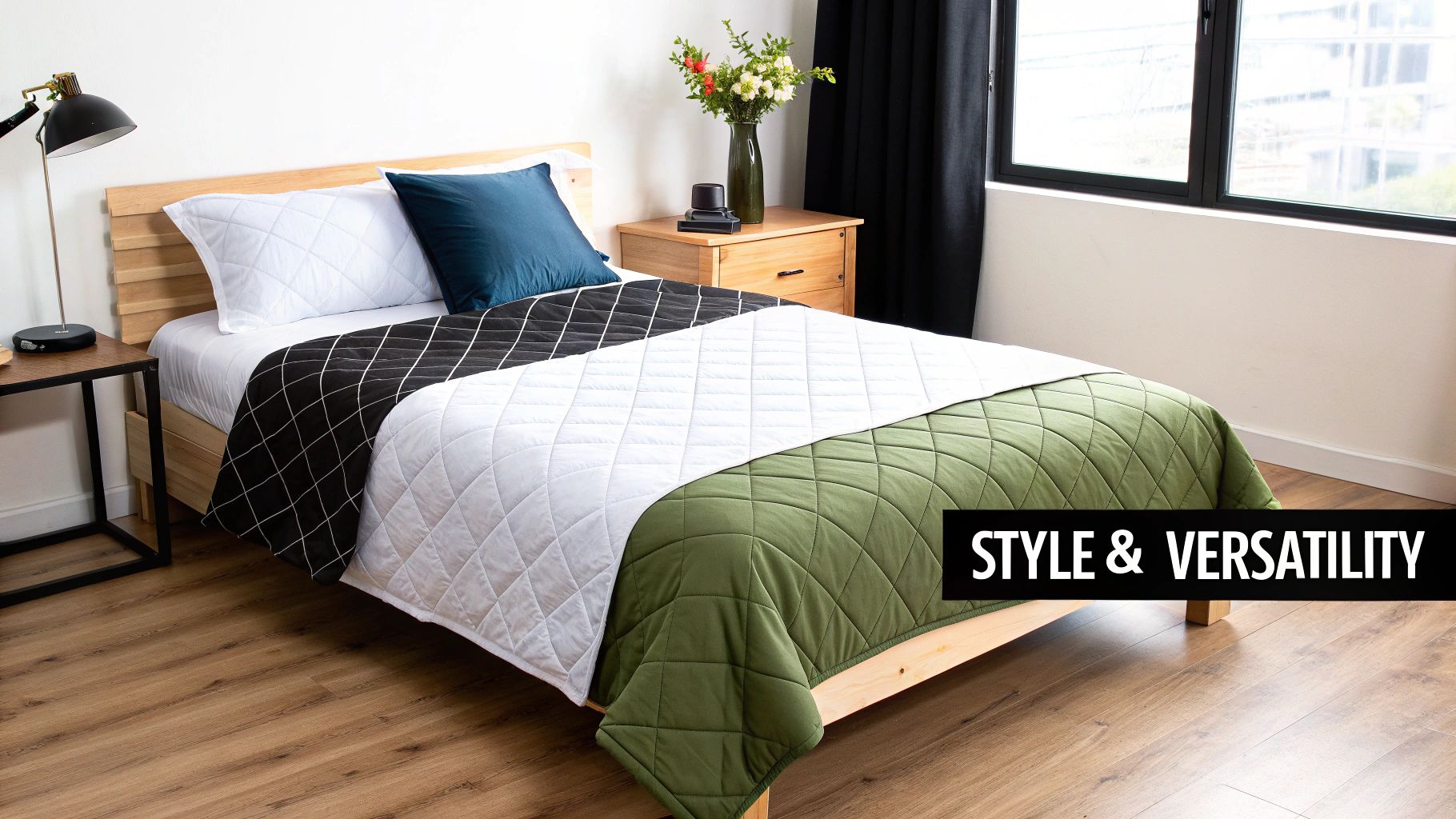
A duvet's biggest advantage is its versatility. Think of it as a blank canvas. By changing the duvet cover, you can transform your room's vibe instantly. This makes duvets perfect for anyone who loves to switch up their decor with the seasons.
Quilts bring a more structured and textural quality. Their detailed stitching and patterns introduce a feeling of heritage and craftsmanship. A quilt isn't just bedding; it’s a finished piece that defines the space.
Styling with a Duvet
Duvets are a natural fit for modern, Scandinavian, or minimalist bedrooms. The cover is the star.
- Minimalist Look: A plain white or neutral linen cover creates a serene, boutique-hotel feel.
- Vibrant Style: A cover with a bold pattern or rich colour makes an instant statement.
This chameleon-like quality makes duvets fantastic for exploring new luxury bedroom design ideas without a total overhaul.
Styling with a Quilt
Quilts are masters of the layered, inviting look. They suit traditional, farmhouse, or bohemian styles perfectly.
Real-World Example: James wanted a modern farmhouse look. He chose a crisp white duvet for a clean base. He then folded a navy blue quilt with a classic diamond stitch pattern and draped it across the foot of the bed. This added colour, texture, and a touch of traditional charm, completing the style.
Care, Longevity, and Cost
When weighing a duvet vs quilt, practicalities like cleaning, durability, and cost are crucial.
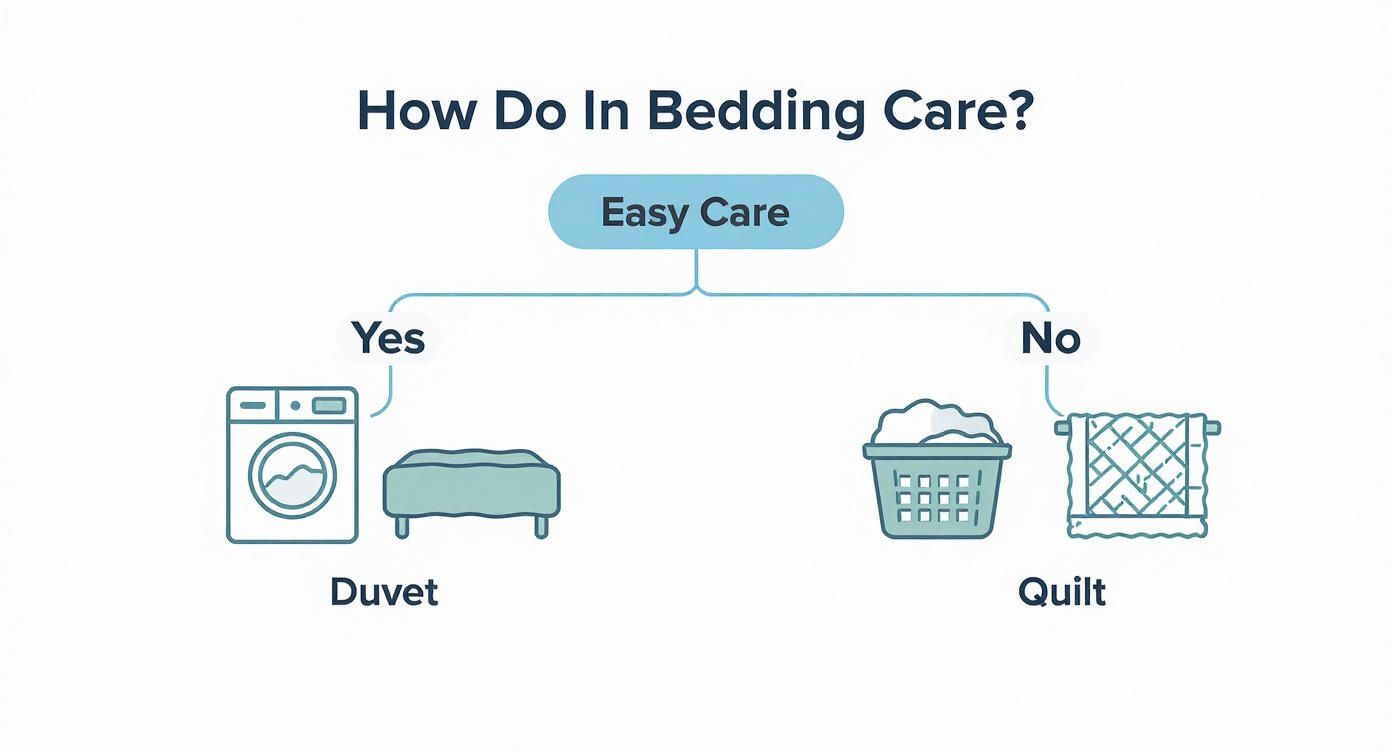
A duvet's biggest practical win is its two-part design. The duvet cover takes all the dirt and spills, making laundry a breeze. Just strip the cover off and throw it in the wash. The bulky insert itself only needs washing once or twice a year.
Washing a quilt is a bigger undertaking. Because it's a single piece, the whole thing has to go in the machine, which often means a trip to a laundromat for a commercial-sized washer.
Analysing the Long-Term Investment
On the surface, a quilt might seem cheaper as a single purchase. A duvet requires both an insert and at least one cover. However, think about the long-term cost.
A good quality duvet insert can last for years. Since the cover absorbs most of the wear, you can replace it affordably whenever it gets worn out or you want a new style.
With a quilt, a bad stain or tear might mean replacing the whole thing. The duvet's modular system often proves more cost-effective over time. For more tips, check out our guide on 6 ways to make your bedding last longer.
So, Which Bedding is Right for You?
Making the final call in the duvet vs quilt debate boils down to your personal style, sleep preferences, and how much time you want to spend on laundry.
Choose a Duvet If You...
- Love to redecorate: A new cover is a quick, easy way to give your room a makeover.
- Crave that fluffy, cloud-like feeling: Nothing beats a good duvet for plush, lofty comfort.
- Need a low-fuss cleaning routine: A washable cover is a game-changer for busy households.
Choose a Quilt If You...
- Prefer a traditional, layered look: The stitching adds timeless charm and texture.
- Want a single piece of bedding that offers gentle, moderate warmth.
- Value versatility: A quilt is brilliant on its own in summer or as an extra layer in winter.
Ultimately, the best choice is the one that fits seamlessly into your daily life. If you're still weighing your options, our guide on the comforter vs quilt might offer extra insight. And once you've picked your top layer, dive deeper into materials with articles like Linen vs. Cotton Sheets: Which Bedding Is Right For You.
Frequently Asked Questions
Still have questions? Here are quick answers to help you settle the great bedding debate.
Can I Use a Quilt and a Duvet Together?
Absolutely! It's a brilliant way to achieve a layered, magazine-worthy look. Use your duvet as the primary source of comfort, then drape a beautiful quilt over the end of the bed. This adds colour and texture and is super practical for chilly nights.
What Is a Doona in Australia?
In Australia, 'doona' and 'duvet' mean the same thing. 'Doona' was originally a brand name that became the common term for the soft insert that goes inside a duvet cover. So, if you're shopping for a doona, you're looking for a duvet insert.
Which Is Better for People with Allergies?
Both can be great, but the secret lies in the materials. For duvets, the advantage is the separate cover, which you can wash often in hot water to remove allergens. Pair that with an insert filled with hypoallergenic materials like bamboo or microfibre. For quilts, choose one made from breathable, anti-bacterial fabric like cotton or bamboo. Our range of naturally hypoallergenic bamboo bedding is a great place to start.
Find Your Perfect Match Today
The choice between a duvet and a quilt is a personal one, but now you have the clear, actionable insights to decide with confidence. Whether you crave the plush, versatile comfort of a duvet or the timeless, layered style of a quilt, the right bedding is waiting for you.
Ready to upgrade your sleep? At Sienna Living, we have a beautiful selection of premium duvets and quilts designed for the Australian climate. Explore our collection at https://www.siennaliving.com.au and find the perfect match for your home today.