

Struggling with a mattress that's too firm, too old, or just not right? Before you spend a fortune on a brand-new one, there's a simpler, more affordable solution that can revolutionise your sleep. A high-quality mattress topper memory foam is a thick layer of specialised foam that you place right on top of your existing mattress. It’s designed to completely change how your bed feels, offering personalised comfort and support without the hefty price tag.
Why a Topper is the Smartest Sleep Upgrade
The hunt for perfect sleep often feels like it ends with one expensive conclusion: buying a new mattress. But a memory foam topper can transform your bed, acting as the ultimate comfort upgrade.
Think of it as adding a custom comfort layer to a bed that's almost perfect. It's designed to cradle your body, relieve pressure on your hips and shoulders, and bring a tired mattress back to life. Instead of ditching a perfectly good bed that’s just a bit too firm, a topper lets you fine-tune your sleep surface to feel just right.
The Rise of Smarter Sleep Solutions
It's no secret that better sleep is a top priority. In fact, research from the Sleep Health Foundation shows that 1 in 3 Australians regularly struggle with their sleep. This has led to a boom in smart sleep solutions, with memory foam leading the charge for its incredible pressure-relieving qualities. It’s a clever upgrade that brings several key benefits:
- Cost-Effective Comfort: Get that luxurious, cloud-like feeling for a fraction of what a new premium mattress would cost.
- Targeted Support: It’s the perfect fix for specific problems, like a mattress that feels too hard or one that doesn't quite contour to your body shape. Explore our range of mattress toppers for back pain for targeted relief.
- Extend Your Mattress Life: A topper takes the brunt of nightly wear and tear, protecting your mattress underneath and making it last longer.
- Improve Sleep Hygiene: Most toppers are far easier to clean than an entire mattress. For a truly fresh sleep space, regular expert mattress and furniture care can also keep your whole bed allergen-free.
A Real-World Example
Take Sarah, a side sleeper from Sydney. She bought a new, firm mattress but soon found it was causing shoulder pain every morning. Instead of the hassle and expense of a return, she tried a 7cm memory foam topper.
The result? The topper provided the crucial cushioning her joints needed, letting her sleep comfortably. Her mattress still offered firm support, but the topper delivered the softness that was missing. It's a perfect example of what a mattress topper can do to fix a common sleep issue.
Decoding the Feel of Your Memory Foam Topper
Choosing a mattress topper memory foam can feel technical, but it’s actually straightforward. The "feel" of your new topper boils down to three key things: its thickness, its density, and the type of foam used. Nailing this combination is the secret to unlocking a truly great night's sleep.
Think of it like ordering coffee. Thickness is the size (a small shot or a big mug), density is the strength (light or bold), and foam type is the flavour (classic or a cool, modern blend). Each choice changes the end result.
Thickness: Your First Layer of Comfort
The thickness of a topper, measured in centimetres, directly impacts how much cushioning you feel. A thicker topper creates a more dramatic change.
-
5 cm Toppers: Perfect for adding a noticeable layer of softness to a mattress that's just a bit too firm. It gives you gentle contouring without a deep "sinking" feeling.
-
7 cm Toppers: This is the sweet spot for most people. It offers a significant comfort upgrade, providing serious pressure relief for side sleepers while still being supportive enough for back sleepers.
-
10 cm+ Toppers: This is for anyone chasing a truly transformative, cloud-like experience. It can make a rock-hard mattress feel like a five-star hotel bed.
Deciding between a new mattress or a topper is a common crossroads. This flowchart can help you think it through.
The takeaway is that a good topper is often the smartest first step to better sleep before committing to the expense of a whole new mattress.
Density: The Secret to Support and Durability
While thickness is about the amount of cushion, density is about the quality and support. It’s measured in kilograms per cubic metre (kg/m³) and tells you how much foam is packed into the topper. More density means better support and a longer lifespan.
Think of it like a cake: Low-density foam is like a light sponge cake—it’s soft and compresses easily. High-density foam is more like a dense mud cake—it’s substantial, supportive, and holds its shape.
Low-density foam (under 45 kg/m³) feels softer but can wear out faster. High-density foam (over 50 kg/m³) provides superior body contouring and pressure relief, ensuring your topper will support you for years.
While most people use toppers to soften their bed, some want the opposite. If that's you, learning how to find a hard mattress topper will point you toward high-density options.
Foam Type: Traditional vs. Modern Innovations
Not all memory foam is the same. Original foam was brilliant for its deep, cradling feel but was notorious for trapping body heat. Luckily, technology has come a long way.
Modern foams are engineered to solve these old problems. Gel-infused memory foam, for instance, has tiny gel beads that actively pull heat away from your body. Other advances, like open-cell structures, create tiny air pockets to promote airflow. These innovations mean you get all the pressure-relieving magic of memory foam without overheating.
How to Choose Your Ideal Topper
To bring it all together, here’s a quick reference table to help you match your needs to the right topper specifications.
| Sleeper Weight | Primary Goal | Recommended Thickness (cm) | Recommended Density (kg/m³) |
|---|---|---|---|
| Lighter (Under 70 kg) | Adding plush softness | 5 cm | 40-50 kg/m³ |
| Average (70-100 kg) | Balanced comfort & support | 7 cm | 50-60 kg/m³ |
| Heavier (Over 100 kg) | Maximum support & durability | 7-10 cm | 60+ kg/m³ |
By keeping these three factors in mind—thickness, density, and foam type—you can easily choose the topper that's perfectly suited to your body and sleep style.
How a Quality Topper Solves Your Biggest Sleep Problems
A modern memory foam topper is more than extra padding. It's sleep technology, designed to tackle the very things that keep us up at night. Whether you're overheating, battling allergies, or getting jostled awake by a partner, the right mattress topper memory foam can be a game-changer.
Tired of Overheating at Night?
One of the biggest knocks against old-school memory foam was its tendency to trap body heat. Thankfully, those days are long gone.
Innovations like gel-infused memory foam work by actively drawing heat away from your body. Think of it like millions of tiny cooling beads mixed right into the foam, absorbing warmth so it doesn't build up around you. This simple tech helps you maintain a comfortable temperature all night. If you’re a hot sleeper, check out the best cooling mattress toppers in Australia.
Create an Allergy-Friendly Sanctuary
For anyone with allergies, the bedroom can feel like a minefield. Dust mites and other allergens love to make themselves at home in bedding, but a good topper creates a powerful line of defence.
Many high-quality toppers are made from materials that are naturally hypoallergenic and antimicrobial. For instance, bamboo charcoal infusions naturally resist the growth of mould and bacteria. This helps create a cleaner, healthier sleep environment, so you can breathe easier.
End Partner Disturbance for Good
Sharing a bed is lovely, but sharing every toss and turn isn't. If your partner’s movements often wake you, motion isolation is the solution. This is where memory foam truly shines.
The foam’s unique structure absorbs movement right at the source.
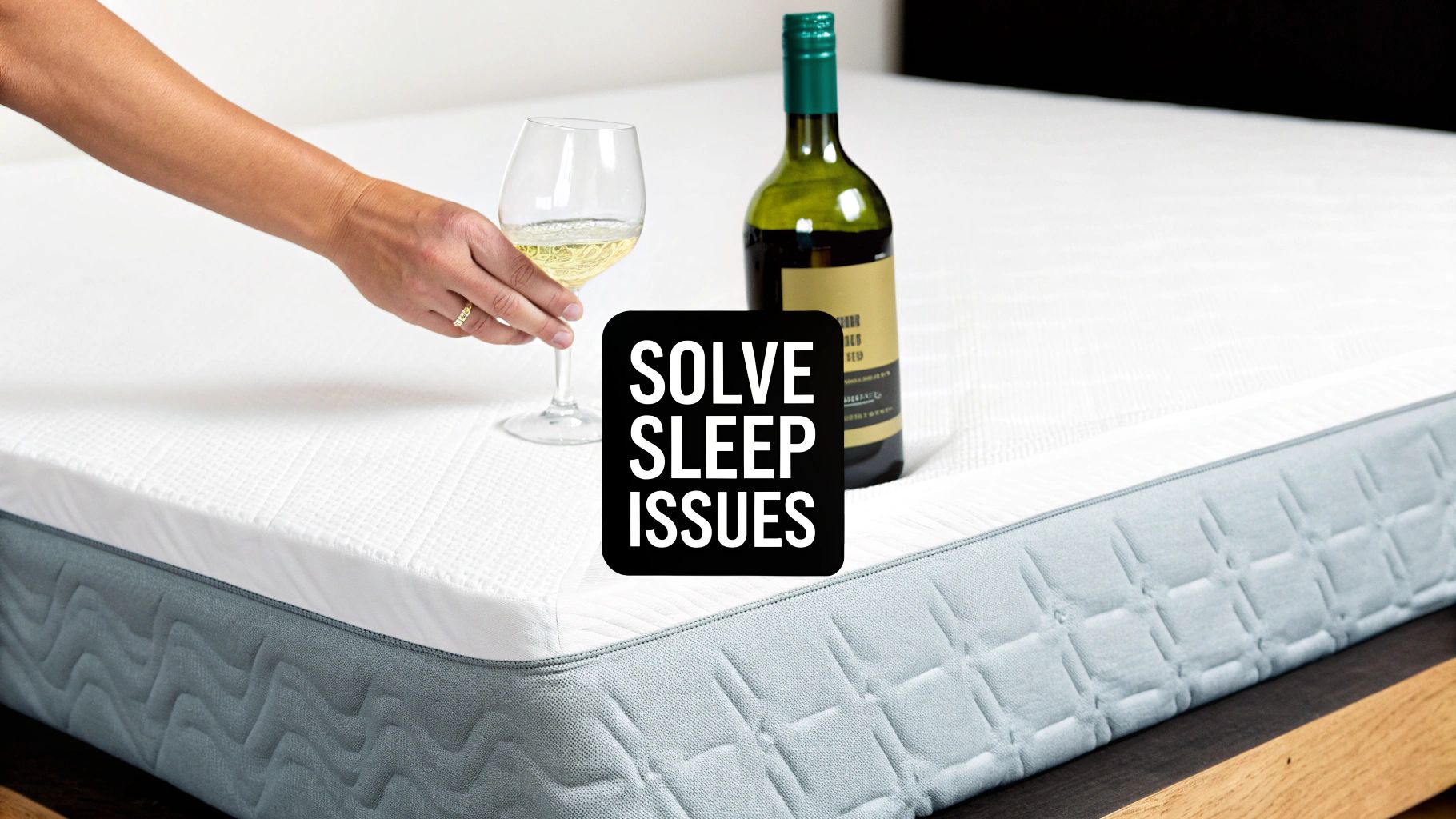
Here's a classic example: Imagine placing a glass of wine on one side of the topper. Someone could lie down on the other side, and the glass would barely wobble. That’s the magic of motion isolation—it stops movement from travelling across the bed.
This allows both of you to shift without disturbing each other, leading to a much more peaceful night.
While a topper can fix physical sleep issues, it’s always good to look at the whole picture. Learning how to overcome insomnia naturally can round out your approach to getting better rest.
Finding the Perfect Topper for Your Sleep Position
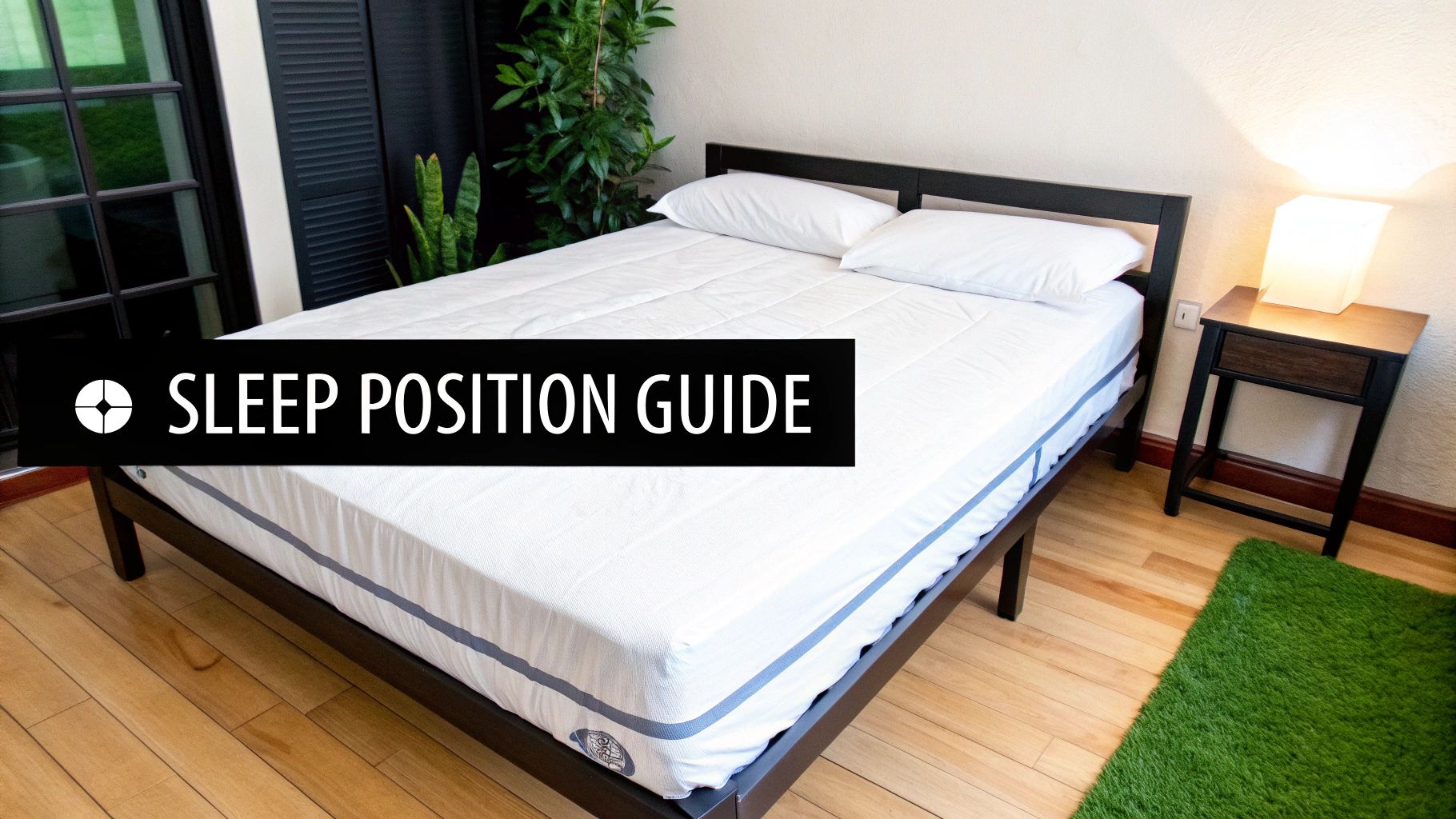
The single most important factor in choosing the right mattress topper memory foam is your sleep position. It determines where your body exerts the most pressure. A topper that’s a dream for a back sleeper could be a nightmare for someone on their side.
Your spine needs to maintain a neutral, straight line all night to prevent strain. The right topper works like a personalised support system, filling in the gaps and cushioning pressure points to hold that perfect alignment.
Best for Side Sleepers
If you're a side sleeper, your hips and shoulders bear most of your weight. A mattress that’s too firm creates uncomfortable pressure. You need a topper with enough give to let these areas sink in.
- Ideal Thickness: A 7 cm to 10 cm topper is your sweet spot.
- Ideal Density: Look for low to medium density (around 40-50 kg/m³) for a plusher feel.
A softer, thicker topper is like a custom mould for a side sleeper. It fills the space between your waist and the mattress to support your core while letting your shoulder and hip nestle in, keeping your spine straight.
Perfect for Back Sleepers
Back sleeping makes it easier to keep your spine aligned. The goal is to support the natural curve of your lower back. If a topper is too soft, your hips will sink too low.
- Ideal Thickness: A 5 cm to 7 cm topper strikes the perfect balance.
- Ideal Density: A medium to high density (50-60 kg/m³) is key to prop up your lower back.
Great for Stomach Sleepers
Sleeping on your stomach can be tough on your spine. The biggest risk is having your midsection sag, forcing your spine into an unnatural arch. Stomach sleepers need a topper that’s both thin and firm.
- Ideal Thickness: Stick with a thinner topper, around 5 cm.
- Ideal Density: Choose a high-density foam (60 kg/m³ or higher) for firm support.
For stomach sleepers, the aim is to add a touch of comfort without sacrificing the solid, flat support needed to avoid back strain.
Keeping Your Memory Foam Topper in Great Shape
Think of a quality memory foam mattress topper as an investment in your sleep. A little care goes a long way to protect it. Thankfully, it's easier than you might think.
A few simple habits are all it takes to maintain that cloud-like feel. It’s like servicing your car; you do it to keep things running smoothly.
First 48 Hours and Routine Care
Your new topper will arrive vacuum-packed. Unroll it and give it a good 24-48 hours to fully expand. This also allows any "new foam" smell to air out.
Once it's settled, keeping it in top condition is straightforward:
- Rotate, Don't Flip: Every three months, spin the topper 180 degrees (head to foot). This ensures it wears evenly and prevents dips from forming.
- Use a Protector: A waterproof mattress protector is essential. It shields the foam from spills, sweat, and allergens.
- Let it Breathe: Once a month, strip the bed and let the topper air out for a few hours to keep things fresh.
How to Handle Spills
Accidents happen. The golden rule is that your memory foam topper should never go in a washing machine. The tumbling will tear the foam to shreds.
So, what do you do? Spot-clean. The moment a spill happens, blot the area with a clean, dry cloth. For tougher stains, mix a tiny bit of mild detergent with water, dab it on gently, then blot it away with a clean, damp cloth. Always let the spot air dry completely.
This gentle method cleans the mess without wrecking the foam. For a detailed walkthrough, our guide on how to clean your mattress topper has you covered.
Your Questions About Memory Foam Toppers Answered
Considering a memory foam topper, but have a few questions? Let’s tackle the most common queries so you can feel confident in your choice.
How Long Will My Topper Last?
A good quality memory foam topper should last 3 to 5 years, but proper care can often extend its life. The biggest factor is foam density—denser foams are more robust and resist sagging. Rotating it every few months and using a protective cover are the best ways to maximise its lifespan.
Will It Make Me Sleep Hot?
This is a persistent myth that modern technology has busted. While old-school memory foam trapped heat, today’s toppers are different.
Innovations like gel infusions are a game-changer. The gel beads act like tiny cooling agents, drawing heat away from your body. Combined with an open-cell structure that promotes airflow, you get a topper that keeps you cool and comfortable all night.
Can It Fix My Sagging Mattress?
This is an important distinction. A memory foam topper is fantastic for adding comfort, but it’s not a structural fix for a broken-down mattress.
Think of it this way: the topper will follow the shape of whatever it’s sitting on. If your mattress has a significant dip, the topper will just sink into it. Its magic lies in adding a new layer of cushioning and support, not papering over deep structural problems.
Ready to feel the difference a truly great topper can make? By understanding your needs and choosing the right thickness, density, and foam type, you can dramatically improve your sleep quality without the cost of a new mattress.
Transform your bed with Sienna Living’s advanced memory foam toppers today.