

Spilled your morning coffee in bed? Don't panic. The golden rule for cleaning a mattress topper starts with one simple step: check the care label. This single action dictates your entire game plan. Knowing how to clean a mattress topper correctly not only saves it from damage but is also key to a healthy sleep environment. While some toppers can handle a gentle machine wash, most—especially memory foam—require a different approach.
For non-washable toppers, your toolkit is simple: a vacuum cleaner, a gentle spot treatment, and some bicarbonate of soda for a deep refresh. Let's walk through the exact steps to bring your topper back to life.
Why a Clean Mattress Topper Matters
Your mattress topper does more than just add comfort; it's a barrier that absorbs sweat, body oils, dead skin cells, and allergens every single night. Over time, this buildup can create an ideal environment for dust mites and bacteria. For the millions of Australians with allergies, this can be a serious issue. In fact, research shows that a typical used mattress can harbor anywhere from 100,000 to 10 million dust mites. Regular cleaning is your best defence.
A deep clean two or three times a year will keep allergens at bay, extend the life of your topper, and ensure your bed remains a hygienic sanctuary for rest.
First, Identify Your Topper's Material
Before you start, you need to know what you're working with. Is it memory foam, latex, wool, or something else? The material is the most important factor in determining the right cleaning method. If you're unsure, our guide on what is a mattress topper can help.
This flowchart breaks down that critical first decision: can it go in the wash or not?
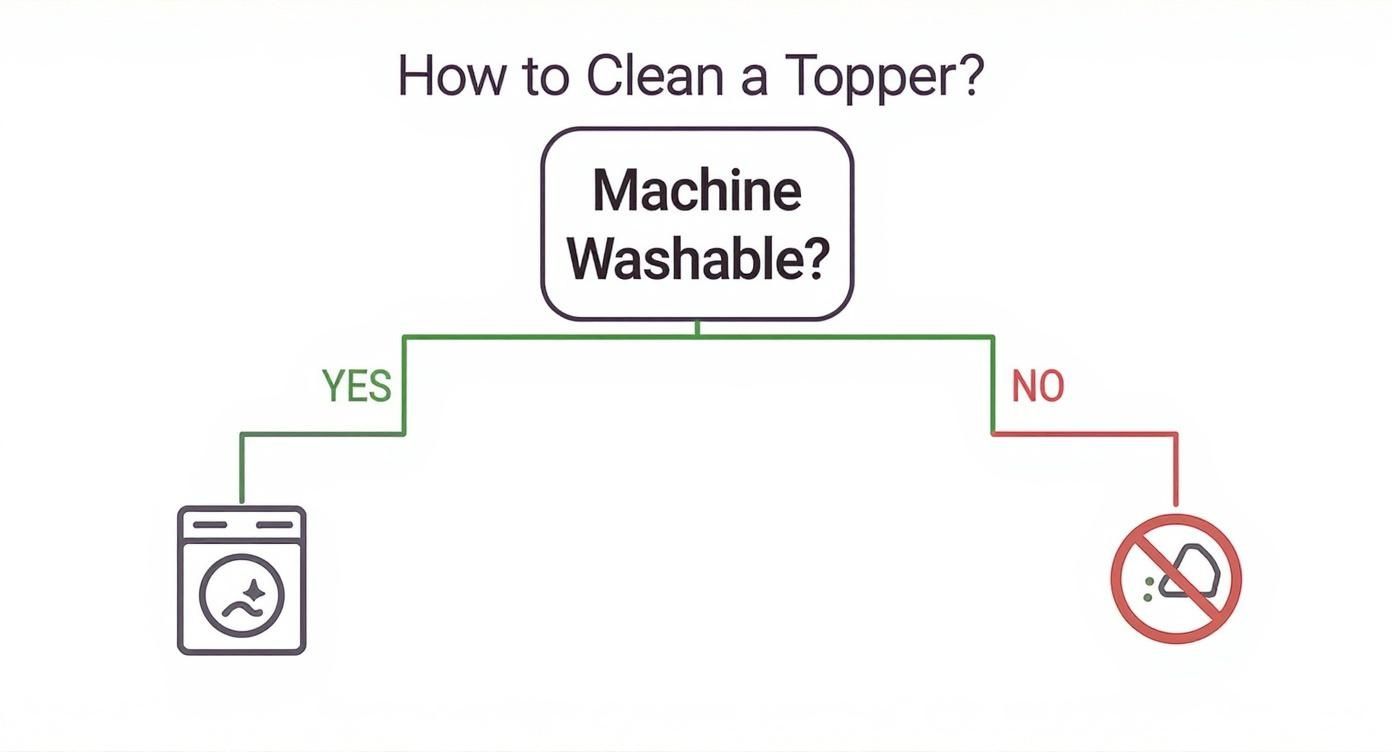
As you can see, getting this wrong can ruin your topper, especially foam models which can tear or lose their shape. Let’s break down the correct method for both washable and non-washable types.
Quick Cleaning Guide by Topper Material
Here’s a simple reference chart for the most common topper materials. Always double-check your care label, but this is a great starting point.
| Material Type | Machine Washable? | Best Cleaning Method | Drying Tip |
|---|---|---|---|
| Memory Foam | No | Vacuum, spot clean with mild detergent | Air-dry completely away from direct sun |
| Latex | No | Vacuum, spot clean with vinegar/water mix | Air-dry flat, avoid heat sources |
| Down/Feather | Yes (usually) | Gentle cycle, cool water, mild soap | Tumble dry low with dryer balls |
| Wool | No (mostly) | Vacuum, spot clean, air out in the sun | Air-dry flat in a shaded, breezy area |
| Polyester/Fibre | Yes | Gentle cycle, cool water | Tumble dry on a low setting |
Step 1: Gather Your Cleaning Toolkit
Having your supplies ready makes the process quick and effective. The good news? You probably already have everything you need.
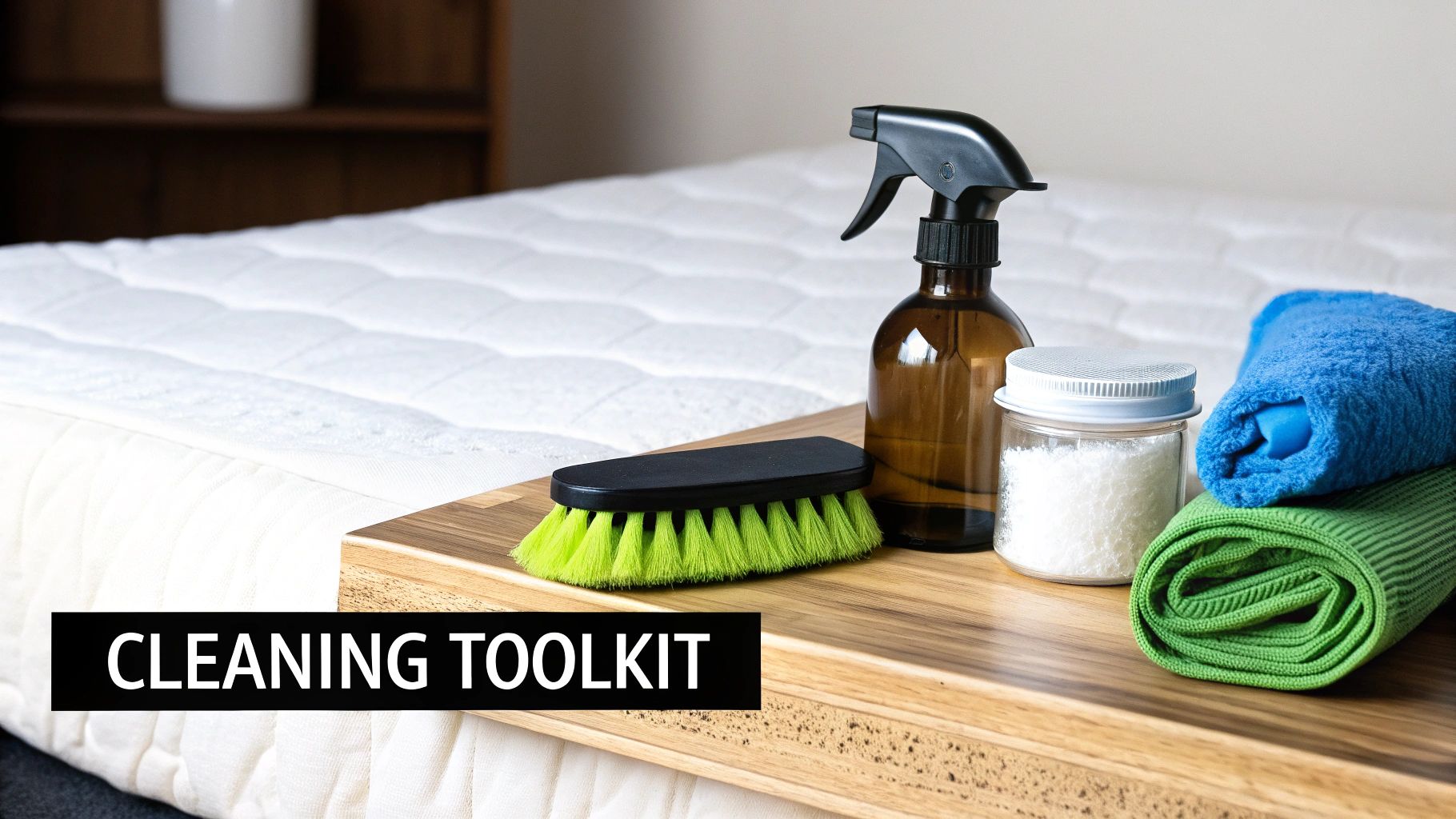
Your Go-To Cleaning Arsenal
- Vacuum with an upholstery tool: To lift away surface dust, hair, and crumbs.
- Bicarbonate of soda (Bicarb Soda): A natural deodoriser that absorbs moisture and neutralises odours.
- White vinegar & spray bottle: A 50/50 mix with water creates a gentle, effective stain remover.
- Mild, clear laundry detergent: For tackling tougher, protein-based stains.
- Clean cloths: Microfibre cloths are perfect for blotting and cleaning.
Pro Tip: Always use a clear or white laundry liquid for spot cleaning. Coloured detergents can leave their own stain behind, creating a new problem while you're trying to solve another.
Step 2: Spot-Clean Stains and Spills
Life happens, but stains don't have to be permanent. The key is to act fast. The quicker you address a spill, the less chance it has to set deep into the fibres.
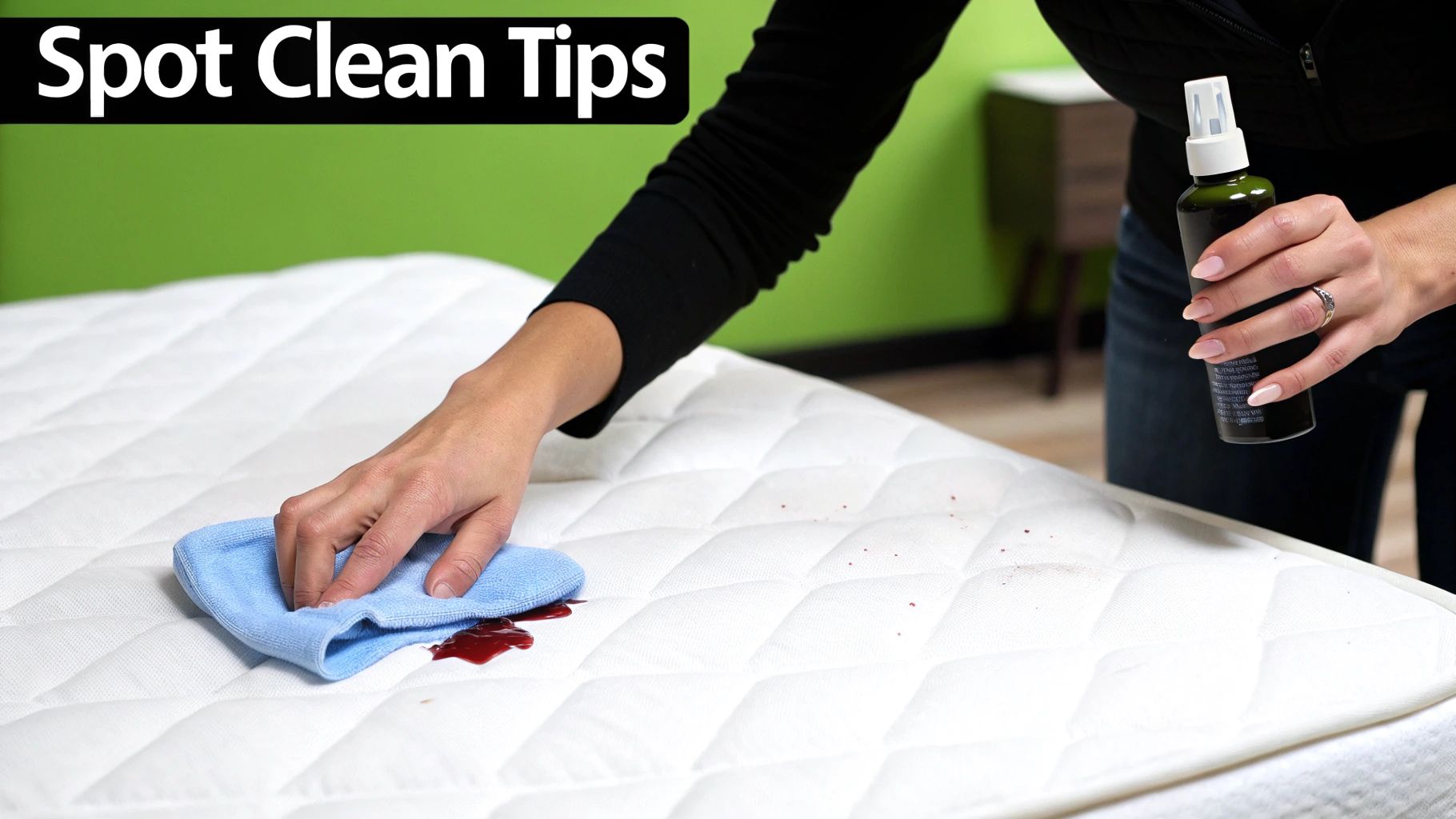
The Blotting Technique
Your first move should always be to blot, not rub. Use a clean, dry cloth to press firmly on the spill, absorbing as much liquid as possible. Rubbing only pushes the stain deeper into the topper.
Your Homemade Stain Solution
For most common spills, mix equal parts white vinegar and water in a spray bottle. Lightly mist the stained area—you want it damp, not soaked. Let it sit for 10-15 minutes.
Then, take a fresh, damp cloth and blot the area again to lift the stain and the solution. For more specific advice on common bedroom mishaps, our guide on how to clean bed stains has you covered.
Real-World Example: Imagine a dreaded red wine spill. After blotting the excess, spray the area with your vinegar solution. Start dabbing with a clean cloth from the outside of the stain and work inwards. This prevents the stain from spreading and is much more effective.
Step 3: Deep Clean and Deodorise Your Topper
For a full refresh, a seasonal deep clean is essential. This is where bicarbonate of soda becomes your secret weapon. It’s perfect for tackling built-up odours and moisture, especially in non-washable materials like memory foam.
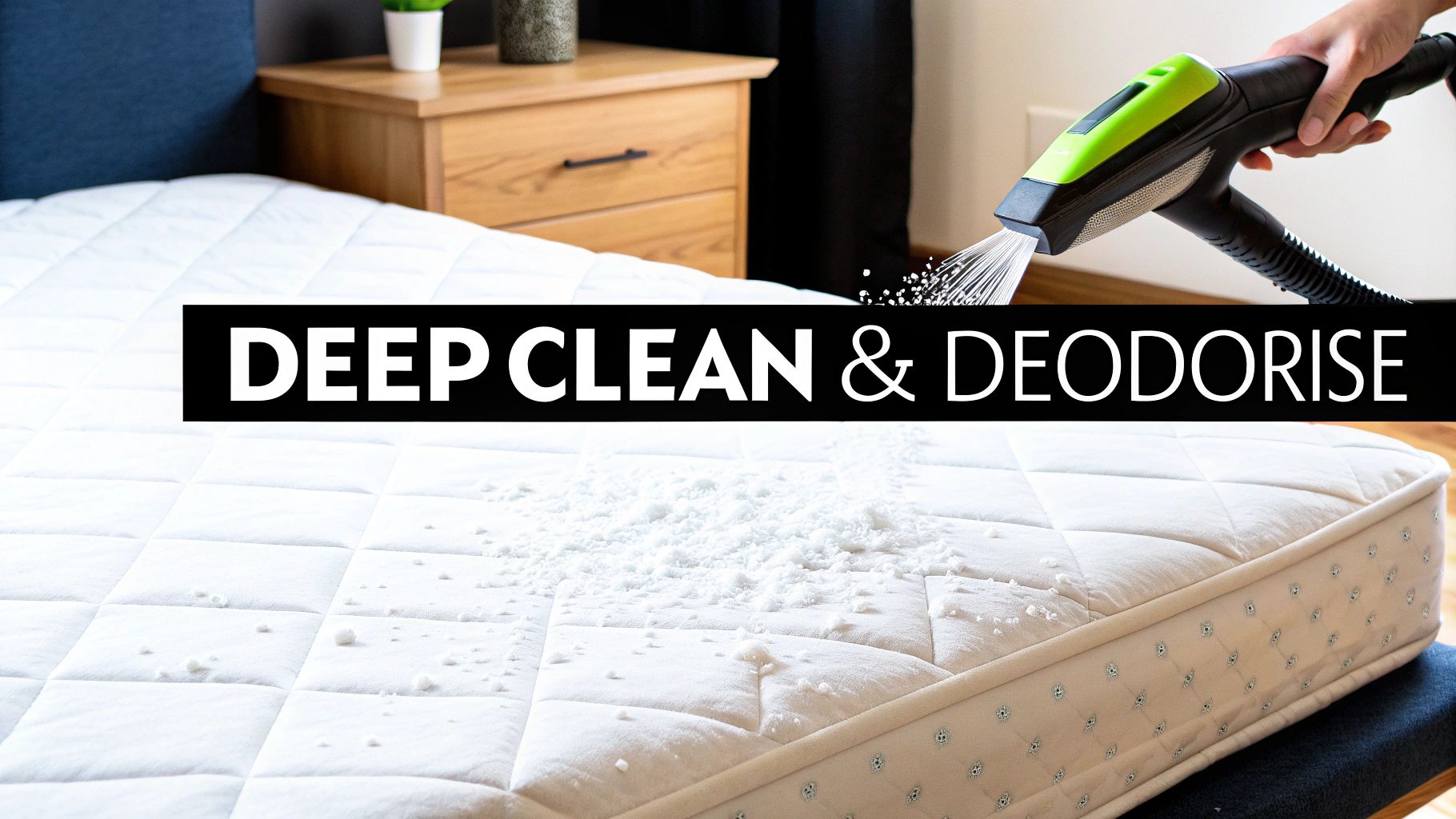
The Bicarb Soda Method
- Vacuum First: Start by thoroughly vacuuming the entire surface of the topper with the upholstery attachment. This removes loose debris and prepares it for deodorising.
- Sprinkle Generously: Apply an even, generous layer of bicarb soda over the whole topper. Don't be shy—a full box is fine for a queen-size topper.
- Let It Sit: Leave the bicarb soda to work its magic for at least eight hours, or overnight for the best results. It will absorb moisture and neutralise odour-causing acids.
- Vacuum Again: Carefully vacuum up all the powder. Go over the surface several times from different directions to ensure every grain is removed.
This process is incredibly effective for musty smells or lingering odours. If you're dealing with specific issues like pet accidents, our guide on how to get urine smell out of mattress offers more targeted advice.
Step 4: Dry Your Topper Correctly to Prevent Mould
Drying is the most critical final step. A damp topper is a breeding ground for mould and mildew, which can ruin it and impact your health.
The golden rule: never put a memory foam or latex topper in a machine dryer. The intense heat will destroy the foam's structure, causing it to become brittle and crumble.
Best Practices for Air-Drying
- Lay it Flat: Place the topper on a clean, flat surface, like the floor or across several chairs to allow air to circulate underneath.
- Create Airflow: Open windows or use a fan to speed up the process.
- Avoid Direct Sun: If drying outside, keep it in a shaded, breezy spot. Direct sunlight can degrade and yellow the materials.
- Be Patient: A thick foam topper can take up to 24 hours to dry completely. Before putting it back on the bed, ensure it’s 100% dry to the touch on both sides.
For an extra layer of protection against future spills, consider a bamboo waterproof mattress protector. It makes cleaning so much easier in the long run.
How to Keep Your Topper Fresher for Longer
Prevention is always easier than a cure. A few simple habits can drastically reduce how often you need to do a full deep clean.
The single most effective thing you can do is use a high-quality mattress protector. It acts as a shield against sweat, spills, and allergens, taking the hit so your topper doesn't have to. You can learn more about the hidden benefits of a mattress protector here.
Simple Habits for Lasting Freshness
- Air it out daily: When you wake up, fold your duvet back for 30 minutes to let moisture evaporate.
- Rotate regularly: Spin your topper 180 degrees every few months to ensure even wear.
- Vacuum monthly: A quick vacuum when you change your sheets removes dust and skin cells before they build up.
These small, proactive steps are some of the best ways to make your bedding last longer and maintain a healthy sleep space.
Your Mattress Topper Cleaning Questions Answered
Let's clear up a few common questions.
Can I put a memory foam topper in the washing machine?
No, absolutely not. The aggressive machine action can tear the foam, and it will absorb so much water that it becomes nearly impossible to dry properly, leading to mould growth. Stick to vacuuming and spot cleaning.
How often should I clean my mattress topper?
Aim for a deep clean every three to six months. Vacuum it monthly when you change your sheets, and treat any spills immediately. If you have allergies or pets, you may want to clean it more frequently.
What's the best way to get rid of a musty smell?
Bicarbonate of soda is your best friend. A generous layer left overnight will absorb moisture and neutralise odours. Simply vacuum it all up the next day for a fresh, clean result.
A clean topper is the foundation of a great night's sleep. By following these steps, you can keep yours fresh, hygienic, and comfortable for years. If your topper has seen better days and a deep clean isn't enough, it might be time for an upgrade.
Ready for a truly restorative sleep? Explore the premium range of mattress toppers at https://www.siennaliving.com.au today.