

Spilled your morning coffee in bed? Don't panic. Knowing how to wash a mattress cover is your secret weapon for a truly clean sleep space, and it's easier than you think. The golden rule is simple: check the care tag first, then use a gentle cycle with cold water and a mild detergent. Air-drying is always the safest bet to protect any waterproof layers.
This guide will walk you through the exact steps to get your cover clean without causing damage, ensuring you protect your mattress investment and enjoy a healthier night's sleep.
Why a Clean Mattress Cover is Non-Negotiable
Think of your mattress cover as your bed's personal bodyguard. It’s the frontline defence against sweat, dust mites, allergens, and accidental spills. Without it, all that grime sinks directly into your mattress, creating an environment that can disrupt your sleep and even affect your health.
In fact, a study by Amerisleep found that after just one week, unwashed pillowcases and sheets contained between three and five million colony-forming units of bacteria per square inch. Your mattress cover catches this buildup before it reaches the mattress. Regular washing is crucial for a hygienic bed.
Keeping your cover clean also protects your mattress investment. A quality cover prevents moisture and body oils from degrading the mattress foam and fabrics, stopping odours and material breakdown before they start.
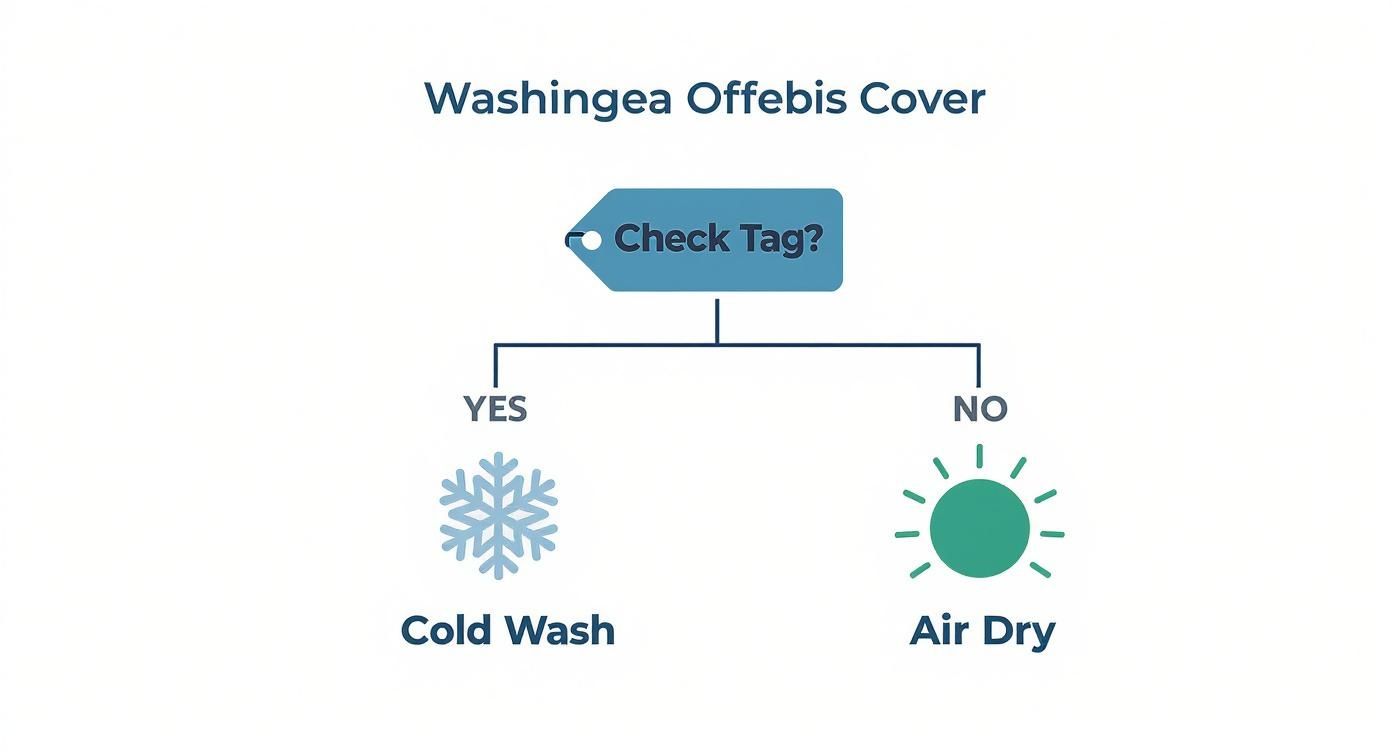
Ultimately, the care tag is your best guide. It provides the manufacturer’s specific instructions to get your cover perfectly clean without causing damage. For more expert advice on caring for specific fabrics, the Sienna Living care guide is an excellent resource.
Pro Tip: When in doubt, choose the gentlest cleaning method. A cold wash and air-drying are the safest options, as they protect delicate fibres and waterproof linings from heat damage that can shorten your cover's lifespan.
A Quick Guide to Washing by Material
Different materials need different care. Here’s a simple table to help you wash your mattress cover correctly based on its fabric.
| Material Type | Washing Temperature | Cycle Setting | Detergent Type | Drying Method |
|---|---|---|---|---|
| Cotton | Cold to Warm (up to 40°C) | Gentle or Normal | Standard Mild Detergent | Tumble Dry Low or Air Dry |
| Polyester | Cold to Warm (up to 40°C) | Gentle or Permanent Press | Standard Mild Detergent | Tumble Dry Low or Air Dry |
| Bamboo | Cold (up to 30°C) | Gentle or Delicate | Mild, pH-Neutral Detergent | Air Dry (preferred) or Tumble Dry Low |
| Waterproof (TPU) | Cold (up to 30°C) | Gentle or Delicate | Mild, Bleach-Free Detergent | Air Dry or Tumble Dry on No-Heat Setting |
| Wool | Cold (up to 30°C) | Wool or Hand Wash Cycle | Wool-Specific Detergent | Air Dry Flat, Away From Direct Sun |
Following these guidelines will help keep your cover in great condition for years. This professional approach is similar to practices in hospitality, where bedding hygiene is paramount. You can find related commercial cleaning insights that highlight the importance of proper fabric care.
Step 1: Pre-Wash Prep for a Perfect Clean
What you do before the wash cycle starts makes all the difference. Tossing a cover straight into the machine can set stains, making them almost impossible to remove later. A few minutes of prep work is key.
First, locate the care label. It’s your instruction manual, detailing the exact water temperature and cycle type the fabric can handle. Following it is the best way to avoid accidental shrinking or damage.
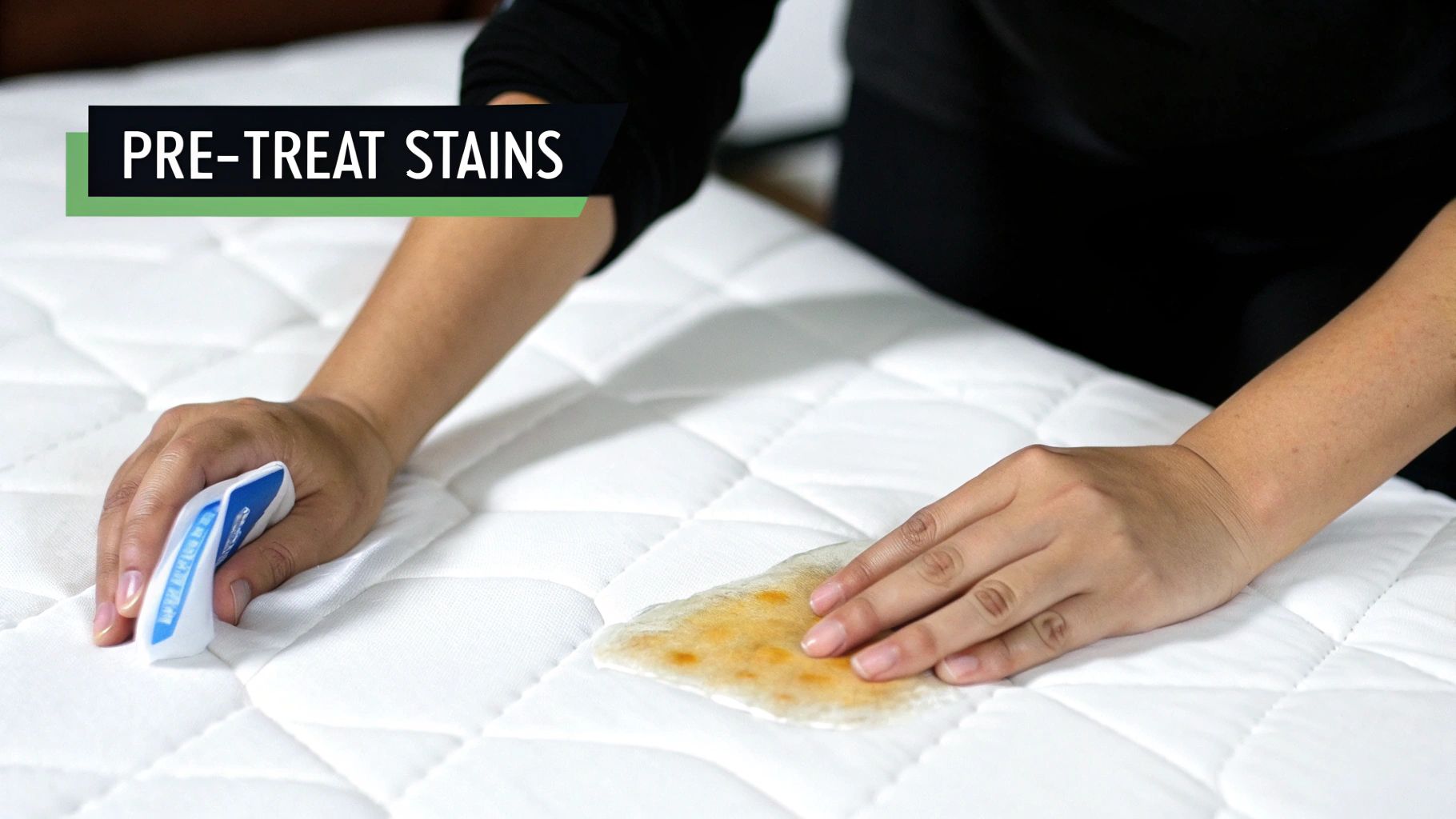
Next, inspect the cover for any spots or spills. Think of that tea you spilled last week—treating it now gives you the best chance of removing it completely.
How to Tackle Stains and Odours
For common stains like sweat or drinks, a simple paste of baking soda and water works wonders. Apply it to the spot, let it sit for about 30 minutes, and gently dab it away before washing.
For tougher organic stains like blood, an enzyme cleaner is your best tool. These cleaners are designed to break down the proteins in the stain, lifting them far more effectively than regular detergent. For a detailed guide, check out our post on https://www.siennaliving.com.au/blogs/journal/how-to-clean-bed-stains.
Finally, take the cover outside for a good shake. This removes loose dust, hair, and crumbs, preventing them from clogging your washing machine's filter and allowing the detergent to work more effectively on the fabric itself.
Step 2: The Right Machine Settings
Now for the main event. While a hot, heavy-duty cycle might seem like the best way to deep clean, it’s often the worst thing you can do for your mattress cover.
Always opt for a gentle or delicate cycle with cold water. This is especially important for waterproof covers, as hot water can destroy the protective lining and damage delicate fibres.
Choose Your Detergent Wisely
When selecting a detergent, think mild. A gentle, bleach-free liquid detergent is ideal. Harsh chemicals can degrade the fabric over time, shortening its life. For sensitive skin, a hypoallergenic or plant-based detergent is an excellent choice. This same gentle approach applies to other luxury bedding, which you can learn more about in our guide on how to wash bamboo sheets.
One crucial tip: never use fabric softener. It leaves a waxy residue that clogs the fabric's pores, reducing breathability. For waterproof covers, this coating can ruin the protective barrier completely.
Before you press start, ensure the cover is spread out in the drum to prevent an unbalanced load and ensure an even clean.
Step 3: Drying Without Damage
The drying stage is where many well-intentioned cleaning efforts go wrong. You can follow every washing instruction perfectly, only to ruin your cover with high heat.
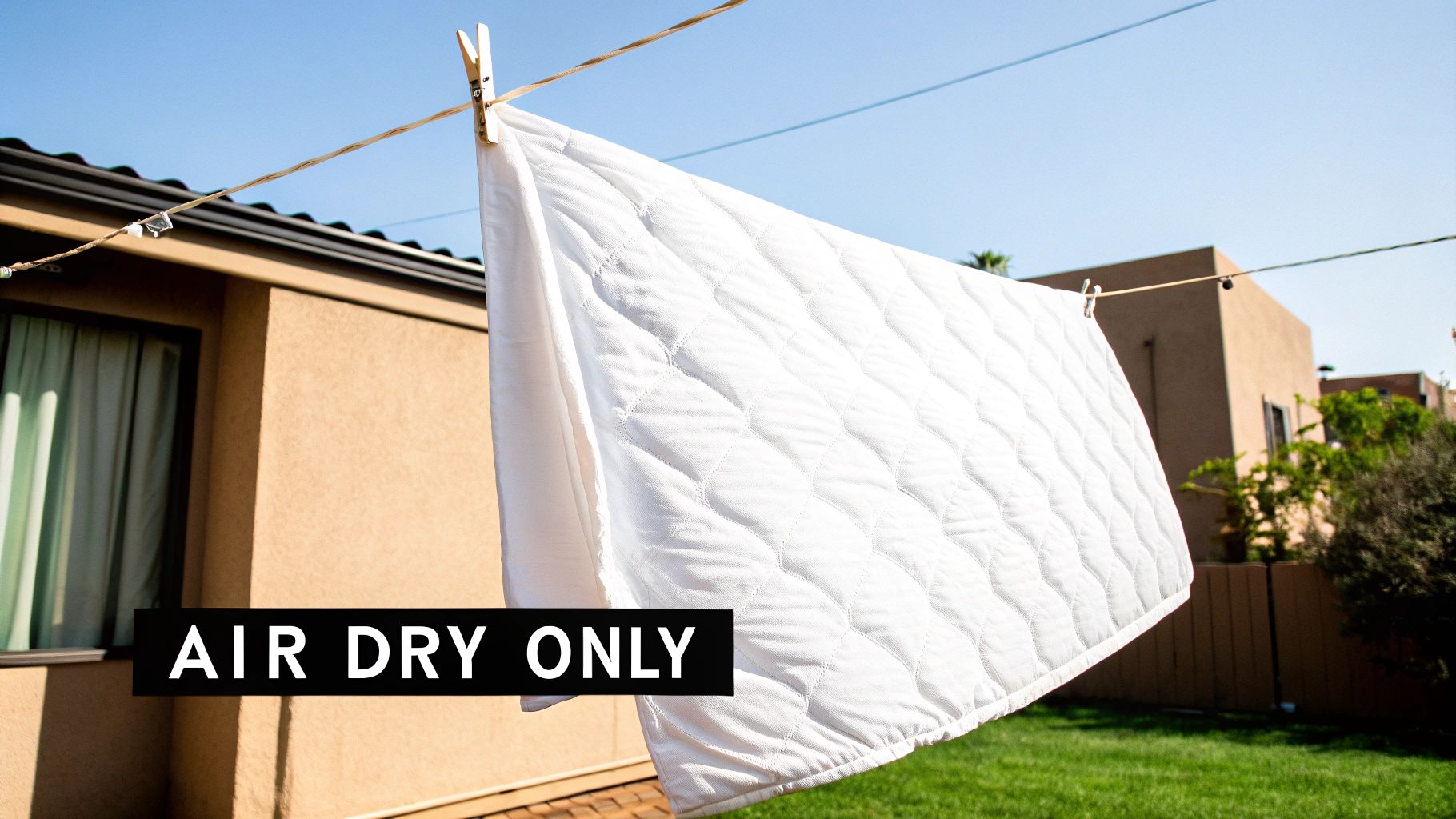
Think of the waterproof membrane on your cover like a thin layer of plastic. Intense heat from a dryer can cause it to crack, bubble, or shrink, rendering it useless.
The safest method is always air-drying on a clothesline. It’s gentle, free, and the sunlight acts as a natural disinfectant and deodoriser.
If You Must Use a Dryer
Sometimes, you don't have the time or space to air-dry. If you need to use a tumble dryer, you must use the lowest heat setting available. An 'air fluff' or 'no heat' setting is even better.
To prevent the cover from turning into a tangled, damp ball, try these tricks:
- Add Wool Dryer Balls: These bounce around inside the drum, separating the fabric and improving air circulation for a faster, more even dry.
- Include Dry Towels: Tossing in a couple of clean, dry towels has a similar effect, absorbing moisture and preventing bunching.
This careful approach is essential for other natural fibres too. If you've ever learned how to wash linen, you'll know that gentle drying is the key to longevity.
How to Keep Your Cover Fresh Between Washes
Washing your cover every couple of months is great, but simple maintenance in between washes is what truly keeps your bed fresh.
A quick and easy habit is to vacuum your cover with an upholstery attachment every time you change your sheets. This two-minute task removes dust, dead skin cells, and allergens that accumulate on the surface.
Small Habits, Big Difference
Whenever you strip your bed, let it breathe. Pull the cover back and leave the mattress exposed for an hour or so. This allows trapped moisture to evaporate, preventing musty smells from developing. For waterproof covers, like a breathable bamboo waterproof mattress protector, this is key to maintaining performance.
For minor spills, act fast:
- Blot Immediately: Use a clean, dry cloth to soak up as much liquid as possible.
- Spot-Clean: Dab the area with a damp cloth and a tiny drop of mild detergent.
- Rinse: Wipe with a fresh, water-dampened cloth to remove any soap residue.
- Air Dry: Ensure the spot is completely dry before putting sheets back on.
Tackling spills right away prevents stains from setting and means you can go longer between full washes. This proactive approach aligns with advice from sleep hygiene experts and fits well with Australian habits—a 2022 survey showed 75% of us wash sheets at least fortnightly. You can discover more about these bedding habits and see how small routines lead to a cleaner sleep.
Your Mattress Cover Questions, Answered
Here are the answers to some of the most common questions about washing a mattress cover.
How often should I wash my mattress cover?
For most people, washing your cover every two months is a good benchmark. However, consider washing it monthly if you have allergies, share your bed with pets, or live in a warm, humid climate. For a rarely used guest bed, washing it after each use or twice a year is sufficient.
Can I use hot water to wash a waterproof cover?
No. Hot water is the enemy of waterproof covers. The heat can break down the protective membrane, causing it to melt or crack. Always stick with cold or lukewarm water on a gentle cycle to preserve its protective qualities.
What causes yellow stains and how can I remove them?
Those yellow patches are typically a buildup of sweat and body oils over time. To treat them, create a paste from baking soda and water. Spread it over the stain, let it sit for at least an hour, and then wash as usual. The baking soda helps lift the discolouration from the fabric.
For stubborn stains, spray the area with a 50/50 solution of white vinegar and water before applying the baking soda paste for an extra cleaning boost.
A clean bed is the cornerstone of restorative sleep. At Sienna Living, we design premium bedding that blends luxurious comfort with easy care, helping you create a healthier sleep sanctuary.
Ready to upgrade your sleep hygiene? Explore our collection of high-quality mattress protectors and more at Sienna Living today.