

That sinking feeling when a cup of coffee topples onto your pristine mattress is universal. But before panic sets in, know this: your first few moments are the most critical. Figuring out how to clean mattress stains effectively starts with immediate action. Your mission, should you choose to accept it, is to blot the spill with a clean, dry cloth right away. This simple first step can stop a minor accident from becoming a permanent mark.
Your First Response to Mattress Stains
What you do in the first few minutes after a spill makes all the difference. The golden rule is to get to the liquid before it soaks deep into the mattress fibres. Don't panic, just act.
Whatever you do, resist the urge to scrub. Scrubbing grinds the stain further into the mattress, making it a nightmare to remove. Your goal is to lift the stain out, not push it in.
The Crucial Blotting Technique
In those first critical moments, your best friend is a clean, dry cloth or a few paper towels. Press down firmly on the stain to soak up as much liquid as possible.
A pro tip is to start from the outside edge of the spill and work your way toward the centre—this stops the stain from spreading. Keep using fresh, dry sections of your cloth until you can’t pull any more moisture out. This one technique is the most effective first aid you can give your mattress.
If the spill has also affected your mattress cover, you might find some extra guidance in our article on how to wash a mattress cover.
Quick Action Guide for Common Stains
Not all spills are the same. What works for a coffee spill might make a bloodstain worse. For example, using hot water on a bloodstain will essentially "cook" the protein, setting it into the fabric for good. Always use cold water for protein-based stains like blood or urine.
Here's a quick cheat sheet for what to do the moment disaster strikes.
| Stain Type | Immediate Action | What to Avoid |
|---|---|---|
| Wine or Coffee | Blot with a dry cloth. Gently dab with cool water. | Hot water (can set the stain), scrubbing vigorously. |
| Blood or Urine | Blot thoroughly. Dab only with cold water. | Hot or warm water (cooks the protein), harsh cleaners. |
| Oil or Grease | Sprinkle with bicarb soda or cornflour to absorb the oil. | Water (will repel the oil and spread the stain). |
Following these first steps dramatically improves your chances of getting the mark out completely, protecting your investment for a clean, healthy sleep.
How to Clean Mattress Stains: Step-by-Step
Alright, you’ve contained the spill. Now it's time to deal with what’s left. The trick to successfully cleaning a mattress isn't just speed; it's about matching your cleaning method to the type of stain.
Before you start, always find a small, hidden spot on the mattress to test your cleaning solution. The last thing you want is to create a bigger problem by causing discolouration.
This flowchart lays out the first crucial steps for tackling any fresh spill.
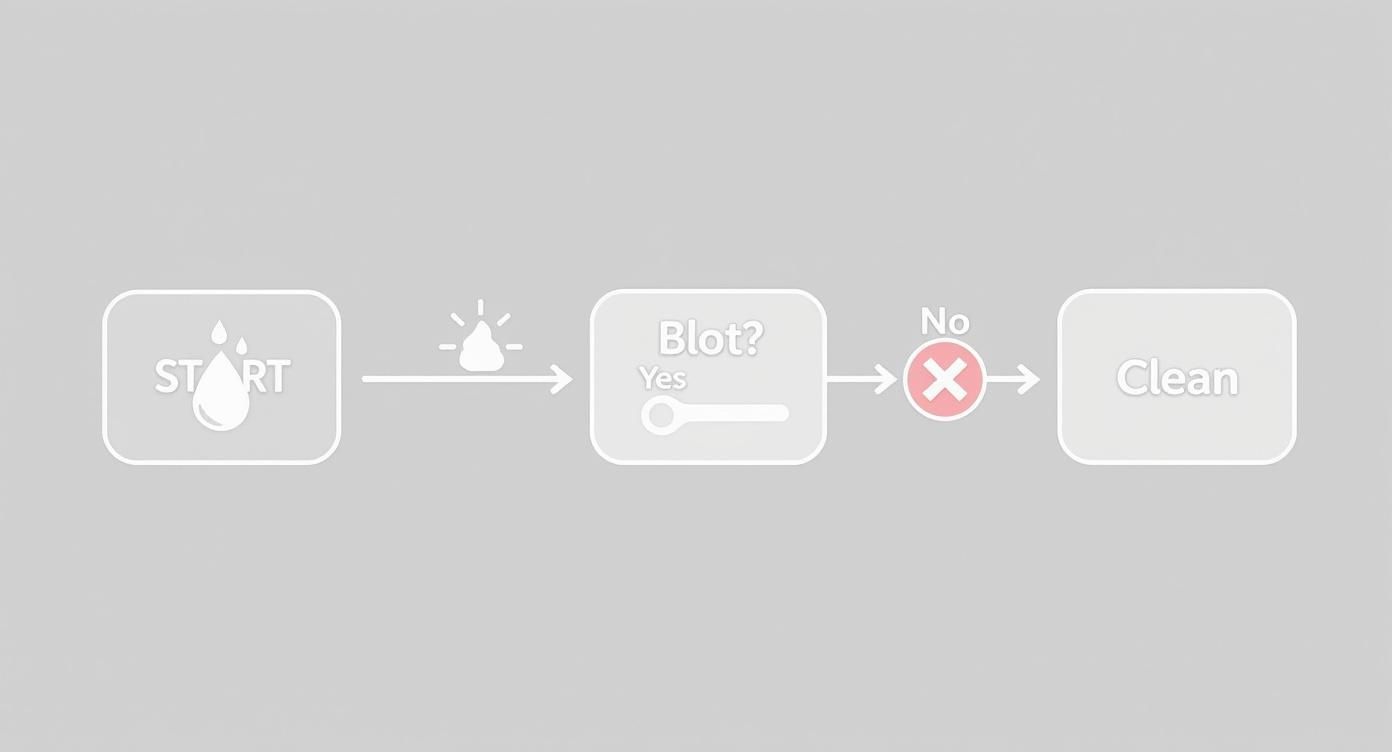
As you can see, blotting is your non-negotiable first move. It’s what stops a small accident from soaking deep into the mattress layers.
Tackling Sweat and General Grime
Over time, it's normal for mattresses to develop yellowish marks from sweat and body oils. The good news is, a simple bicarb soda paste is brilliant for lifting them.
- Make the paste: Mix a few tablespoons of bicarb soda with a tiny bit of cool water. You’re aiming for a thick, spreadable consistency, like toothpaste.
- Apply and wait: Gently spread this paste over the stained area and let it sit for at least 30 minutes, but an hour is even better. As it dries, the bicarb soda draws the oils and any odours out of the fabric.
- Vacuum it up: Once the paste is completely dry, scrape off any large bits and then give the area a thorough vacuum with your upholstery attachment.
This method is gentle but surprisingly tough on grime, leaving your bed looking and feeling much fresher.
Dealing with Tough Organic Stains
When you're faced with protein-based stains like blood or urine, you need a different game plan. These stains are made of organic compounds that require a stronger solution to break them down.
Remember, never use hot water on a bloodstain. It will set the stain permanently. Cool water is always your starting point. Bloodstains are notoriously stubborn, which is why we’ve put together a specific guide on how to get blood out of a mattress.
For these trickier stains, a mix of hydrogen peroxide and a drop of dish soap can work wonders.
- Mix the solution: In a small bowl, combine two parts 3% hydrogen peroxide with one part liquid dish soap.
- Apply carefully: Using a clean cloth, gently dab the solution onto the stain. You should see it start to foam—that’s the peroxide breaking down the stain.
- Blot it away: Let it sit for about five minutes. Then, take a fresh, damp cloth and blot the area to lift away the cleaning solution and the stain residue.
When to Use an Enzymatic Cleaner
Sometimes, DIY efforts aren’t enough, especially for older urine stains or pet accidents. This is when an enzymatic cleaner becomes your best friend. These cleaners use enzymes to digest the proteins in organic matter, completely removing the stain and the smell.
The magic of enzymatic cleaners is that they don't just cover up odours—they destroy the molecules causing them. This is crucial if you have pets, as it stops them from being drawn back to the same spot. Just follow the product instructions, then blot the area dry.
When to Call a Professional Mattress Cleaner
You’ve tried the bicarb soda paste and blotted relentlessly, but that stubborn stain is still there. While DIY methods are great for many spills, knowing when to call in a professional is often the smartest move. It can save you frustration and prevent accidental damage.
If you're tackling a very old, deeply set-in stain, your chances of success are low. The same goes for a major spill that has soaked a large area. For these stubborn mattress stains, it's worth considering professional stain removal services.
What Do the Pros Do Differently?
Professionals arrive with industrial-grade equipment and a deep understanding of different fabrics and stains. The two most common techniques are hot water extraction (steam cleaning) and dry cleaning.
- Hot Water Extraction: This is the deep clean. High-pressure hot water gets right into the mattress fibres, dissolving dirt. A powerful vacuum then sucks the dirty water out, taking the grime with it.
- Dry Cleaning: For delicate materials like memory foam, a special low-moisture foam or dry chemical compound is used. This solution absorbs dirt, which is then vacuumed away.
It's More Than Just a Stain Remover
A professional clean provides a level of sanitisation home methods can't match. It’s not just about removing a visible mark; it's about eliminating bacteria, dust mites, and allergens deep within your mattress. For anyone with allergies, this is a huge health benefit.
You could even build it into your annual spring clean. To get organised, grab our ultimate bedroom spring cleaning checklist for more great tips.
What to Expect for Costs in Australia
Calling in a professional is probably more affordable than you think. In Australia, you can expect to pay between AUD 80 and AUD 150 for a professional mattress clean. The final price depends on your mattress size and the cleaning method. You can get more insights on mattress cleaning costs on micksmattresscleaningadelaide.com.au. Think of it as an investment that removes tough stains and helps extend the life of your mattress.
How to Properly Dry and Deodorise Your Mattress
You’ve successfully removed the stain, which is a great feeling. But don't put the sheets back on just yet. The next step—drying—is the most crucial part of the process. A mattress that’s even slightly damp is a welcome mat for mould and mildew, a problem that can get out of hand quickly.
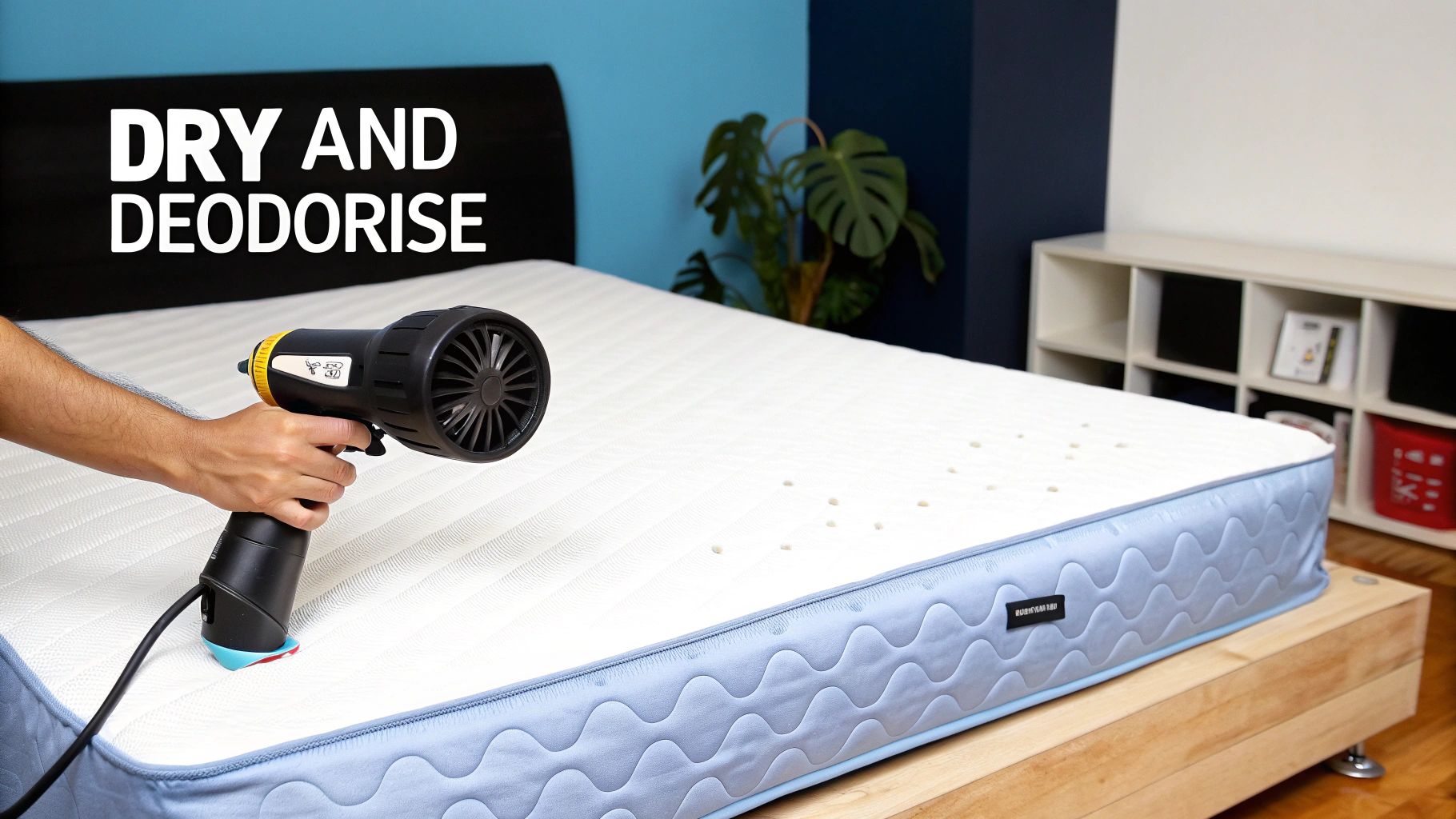
The secret to a dry mattress is airflow. Open the windows, turn on a fan, and point it directly at the damp patch. This makes a world of difference. For smaller spots, a hairdryer on its cool setting can speed things up. Just keep it moving to avoid damaging the mattress fibres.
This is why many professional mattress cleaning methods use very little moisture, avoiding the risk of oversaturation.
Getting Rid of Lingering Smells
Sometimes, even when the stain is gone, a faint smell remains. Before you reach for a floral spray, grab the bicarb soda. It’s a natural deodoriser that absorbs smells instead of just masking them.
Liberally sprinkle bicarb soda over the entire dry mattress surface. Don’t be stingy. The longer you can leave it, the better. A few hours is good, but letting it sit overnight is ideal.
Once the bicarb soda has done its job, vacuum the entire mattress with the upholstery attachment, paying close attention to seams and tufts. This sucks up the bicarb soda, taking all those absorbed odours with it.
For really tough smells, like a pet accident, you might need more firepower. We have a specific guide on how to get the urine smell out of a mattress for those stubborn situations.
Keeping Your Mattress Clean for Longer
While knowing how to tackle stains is a great skill, preventing them is the real win. A little proactive care goes a long way in protecting your investment.
Hands down, the single most effective tool is a high-quality waterproof mattress protector. It's truly a non-negotiable for mattress longevity.
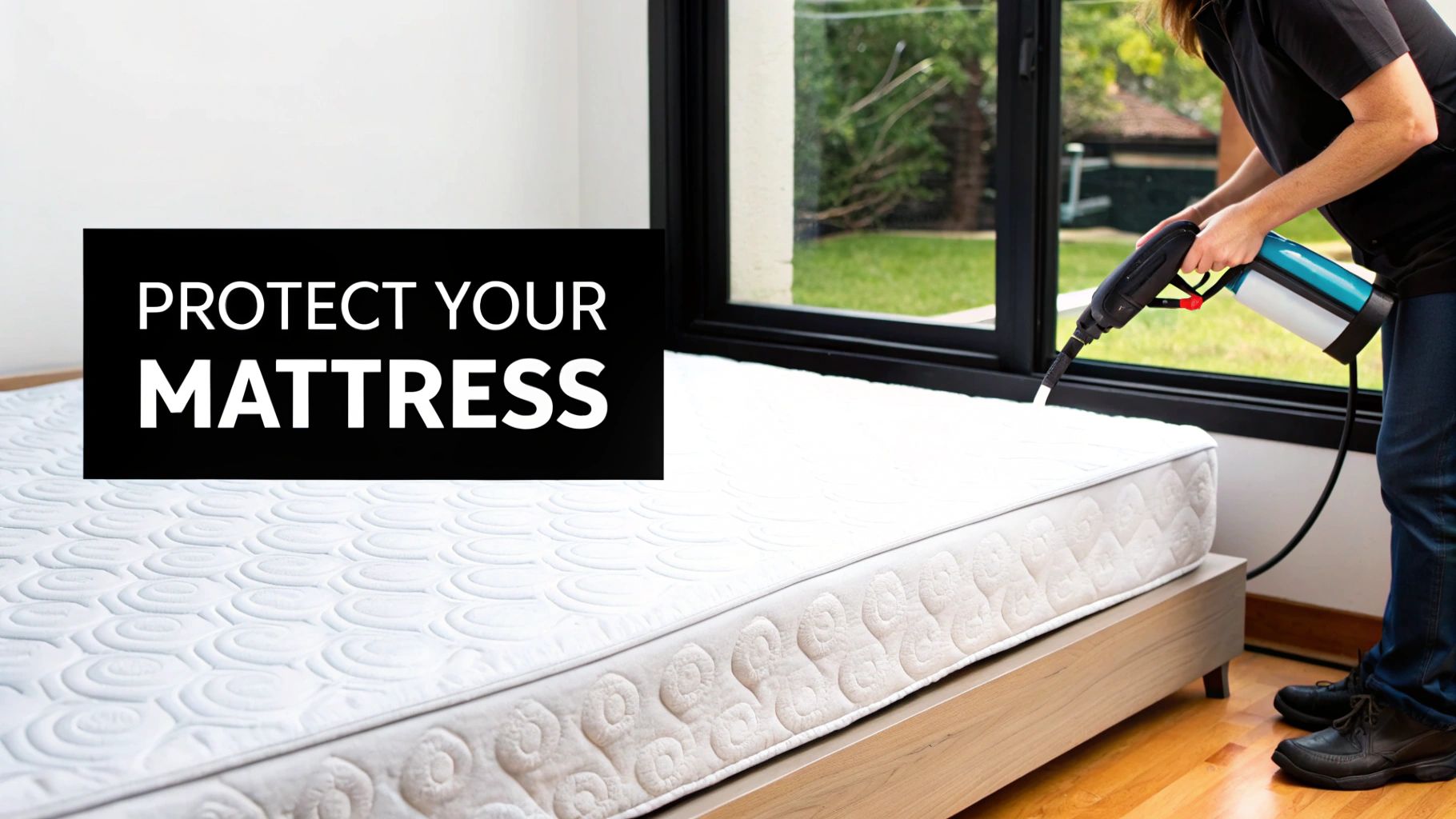
Think of it as an insurance policy for your bed. It forms a shield against spills, sweat, allergens, and dust mites. For those with pets, pairing a good protector with other solutions, like using washable dog diapers, can save you a world of cleaning headaches.
Simple Habits for a Healthier Bed
Beyond a protector, a few simple habits can make a huge difference.
One of the most vital routines is regular vacuuming. A global dust study found that a staggering 76% of people don’t vacuum their mattresses regularly, which is concerning when you think about the build-up of dead skin and dust mites. Just use your vacuum’s upholstery attachment once a month for a quick once-over.
Another simple but effective trick is to let your mattress breathe. Each time you change your sheets, leave the bed uncovered for a few hours. This helps any lingering moisture evaporate, keeping your mattress fresh and dry.
Choosing the right protector is key. You'll want one that's not just waterproof but also breathable. Our guide on selecting a bamboo waterproof mattress protector is a great resource for finding one that offers silent, crinkle-free protection.
Common Questions About Cleaning Mattress Stains
Even with the best instructions, you're bound to have questions. Let's tackle some of the most common queries.
Can I Use Bleach on My Mattress?
My advice? Absolutely not. Bleach is far too aggressive for mattress materials.
It's tempting, but bleach will do more harm than good. It can permanently yellow the fabric and break down the delicate foam and fibres inside. You'll also be left with harsh fumes. Instead, stick with gentler options like diluted white vinegar, a mild hydrogen peroxide solution, or an enzymatic cleaner.
How Long Will My Mattress Take to Dry?
A small, lightly treated spot might be dry in a few hours. A deeper clean could easily take 24 hours or more. It all comes down to how much liquid soaked in and the ventilation in your room.
The golden rule: your mattress must be 100% bone dry to the touch before you put sheets back on. Dressing a damp mattress is a one-way ticket to mould. To speed things up, open windows and use a fan.
Does Cleaning a Stain Void My Mattress Warranty?
This is a tricky one, but the answer is often yes. Most mattress warranties don't cover damage from liquid spills or improper cleaning. Using unapproved chemicals can easily void your coverage. Before you start, check the care guide that came with your mattress.
This is why a high-quality, waterproof mattress protector is non-negotiable. It’s the ultimate insurance for your bed, safeguarding the mattress and its warranty. For a deeper dive, take a look at our comprehensive guide on how to clean bed stains.
Ready to protect your investment and say goodbye to stain-related stress? A pristine mattress is the foundation of great sleep.