

Tired of waking up tangled in a fitted sheet that’s popped off the corner of your mattress again? It’s a common frustration, and the fix is simpler than you think: you probably need extra deep fitted bed sheets. Designed for today's taller mattresses, plush pillow tops, and thick toppers, these sheets provide the generous depth needed to keep everything secure all night long.
This guide is your complete roadmap to ending the fight with your bedding for good. We’ll show you exactly how to get that perfect, stay-put fit for an uninterrupted night's sleep.
Why Your Standard Sheets No longer Fit
If wrestling with your fitted sheet feels like a nightly battle, you’re not alone. The problem often isn’t the sheet but the mattress itself. Modern mattresses have grown significantly taller, packed with layers of memory foam, cooling gels, and pillow tops for ultimate comfort.
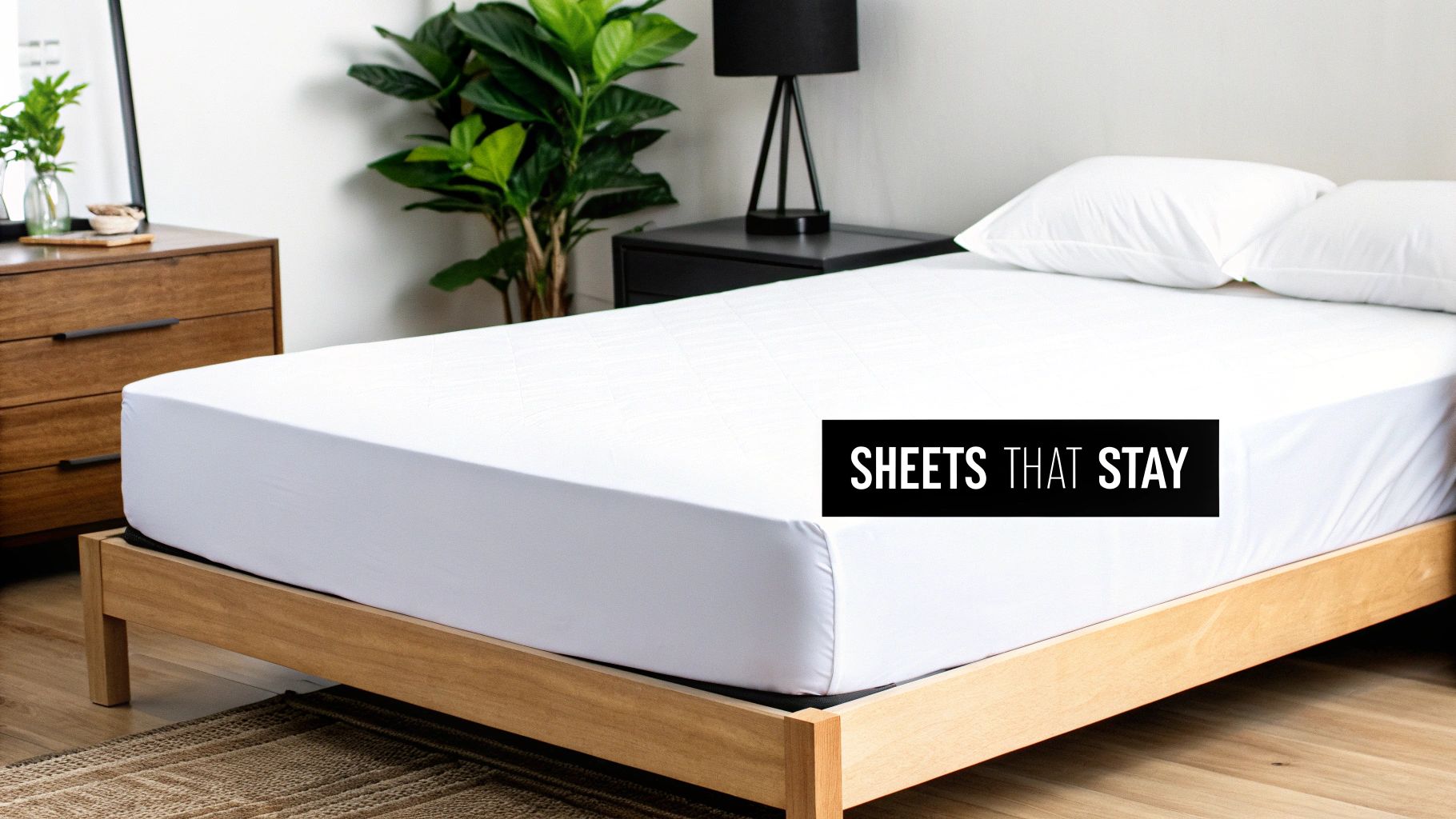
Add a mattress protector or a plush topper, and a standard 30 cm mattress can easily reach 40 cm or more. Standard fitted sheets simply don't have enough fabric to tuck securely underneath, leading to that inevitable midnight snap.
The Rise of Better Bedding
This shift in mattress design has created a demand for bedding that actually fits. It’s no surprise that, according to Statista, the bed linen market in Australia is expected to reach a revenue of US$1.02 billion in 2024. People are investing in quality products that solve everyday frustrations. Specialised items like extra deep fitted sheets are now a necessity, not a luxury.
Here’s what you'll learn:
- How to accurately measure your mattress depth.
- The key difference between deep and extra-deep pockets.
- Why the right fabric is crucial for a secure fit.
- Simple fixes for common sheet-fitting problems.
By the end, you'll know how to choose the right bed sheets that stay put, giving you a smooth and comfortable sleep.
How to Measure Your Mattress for a Perfect Fit
Getting the perfect fit comes down to one simple step: measuring your mattress properly. This quick job ensures you buy the right extra deep fitted bed sheets the first time, saving you the frustration of a sheet that pings off the corners. All you need is a firm tape measure or ruler.
Start by placing one end of your tape measure at the bottom seam of the mattress. Pull it straight up to the highest point on the top surface, often called the "crown." Ensure the tape is perfectly vertical for an accurate number.
Don't Forget the Toppers and Protectors
A common mistake is measuring only the mattress. You must account for the extra height from toppers, protectors, or built-in pillow tops. These layers can easily add another 5 to 10 cm that your fitted sheet needs to cover.
Think of it like buying a hat. You wouldn't just measure your head if you planned to wear it over a thick beanie—you'd measure with the beanie on. Your bedding works the same way.
Pro Tip: For a precise measurement, lay a straight edge (like a hardcover book) across the top of your bed. Then, measure from the bottom seam of the mattress up to the underside of the straight edge. This trick eliminates any guesswork on plush surfaces.
A Step-by-Step Measurement Guide
Follow these simple steps to find the exact total height your new sheets need to cover.
- Strip the Bed: Remove all bedding, but leave any toppers or pads that will stay underneath your new sheet.
- Measure the Total Height: Measure from the bottom seam to the highest point, including all top layers. Jot down this number.
- Add Room for Tucking: Your sheet's pocket depth should be at least 5-7 cm deeper than your total mattress height. This extra fabric is crucial for tucking firmly underneath.
Real-World Example:
Let's say your mattress is 35 cm tall and you use a plush 5 cm mattress topper.
- Your total mattress height is 35 cm + 5 cm = 40 cm.
- For a secure tuck, you need a pocket depth of at least 40 cm + 5 cm = 45 cm.
- Therefore, you should shop for an extra deep fitted sheet with a pocket of 45 cm or deeper.
Once you have your measurements, you can shop with confidence. For standard Australian bed sizes, check our detailed bedding size chart. A few minutes of measuring now saves the headache of returns later.
Decoding Sheet Depths: Deep vs. Extra Deep
Bedding terminology can be confusing. You’ll see terms like 'deep' and 'extra deep' used interchangeably, but the difference is key to finding a sheet that hugs your mattress perfectly.
It all comes down to pocket depth—the measurement of the corner seam on a fitted sheet. While there's no single industry rule, the guidelines are straightforward. Understanding this detail helps you buy the right extra deep fitted bed sheets the first time.
Standard vs. Deep Pockets
Standard fitted sheets were designed for older, thinner mattresses and usually have a pocket depth of around 25-30 cm. Deep pocket sheets accommodate modern mattresses, offering a depth of about 33-43 cm.
But if you've invested in a multi-layered mattress or added a cloud-like topper, your total bed height can easily exceed 40 cm. This is where 'deep' is no longer deep enough.
This decision tree gives you a simple visual for figuring out what you need.
The crucial takeaway? You must account for every layer on your bed to get the true height.
When You Need Extra Deep Fitted Bed Sheets
Extra deep fitted sheets are the answer for today's taller sleep setups, featuring a pocket depth of 45 cm or more. Some, like ours, go up to 50 cm or even 60 cm to handle the most impressive mattress and topper combinations.
Consider this scenario:
- Your mattress is 35 cm high.
- You add a 5 cm memory foam topper. Your total height is now 40 cm.
- A 40 cm sheet is now stretched to its limit, with no fabric left to tuck underneath. This is a guarantee for slipping corners.
In this case, an extra deep fitted sheet with a 50 cm pocket is perfect. It will cover the 40 cm height and give you a generous 10 cm of fabric to wrap securely under the mattress.
Fitted Sheet Pocket Depth Guide
Use this table to match your total mattress height (including toppers) to the correct sheet type.
| Sheet Type | Typical Pocket Depth | Ideal for Mattress Height | Fit Characteristic |
|---|---|---|---|
| Standard | Up to 30 cm | Up to 25 cm | Best for older, thinner mattresses without toppers. |
| Deep Pocket | 33-43 cm | 28-38 cm | Fits most modern mattresses, may be tight with a topper. |
| Extra Deep Pocket | 45-60 cm | 38-55 cm | The perfect choice for thick mattresses with toppers. |
This at-a-glance chart takes the guesswork out of your purchase.
The Secret to a Secure Fit: The Tuck
The 'tuck'—how much fabric wraps underneath the mattress—is the most overlooked part of a great fit. To hold up against tossing and turning, you need at least 5-7 cm of extra material to tuck under.
This essential tuck creates the tension needed to hold the sheet firmly in place. It’s the secret to getting that crisp, hotel-bed finish at home.
Knowing your bed's specific dimensions, like what size a queen fitted sheet is, is always the best place to start your search for the perfect fit.
Choosing the Best Fabric for Extra Deep Sheets
Once you know the right size for your extra deep fitted bed sheets, the next decision is the fabric. The material affects not only how the sheets feel but also how well they fit, how comfortably you sleep, and how long they last.
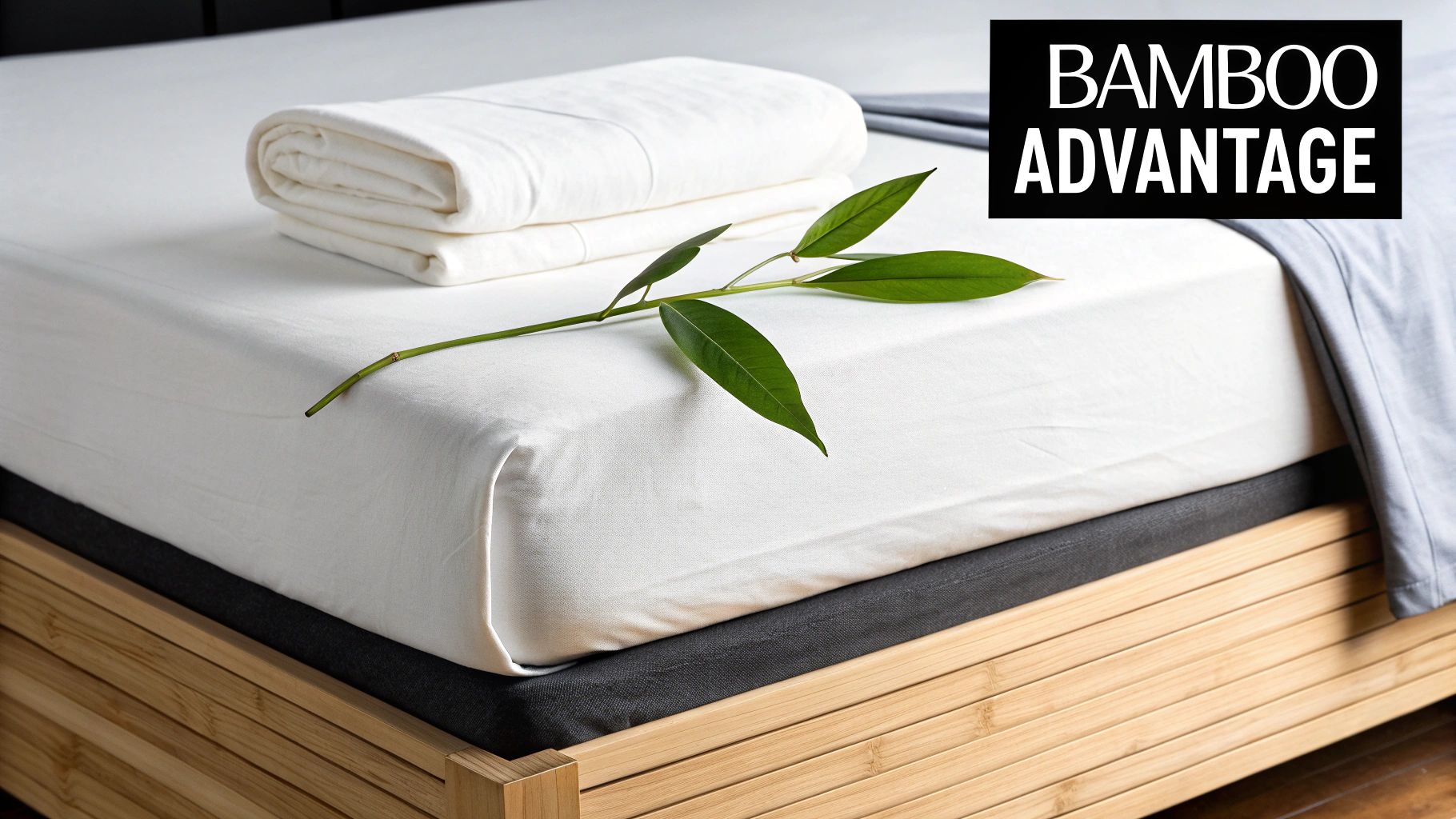
While traditional materials like cotton are popular, the challenge of a deep mattress calls for a fabric with something extra. Thicker mattresses can trap heat, so temperature regulation is a priority. The material also needs enough give to hug deep corners without straining the seams. This is where bamboo fabric shines.
Why Bamboo Is a Superior Choice
Bamboo fabric is a smart solution for modern sleep setups. Its natural properties solve common problems associated with tall, plush mattresses, making it an ideal choice.
Here’s why it stands out:
- Natural Stretch and Drape: Unlike stiffer fabrics, bamboo has a fluid quality. It allows the sheet to mould to the shape of a deep mattress, reducing tension on the elasticated corners and preventing them from slipping off.
- Exceptional Breathability: Bamboo fibres are naturally porous, creating a breathable weave that wicks moisture and allows air to circulate. This helps regulate your body temperature for a cool, comfortable night.
- Hypoallergenic and Gentle: For those with sensitive skin or allergies, bamboo is a game-changer. It’s naturally hypoallergenic and antimicrobial, resisting irritants like dust mites and bacteria.
The real magic of bamboo is its combination of softness and strength. It feels silky smooth yet is durable enough to hold its snug fit wash after wash.
Comparing Common Bedding Fabrics
Every fabric has its own personality. Understanding how they compare helps you make a choice you’ll be happy with.
Let's take a quick look at the main contenders:
- Cotton: A timeless favourite—breathable and durable. However, it lacks the natural stretch of bamboo, which can make for a tighter, less forgiving fit on an extra deep mattress. Learn more in our guide on the differences between bamboo and cotton sheets.
- Linen: Loved for its rustic charm and breathability. Its main downside is that it wrinkles easily and can feel stiff at first, so it doesn't have the smooth drape needed to hug deep corners snugly.
- Tencel™: A branded lyocell fabric made from wood pulp. It’s eco-friendly, soft, and great at wicking moisture, putting it in the same league as bamboo. If you're weighing up these two, comparing bamboo and Tencel fabrics can provide extra clarity.
Choosing a material like bamboo gives you the perfect mix of flexibility, breathability, and comfort, ensuring a better, more peaceful night’s sleep.
Getting the Fit Just Right: Troubleshooting Common Problems
You’ve measured carefully and bought what you thought were the perfect extra deep fitted bed sheets, but something’s not quite right. Don't worry, most fit issues are easy to fix.
What to Do When Your Sheets are Too Tight
If your sheet is so taut it looks like a corner is about to spring off, it’s too snug. This usually means there isn't enough fabric to comfortably wrap around your mattress.
Here's what might be happening:
- A Sneaky Height Increase: Did you recently add a plush mattress protector? Even an extra centimetre can make a difference.
- Oops... a Little Shrinkage: Natural fibres can shrink in hot water or high-heat dryers.
The Fix: Re-measure your total mattress height to be sure. If shrinkage is the problem, always wash in cold water and tumble dry on the lowest setting. For a sheet that’s already snug, try gently stretching it while damp and letting it air-dry on the bed.
How to Handle Loose, Baggy Sheets
A loose, wrinkly sheet is just as annoying. This happens when the sheet's pocket is too deep for your mattress, leaving extra material to bunch up.
What's Really Happening: A baggy sheet often means the elastic isn't strong enough to pull all that extra fabric securely under the mattress.
The Fix: Try sheet suspenders or sheet straps. These adjustable elastic straps run diagonally under the mattress, pulling opposite corners toward each other to create tension and smooth out slack.
When the Corners Keep Popping Off
This is the most maddening problem of all. You secure one corner, and as you move to the next, the first one pings off.
This is almost always caused by a lack of "tuck." Your sheet may cover the sides, but if there isn't enough fabric to wrap securely underneath, it will never stay in place.
The Fix: If sheet suspenders don't work, it’s a clear sign you need extra deep fitted bed sheets with an even more generous pocket. Look for a pocket depth that’s at least 5-7 cm deeper than your mattress. That extra material is what keeps those corners exactly where they belong.
How to Care for Your Sheets to Keep That Perfect Fit
You've found the perfect extra deep fitted bed sheets. Now, let's keep them that way. Proper care isn't just about cleanliness; it's about protecting the fabric and elastic for a snug fit that lasts.
High heat is a fitted sheet's worst enemy. Hot water and intense dryer heat can degrade elastic and cause natural fibres like cotton and bamboo to shrink or stretch.
Washing Your Sheets for Longevity
To prevent shrinking, always wash your sheets in cold water on a gentle cycle. Hot water can constrict fibres and permanently alter the sheet's dimensions.
Stick to a mild, liquid detergent. Harsh powders can be abrasive, and it's best to skip bleach and fabric softeners, as these can weaken natural fibres and reduce their breathability.
The Right Way to Dry Your Sheets
Just like with washing, avoid high heat when drying. A scorching dryer can wreck the elastic corners of your fitted sheet.
For the best results:
- Tumble dry on the lowest heat setting. It might take longer, but it protects the fabric and elastic.
- Give line drying a go. This is the gentlest method, leaving sheets fresh without any risk of heat damage.
- Pull them out promptly. Don't let sheets bake in a hot dryer, as this can lock in wrinkles.
These steps are essential for natural fabrics, especially bamboo. For a deep dive, see our guide on how to care for your bamboo sheets so they last for years.
Smart Storage to Prevent Stretching
How you store your sheets matters. Scrunching them up in a linen closet can put stress on the elastic, causing it to lose its springiness.
Pro Tip: Learning to fold a fitted sheet is worth the effort. A simple tuck-and-fold method protects the elastic from getting twisted or stretched.
Keep folded sheets in a cool, dry spot away from direct sunlight. These simple habits will ensure your extra deep fitted sheets fit like a glove, wash after wash.
Your Questions Answered
Here are straightforward answers to the queries we hear most often about finding the perfect extra deep fitted bed sheets.
What Size Sheet Do I Need for a 40cm Mattress?
For a 40cm mattress, an extra deep fitted sheet is essential. Look for a pocket depth of at least 45cm to 50cm.
That additional 5-10cm allows the sheet to wrap securely under the mattress, creating a generous "tuck" that holds everything in place and stops corners from popping off.
Can I Use Extra Deep Sheets on a Standard Mattress?
You could, but we don't recommend it. An extra deep sheet on a standard mattress will be a sloppy, ill-fitting mess. The excess fabric creates a loose, baggy surface that bunches up while you sleep. For a crisp, comfortable fit, always match your sheet depth to your mattress height.
Do Bamboo Fitted Sheets Shrink?
High-quality bamboo sheets are usually pre-shrunk to minimise changes. However, like any natural fibre, bamboo can shrink if exposed to high heat during washing or drying.
To keep your sheets fitting perfectly, follow the care label. A cold, gentle wash and a low tumble dry setting (or line drying) will protect your investment.
With this info, you can choose your next set of sheets with confidence.
Ready to end the nightly struggle with your sheets for good? At Sienna Living, we design our premium bamboo bedding with generous depths specifically for Australia's taller, modern mattresses. Experience the difference a perfect fit truly makes.