

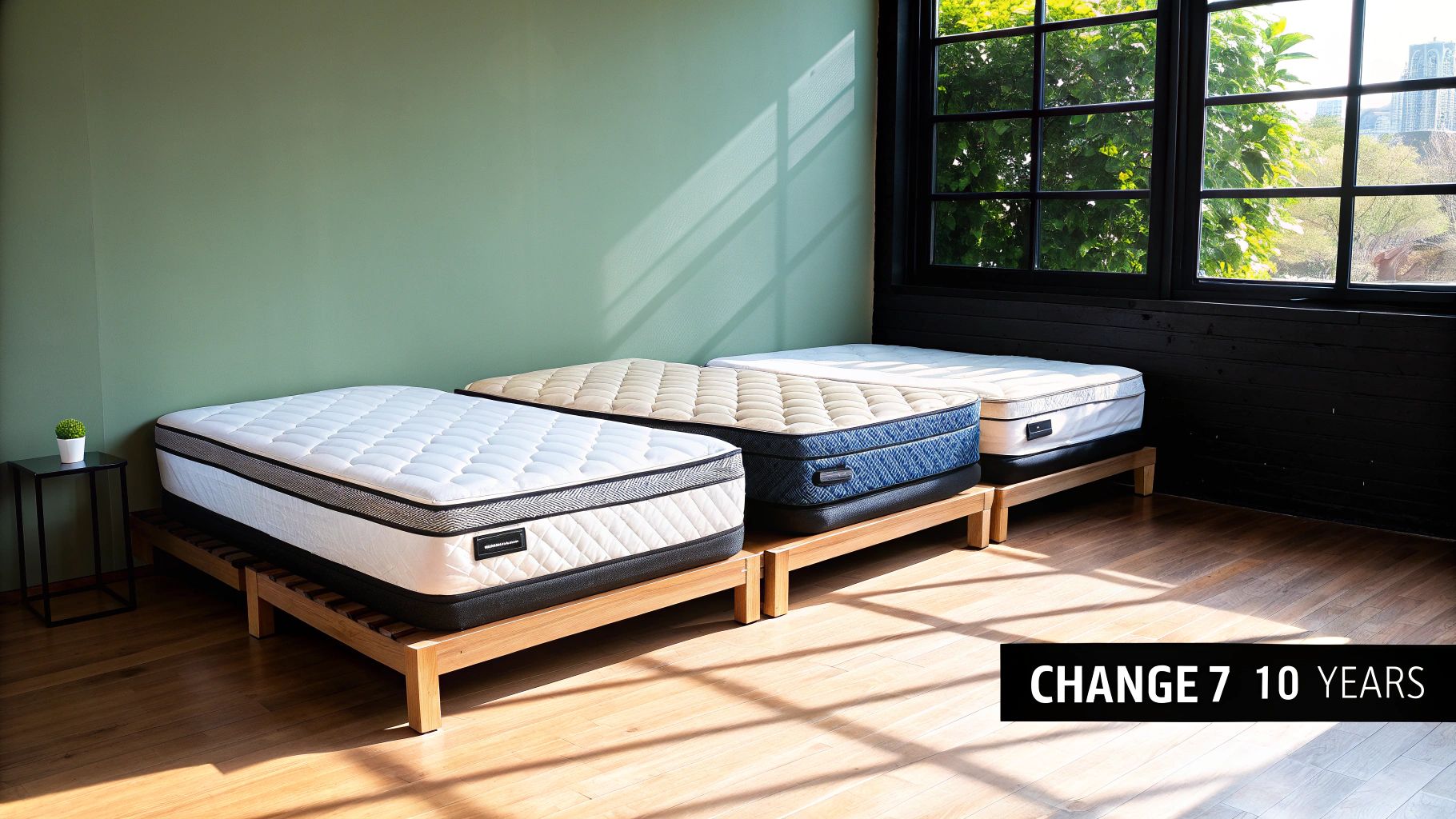
Is your mattress past its prime? If you’re wondering how often should I change my mattress, the general rule of thumb is every 7 to 10 years. But this is just a guideline. The real lifespan of your bed depends on its material, your sleeping habits, and how well you've cared for it. This guide provides the clear, actionable insights you need to decide if it's time for an upgrade.
Your mattress is the foundation of your health. A good one supports restorative sleep, which impacts your energy, mood, and long-term wellbeing. Think of it less like furniture and more like essential health equipment. Knowing the signs of a worn-out mattress helps you replace it before it starts causing problems.
Your Quick Guide to Mattress Lifespan
While the 7-10 year rule is a solid starting point, different materials wear out at different speeds. A simple innerspring mattress, for instance, might start showing its age much faster than a durable latex one. Understanding these differences helps you plan and avoid the aches that come from sleeping on a worn-out surface.
Mattress Replacement Timeline at a Glance
For a clearer picture, this quick-reference table breaks down the average replacement timelines for the most common mattress types.
| Mattress Type | Average Lifespan (Years) |
|---|---|
| Innerspring | 6 - 8 years |
| Memory Foam | 8 - 10 years |
| Latex | 10 - 12+ years |
| Hybrid | 8 - 10 years |
This table gives you a great baseline, but remember, your personal experience is key. If your mattress isn't comfortable anymore, it doesn't matter what the calendar says.
This decision tree is another handy tool to help you figure out if it's time for an upgrade.
As the flowchart shows, age and comfort are the two key players. Even a relatively new mattress might be ready for replacement if it's causing you pain. A great mattress is an investment worth protecting. Using a quality shield like a breathable bamboo mattress protector from day one is a simple and effective way to guard it against spills and allergens, helping it last as long as possible.
How Often Should I Change My Mattress? The 7 Key Signs
Forget the calendar for a moment. The best way to know if your mattress has reached its use-by date is to pay attention to your body and the bed itself. These are the most honest reviewers you'll ever have.
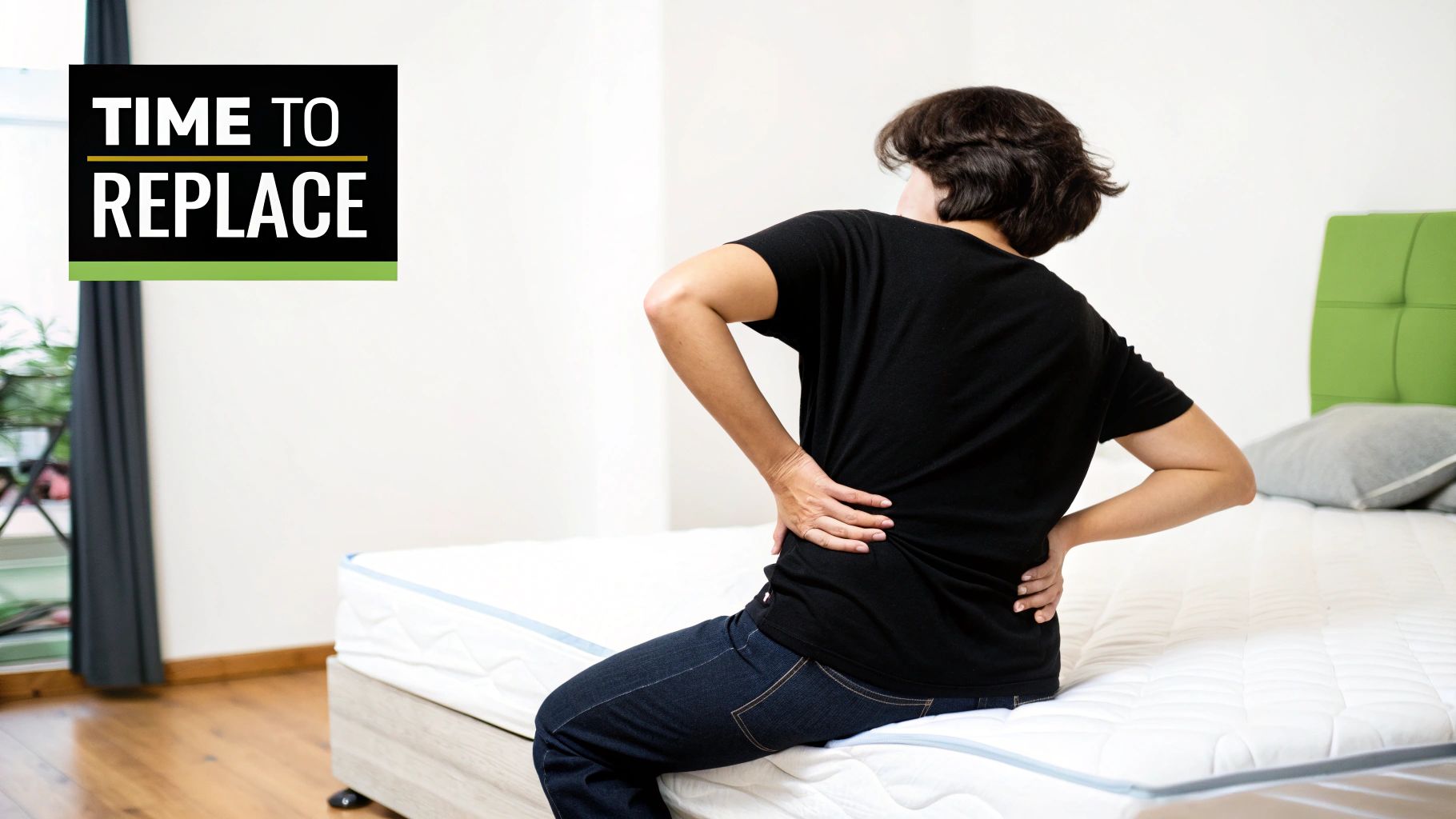
1. You Wake Up With Aches and Pains
Waking up with a stiff neck, sore hips, or a nagging pain in your lower back is one of the loudest alarm bells. A good mattress holds your spine in a neutral alignment. As a mattress ages, it lets heavier parts—like your hips and shoulders—sink too deeply, creating painful pressure points.
Real-World Example: Sarah, a side-sleeper from Melbourne, started getting sharp shoulder pain every morning. She blamed her workouts and her desk chair. It wasn't until she slept on a hotel mattress for a week and woke up pain-free that she realised the real issue: her eight-year-old memory foam mattress had lost its firmness, forcing her shoulder into an awkward position all night long.
2. You Can See Visible Sagging or Lumps
Sometimes, you don't need to feel the problem—you can see it. Strip the sheets off your bed and give it a good, hard look. Are any of these red flags staring back at you?
- Noticeable Sagging: A clear dip or body-shaped impression where you sleep. This is the most obvious sign of a failed mattress.
- Lumps and Bumps: The surface feels uneven because the internal padding has shifted or clumped together.
- Frayed Edges or Rips: If the outside is falling apart, it’s a safe bet the inside isn't doing much better.
That dip in the middle represents a total loss of support. Research backs this up: a study published in the Journal of Chiropractic Medicine found that a new, medium-firm mattress can significantly reduce back pain and improve sleep quality, with participants reporting a 60% improvement in back pain.
3. It Makes Noise When You Move
Does your bed squeak, creak, or groan every time you move? That’s not just an annoying sound; it's the death rattle of the springs and coils inside your innerspring or hybrid mattress. They've lost their tension and are no longer doing their job properly.
4. You Feel Your Partner's Every Move
A good mattress is designed with motion isolation to absorb movement. If you’re being woken up every time your partner rolls over, it means the mattress's internal structure has broken down. It might be time to compare a spring mattress vs a foam mattress to find a replacement that offers better motion isolation.
5. Your Allergies Are Worse at Night
An old mattress is a breeding ground for dust mites, which thrive on dead skin cells. The waste from dust mites is a powerful allergen that can trigger asthma and allergy symptoms. If you often wake up feeling congested, sneezy, or with itchy eyes, your old mattress could be the culprit. Our guide to sustainable bedding for allergy relief offers tips on creating a cleaner sleep space.
6. You Sleep Better Somewhere Else
This is the ultimate test. If you get a much better night’s sleep on a hotel bed, at a friend’s house, or even on the sofa, it’s a clear sign your own mattress is failing you. Your bed should be the most comfortable place to sleep, not a place you escape from.
7. It’s Simply Old
Even if you don't notice any dramatic signs, age itself is a factor. After 7-10 years, the foams, fibres, and springs have endured thousands of hours of use. They will have degraded, even if it's not immediately obvious. Replacing it proactively is a smart investment in your health.
Simple Habits to Extend Your Mattress Lifespan
Looking after your mattress can easily add years to its life. You don't need a complex maintenance plan—just a few consistent habits can keep your bed supportive and clean for longer.
Rotate It Like Clockwork
Rotate your mattress 180 degrees (head to foot) every 3 to 6 months. This simple act spreads wear and tear out evenly, preventing permanent body impressions and premature sagging from setting in. A consistent rotation schedule keeps the surface level and comfortable.
Use a Mattress Protector
Think of a mattress protector as essential insurance for your bed. It creates a barrier against spills, sweat, body oils, dust mites, and other allergens that secretly ruin your mattress from the inside out. A waterproof yet breathable protector is the unsung hero of mattress longevity.
Build on a Solid Foundation
The base your mattress sits on is just as crucial as the mattress itself. A weak, sagging, or unsuitable foundation can destroy even the best mattress by failing to support it properly. Ensure your bed frame is strong, with slats that are no more than 7cm apart. For more tips, check out our guide on 6 ways to make your bedding last longer.
What to Do with Your Old Mattress
So, you’ve decided it’s time for a new mattress. But what do you do with the old one? Before you try to haul it to the curb, consider these eco-friendly options.
- Council Collection: Most local councils offer a hard rubbish collection service. Check their website for dates and booking rules.
- Recycling Programs: This is the best choice for the planet. Organisations like Soft Landing pull mattresses apart to recover and reuse materials like steel springs and foam. See how to recycle your mattress in Sydney.
- Junk Removal Services: For a hassle-free option, a professional service can handle the heavy lifting. This homeowner's guide to junk removal can be a great resource.
Donating a used mattress is difficult due to hygiene regulations, but you can always check with local shelters, provided it's in near-perfect, stain-free condition. And remember to check the warranty—a significant sag might be a manufacturing defect covered by the retailer.

Your Top Mattress Questions Answered
Let's clear up a few common questions about when to replace your mattress.
Can a mattress topper save an old mattress?
A topper can add a layer of comfort, but it’s a band-aid, not a fix. If your mattress is already sagging, the topper will just sink into the dips. It won’t provide the underlying support your spine needs.
Is it unhygienic to keep a mattress longer than 10 years?
Yes. Over a decade, a mattress absorbs a huge amount of sweat, skin cells, and body oils, creating an ideal home for dust mites and bacteria. For anyone with allergies or asthma, this can become a major health trigger. Swapping to naturally hypoallergenic bamboo bedding can also help keep your sleep environment fresh.
Should I still flip my modern mattress?
Probably not. Most modern mattresses are designed to be one-sided, with comfort layers on top and a support core on the bottom. The rule is to rotate, not flip. Flipping it would mean sleeping directly on the hard support base. Always check the manufacturer's care instructions to be sure.
Ready to invest in better sleep? At Sienna Living, we believe everyone deserves a restorative night's rest. If you recognise the signs, it's time to stop compromising on your health. Explore our collection of premium mattresses and bedding designed for ultimate comfort and support. Upgrade your sleep sanctuary today.