

Waking up with a stiff neck or an aching back is a frustrating way to start the day. If you're a stomach sleeper, this feeling might be all too familiar, and your pillow is the most likely culprit. A pillow that's too high or too firm forces your head into an awkward position, straining your spine all night long.
The good news? The solution is simple. The best pillow for stomach sleepers is one that is thin, relatively soft, and highly breathable. This combination helps keep your spine in a healthy, neutral line, letting you wake up refreshed and pain-free. Let's dive into how you can find the perfect one.
The Stomach Sleeper's Dilemma
Sleeping on your stomach is less common than you might think. Research from the Sleep Foundation shows that only about 7% of adults prefer this position. While it can feel comforting, it puts the most pressure on your spine by flattening its natural curve and forcing you to twist your head to breathe.
The wrong pillow makes this alignment issue much worse. A thick, firm pillow acts like a wedge, cranking your neck even further out of line. It's the same as tilting your head sharply to one side for hours—of course you'd feel sore. That’s what a pillow with too much loft does to your neck all night.
Your Pillow Is the Key to Relief
You don't have to change your favourite sleeping position. Instead, you can create a supportive sleep environment, and the right pillow is your most important tool.
A great pillow for a stomach sleeper will:
- Keep Your Spine Neutral: A thin, low-profile pillow ensures your head stays nearly level with the mattress.
- Reduce Neck Strain: A softer pillow allows your head to sink in just enough, preventing it from being propped up at a painful angle.
- Prevent Overheating: Since your face is pressed into the pillow, breathable materials are essential for cool, comfortable sleep.
A Real-World Example
Consider Alex, a graphic designer who battled nagging shoulder pain for years. He blamed long hours at his computer, but the pain was always worst right after waking up. He was using a standard memory foam pillow, thinking its firmness meant good support.
Once he connected the pain to his stomach-sleeping habit, he switched to an ultra-slim bamboo pillow. The minimal height allowed his neck to align with his spine, instantly relieving the strain. Within a week, his morning pain was gone. The right pillow was the missing piece to his puzzle.
Getting the dimensions right is a great first step. You can learn more about standard pillow sizes in Australia in our guide.
Why Spine Alignment Is Everything for Stomach Sleepers

Think of your spine as a straight, relaxed line when you're standing. The goal of sleep is to maintain that neutral posture. For stomach sleepers, this is a challenge because the position naturally flattens the spine's gentle "S" curve and forces your head to twist to the side.
This is a recipe for stiffness and aches before you even add a pillow to the mix.
The Problem with a Puffy Pillow
Now, add a standard, lofty pillow. Suddenly, that pillow acts like a wedge, forcing your head and neck up at an unnatural angle. For 7-8 hours a night, your spine is held in a strained posture. This constant stress is the direct cause of neck pain, tight shoulders, and even that pins-and-needles feeling in your arms.
This misalignment doesn't just stop at your neck; it creates a domino effect down your back. When your neck is bent out of shape, your shoulder and upper back muscles tense up. Even your lower back can start to ache as your body tries to compensate.
It's Simple Biomechanics
This isn't just about comfort; it's basic biomechanics. Poor sleep posture is a leading cause of chronic muscle and joint pain. The constant pressure on nerves and ligaments night after night can lead to long-term issues that affect your daily life.
This is why the best pillow for stomach sleepers is almost always a very thin, low-profile one. This isn't just a preference; it's a non-negotiable for spinal health. If this sounds familiar, our guide on choosing the right pillow for neck and shoulder pain offers more targeted advice.
The right pillow's job is to minimize the angle between your head and the mattress. This one simple change can make a massive difference, taking the pressure off your muscles and letting them finally relax and recover.
Three Keys to the Perfect Stomach Sleeper Pillow
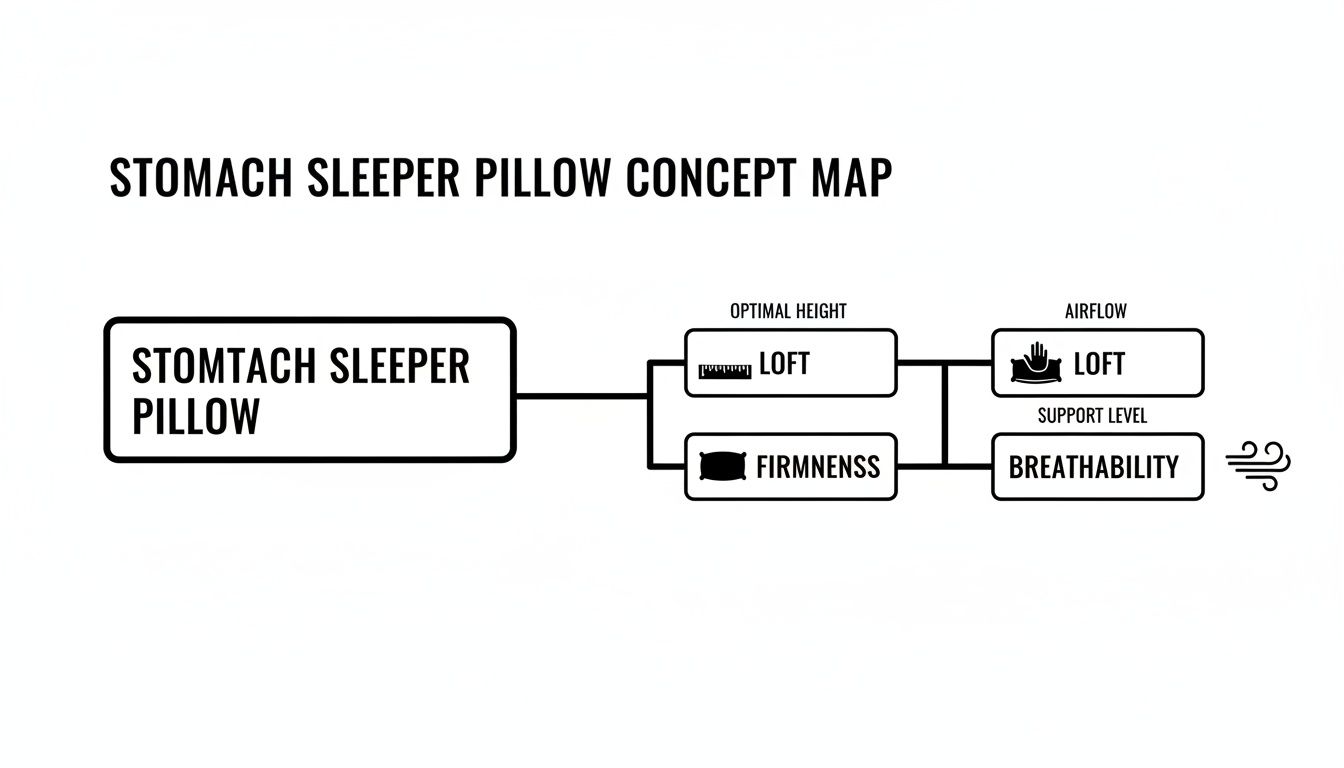
Finding the right pillow can feel complex, but it boils down to three key features: Loft, Firmness, and Breathability. Get these three things right, and you’ll have a pillow that supports your spine, eases neck pain, and helps you wake up feeling fantastic.
Key 1: Loft—The Lower, The Better
In the world of pillows, loft is just a fancy word for height. While other sleepers need height to fill the gap between their head and the mattress, a high-loft pillow is a stomach sleeper's worst enemy.
You want your head and neck to be as flat and neutral as possible. A thick pillow forces your head upward, straining your spine. The sweet spot for a stomach sleeper is a loft of under 8cm (about 3 inches). This slim profile keeps your head almost level with the mattress for healthier alignment.
Key 2: Firmness—Soft Support is Best
Next up is firmness. A firm pillow is just as bad as a high one for a stomach sleeper. A pillow that’s too hard won’t let your head sink in, propping it up and creating that same stressful angle on your neck.
Look for a soft to medium-soft feel. This allows your head to settle comfortably into the pillow, giving you a gentle cushion without jacking up your neck. The goal is a balance: soft enough to feel like a cloud but with enough substance to provide gentle support. Our guide comparing latex vs memory foam pillows can help you understand the differences.
Key 3: Breathability—A Must for Cool Comfort
Finally, let's talk about breathability. This is critical for stomach sleepers because your face is pressed against the pillow all night. A pillow that traps heat is a recipe for a sweaty, uncomfortable night.
Pillows with poor airflow can lead to:
- Overheating and Night Sweats: Dense materials like traditional memory foam are known for holding onto body heat.
- Skin Irritation: Trapped heat and moisture can become a breeding ground for bacteria.
- Broken Sleep: Constantly flipping your pillow to find the cool side disrupts deep, restorative rest.
Look for pillows made from naturally breathable materials. Bamboo, TENCEL™, or latex with ventilation channels are fantastic choices. These materials excel at wicking moisture away and letting air flow freely, keeping you cool and dry all night.
Choosing The Right Pillow Material
The filling inside your pillow is what makes or breaks your sleep, especially if you’re a stomach sleeper. It’s not about picking the most popular material; it’s about finding one that keeps your spine aligned and comfortable.
This is where the search for the best pillow for stomach sleepers gets specific. Some materials feel soft at first but flatten into a useless pancake by morning. Others are so firm they create the neck strain you’re trying to avoid.
Why Traditional Fills Often Fail
Many common pillow materials just aren't a good fit for stomach sleepers. They might be great for other positions, but they often do more harm than good for those sleeping on their front.
- Memory Foam: A solid block of memory foam is usually too dense and high for stomach sleeping. It can feel like your head is propped on a brick and can trap heat.
- Latex: Natural latex is durable but also quite bouncy, which can prevent your head from sinking in enough to maintain a neutral spine.
- Feather & Down: These natural fills feel luxurious but often lack consistent support, either flattening out completely or needing constant re-fluffing.
For a closer look, you can check our guide on bamboo and memory foam pillows.
Why Modern Fills Are a Game Changer
This is where newer materials, especially those derived from bamboo, truly shine for stomach sleepers. They offer a unique mix of properties that solve the biggest challenges of this sleeping position.
A bamboo-derived fill provides a soft, low-profile cushion that gently cradles your head without pushing it up. It holds its supportive structure all night, so you don’t end up with your head flat against the mattress. You get the softness you want with the reliable, low-loft support your spine needs.
Better yet, these materials are naturally breathable and hypoallergenic. Since your face is pressed into the pillow, good airflow is essential for staying cool and clean.
Making The Right Choice For You
At the end of the day, the best material for a stomach sleeper ticks three critical boxes: low loft, soft-to-medium firmness, and great breathability. By understanding the pros and cons of each material, you can look past the marketing hype and choose a pillow that’s truly designed to support your health.
How to Test and Select Your New Pillow
Choosing a new pillow can feel like a shot in the dark, but it doesn't have to be. With a bit of knowledge, you can confidently pick the best pillow for stomach sleepers and ensure it's the right fit.
What to Look for Before You Buy
Before you add a pillow to your cart, run through this quick checklist. It will save you from a bad purchase and a literal pain in the neck.
- Loft Measurement: Look for the pillow's height. As a stomach sleeper, you want something under 8cm. A specific measurement is better than vague terms like "slim."
- Firmness Rating: Keep an eye out for "soft" or "medium-soft." Avoid anything labeled "firm," as those are designed to prop your head up.
- Return Policy & Trial Period: This is your secret weapon. A brand that offers a generous trial period (100 nights or more) stands by its product and gives you a risk-free chance to test the pillow in your own bed.
The At-Home Spinal Alignment Test
Once your new pillow arrives, it's time for the real test. Don't just squish it with your hands—that tells you almost nothing.
Here’s a simple test you can do in under a minute:
- Place the new pillow on your bed.
- Lie down on your stomach in your usual sleeping position and relax for a moment.
- Have a partner or friend look at your posture from the side. They should see a straight line running from the back of your head, down your neck, and along your spine.
If your head is clearly angled up, the pillow is too high. If it feels like your head is sinking too low, it may be too soft. The goal is a perfectly neutral, straight line. This quick visual check is the most reliable way to know if a pillow is doing its job.
By combining savvy online research with a practical at-home test, you remove the guesswork. This simple process helps you find a pillow that delivers on the promise of a pain-free, restful night's sleep. For more tips, check out our guide on how to choose the right pillow.
Conclusion: Your Journey to Better Sleep Starts Now
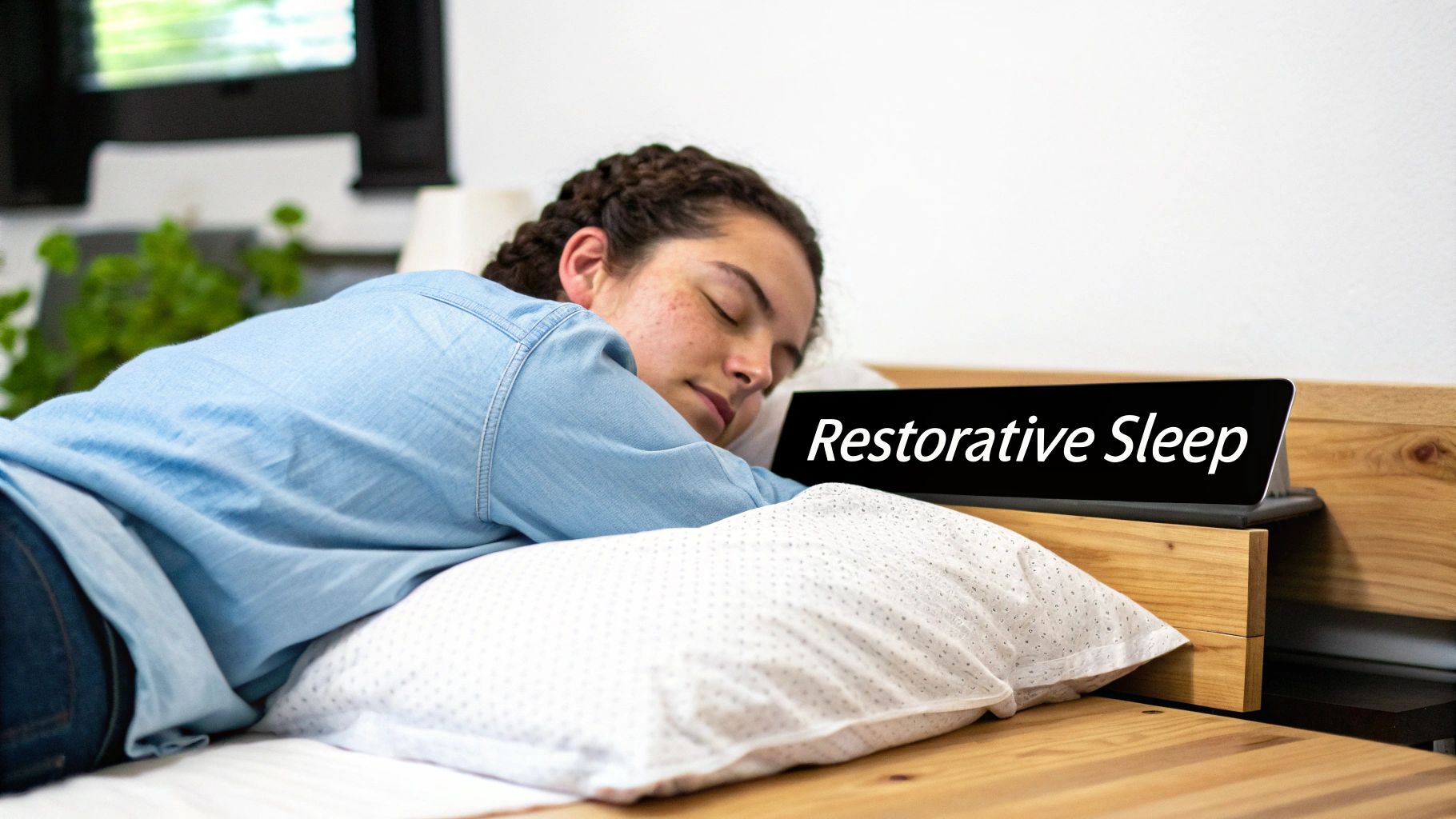
Finding the best pillow for stomach sleepers comes down to three non-negotiable features: it must be thin, soft, and breathable. By focusing on keeping your spine aligned, you’re not just buying a new pillow—you’re investing in your long-term health and how you feel every day.
You now have a clear roadmap to solve morning aches and pains. Small tweaks to your sleep setup, starting with the right pillow, can slash discomfort and dramatically boost your sleep quality.
Take the Final Step
Imagine waking up feeling refreshed, without that familiar stiffness in your neck or the dull ache in your back. This is what happens when you give your body the proper support it needs. A low-profile pillow doesn't just feel comfortable—it actively works all night to maintain that crucial neutral spine position.
Ready to feel the difference for yourself? It's time to take that final step towards the deep, comfortable sleep you deserve. Explore our collection of Sienna Living pillows, designed with the low-loft, breathable support that can completely change your sleep for the better.
A Few Final Questions About Stomach Sleeping
Even after doing your homework, a few questions might linger. Here are quick, straight-to-the-point answers to the most common ones we hear.
Is Stomach Sleeping Really That Bad for You?
You’ve probably heard that sleeping on your stomach is the riskiest position, but it doesn't have to be a one-way ticket to pain. The main issue is the twisted angle it forces on your neck. The good news is, you can make it much safer.
The key is to get your head and neck as close to a neutral, flat position as possible. Using an ultra-thin pillow—or even no pillow at all—is the most important change you can make. Some people also find that tucking a flat pillow under their pelvis helps prevent their lower back from arching uncomfortably.
Can't I Just Use My Old, Flat Pillow?
It’s tempting to use a regular pillow that’s gone flat, but this is a gamble. Most standard pillows start with too much filling for a stomach sleeper. Even when compressed, they rarely offer the consistent, low-profile support you need.
An old, compressed pillow often has lumps and dips that can worsen neck strain overnight. A purpose-built slim pillow provides uniform, edge-to-edge support, which makes all the difference.
How Often Should I Replace My Pillow?
Because the best pillows for stomach sleepers are thin and soft by design, they can wear out faster than thicker pillows. The nightly compression can cause materials to break down, leaving permanent dips and unsupportive spots.
A good rule of thumb is to consider a replacement every 12 to 18 months. But your body is the best guide. If your pillow feels lumpy, looks uneven, or that old neck pain starts creeping back, it's a sure sign it's time for an upgrade. For more tips, check out our comprehensive pillow care guide.
Finding the right pillow isn't just about comfort; it's an investment in your well-being. At Sienna Living, we design our pillows with the unique needs of every sleep style in mind, so you can get the restorative, pain-free rest you deserve.
Ready to find your perfect match? Explore our collection of pillows and start sleeping better tonight.