

Ever stood in the bedding aisle, confused by numbers like 800 or 1000, wondering what the best thread count for sheets really is? You're not alone. For years, marketing has told us that a higher number equals better quality, but that’s one of the biggest myths in the bedding industry. The secret to luxurious, comfortable sheets isn't about chasing the highest number—it's about understanding what truly matters: the quality of the fibre.
This guide cuts through the fluff. We'll show you why a 400-thread-count sheet made from premium bamboo can feel softer and last longer than a 1000-thread-count sheet made from cheap cotton. Let's find your perfect night's sleep.
What a High Thread Count Really Means
The most important takeaway is this: thread count is just one part of the equation. To find the best sheets, you need to focus on three key elements working together.
- Fibre Quality (Most Important): The length and strength of the fibres determine softness and durability. Long-staple fibres like bamboo or Egyptian cotton create smooth, strong fabric. Short-staple fibres result in a coarse, weak fabric that pills easily.
- Weave Style: This is how the threads are woven. It dictates the texture of the sheet. A percale weave is crisp and cool, while a sateen weave is silky and smooth.
- Thread Count: This is the number of threads woven into one square inch of fabric. It only matters after you consider fibre and weave.
Think of it this way: a chef would rather cook with a few high-quality, fresh ingredients than a mountain of cheap, processed ones. The same logic applies to sheets. Premium fibres will always outperform low-quality fibres, regardless of thread count.
For a deeper look, our ultimate guide to choosing the right bed sheets breaks down every detail you need to make the perfect choice.
What Is Thread Count, Anyway?
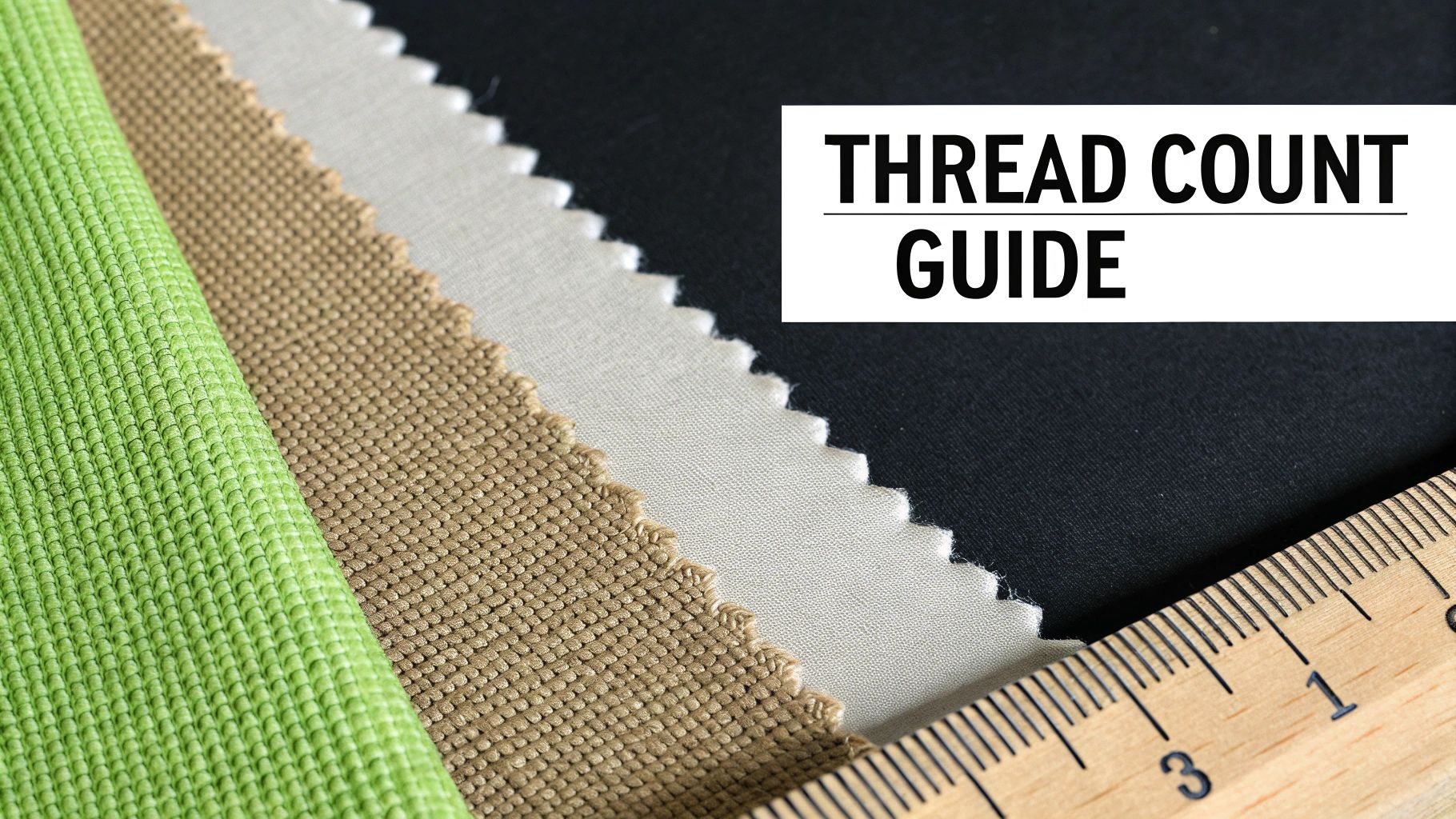
Thread count is the total number of threads—both vertical (warp) and horizontal (weft)—woven into a single square inch of fabric. A higher number means the threads are packed more tightly.
But here’s the catch: if a manufacturer uses thin, weak threads, cramming more of them together doesn't improve the quality. In fact, it often creates a heavy, stiff sheet that traps heat and is more likely to wear out quickly. This is where the marketing gets tricky.
The Multi-Ply Marketing Trick
How do brands advertise thread counts of 1000 or even 1200? They often use a technique involving multi-ply yarns.
Manufacturers twist two or three weaker, shorter fibres together to create a single thread. They then count each individual strand in the final thread count. This artificially doubles or triples the number without adding any real quality, softness, or durability.
A sheet labelled as "1000 thread count" is often just a 500-thread-count sheet made with two-ply threads. This fabric usually feels heavier and less breathable than a genuine 500-thread-count sheet made from superior single-ply yarn.
This is why focusing on the fibre is so critical. Single-ply, long-staple fibres—like those in our Sienna Living bamboo sheets—are the true mark of quality. They create a fabric that is naturally soft and strong without needing inflated numbers. You can dive deeper into why high thread count sheets can sometimes be a myth in our detailed guide.
Why Fibre Quality Is the True Secret
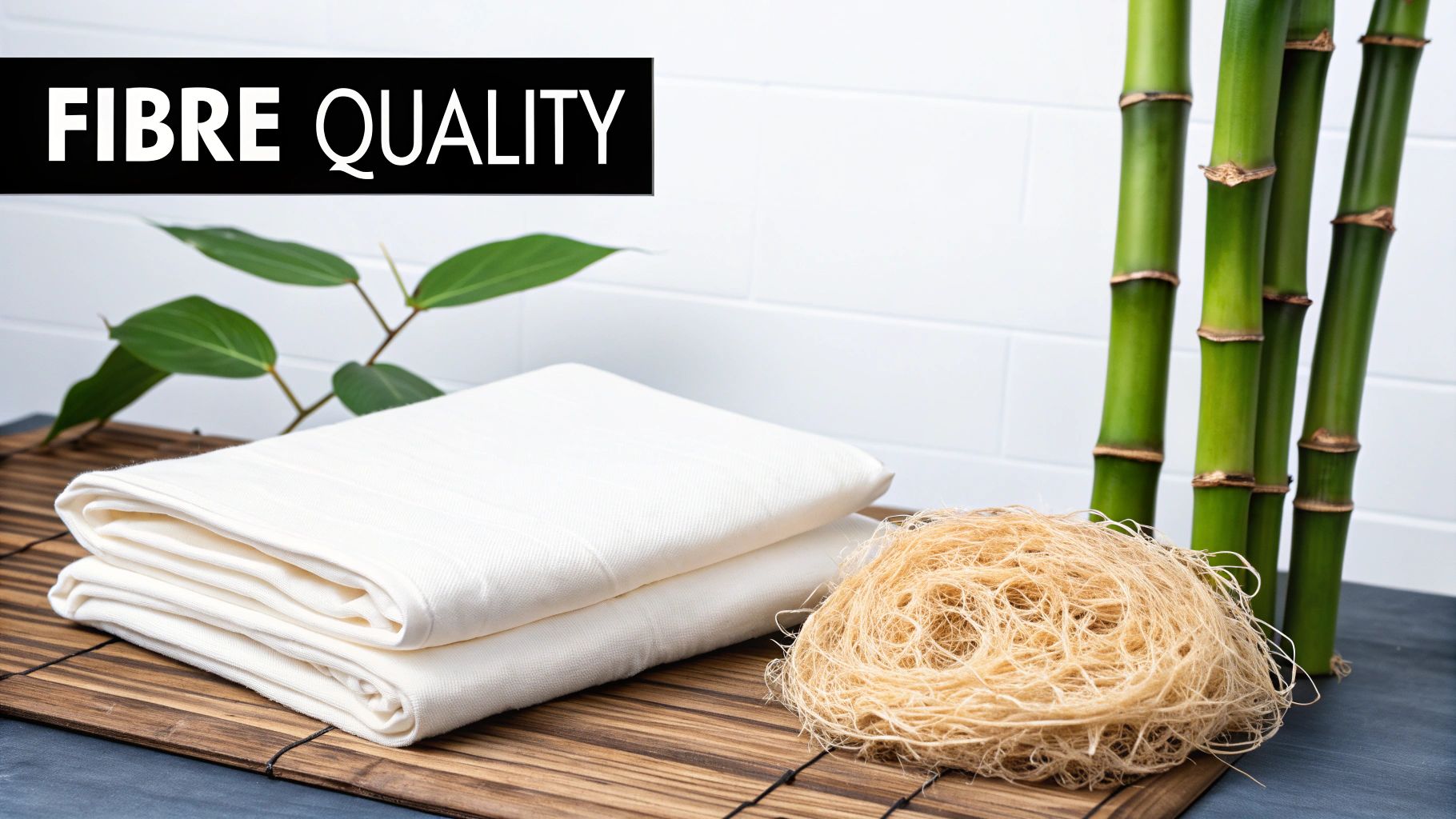
The material your sheets are made from is the single most important factor. It influences everything from softness to how long they last. The key is something called staple length, which refers to the length of the individual plant fibres spun into yarn.
- Short-staple fibres: These are fuzzy and weak. They produce a coarse fabric that starts pilling after just a few washes.
- Long-staple fibres: These are smoother and stronger. They create a fine, silky yarn that results in a noticeably softer and more resilient fabric.
A Quick Look at Premium Fibres
Understanding the characteristics of different materials is key to finding the best sheets for your needs.
| Fibre Type | Feel & Texture | Breathability | Best For | Ideal Thread Count |
|---|---|---|---|---|
| Bamboo | Silky, smooth, buttery | Excellent | Hot sleepers, sensitive skin, eco-conscious buyers | 300-500 |
| Egyptian Cotton | Soft, crisp, durable | Very Good | Those who love a classic, hotel-style feel | 400-800 |
| Linen | Textured, airy, softens over time | Excellent | Year-round comfort, rustic and relaxed aesthetics | 80-150 (measured by GSM) |
| Standard Cotton | Varies widely, often coarse | Good | Budget-friendly options, everyday use | 200-400 |
For a balance of silky softness, sustainability, and breathability, bamboo is hard to beat. Its unique properties make it a standout choice, especially for the varied Australian climate. It naturally regulates temperature, wicks moisture, and is hypoallergenic—a dream for anyone with allergies. Our article comparing bamboo vs organic cotton for air quality dives deeper into these benefits.
How Weave Shapes the Feel of Your Sheets
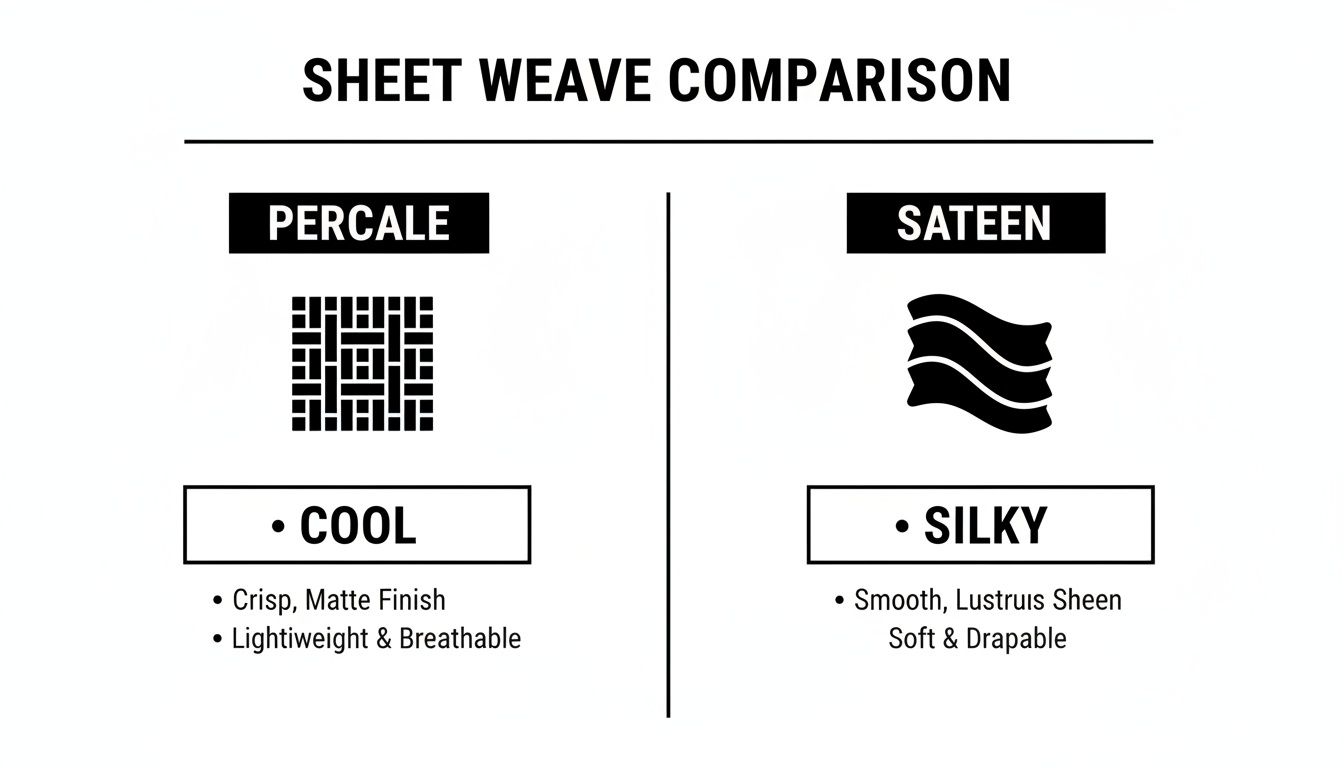
The weave is the pattern used to interlace the threads. This pattern gives a fabric its unique texture and finish. The two most common weaves are percale and sateen.
Percale Weave: The Crisp Classic
A percale weave uses a simple one-thread-over, one-thread-under pattern. This creates a tight, durable fabric with a signature matte finish that feels crisp, cool, and breathable. It’s the classic hotel-sheet feel.
- Best for: Hot sleepers or those in humid climates.
- Feel: Light, airy, and clean.
To dive deeper, have a look at our guide on understanding what percale cotton is.
Sateen Weave: Silky and Indulgent
A sateen weave uses a one-thread-under, three-or-four-threads-over pattern. This technique exposes more thread surface, giving the fabric its trademark subtle sheen and exceptionally soft, buttery feel.
- Best for: Those who prioritise a silky-soft feel or sleep cool.
- Feel: Smooth, lustrous, and luxurious.
Choosing between percale and sateen is purely about personal preference. There’s no right or wrong answer—just what feels best to you.
Finding the Best Thread Count for Each Fabric
Now, let's connect thread count to specific materials. Each fabric has an ideal range where it performs best. Going too high or too low can compromise the qualities you want.
The Sweet Spot for Cotton
The ideal thread count for cotton depends on the weave.
- Cotton Percale: Aim for 200-400. This range maintains the light, airy structure that makes percale feel so crisp and cool.
- Cotton Sateen: Look for 300-600. A slightly higher count enhances the smooth, lustrous finish without making the sheet feel heavy.
Why Linen Is Different
Linen fibres are naturally thicker, so you can forget high thread counts. Quality is often measured in grams per square metre (GSM) instead. The ideal thread count for premium linen is just 80-150. This keeps the fabric breathable and allows it to get softer with every wash.
The Perfect Range for Bamboo
Bamboo shines by proving you don't need high numbers for a luxurious feel. Its fibres are long, smooth, and naturally silky.
The optimal range for bamboo sheets is between 300-500. This is the perfect balance to maximise its inherent softness, durability, and famous breathability.
Pushing the thread count higher can make the weave too dense, trapping heat and reducing the natural airflow that makes bamboo great for temperature regulation. That's why our Sienna Living bamboo sheet collection is crafted within this ideal range.
How to Care for Your Sheets
You’ve found the perfect sheets. Now, how do you keep them feeling luxurious? Proper care is simple and protects your investment.
- Wash Gently: Use a cold, gentle cycle with a mild liquid detergent. Avoid harsh chemicals and powdered detergents.
- Skip Fabric Softener: This is crucial. Fabric softeners coat fibres in a waxy film that reduces breathability and softness.
- Line Dry When Possible: Air drying is the best way to maintain softness and avoid damage from high heat. If you must use a dryer, choose the lowest heat setting.
Proper care ensures your bedding lasts longer and continues to provide maximum comfort. For more expert tips, check out our guide on 6 ways to make your bedding last longer.
Your Questions, Answered
Let's clear up some common questions about finding the best thread count for sheets.
Are 1000 Thread Count Sheets Worth It?
Usually, no. An extremely high thread count is often a marketing gimmick masking lower-quality, multi-ply threads. The result is a heavy, stiff sheet that traps heat. A sheet with a moderate thread count made from high-quality, single-ply fibres will feel far more luxurious and last much longer.
What's the Best Thread Count for Hot Sleepers?
For hot sleepers, breathability is key. Focus on temperature-regulating fabrics like bamboo or linen.
- Bamboo: Look for a thread count between 300-500.
- Cotton Percale: A 200-400 thread count is perfect for airflow.
How Does Bamboo Thread Count Compare to Cotton?
They aren't directly comparable because the fibres are fundamentally different. Bamboo fibres are naturally longer and smoother than most cotton. A 400-thread-count bamboo sheet can feel just as soft, if not softer, than an 800-thread-count cotton sheet. You don't need high numbers to get a premium feel with bamboo.
The Takeaway: Quality Over Quantity
The secret to finding the best sheets is to stop focusing on thread count alone. Instead, prioritise high-quality fibres like bamboo, choose a weave that matches your texture preference, and then find the optimal thread count within that category. This approach will help you invest in bedding that delivers true comfort and durability.
The Australian bedsheet market is projected to reach nearly USD 2.8 billion by 2030, showing a clear trend toward quality and sustainable materials. As consumers become more educated, the focus is shifting from inflated numbers to genuine comfort. You can understand the growth of sustainable bedding in Australia by exploring these market trends.
Ready to experience the difference that quality fibres can make?