

Waking up with a stiff neck or aching shoulders isn't the best way to start your day. If that morning pain feels all too familiar, the solution might be simpler than you think. Finding the right pillow for neck and shoulder pain is often the single most important step you can take for a better night's sleep and pain-free mornings.
The right pillow does more than just cushion your head; it aligns your spine, allowing your neck and shoulder muscles to fully relax and recover overnight. Let’s explore how to find the perfect pillow to end that cycle of discomfort.
Why Your Pillow Is Key to Pain-Free Mornings

That nagging ache isn't just a sign of a restless night—it’s a direct message that your sleep setup isn't working. More often than not, the culprit is your pillow. If it’s too high, too flat, or too soft, it forces your neck into an unnatural position for hours.
This isn't a minor issue. Research shows that up to 70% of people will experience neck pain at some point in their lives. The wrong pillow is a major contributor, turning your sleep into a source of strain rather than recovery.
The Goal: A Neutral Spine
Think of your spine as a straight line from your lower back to your head. Your pillow’s most important job is to maintain this ‘neutral spine’ while you sleep. It must perfectly fill the space between your head and the mattress, keeping everything aligned as if you were standing with good posture.
A pillow that’s too high or too low creates a bend in your neck. This strains the muscles and ligaments connecting your neck to your shoulders, forcing them to work overtime all night. The result is inflammation, stiffness, and that familiar pain when you wake up.
This guide will walk you through finding your perfect match, so you can achieve deeper sleep and wake up feeling refreshed.
Match Your Pillow to Your Sleep Position
The way you sleep is the most critical factor in choosing the right pillow. A pillow that feels perfect for a side sleeper can cause discomfort for a back sleeper. It’s all about matching the pillow's height (loft) and firmness to support your body's alignment in your preferred position.
For Side Sleepers
If you sleep on your side, you have the largest gap to fill between your ear and the mattress. Your pillow needs to be thick and firm enough to fill this space completely, preventing your head from drooping.
- Actionable Tip: Look for a high-loft (10-15 cm), firm pillow. A good test is to lie down and have someone check if your nose is in line with the centre of your body. If it is, your spine is straight. Learn more in our guide to the best pillows for side sleepers.
For Back Sleepers
Sleeping on your back is great for spinal health, but only with the right pillow. You need a pillow that supports the natural curve of your neck without pushing your head too far forward. A pillow that’s too high will force your chin towards your chest, straining your neck muscles.
- Actionable Tip: Choose a medium-loft (8-12 cm), medium-firm pillow. Cervical pillows with a raised edge for neck support are often an excellent choice.
For Stomach Sleepers
This position is the most challenging for your spine, as it forces your neck to twist. If you can’t change this habit, the right pillow is crucial for damage control. You need to keep your head and neck as flat as possible.
- Actionable Tip: Opt for a very thin, soft pillow (under 8 cm), or even no pillow at all. Placing another thin pillow under your hips can also help keep your lower back from arching.
For Combination Sleepers
If you switch positions throughout the night, you need a versatile pillow. Look for adaptable designs, like pillows with different height contours or those with adjustable fills like shredded foam.
- Actionable Tip: An adjustable pillow allows you to customise the support as you move, ensuring you stay aligned whether you’re on your side or back.
Choosing the Right Pillow Material and Shape
Once you know your ideal loft and firmness, it's time to choose a material. Finding the right material for a pillow for neck and shoulder pain is personal, as each offers a unique feel and level of support.
Memory Foam: Contouring Support
Memory foam uses your body heat to soften and mould to the exact shape of your head and neck. This creates a custom-fit cradle that provides excellent, consistent support.
- Best For: Sleepers who want a deep, contouring feel that eliminates pressure points.
- Keep in Mind: Look for gel-infused or aerated memory foam if you tend to sleep hot.
Natural Latex: Responsive Lift
Unlike the slow sink of memory foam, latex offers a buoyant and responsive feel. It provides immediate support and is naturally breathable, making it a cooler option.
- Best For: Those who prefer a bouncier feel with excellent support and breathability. For more details, compare latex vs. memory foam pillows.
Hypoallergenic Microfibre: Soft and Safe
If you love the plush softness of down but suffer from allergies, high-quality microfibre is the perfect alternative. It delivers a light, airy feel while resisting dust mites and other allergens.
- Best For: Sensitive sleepers who want adjustable, cloud-like comfort.
The Power of Pillow Shape
The shape of your pillow can be a game-changer. While a standard rectangular pillow works for many, specialised shapes are designed to solve specific alignment issues.
The most effective design is often a cervical or contour pillow. Its wave-like shape features a higher curve and a lower one. You place the supportive curve directly under your neck, which perfectly cradles its natural arch while your head rests in the centre dip. This design is exceptionally good at maintaining a neutral spine for back and side sleepers. Check out this comprehensive guide on how to choose the perfect pillow for more insights.
Simple Adjustments for Immediate Relief
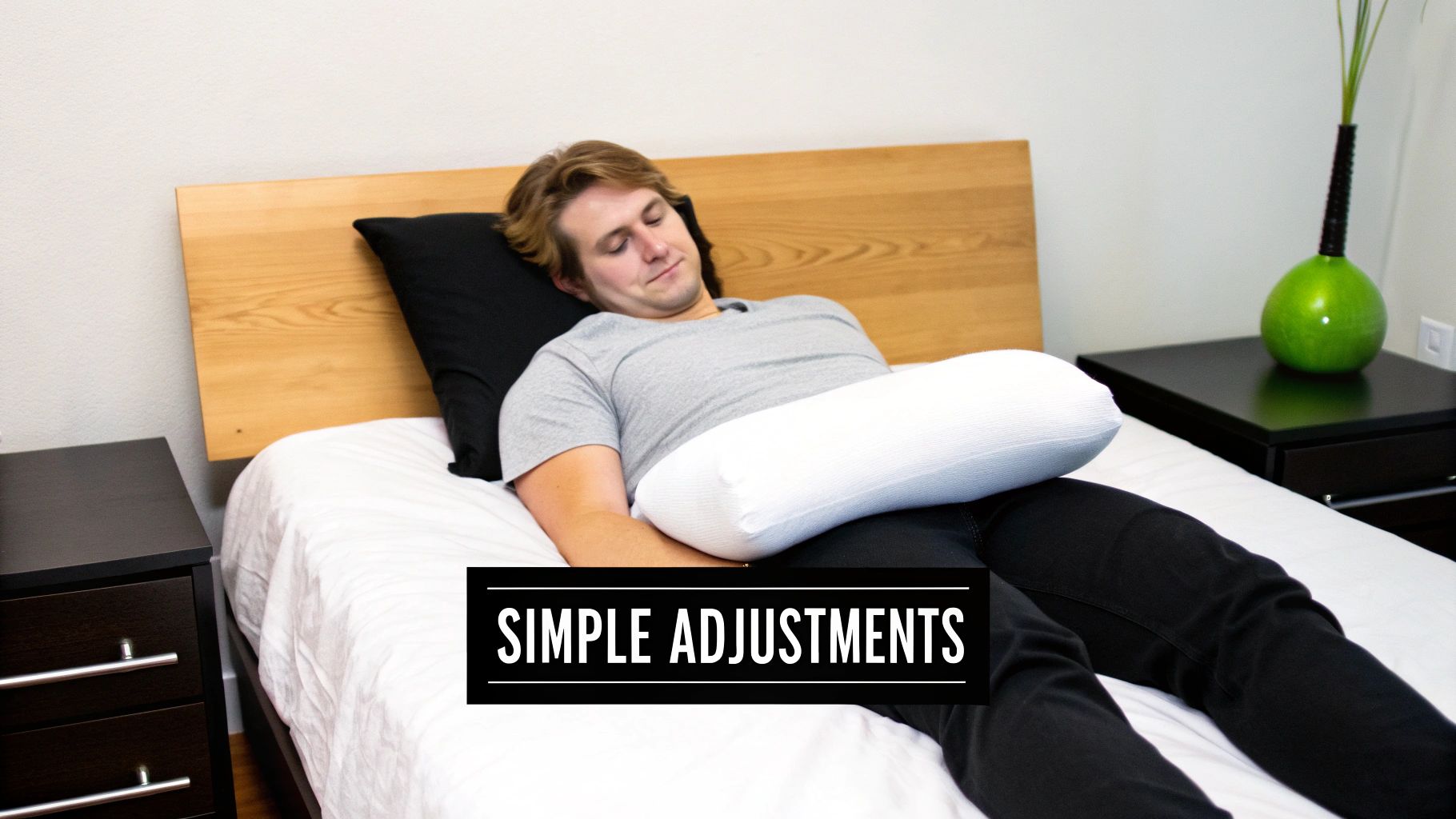
Even the perfect pillow for neck and shoulder pain needs to be used correctly. A few simple tweaks can dramatically increase your comfort and ensure you get the maximum benefit.
Perfect Your Pillow Placement
How you place your pillow is just as important as the pillow itself. Your shoulders should rest on the mattress, not on the pillow. The pillow is there to support only your head and neck. This prevents your spine from curving at an awkward angle.
- Case Study: Mark, a side sleeper, kept waking up with shoulder pain. He realised his shoulder was creeping up onto his high-loft pillow. By consciously positioning the pillow just under his neck, he created the right alignment and his shoulder pain disappeared within a week.
Add a Pillow Between Your Knees
For side sleepers, placing a second pillow between your knees is a game-changer. This simple action keeps your hips, pelvis, and spine aligned by preventing your top leg from twisting your lower back. This stability reduces strain that can travel all the way up to your neck.
Stop Stacking Pillows
If you find yourself folding your pillow or adding a second one, it’s a clear sign your main pillow is too low or has lost its support. Stacking creates an unstable surface that shifts during the night, leading to inconsistent alignment and more pain. Instead, invest in a single pillow with the correct loft for your needs. Unsure what size to get? This guide on pillow dimensions in Australia can help.
Remember, daytime posture matters too. Supporting your neck with ergonomic office chairs designed for neck pain relief reduces strain during the day, allowing your muscles to better recover at night.
When to Replace Your Pillow for Better Health
Even the best pillow for neck and shoulder pain won’t last forever. Over time, the materials break down and lose their ability to provide adequate support. Using a worn-out pillow can bring your pain right back.
Signs Your Pillow Is Past Its Prime
Be on the lookout for these clear indicators that it's time for a replacement:
- Visible Lumps: If the filling is clumpy and uneven, it can’t provide consistent support.
- Permanent Indents: A head-shaped crater that doesn't fluff out means the filling is compressed.
- You Fold It: If you have to fold your pillow in half to feel supported, it’s too flat.
The Quick Fold Test
Here's an easy way to check your pillow's health (this works for most fills, except solid memory foam):
- Fold your pillow in half.
- If it springs back into shape, it's still good.
- If it stays folded, its supportive core is gone. It's time for a new one.
Most experts recommend you learn how often you should replace your pillow, which is typically every 1-2 years. This ensures your sleep setup is always working for you, not against you.
Common Questions About Pillows for Pain Relief
Choosing a new pillow for neck and shoulder pain can bring up a few final questions. Here are the answers to the most common ones.
How Long Does It Take to Adjust to a New Pillow?
It can take up to two weeks for your body to adapt to a new, more supportive pillow. Your muscles have to unlearn old habits and get used to proper alignment. Be patient—the initial awkwardness will give way to lasting comfort.
Can the Right Pillow Help with Headaches?
Yes. Many morning headaches are caused by muscle tension in the neck and shoulders, known as cervicogenic headaches. A pillow that provides proper cervical support allows these muscles to relax, which can significantly reduce the frequency and intensity of these headaches.
Should I Get a Firm or Soft Pillow for Neck Pain?
Focus on "supportive" rather than "firm" or "soft." The right level of firmness depends entirely on your sleeping position. A side sleeper needs a firm pillow to bridge the shoulder gap, while a back sleeper needs a medium-firm pillow to cradle the neck gently. Keeping your pillow fresh by knowing how to wash a pillow correctly also helps maintain its supportive structure.
Your Journey to Pain-Free Sleep Starts Now
Choosing the right pillow is an investment in your health. By understanding your sleep position and the importance of a neutral spine, you can select a pillow that provides the support you need to wake up feeling refreshed and free from neck and shoulder pain.
Ready to find the pillow that will finally put an end to morning pain?
Explore the Sienna Living Pillow Collection and Wake Up Refreshed