

That sinking feeling when a glass of red wine topples over or a pet has an accident on the bed—we’ve all been there. Panic is a natural first reaction, but the key to successfully removing a mattress stain is to act fast and blot, don't rub. This guide on how to clean a mattress stain will give you clear, actionable steps for a fresher bed tonight. Getting to a spill quickly stops the liquid from soaking deep into the mattress fibres, which makes a world of difference.
Your Immediate Action Plan for Fresh Spills
When a spill happens, those first few moments are critical. A calm, measured approach with a few household staples is almost always the best choice. In fact, research shows that tackling a spill right away can prevent up to 90% of permanent stains.
The Golden Rule: Blot, Don't Rub
Your first instinct might be to scrub away at the spot, but that's the worst thing you can do. Rubbing just pushes the liquid deeper, making a small problem much bigger.
Instead, grab a clean, dry cloth (microfibre works brilliantly). Press down gently on the spill to absorb as much liquid as possible. Always work from the outside edge of the stain toward the centre—this stops it from spreading.
Real-World Example: Imagine you've just spilled your morning coffee on the bed. Before you do anything else, grab a few paper towels and firmly blot the area. You'll be amazed how much of the brown liquid you can lift out before it even has a chance to set. This simple step can turn a potential disaster into a minor clean-up job.
Gather Your Cleaning Toolkit
You don't need expensive, specialised products. For most fresh stains, a few items from your pantry will get the job done. Here’s a quick rundown of what you’ll need.
Your Essential Mattress Stain Removal Toolkit
This table covers the basic supplies you'll need for most common mattress stains.
| Tool or Supply | Primary Use | Expert Tip |
|---|---|---|
| Clean Cloths | Blotting fresh spills & applying cleaning solutions | Microfibre cloths are your best friend here. They're super absorbent and won't leave lint behind. |
| Baking Soda | Absorbing moisture & neutralising odours | Don't be shy with it! A thick layer left for several hours will work wonders on both the stain and any lingering smells. |
| Vacuum Cleaner | Removing dry residue (like baking soda) | Always use the upholstery attachment to avoid damaging the mattress fabric. |
| Mild Dish Soap | Creating a gentle, all-purpose cleaning solution | Look for a clear, dye-free soap to avoid accidentally adding a new colour to your stain. |
With these items on hand, you're well-equipped to tackle most common spills.
My Go-To All-Purpose Cleaner: For a simple and surprisingly effective solution, just mix a few drops of mild dish soap into a cup of cool water. It’s gentle enough for most mattress fabrics but tough enough for many fresh spills.
Of course, your bedding is the first line of defence. Knowing how to wash a mattress cover properly is a huge part of keeping your entire bed fresh and clean.
Proven Methods for How to Clean a Mattress Stain
Not all spills are created equal. Knowing how to clean a mattress stain properly means understanding what you’re up against. A coffee spill needs a different game plan than a blood stain, and using the wrong method can set the stain permanently.
First, a crucial piece of advice: always spot-test your cleaning solution. Find a small, hidden part of the mattress—a side seam is perfect—and apply a tiny amount. This simple check saves you from the potential headache of discoloration or fabric damage.
This handy decision tree can help you figure out your first move the moment a spill happens.
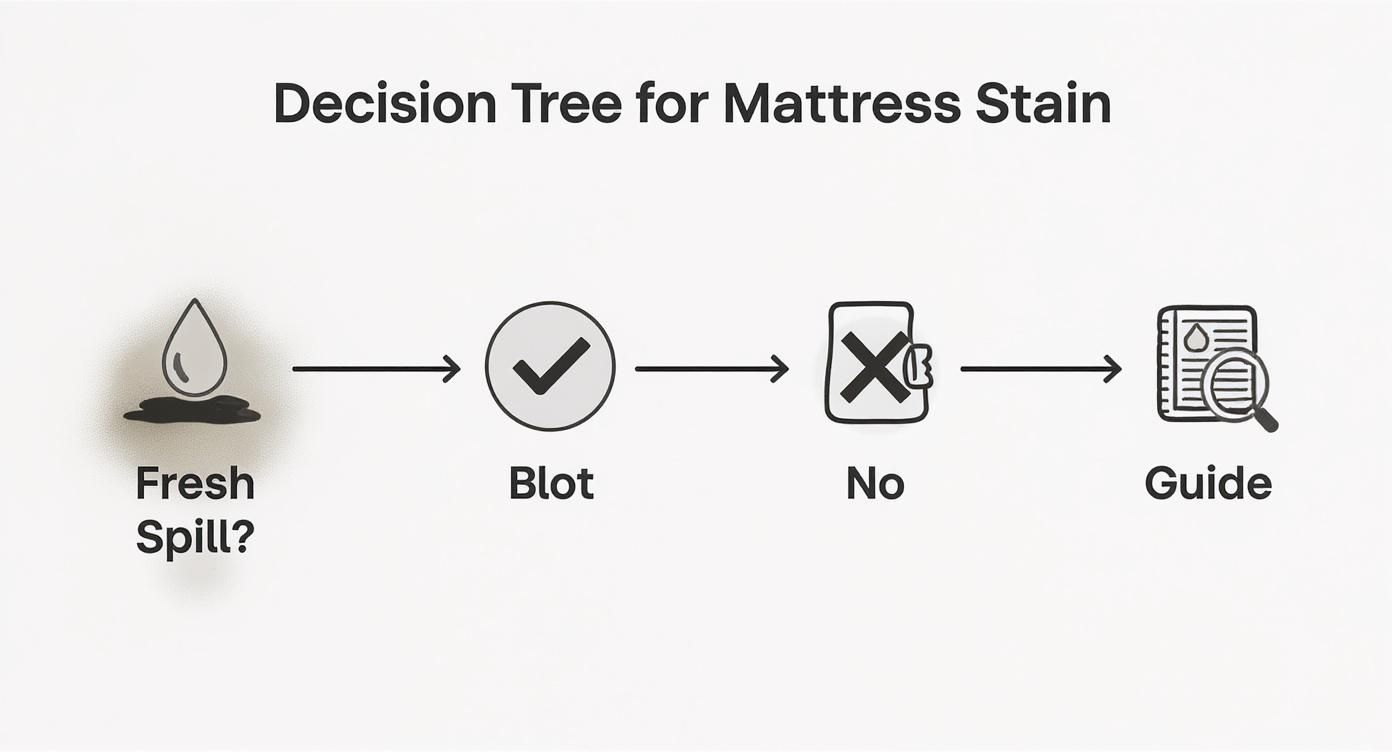
As you can see, your immediate response is all about whether the stain is fresh. Acting fast makes all the difference.
Tackling Common Organic Stains
Organic stains—blood, urine, and sweat—are protein-based. This means they need special care. Whatever you do, keep heat away. Hot water can essentially "cook" the proteins into the fabric, making the stain permanent.
-
Blood Stains: These call for cold water only. A small amount of 3% hydrogen peroxide dabbed on the stain will bubble as it works to lift the proteins. Blot carefully with a clean cloth until the stain fades. For a more detailed walkthrough, see our complete guide on how to get blood out of a mattress.
-
Urine and Sweat Stains: These aren't just unsightly; they leave behind stubborn odours. An enzyme cleaner is your best friend here. These cleaners are formulated to break down the uric acid in urine and the proteins in sweat. Spray the cleaner on, let it sit for 15-20 minutes, then blot it away with a clean, damp cloth. Many effective ways to get rid of sweat stains use similar enzyme-based principles.
Dealing With Food And Drink Spills
Life happens, especially with breakfast in bed. The good news is that most food and drink stains are easy to handle if you catch them quickly.
My Pro Tip: For any liquid spill, the very first thing you should do is blot. Grab a dry cloth and soak up as much of the liquid as you can. This containment step is crucial—it stops the stain from spreading deeper into the mattress layers.
-
Coffee and Tea: Once blotted, mix a solution of one part white vinegar to two parts cool water. Lightly spray this onto the stain, but don't oversaturate. Gently blot with a clean cloth to lift the stain.
-
Red Wine: The classic scary stain, but it's manageable. After blotting, cover the area with a generous pile of salt or baking soda to draw out the remaining liquid. Let it sit for at least an hour before vacuuming it up. Treat any leftover discolouration with a mild soap and cool water solution.
-
Oily or Greasy Food: Did pizza night get messy? Sprinkle cornflour or baking soda directly onto the greasy spot to absorb the oil. Let it sit for a few hours, then vacuum it up. Any remaining mark can be treated with a dab of mild dish soap and water.
Drying and Deodorising for a Truly Fresh Finish
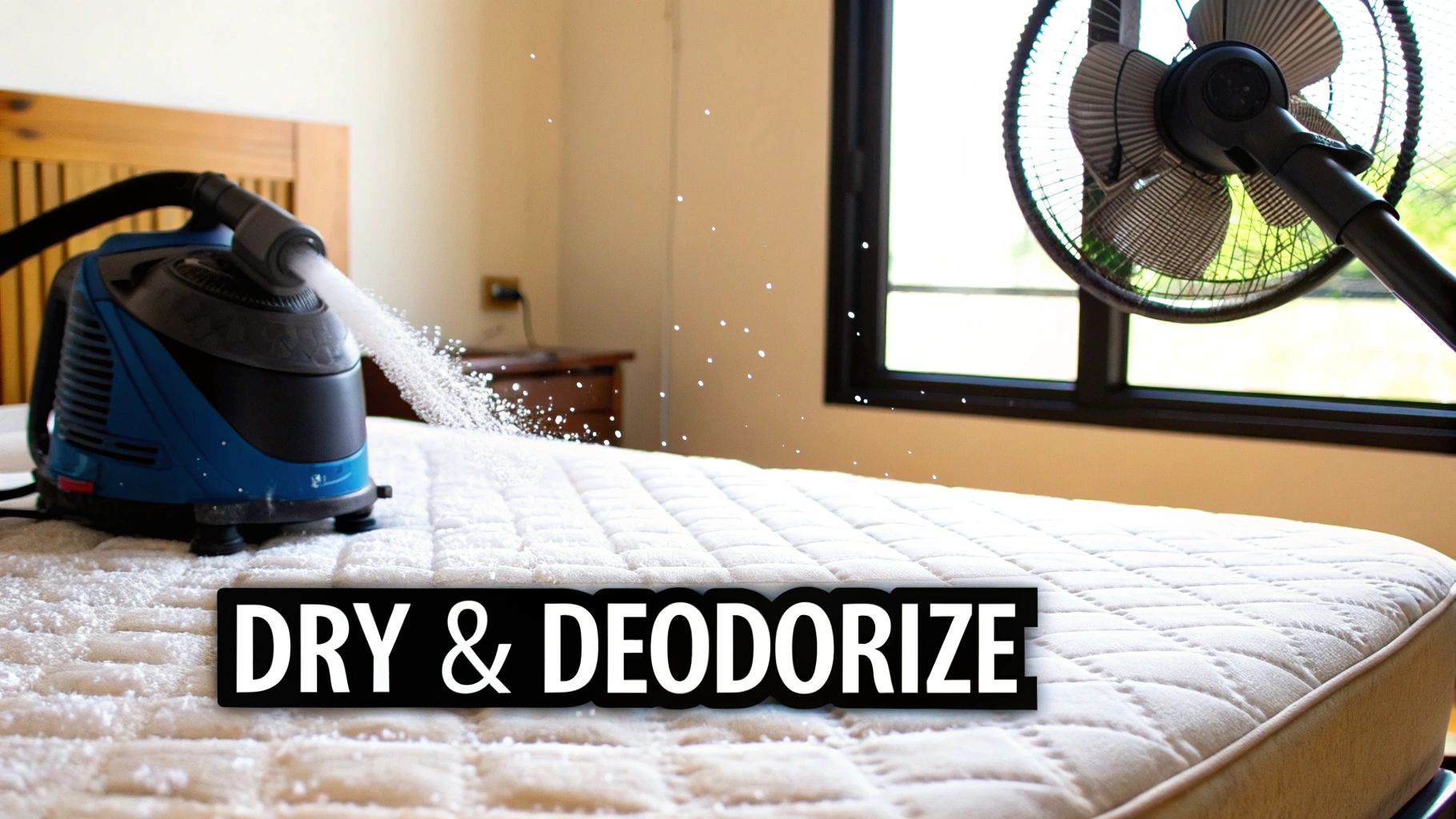
Getting the stain out is a victory, but the job's not done. The final step is making sure the mattress dries completely. If you skip this, you’re inviting musty smells, mould, and mildew to set up camp inside your mattress.
Speeding Up the Drying Time
Your best friends here are air and patience. Open windows and point a fan directly at the damp patch. A dehumidifier can also pull moisture right out of the air and speed things up significantly.
Sunlight is a fantastic natural steriliser, but be careful. Some materials, like memory foam, don't react well to harsh, direct UV rays. A few hours in a bright room is usually fine. Realistically, expect a drying time of four to twelve hours.
The Magic of Baking Soda for Odours
Once the spot feels dry, it’s time to tackle any lingering odours. This is where baking soda comes in. It’s brilliant for absorbing moisture and neutralising smells.
Don't be shy with it. Sprinkle a generous, thick layer over the entire treated area. The more you use, the better it works.
Now, let it sit. A few hours is good, but leaving it overnight is ideal. This is a game-changer for stubborn odours like urine, a common battle for parents and pet owners. If that’s a challenge you're facing, we have a detailed guide on how to get the urine smell out of a mattress.
A Quick Story: A customer had a huge coffee spill. Even after cleaning, a faint sour smell lingered. They covered the area in a thick blanket of baking soda, left it for a full 24 hours, and managed to completely knock out the odour. Their mattress was back to being fresh and clean.
When you're ready, grab your vacuum, pop on the upholstery attachment, and suck up all the baking soda. Your mattress should now be stain-free, fresh, and ready for a good night's sleep.
Knowing When to Call a Professional Cleaner
Let's be honest, some stains are out of our league. Knowing when to call in a professional is key to protecting your mattress investment. Pushing a home remedy too far can set a stain for good.
If you're staring at a stain that’s old, deeply set, or you have no idea what it is, it’s probably time for an expert. Another red flag is any sign of mould or mildew—dark, speckled spots with a musty smell. These problems run deep and need specialised treatment.
The Professional Advantage
Professional cleaners have commercial-grade equipment and mattress-safe solutions we don't. They can deep clean and sanitise, removing hidden allergens, bacteria, and dust mites.
This kind of deep clean is a game-changer for:
- Serious Water Damage: A pro can pull all that moisture out and stop mould before it starts.
- Widespread Discolouration: For large, yellowed patches from years of use, their tools achieve a much more even result.
- Removing Nasty Allergens: A professional clean can genuinely improve air quality in your bedroom.
What to Expect: Costs and Process
Hiring a professional might sound expensive, but it's often affordable. In Australia, you can expect the cost to professionally clean a mattress to fall between $80 and $150. The final price depends on mattress size and the type of cleaning required.
At the end of the day, if a stubborn stain is ruining your peace of mind, calling a professional is a smart move. It ensures the job gets done right, protecting your health and the longevity of your mattress—a big deal when you consider how long mattresses should last.
Long-Term Habits for a Cleaner Mattress
Knowing how to tackle a stain is great, but preventing them is easier. A few simple, consistent habits can keep your mattress feeling fresh for the long haul.
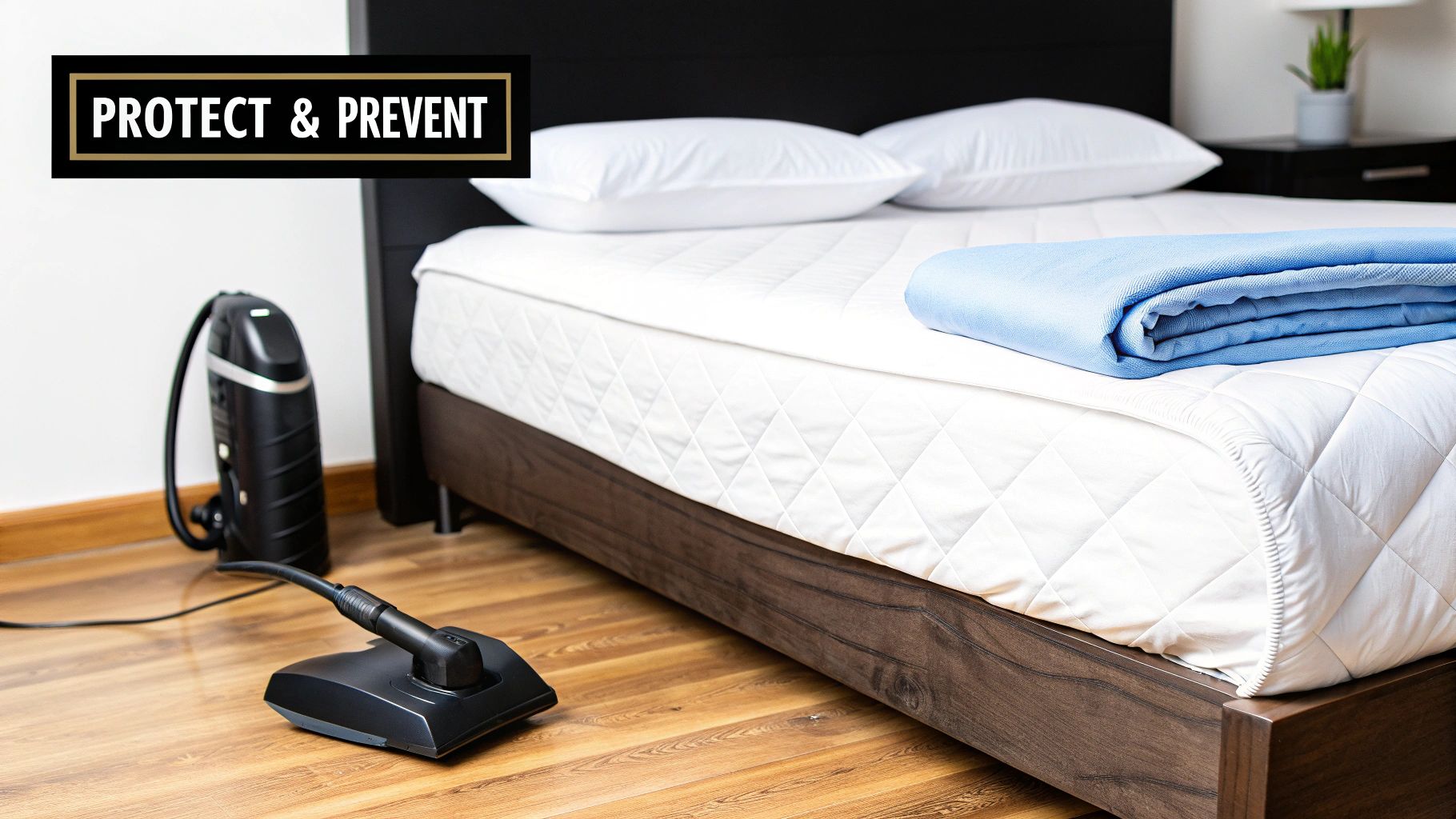
If you do just one thing, make it this: get a high-quality, waterproof mattress protector. Think of it as insurance for your bed. It creates a solid barrier against spills, sweat, and allergens.
Building Your Proactive Care Routine
Beyond a good protector, a few other habits are key. These small actions add up, cutting down on the build-up of dirt and grime.
- Vacuum Regularly: Once a month, give your mattress a good going-over with an upholstery attachment. This whisks away dust, dead skin cells, and allergens.
- Rotate Your Mattress: Every three to six months, give your mattress a 180-degree spin. This helps it wear evenly and extends its supportive life.
- Wash Bedding Frequently: Wash your sheets, pillowcases, and mattress protector every one to two weeks in hot water. This kills dust mites and bacteria. Learn more with our guide on 6 ways to make your bedding last longer.
The Value of a Professional Deep Clean
Even with great home care, a professional deep clean every year or two works wonders. Professional cleaners use specialised equipment to sanitise and deodorise far more effectively than any DIY method.
For the roughly 1 in 10 Australians who suffer from asthma, a professionally cleaned mattress can make a real difference in reducing allergic reactions. You can explore more essential mattress maintenance and cleaning tips to extend its lifespan.
Still Have Questions About Cleaning Your Mattress?
Even with the best instructions, questions come up. Let's walk through some common queries.
Is It Okay to Use a Steam Cleaner on My Mattress?
The answer is almost always no, especially for memory foam or latex. High heat can melt and deform the foam structure, permanently damaging the mattress. Always check your manufacturer's care guide. For most modern beds, gentle spot-cleaning with minimal liquid is the only safe way.
How Long Will My Mattress Take to Dry?
Drying time varies from 4 to 24 hours. It depends on how much cleaning solution you used, room humidity, and air circulation. The mattress must be 100% dry before you put sheets back on. Trapped moisture is a recipe for mould and mildew.
Could Cleaning a Stain Myself Void My Warranty?
Unfortunately, yes. Many mattress warranties become void at the first sign of liquid damage—including stains from cleaning solutions. Using harsh chemicals like bleach is another sure-fire way to have a claim denied.
Our Best Advice: The only guaranteed way to protect your mattress and its warranty is to use a high-quality waterproof mattress protector right from the start. Think of it as essential insurance against life's little accidents.
Does Baking Soda Actually Get Rid of Smells?
It really does! Baking soda is a fantastic natural deodoriser. It works by absorbing moisture and neutralising the acidic compounds that cause bad odours. Be generous, sprinkle a thick layer over the area, and let it sit for at least a few hours—or overnight for tough smells. Then, just vacuum it all up. If the smell persists, check our guide on how to wash a mattress cover for more tips.
A clean bed is the cornerstone of a good night's sleep. By following these steps on how to clean a mattress stain and adopting a proactive care routine, you can keep your mattress in great shape for years, ensuring it remains a comfortable and healthy place to rest.
Ready to give your bed the best defence against future stains? Explore our collection of premium, breathable mattress protectors at https://www.siennaliving.com.au.