

Your king mattress was a significant investment. Think of a high-quality king mattress protector as the essential insurance policy for that investment, shielding it from morning coffee spills, sweat, and allergens that can drastically shorten its lifespan. This guide gives you actionable insights to choose the perfect one, ensuring your bed remains a clean, comfortable sanctuary for years.
Why a King Mattress Protector is a Smart Decision
A king mattress is a long-term commitment to better sleep. However, daily life—spills, sweat, and dust mites—puts that commitment at risk. A protector is the single most effective way to keep your mattress in pristine condition.
This is about more than just stains. A quality protector forms an impenetrable barrier, stopping moisture from seeping into the foam and fibres, which prevents mould and mildew growth. It also blocks the build-up of dead skin cells, the primary food source for dust mites—a major trigger for allergies and asthma.
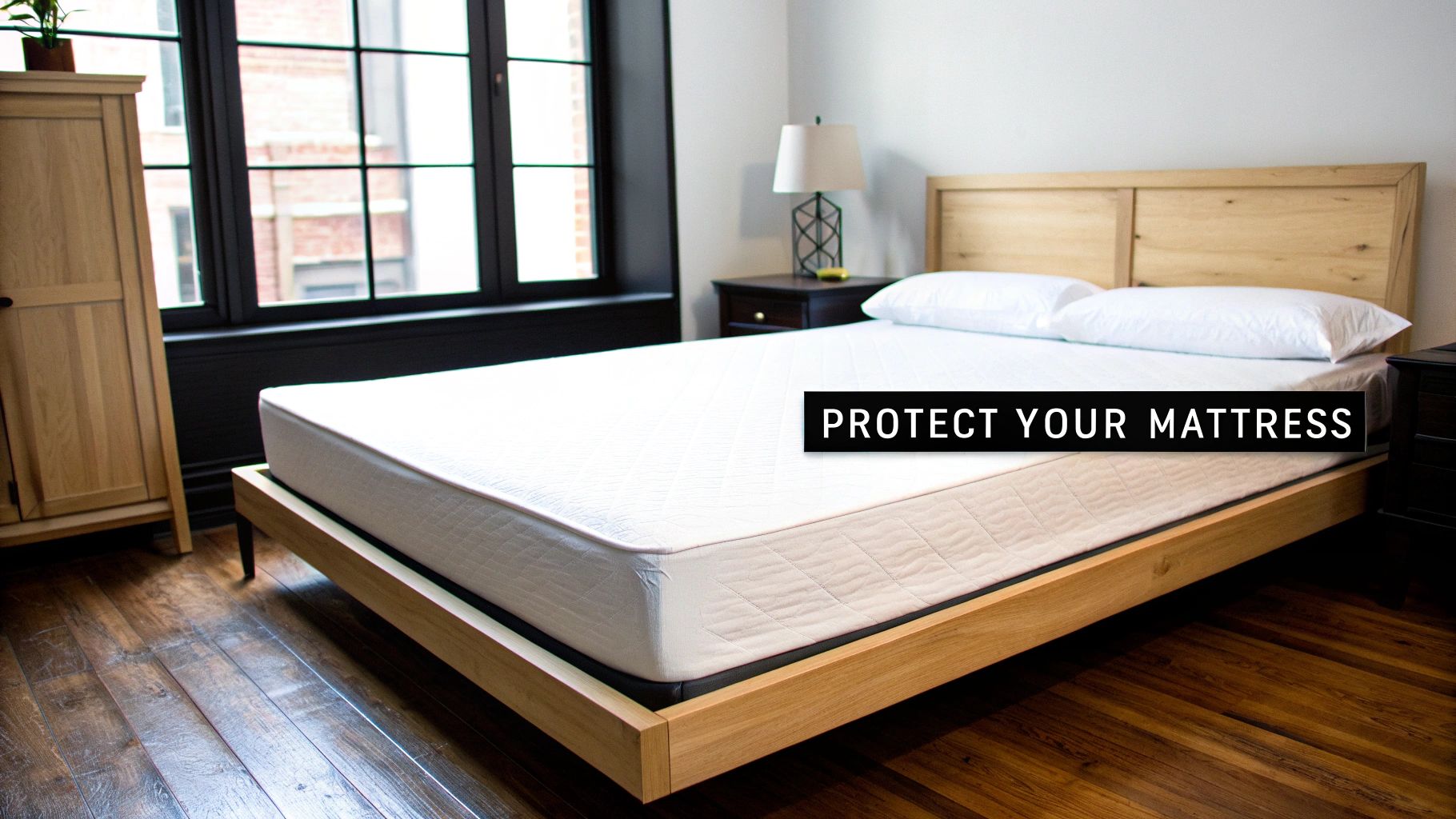
Protection for a Growing Trend
More Australians are upgrading to larger beds. In fact, the Australian mattress market is projected to grow significantly, with consumers increasingly favouring bigger, more luxurious options like king-size mattresses. This trend highlights a greater appreciation for premium sleep, making it crucial to protect these valuable investments.
Taking this simple step not only keeps your mattress looking and feeling new but helps it last for its full intended lifespan, saving you money in the long run. When you understand how long mattresses should last, you see why a protector is a necessity, not an accessory.
A Layer of Hygiene and Peace of Mind
Ultimately, a king mattress protector offers peace of mind. You can relax with breakfast in bed or let the kids have a snack without worrying about accidents. It adds a simple, washable, and hygienic layer to your bed, ensuring it remains a clean and healthy sanctuary. Once you see the benefits, you can explore a wide range of mattress pads and protectors to find your perfect match.
Finding The Perfect Fit For Your King Mattress
An ill-fitting protector is a nightmare. Too loose, and it bunches up under your sheets. Too tight, and it pings off the corners, defeating its purpose. Getting the fit right is the most critical first step.
While a standard Australian king mattress is 183.5cm x 203cm, the most overlooked measurement is the depth.
Why Mattress Depth is the Key
Modern mattresses featuring pillow-tops and thick memory foam layers are much deeper than older models. A protector designed for a 25cm mattress simply won't fit a modern 40cm one.
Forcing a protector onto a mattress that's too deep can compress the comfort layers, changing how the bed feels. It also stresses the elastic and seams, causing it to wear out faster. A snug, secure fit is essential for protection you won't even notice is there.
How to Measure for a Perfect Fit
Take a minute to measure your mattress properly. It’s simple:
- Strip the bed: Remove all bedding to get to the bare mattress.
- Use a straight edge: Place a hardcover book or ruler across the top, hanging slightly over the side.
- Measure up: Use a tape measure to measure from the bottom of your mattress to the underside of the straight edge. This gives you the true height without squashing the top.
- Note the depth: Write down the measurement in centimetres.
Pro Tip: If you use a mattress topper, measure the combined height of the mattress and topper together. Look for a protector that can comfortably cover this total depth.
Choosing the Right Skirt Depth
With your measurement, you can shop confidently. Protectors come with different skirt depths:
- Standard Skirt: Fits mattresses up to about 35cm deep.
- Deep Skirt: Designed for thicker mattresses, fitting depths from 40cm up to 50cm. This is the best choice for most modern pillow-top or hybrid king beds.
Look for a protector with a deep, fully elasticised skirt that wraps securely under the mattress, ensuring it stays put all night. For a complete rundown, see our guide to bedding and mattress dimensions.
Comparing The Best Protector Materials
The material of your king mattress protector dictates your comfort. It’s the difference between sleeping on a cool, quiet surface and a crinkly, heat-trapping plastic sheet. The fabric impacts breathability, softness, and durability. Let's break down the common options.
Bamboo: The Natural All-Rounder
If you're a "hot sleeper" who constantly flips the pillow to the cool side, a bamboo king mattress protector is a game-changer. Its silky-smooth fibres are naturally porous, wicking moisture away while allowing air to flow freely. This keeps you cool and dry.
Bamboo is also naturally hypoallergenic and antibacterial, making it a fantastic choice for people with allergies or sensitive skin. You can explore the benefits of viscose from bamboo in our detailed guide.
Cotton: The Timeless Classic
Cotton is a reliable choice, known for being soft and breathable. A good cotton protector allows air to circulate, preventing heat build-up. However, cotton tends to absorb moisture rather than wick it away, so it can feel damp if you're prone to night sweats.
Getting the material right is half the battle; the other half is fit. This diagram shows you exactly what to look for.
As you can see, a perfect fit isn’t just about the width and length. It’s about making sure the skirt is deep enough to hug your mattress securely, so it doesn't bunch up or slip off.
Polyester: The Durable Workhorse
For tough, waterproof protection, polyester is a go-to. This synthetic material is resilient, affordable, and excellent at repelling spills, making it a popular pick for kids' beds. The trade-off is often breathability, as cheaper polyester can trap heat. However, modern blends often combine polyester with other fibres to improve comfort.
Tencel: The Eco-Friendly Innovator
Tencel™, a type of lyocell made from wood pulp, is known for being incredibly soft and a champion of temperature regulation. Like bamboo, Tencel is a moisture-wicking powerhouse, making it another top choice for hot sleepers. Its sustainable production process is a win for the environmentally conscious shopper.
King Mattress Protector Material Comparison
| Material | Key Benefits | Best For | Considerations |
|---|---|---|---|
| Bamboo | Ultra-soft, highly breathable, moisture-wicking, hypoallergenic | Hot sleepers, people with allergies or sensitive skin | Can be a higher price point than synthetics |
| Cotton | Soft, breathable, familiar feel, generally affordable | Those who want a classic, natural fibre | Absorbs moisture instead of wicking it away |
| Polyester | Very durable, waterproof, budget-friendly, excellent stain resistance | Kids' beds, maximum spill protection | Can trap heat and may feel less soft |
| Tencel | Exceptionally soft, excellent moisture-wicking, eco-friendly | Eco-conscious shoppers, hot sleepers, ultimate luxury | Often the most expensive option |
The best material depends on your personal needs. Matching the fabric to your sleep style is the secret to a great night's rest.
Getting Waterproofing Right Without Sacrificing Comfort
The word "waterproof" can conjure memories of crinkly, hot plastic sheets. The good news? Bedding technology has advanced significantly. Today’s protectors offer complete peace of mind against spills without making you feel like you’re sealed in a plastic bag.
The Science Behind Silent, Breathable Protection
The best modern protectors combine a soft fabric top layer (like bamboo) with a thin, undetectable layer of polyurethane (PU) underneath. This PU membrane is the hero.
Think of it like a high-tech rain jacket: it stops liquid from getting through but has microscopic pores that let body heat and vapour escape.
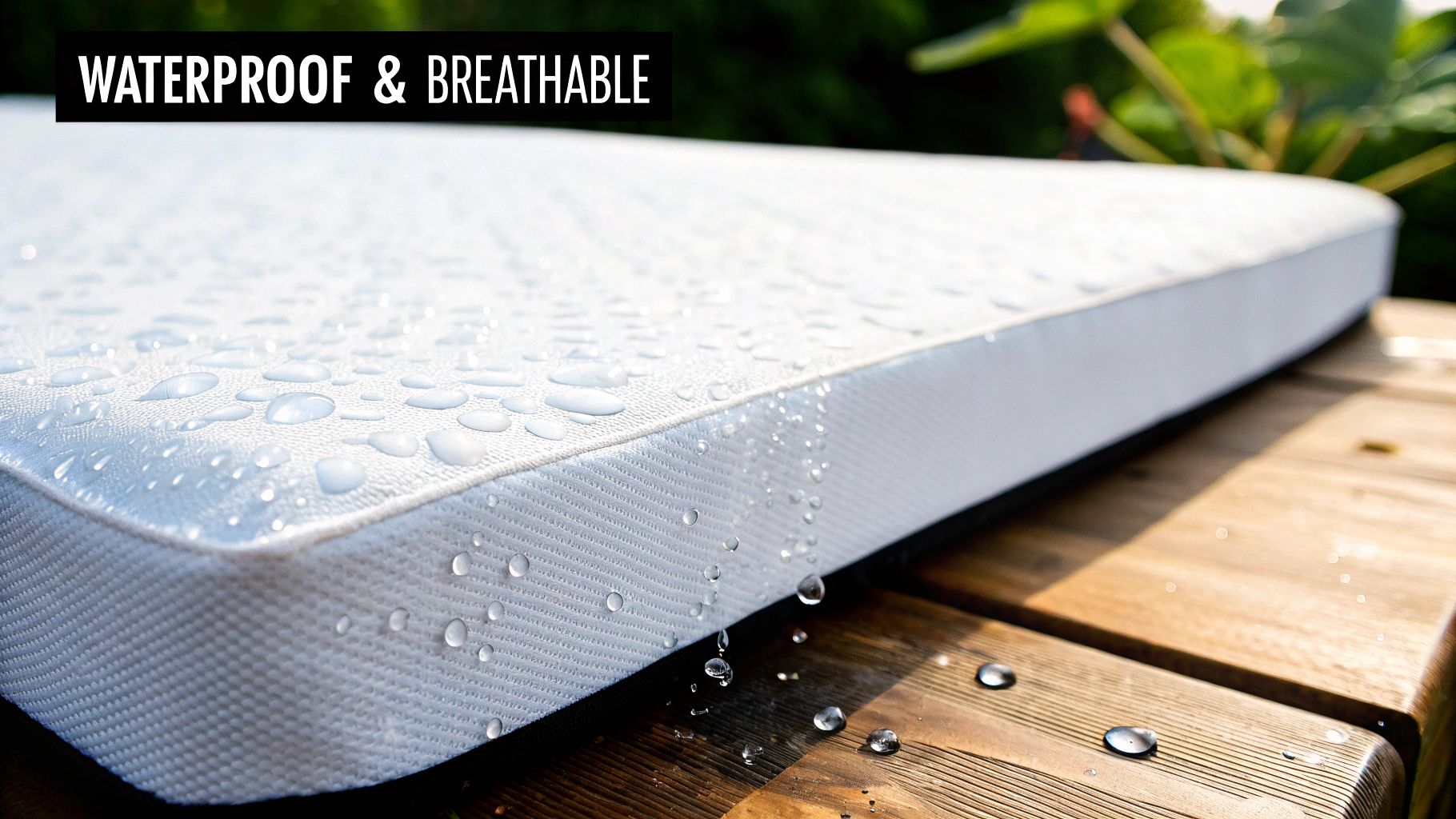
A quality king mattress protector operates on the same principle:
- It stops liquids: Spills and sweat bead up on the surface.
- It lets the bed breathe: Air circulates freely to help regulate your temperature.
- It’s completely silent: The flexible PU layer moves with you without any crinkling noise.
This smart design means you get 100% confidence against stains without sacrificing a cool, quiet, and comfortable sleep.
Why Breathability is So Important
Breathable technology is essential, especially for memory foam or hybrid mattresses that can retain body heat. A non-breathable cover would trap this heat, creating a hot, sticky environment. A modern, breathable king mattress protector works with your mattress, allowing heat to dissipate naturally.
A 2023 industry report showed that sheets and mattress covers, including the king mattress protector, made up a massive 42.02% of the Australian bed linen market, confirming that consumers are prioritising mattress hygiene and longevity. You can get more insight on these trends in the full report on the Australian mattress market.
A Real-World Example
Consider a family with young children who just bought a new king mattress. They were worried about juice spills and nighttime accidents. They chose a bamboo protector with a PU membrane. A few weeks later, a cup of water spilled on the bed. The liquid pooled on the protector, which they wiped up in seconds. The mattress underneath was completely dry. This story shows how modern protectors deliver on both protection and comfort. For more details, see our guide on the benefits of a bamboo waterproof mattress protector.
How a Protector Creates a Healthier Sleep Environment
A mattress protector does more than guard against spills; it creates a healthier place to sleep. Over time, mattresses collect dust mites, dead skin cells, and other allergens that can trigger asthma and skin conditions like eczema.
A good king mattress protector creates a physical barrier that prevents these allergens from burrowing into your mattress, transforming your bed into a clean, allergy-friendly sanctuary.
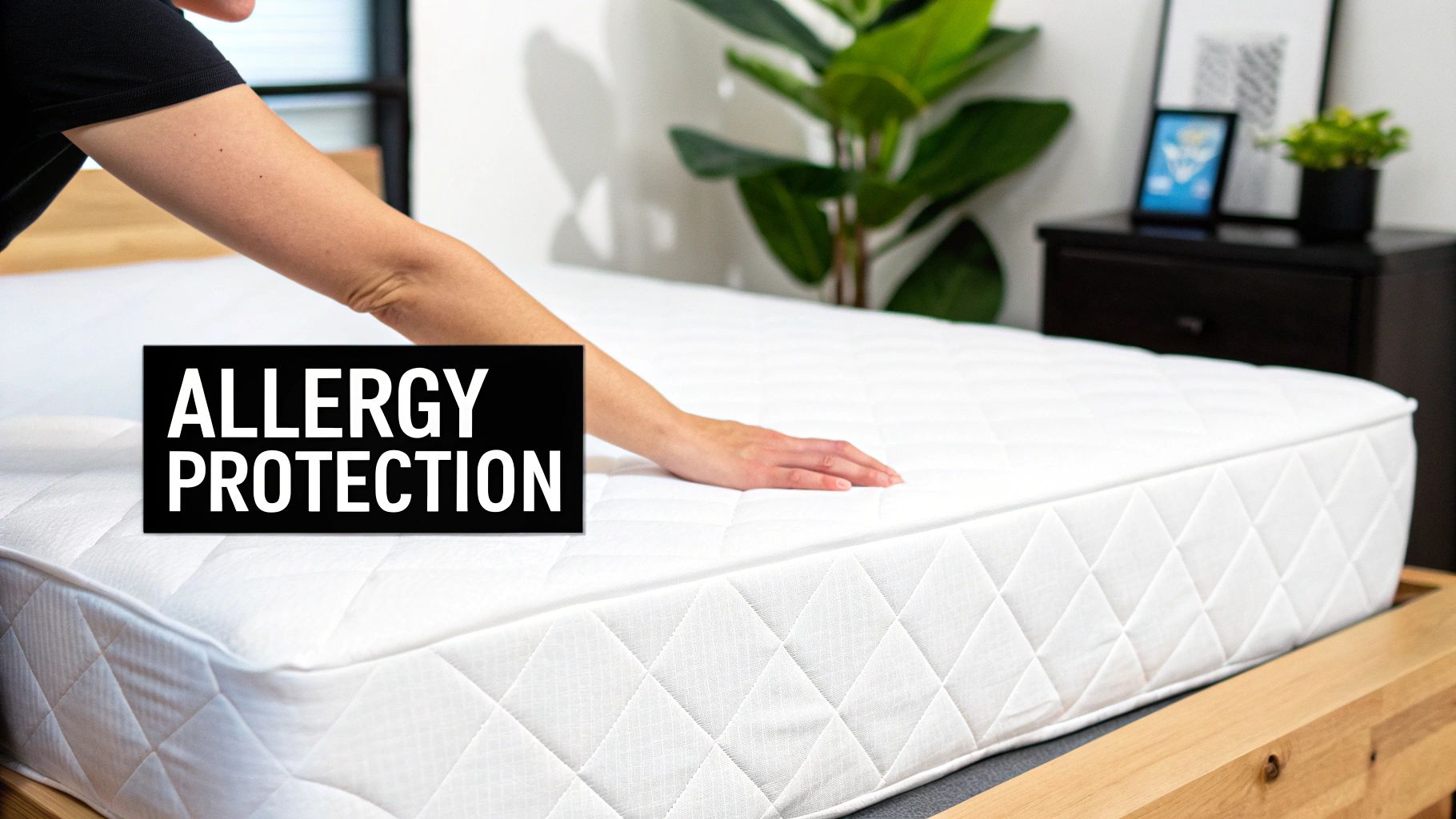
Choosing Materials for Allergy Relief
Certain materials are superstars at keeping things healthy:
- Hypoallergenic Fabrics: Materials like bamboo are naturally resistant to dust mites and mould. Their antimicrobial properties stop bacteria from growing.
- Breathable Weaves: Fabrics that wick moisture away prevent the damp conditions where allergens thrive.
By keeping your mattress core clean, you reduce your nightly exposure to common irritants.
The Importance of Safety Certifications
When buying for health reasons, you need to trust the product is safe. This is where independent certifications matter.
The gold standard is OEKO-TEX® Standard 100. This certification guarantees that every component has been tested for harmful chemicals and is safe for human health.
Choosing an OEKO-TEX® certified king mattress protector means you aren't bringing unwanted chemicals into your bed. It’s a clear sign the manufacturer cares about your family’s well-being.
Care And Maintenance To Maximise Your Protector's Lifespan
You've invested in a quality king mattress protector, but how do you protect the protector? Proper care ensures it stays waterproof and effective for years. The golden rule is to always be gentle, as high heat can destroy the waterproof membrane.
The Correct Washing Method
Follow these essential steps:
- Use a Mild Detergent: Harsh chemicals, bleach, and fabric softeners can break down the waterproof layer. Stick to a gentle liquid detergent.
- Select a Gentle Cycle: Choose a cool or warm gentle wash cycle to avoid stretching the fabric.
- Wash with Similar Items: Avoid washing it with heavy items like jeans or towels to prevent unnecessary friction.
For a deeper dive, our guide on how to wash your mattress cover offers extra tips.
Drying Your Protector Properly
The dryer is where most protectors meet an untimely end. High heat is the ultimate enemy.
Crucial Tip: Never use high heat when drying your mattress protector. This is the single most important thing you can do to preserve its waterproof barrier.
Tumble dry on the lowest heat setting or an air-dry cycle. It may take longer, but this patience will significantly extend its life.
How Often Should You Wash It?
There’s no need to wash your protector every time you change your sheets. Every one to two months is fine for general hygiene.
However, there are exceptions:
- After a Spill: Wash it immediately to prevent stains and odours.
- For Allergy Sufferers: Wash it monthly to remove the build-up of dust mites.
For tough marks, acting quickly is key. Exploring proven methods for stain removal can help keep it looking pristine.
Common Questions About King Mattress Protectors
Here are answers to the most common queries about king mattress protectors to help you choose with confidence.
How Often Should I Wash My King Mattress Protector?
Wash your protector every one to two months for general hygiene. If you have allergies, a monthly wash is better to control dust mites. Always wash it immediately after a spill. Remember to use a gentle cycle and low heat to protect the waterproof layer.
Will A Waterproof Protector Make Me Feel Hot?
This is a common worry based on old-school vinyl protectors. Modern protectors are different. Today’s best options, especially a bamboo king mattress protector, use breathable materials with a thin polyurethane membrane that blocks liquid but allows air to circulate, keeping you cool and comfortable all night.
Can I Use An Electric Blanket With My Protector?
Yes. For the safest setup, lay your electric blanket directly on the mattress. Then, fit the mattress protector over the electric blanket, and finally, put your fitted sheet on top. This order lets you feel the warmth while protecting both the mattress and the blanket from spills.
The key is correct layering: Mattress -> Electric Blanket -> Protector -> Fitted Sheet.
What Is The Difference Between A Protector And A Topper?
They have two different jobs. A protector is for defence, while a topper is for comfort.
- A king mattress protector is a thin shield to guard your mattress from spills, stains, and allergens.
- A mattress topper is a thick layer designed to change the feel of your mattress, making it softer or more supportive.
If you use both, the topper goes on the mattress first. Then, cover both with a deep-pocketed protector to shield your entire investment.
A king mattress protector is a small investment that offers huge returns in hygiene, comfort, and the longevity of your mattress. By choosing the right material and fit, you ensure years of clean, healthy sleep.
Ready to give your mattress the five-star protection it deserves? Shop the Sienna Living King Mattress Protector now and sleep better tonight!