

Tired of waking up with frizzy hair and sleep lines on your face? The solution might be simpler than you think. Nestled in the growing trend towards mindful living is a game-changing fabric that’s transforming how Australians sleep. High-quality pillow cases bamboo are the secret to the cooler, smoother, and more restorative night's sleep you've been searching for.
This guide cuts through the noise. We'll show you exactly why this fabric is a smart choice, what to look for when buying, and how it directly benefits your skin, hair, and overall sleep quality.
Why Are Bamboo Pillow Cases a Smart Upgrade?
Switching your pillowcase might seem small, but it has a big impact. If your cotton case feels too warm on a summer night or even luxury fabrics irritate your skin, you're not alone. The simple truth is, the surface your face touches for eight hours matters. That's why so many people are turning to bamboo.
A Clear Shift in Bedding Choices
The demand for premium bedding is rising, driven by a desire for better health, comfort, and sustainability. It’s no longer just about aesthetics; it's about performance. Research shows the Australian cushion and pillow market hit USD 478.8 million in 2024, with a significant portion of this growth coming from natural, high-performance fabrics. Discover more about Australia's bedding market trends.
So, what makes bamboo stand out?
- Silky-Smooth Surface: Bamboo fabric has an exceptionally smooth feel that reduces the friction responsible for sleep creases and hair damage.
- Natural Temperature Control: Its fibres are naturally breathable and wick moisture away, pulling heat from your body to keep you cool and comfortable all night.
- Healthier Sleep Environment: Bamboo is naturally hypoallergenic and antimicrobial, resisting dust mites and bacteria for a cleaner place to rest your head.
Ready to see how this translates to your whole bed? Explore our complete guide to the best bamboo sheets for Australian homes for more insights.
What Makes Bamboo Fabric So Special?
How does a tough, woody plant become a fabric softer than high-thread-count cotton? The process is a marvel of green technology. Mature bamboo is harvested, crushed into a pulp, then dissolved and spun into soft, fine fibres. This is what creates the material for bamboo pillowcases, with bamboo viscose being a popular choice for its incredible softness. For a deeper look at this process, see our article on what is viscose from bamboo.
The Secret to Cool, Dry Comfort
The real magic is at the microscopic level. Bamboo fibres are filled with tiny micro-gaps. This unique structure creates natural channels for air to flow, preventing the heat buildup common with dense cotton weaves. Instead of trapping warmth, your pillowcase actively breathes, helping you stay cool.
This same structure makes bamboo a master of moisture management. It can absorb up to three times its weight in water, pulling sweat away from your skin so it can evaporate quickly. For anyone who sleeps hot or deals with night sweats, this is a revolutionary benefit that leads to a drier, more comfortable night.
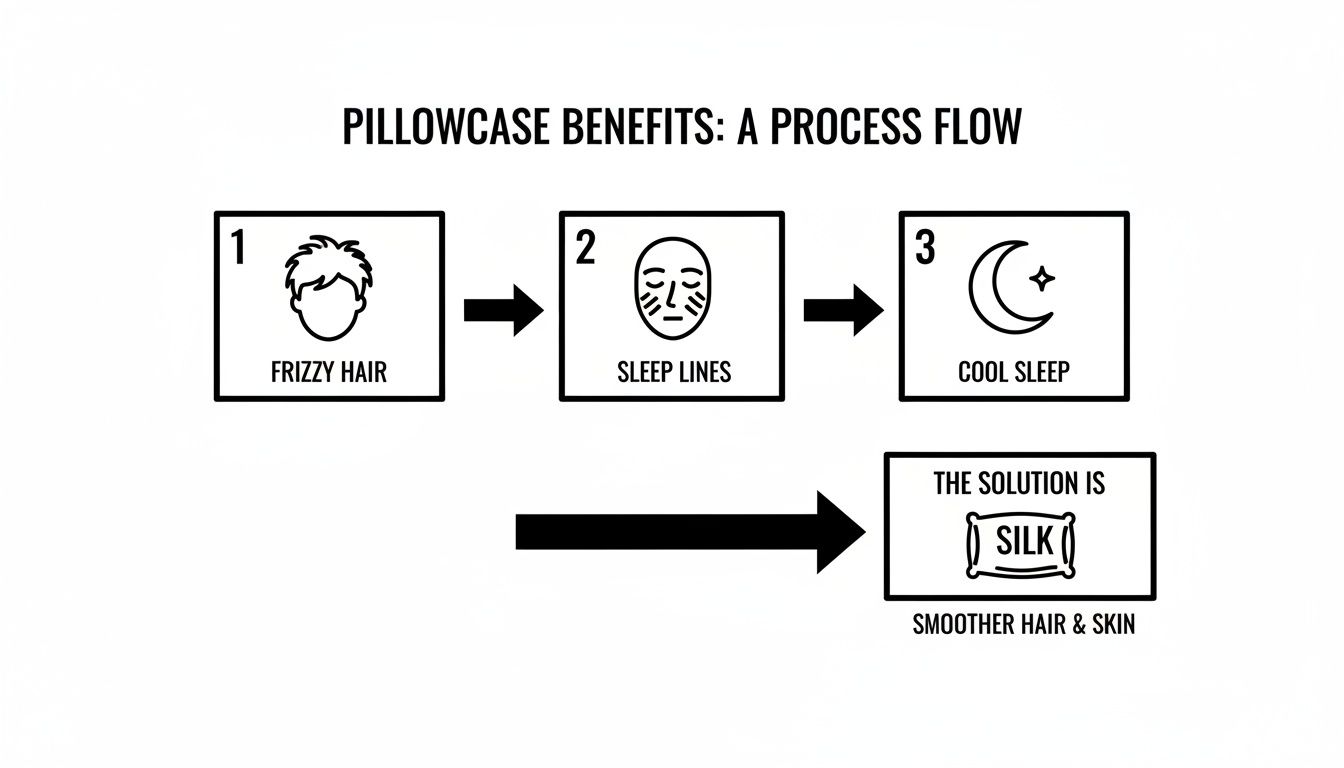
This blend of softness and performance is driving major market growth. The global bamboo pillow market was valued at USD 420.1 million in 2024 and is projected to climb to USD 740.0 million by 2035, fuelled by consumers seeking sustainable and functional bedding.
Real Benefits for Your Skin, Hair, and Sleep
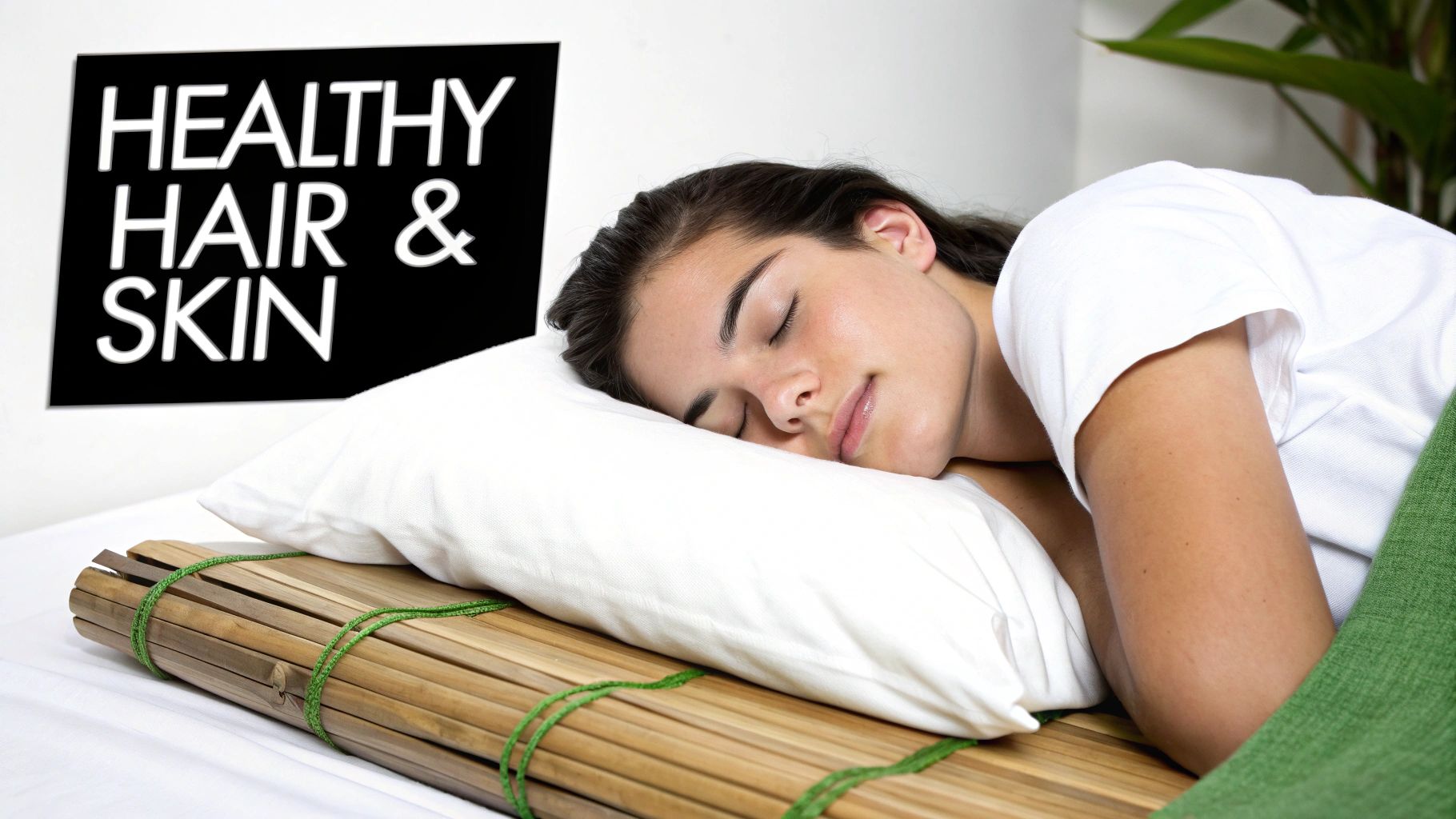
The incredible softness of bamboo pillowcases is just the beginning. The true benefits unfold while you sleep, offering science-backed advantages that turn your pillow into a nightly wellness tool.
A Gentler Touch for Your Skin
Ever wake with a sleep crease that lingers for hours? That’s caused by friction from fabrics like cotton tugging at your skin. Bamboo’s naturally round and smooth fibres create a slick surface your skin glides across, reducing irritation and morning lines.
This is a game-changer for sensitive or acne-prone skin. Less friction means less inflammation. Plus, bamboo's hypoallergenic and antimicrobial properties resist bacteria and dust mites—common triggers for eczema and breakouts. Discover more about luxury bamboo bedding for sensitive skin.
Wake Up to Smoother Hair
That same silky surface works wonders for your hair. Rougher pillowcases can snag hair strands, causing frizz, tangles, and breakage. Sleeping on bamboo is like giving your hair an eight-hour rest from physical stress.
The smooth texture lets your hair move freely, helping to preserve your hairstyle and reduce bedhead. This aligns with expert advice on how to prevent hair breakage, as it minimizes nightly tugging and keeps the hair cuticle smooth.
Sleep Deeper with Better Temperature Control
Perhaps bamboo's biggest advantage is its ability to regulate temperature. Research confirms our thermal environment is a critical factor for quality sleep. Tossing and turning because you're too hot disrupts your sleep cycles.
Bamboo acts as a natural thermostat. On warm nights, it wicks away heat and sweat for a cooling effect. On cool nights, it provides a breathable thermal layer that keeps you cosy without overheating. This stable temperature control leads to longer stretches of uninterrupted, restorative sleep.
How to Choose the Best Bamboo Pillow Cases
Ready to make the switch? Choosing the right bamboo pillowcases is easy when you know what to look for. Let's focus on the details that guarantee quality and comfort.
Understand the Weave: Sateen vs. Twill
The feel of your pillowcase comes down to its weave. With bamboo, you’ll mainly find two types:
- Sateen Weave: This is the top choice for luxury. A "one-under, three-over" pattern creates a lustrous sheen and a silky-smooth finish that feels incredible against your skin. If you want that five-star hotel feel, choose sateen.
- Twill Weave: This weave creates a subtle diagonal pattern, like you'd see on denim. It’s exceptionally durable with a slightly crisper, yet still soft, texture. It’s a brilliant, hard-wearing option for everyday use.
Why GSM Matters More Than Thread Count
For cotton, high thread count often means high quality. For bamboo, that metric is misleading. A better indicator is GSM (Grams per Square Metre), which measures the fabric's density and weight.
A higher GSM indicates a more substantial, durable, and luxurious fabric. For premium bamboo pillowcases, look for a GSM of around 160 or higher. This is your assurance of a quality product built to last.
Your Final Quality Checklist
Before you buy, run through this quick checklist:
- OEKO-TEX® Certification: Look for the STANDARD 100 by OEKO-TEX® label. It confirms every component has been tested for harmful substances, guaranteeing a clean and healthy product.
- Brand Policies: A confident brand offers strong policies. Sienna Living, for example, provides a 365-day warranty and a trial period, so you can be sure of your purchase.
- Aesthetic and Fit: Make sure the colour and style complement your bedroom decor. For inspiration, check out these practical bedroom design ideas to create a cohesive look.
With this knowledge, you can confidently choose the perfect bamboo pillowcases for your home.
Pillowcase Showdown: Bamboo vs. Cotton vs. Silk
In the world of premium bedding, three materials dominate: bamboo, Egyptian cotton, and Mulberry silk. While each has its merits, bamboo stands out as the best all-around choice for modern sleepers who value comfort, performance, and practicality.
Breathability and Temperature Control
This is where bamboo excels. Its fibre structure creates a natural ventilation system, wicking moisture to keep you cool and dry. Egyptian cotton is breathable but absorbs more moisture than it wicks. Mulberry silk is the least breathable and can sometimes trap heat.
Feel and Comfort
- Bamboo: Silky, smooth, and drapey with very low friction.
- Egyptian Cotton: Crisp, cool, and substantial, softening with each wash.
- Mulberry Silk: The ultimate in smoothness—glossy, weightless, and famously gentle.
While silk is the gold standard for a frictionless surface, bamboo offers a very similar experience with far greater durability and easier care.
Durability and Care
A good pillowcase must be built to last. Bamboo fabric is surprisingly tough and handles regular machine washing on a gentle, cold cycle. Egyptian cotton is also a workhorse and easy to care for. Mulberry silk, however, is delicate, often requiring hand-washing and being prone to snags. For simple instructions, see our guide on how to wash bamboo sheets.
Comparison at a Glance: Bamboo vs. Cotton vs. Silk
| Attribute | Bamboo | Egyptian Cotton | Mulberry Silk |
|---|---|---|---|
| Breathability | Excellent | Very Good | Fair |
| Feel | Silky & Smooth | Crisp & Soft | Ultra-Smooth & Glossy |
| Durability | Very Good | Excellent | Poor |
| Care | Easy (Gentle Wash) | Very Easy | Difficult (Hand Wash) |
| Hypoallergenic | Yes (Naturally) | Sometimes | Yes |
For an unbeatable blend of luxurious feel, powerful temperature control, and practical durability, bamboo is the clear winner.
How to Keep Your Bamboo Pillow Cases Like New
You've invested in beautifully soft bamboo pillowcases. With a little care, you can maintain that silky feel for years. It's not difficult—it just requires a gentler touch than cotton.
Simple Washing Instructions
The golden rule is to wash in cold water (max 30°C) on a gentle cycle. Hot water can cause the fibres to shrink and lose their softness.
- Do use a mild, liquid detergent.
- Do wash with similar items to avoid pilling from rough fabrics like denim.
- Don’t use bleach or fabric softeners. Bleach weakens the fibres, while softeners clog them, reducing breathability.
For more details, our complete guide on how to wash bamboo sheets has you covered.
Drying and Storing Tips
Line drying out of direct sunlight is the best method to preserve the fabric and naturally reduce wrinkles. If using a dryer, choose the lowest heat setting. A great trick is to remove them while still slightly damp and place them on your pillows to finish drying for a smooth, iron-free finish.
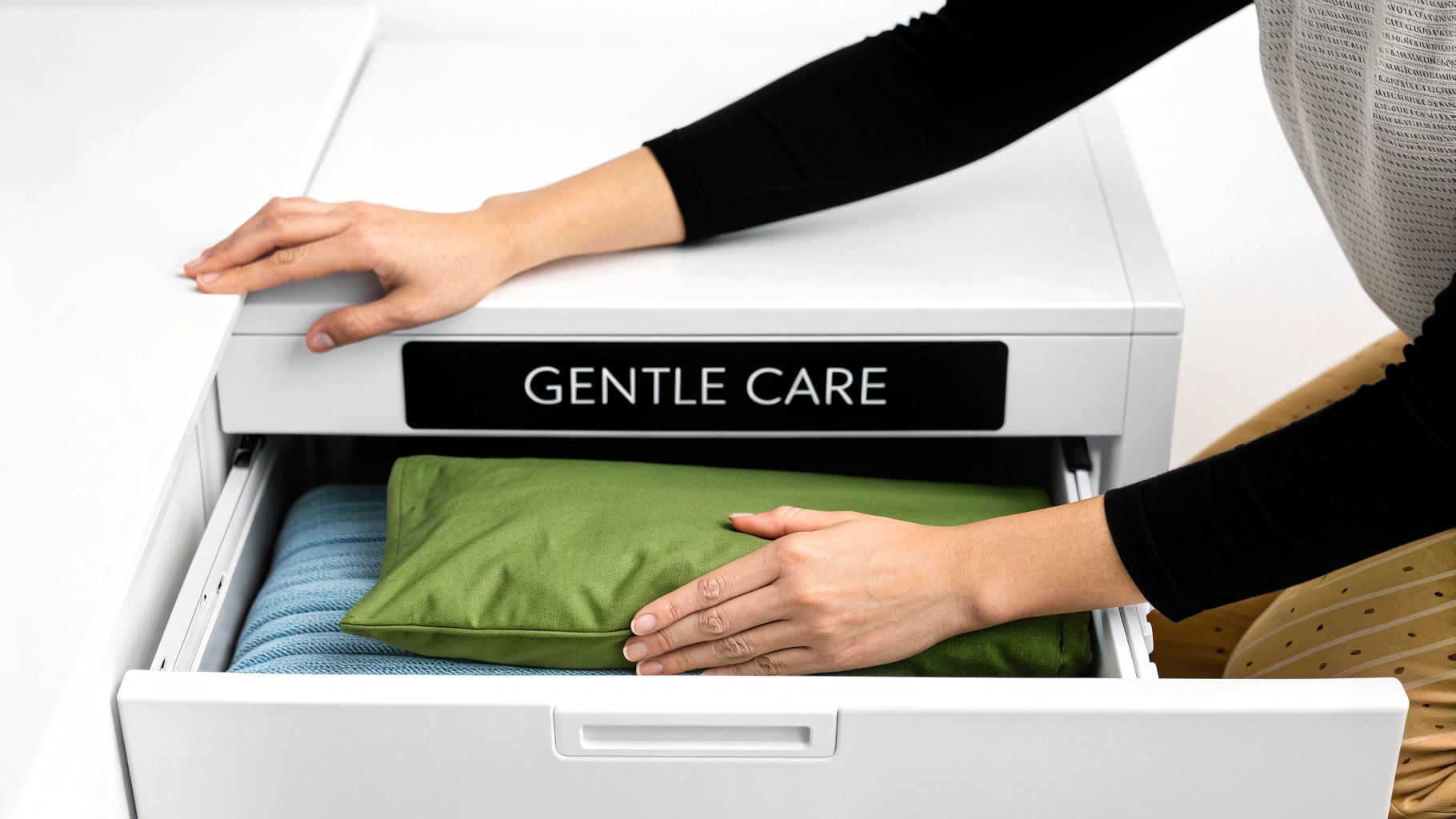
When not in use, store your clean pillowcases in a cool, dry place like a linen cupboard. Avoid plastic containers, which can trap moisture.
Your Bamboo Questions, Answered
Let's clear up a few common questions to help you feel completely confident in your choice.
Are bamboo pillowcases good for allergies?
Yes, they are excellent for allergy sufferers. The natural fibres are hypoallergenic and resist dust mites and mould. Their moisture-wicking properties also prevent bacteria growth, creating a cleaner, healthier sleep surface.
Do bamboo pillowcases wrinkle easily?
They can wrinkle after washing, but it's easy to manage. The best way to avoid this is to pull them from the dryer while still slightly damp and put them straight onto your pillows. The wrinkles will smooth out as they finish drying.
Is bamboo an eco-friendly choice?
When sourced responsibly, yes. Bamboo is a fast-growing plant that requires little water and no pesticides. Look for products with OEKO-TEX® certification to ensure they are free from harmful substances and made with environmentally sound practices.
Have more questions? Check out our complete list of frequently asked questions about bamboo bedding.
Ready to Upgrade Your Sleep?
Making the switch to bamboo pillowcases is a simple, effective way to improve your sleep, skin, and hair health. It's a small change that delivers a significant return in comfort and restoration every single night.
Shop our luxurious Bamboo Pillowcase collection now and transform your sleep.