

Ever wonder what's lurking inside your pillow? Let's get straight to the point: yes, you absolutely should wash your pillows. Not washing them turns your favourite headrest into a hotspot for allergens, oils, and bacteria that can affect your skin, breathing, and overall health. So, if you're asking "should you wash pillows?", the answer is a resounding yes.
The Hidden World Inside Your Pillow
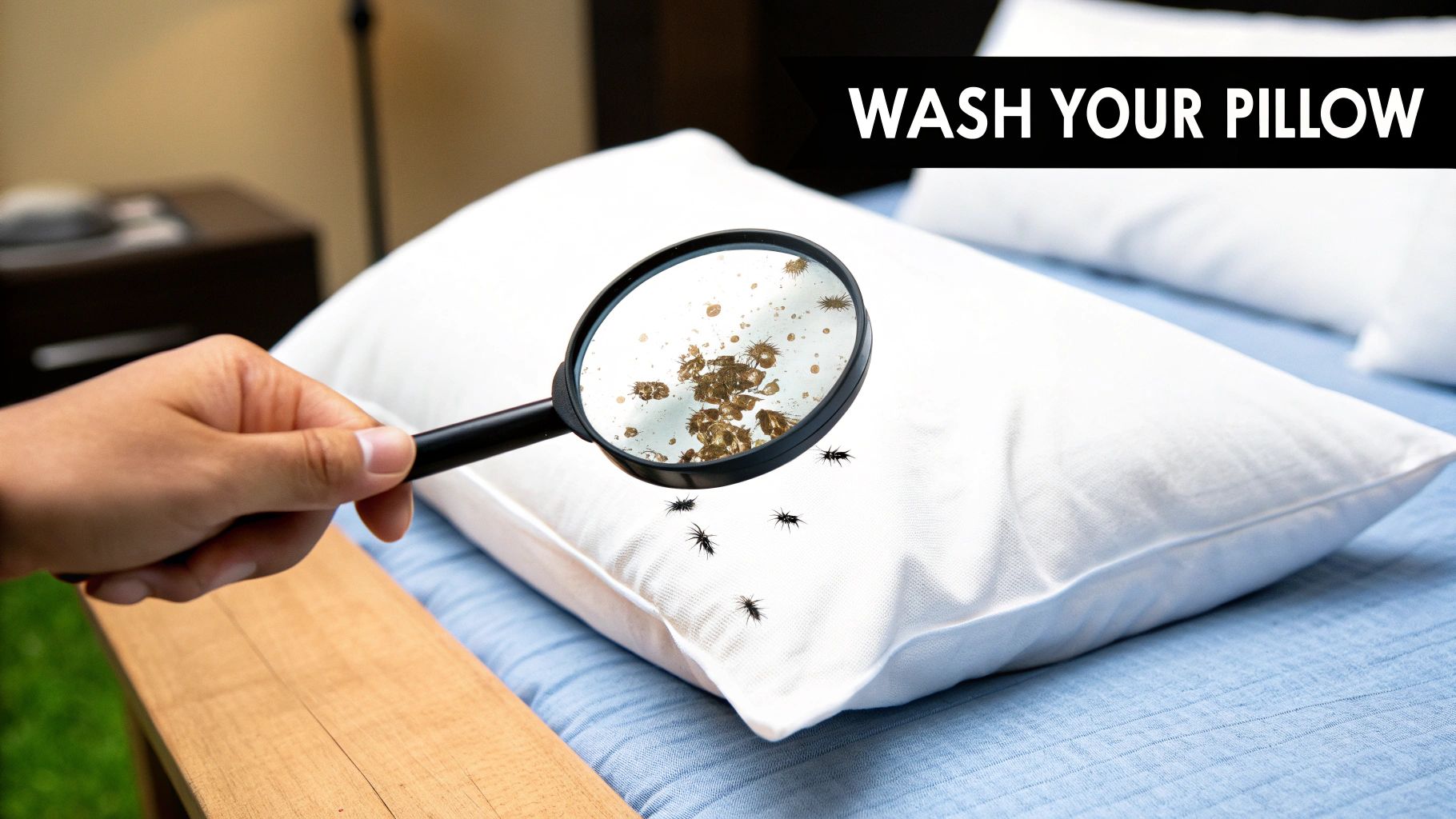
You spend about a third of your life with your face pressed against your pillow. Over time, it acts like a sponge, absorbing a cocktail of substances you'd rather not think about. This buildup includes:
- Dead Skin Cells: You shed millions of skin cells every night, providing a feast for dust mites.
- Body Oils and Sweat: This creates a damp, warm environment perfect for bacteria and fungi to thrive.
- Dust Mites: These microscopic creatures are a major trigger for allergies and asthma.
- Bacteria and Fungi: These can contribute to acne breakouts and other skin irritations.
Why a Clean Pillow Is a Health Priority
This nightly buildup has real-world consequences. A study by UK hygiene experts found that after two years, up to one-third of a pillow's weight can be made up of dead skin, dust mites, and their droppings. This accumulation can make an unwashed pillow harbour more bacteria than a toilet seat.
For anyone with allergies, this is a serious issue. Constant exposure can trigger sneezing, congestion, and itchy eyes, disrupting your sleep. Understanding the persistence of viruses on surfaces also highlights the importance of cleaning items we have close contact with.
Washing your pillows doesn't just remove grime; it also revives them. A good clean helps restore the loft and support of the filling, extending its lifespan. If you're looking for materials that naturally combat allergens, our guide to the top 7 hypoallergenic bedding materials is an excellent resource.
How Often Should You Wash Your Pillows?
So, how often should this task be on your to-do list? A good rule of thumb is to wash your pillows every four to six months. This schedule is effective for tackling the gradual buildup of oils, skin cells, and sweat, preventing your pillow from becoming an allergen hotspot.
When to Wash More Frequently
That four-to-six-month guideline isn't one-size-fits-all. Certain situations call for more frequent washing to maintain a healthy sleep environment. After all, a clean bed is a key part of learning how to improve sleep quality.
Consider washing your pillows more often if:
- You have allergies or asthma: Wash every one to two months to keep dust mites and other triggers at bay. This simple step can significantly reduce symptoms and help you breathe easier at night.
- You have oily or acne-prone skin: Washing every two to three months helps prevent the buildup of pore-clogging oils on your pillow's surface.
- You've recently been sick: Wash your pillow immediately after recovering from a cold or flu to eliminate any lingering germs and prevent reinfection.
The Power of a Pillow Protector
Your pillow protector is the unsung hero of bedding hygiene. This zippered cover acts as a barrier, catching the majority of sweat, drool, and allergens before they seep into the pillow itself. To be effective, wash your pillow protector every two weeks along with your sheets and pillowcases.
The Australian consumer watchdog CHOICE recommends washing your pillows every 4-6 months. This simple routine can dramatically cut exposure to dust mites, a major issue in Australia where high allergy rates affect millions. For those with more severe allergies, experts advise even more frequent washes to protect sensitive airways. Read more about these recommendations on how to clean a pillow.
Here’s a quick guide to help you stay on track.
Pillow Washing Frequency Guide
This table provides a quick reference to help you decide how often your pillows and their protectors need a good wash, based on your specific situation.
| Scenario | Pillow Washing Frequency | Pillow Protector Washing Frequency |
|---|---|---|
| Standard Use | Every 4-6 months | Every 2 weeks |
| Allergies or Asthma | Every 1-2 months | Every 1-2 weeks |
| Oily Skin/Acne | Every 2-3 months | Every 1-2 weeks |
| After Being Sick | Immediately | Immediately |
This consistent cleaning schedule is a simple but incredibly effective way to keep your bed healthy. It's a bit like other household hygiene debates—for example, people often wonder are you supposed to give cats baths. Just as with pets, finding the right routine for your pillows protects both their longevity and your well-being.
A Step-by-Step Washing Guide for Every Pillow Type
You can't just toss a pillow into the washing machine with your towels and hope for the best. Different materials demand different approaches, and a wrong move can leave you with a lumpy, damaged, or even mouldy mess. Nailing the right technique for your specific pillow is the real secret to keeping it clean, fluffy, and supportive for years to come.
This flowchart is a great starting point, breaking down the key moments when a pillow wash is needed—from routine maintenance to a deep clean after you've been sick.
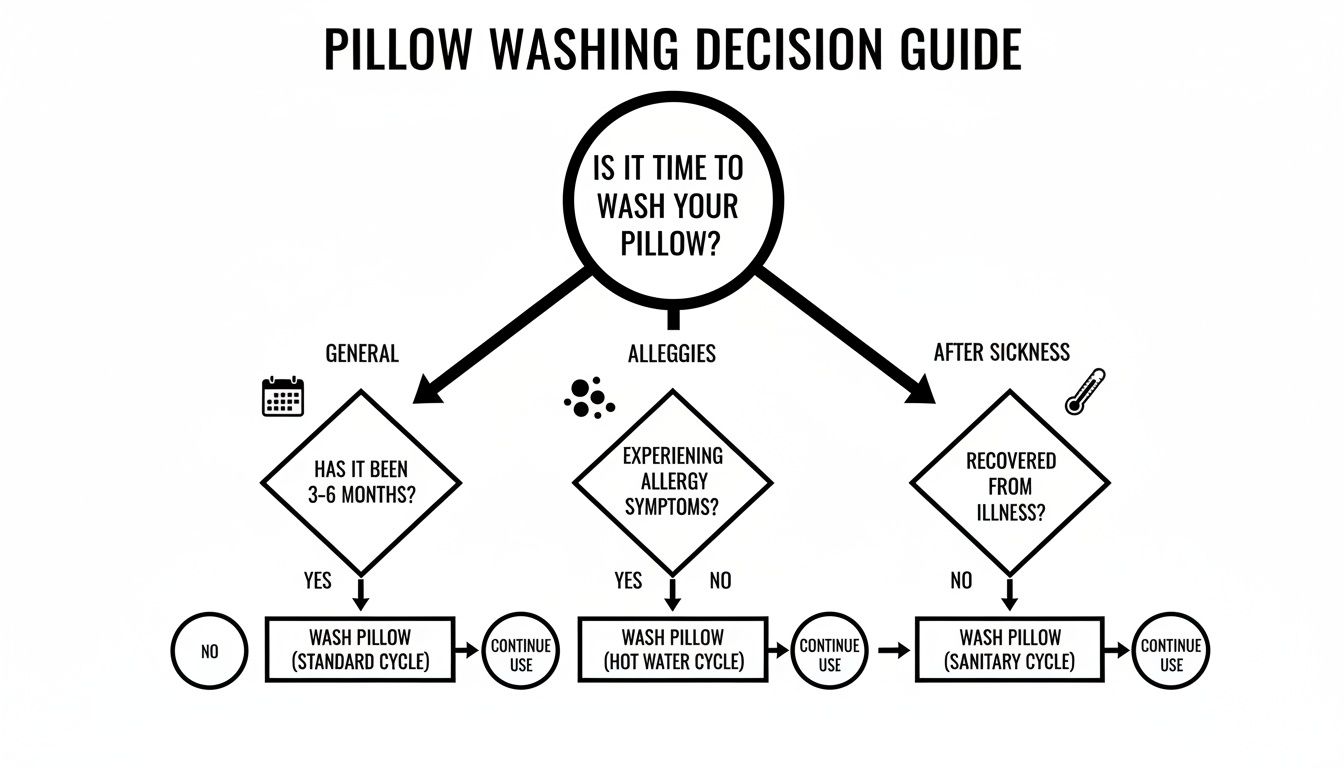
As you can see, the question of should you wash pillows is often more about personal factors like your health and allergies than it is about a strict schedule.
Washing Down and Feather Pillows
Natural-fill pillows need a gentle touch to prevent the delicate down clusters from clumping.
- Check for Tears: Before washing, inspect the pillow for any rips or weak seams to avoid a machine full of feathers.
- Balance the Load: Use a front-loading machine if possible. Always wash two pillows together to keep the drum balanced.
- Use a Gentle Cycle: Select a delicate cycle with cold or lukewarm water. Hot water can damage the natural fibres.
- Use Mild Detergent: A small amount of low-suds liquid detergent is best. Too much soap can leave a residue.
Washing Synthetic Polyester Pillows
Most synthetic pillows are durable, but they still need proper care to avoid becoming lumpy.
- Wash in Pairs: Just like down pillows, wash two at a time to keep the machine stable during the spin cycle.
- Choose Warm Water: A gentle cycle with warm water is effective for killing germs without harming the synthetic fibres.
- Use Standard Detergent: A mild liquid detergent works well. Use about one-third of the normal amount.
- Add an Extra Rinse: Select the extra rinse option to ensure all soap is washed out, preventing stiffness.
Cleaning Memory Foam and Latex Pillows
This is the golden rule: never put a solid memory foam or latex pillow in a washing machine. The intense spinning will destroy its structure. Instead, spot-clean as needed.
- Blot Spills: Act quickly. Use a clean, dry cloth to absorb as much liquid as possible.
- Spot Clean: Mix a small amount of mild detergent with lukewarm water. Dip a cloth in the solution, wring it out, and gently dab the stain.
- Rinse Gently: Use a second cloth dampened with plain water to blot the area and remove the soap.
- Air-Dry Completely: Allow the pillow to air-dry in a well-ventilated area away from direct sunlight or heat, which can cause the foam to become brittle.
This principle of material-specific care is crucial. For instance, knowing how to wash silk pillowcases correctly preserves the fabric's unique qualities.
The Art of Properly Drying Your Pillows
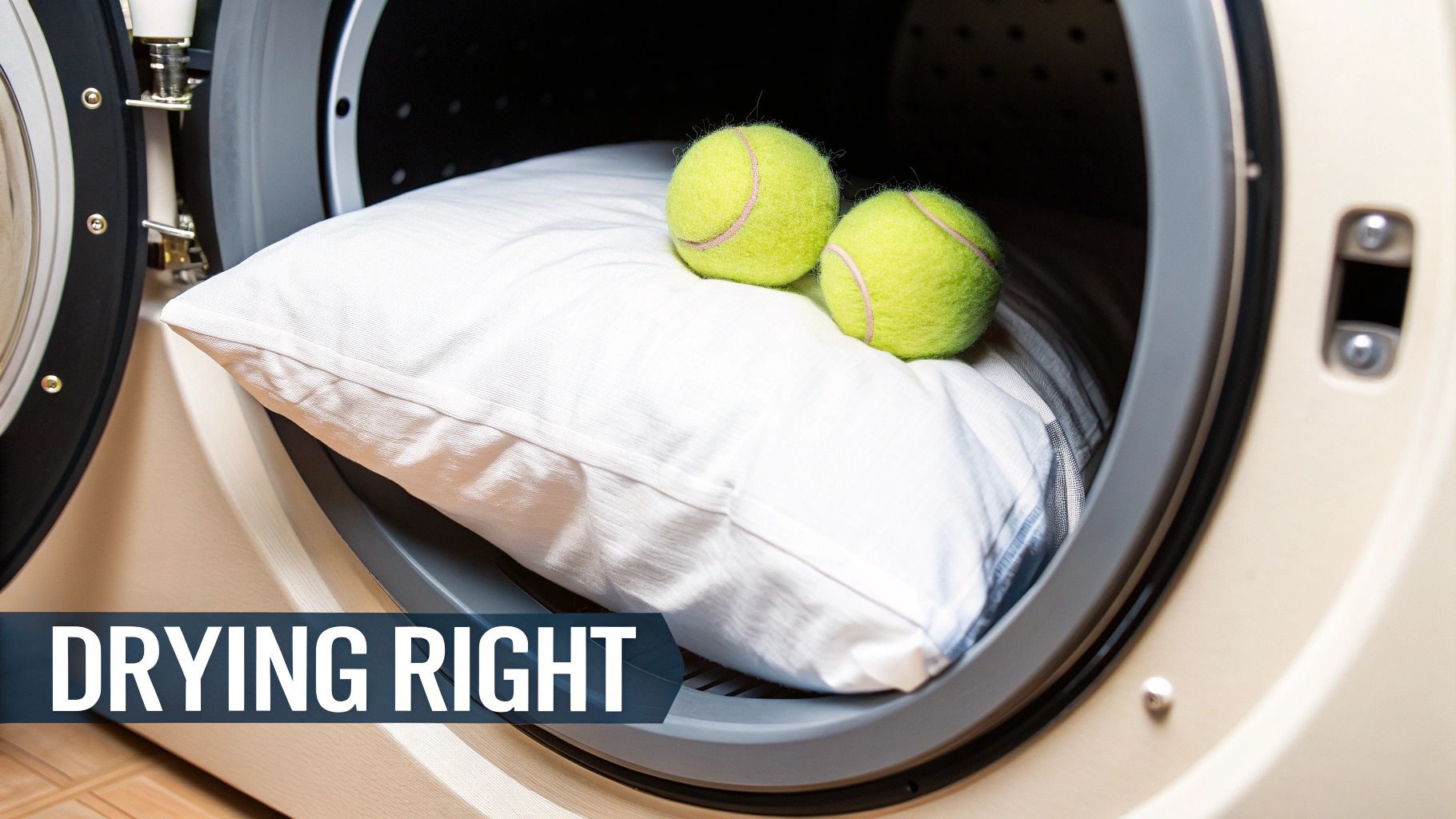
Washing is only half the job. Improper drying can lead to clumps, musty smells, and mould growth, undoing all your hard work. The goal is simple: get your pillow 100% dry, all the way to its core.
Dryer Settings for Down and Synthetic Pillows
For machine-washable pillows like down, feather, and most synthetics, your dryer is your best friend—if you use it correctly.
- Low and Slow: Always use a low-heat or no-heat/air-dry setting. High heat can damage the filling, making it brittle and flat.
- The Tennis Ball Trick: Toss two or three clean tennis balls (inside clean socks to prevent colour transfer) into the dryer with your pillows. They'll bounce around, breaking up clumps and keeping the filling fluffy.
- Check and Fluff: Pause the dryer every 30 minutes to shake the pillows out by hand. This redistributes the filling and helps them dry evenly.
Air-Drying Foam and Other Delicate Pillows
Memory foam and latex pillows must never go in a dryer. The heat and tumbling motion will tear them apart. Air-drying is the only safe method.
After gently pressing out excess water (never wring or twist), lay the pillow flat on a clean towel in a well-ventilated area. Keep it out of direct sunlight. Flip it every few hours to ensure even drying. This process can take up to 24 hours, but patience is key.
A pillow that feels dry on the surface can still hide moisture deep inside. This trapped dampness is what causes that funky, musty smell to appear a few days later—a sure sign of mildew. It’s always better to give it a little extra drying time than not enough.
For a more detailed breakdown of safe washing methods, check out our complete guide on whether you can wash pillows.
When It's Time to Replace Your Pillow, Not Just Wash It
Even the best-cared-for pillow has a limited lifespan. While washing keeps it hygienic, it can't reverse the natural breakdown of the filling. Over time, your pillow loses its ability to support your head and neck, leading to stiffness, aches, and poor sleep.
Knowing when to replace your pillow is just as important as knowing how to clean it. It's surprising how long people hold onto old pillows. A staggering 10% of people admit to not washing their bedding for up to a month, which can seriously shorten a pillow's lifespan. You can find more details on these surprising bedding habits.
Simple Tests to Check Your Pillow's Health
The "fold test" is a quick and reliable way to check your pillow's remaining support.
- For synthetic or down pillows: Fold it in half. If it springs back, it's still good. If it stays folded, its supportive core is gone.
- For larger pillows: Fold it into thirds. If it doesn't unfold on its own, it’s time for a replacement.
Another clear sign is persistent lumpiness. If you can no longer fluff your pillow into a smooth, even surface, the filling has permanently clumped, creating an unsupportive surface that's bad for your neck.
Other Telltale Signs It's Time for a New Pillow
Use your senses. Stubborn stains from sweat and oils that remain after washing are a sign of deep-seated bacteria. A lingering musty smell, even after a thorough drying, indicates that mould or mildew has taken hold inside the filling.
Most importantly, listen to your body. If you frequently wake up with a sore neck or stiff shoulders, your pillow is no longer providing proper alignment. That's your cue to invest in a new one. For more detailed timelines, our guide explains how often you should change your pillows.
Your Pillow Washing Questions, Answered
Let's quickly cover some common questions about pillow care to ensure you get it right every time.
Can I Wash Two Pillows at Once in My Machine?
Yes, and you should! Washing two pillows at once helps balance the machine's drum, preventing it from shaking violently during the spin cycle and ensuring a more even clean. Just make sure not to overcrowd the machine.
What Is the Best Detergent for Washing Pillows?
A mild, low-suds liquid detergent is your best bet. Powdered detergents can sometimes leave a chalky residue. Avoid harsh detergents with bleach, as they can damage delicate fillings like down. Use about one-third of the amount you'd use for a normal load of laundry.
Why Does My Pillow Smell Musty After Washing?
A musty smell is a clear sign that the pillow didn't dry completely. Trapped moisture allows mould and mildew to grow. To prevent this, be patient with the drying process. Use low heat and toss in some dryer balls to improve airflow. If the smell persists after re-drying, it's safest to replace the pillow.
Do I Still Need to Wash My Pillow If I Use a Protector?
Yes. A pillow protector is your first line of defence, but it's not foolproof. Over time, some oils and allergens will get through. Wash your protector every one to two weeks with your sheets, and wash the pillow itself every four to six months for optimal hygiene.
A clean, supportive pillow is the foundation of a great night's sleep. By following these simple guidelines, you can ensure your sleep sanctuary is healthy, hygienic, and comfortable. Ready to upgrade your sleep?
Discover the Sienna Living Pillow Collection and Sleep Better Tonight