

Waking up with a stiff, aching neck is a miserable way to start the day. But what if the solution was hiding in plain sight on your bed? The right pillow for neck pain isn’t just about comfort; it's a crucial tool for keeping your head, neck, and spine perfectly aligned while you sleep. Think of it less as a luxury and more as an essential for your health.
This guide delivers actionable insights to help you choose the best pillow for your needs, so you can finally have a pain-free morning.
Why Your Pillow Is the Key to Waking Up Refreshed

If you consistently feel more tired and sore in the morning than when you went to bed, your pillow is the number one suspect. A pillow that’s too high, too low, or has lost its shape forces your neck into an awkward position for hours.
Imagine your spine as a straight line. A bad pillow creates a kink in that line, putting constant strain on your neck muscles and ligaments. This leads to that familiar stiffness, sharp pain, and even tension headaches. A good pillow simply fills the gap between your head and shoulders, maintaining that all-important straight line so your muscles can finally relax.
The Widespread Impact of Neck Discomfort
This isn't a niche problem. Research shows that neck pain affects a significant portion of the population, with a study revealing that up to 70% of people will experience it at some point in their lives. These figures, highlighted in recent findings on Australian spinal health, show just how vital proper sleep support is.
A truly supportive pillow can:
- Alleviate Muscle Strain: By maintaining proper alignment, it gives your neck muscles the break they need.
- Improve Sleep Quality: When you're not constantly shifting to get comfortable, you sink into deeper, more restorative sleep. You can read more about why breathable fabrics improve sleep quality.
- Prevent Chronic Issues: Night after night of poor posture can lead to long-term neck problems.
A great pillow is an investment in your health. It’s not just about immediate comfort; it's about setting yourself up for a productive, pain-free day, every day.
Understanding Why Your Neck Hurts During Sleep
Ever woken up with a stiff neck and wondered what you did wrong? The culprit is often your pillow. An unsupportive pillow forces your neck into an unnatural position, straining muscles and putting pressure on nerves. The result? You wake up in pain.
A good pillow's most important job is to prevent that awkward bend. It’s meant to fill the gap between your head and the mattress, keeping your spine straight. When everything is properly aligned, your neck muscles can finally relax and heal.
The Role of Your Cervical Spine
The section of your spine running through your neck is called the cervical spine. It has a natural, gentle C-shaped curve that supports the weight of your head—which weighs about 5 kilograms, like a bowling ball.
If your pillow is too high, it pushes your head forward, flattening that vital curve. If it's too flat, your head drops too far. The right pillow for neck pain is one that cradles your head and neck, maintaining that natural curve all night long.
From Daytime Habits to Nighttime Pain
Modern life is tough on our necks. Hours spent hunched over a computer or phone lead to "tech neck." This leaves your neck muscles tight and vulnerable. An unsupportive pillow continues this bad posture into the night, preventing your muscles from recovering.
A supportive pillow acts as a therapeutic tool, counteracting the postural stress your neck endures all day. It’s not just about comfort—it’s about active recovery while you sleep.
While your pillow is a huge part of the solution, exploring the common causes and quick relief for knots in the neck can help you tackle daytime stiffness too.
Why Alignment Is Everything
Proper spinal alignment does more than stop muscle aches. It ensures nerves aren't pinched and that blood flows freely to your brain. This is why the right pillow can dramatically impact your pain levels and overall sleep quality.
Better alignment means deeper, more restorative sleep. Temperature also plays a key role, which is why breathable fabrics improve sleep quality and are another important piece of the comfort puzzle.
Matching Your Pillow to Your Sleep Style
Your favourite sleep position is the most important clue for picking the right pillow. The pillow's job is to fill the gap between your head and the mattress, keeping your spine straight. That gap changes dramatically depending on whether you’re on your side, back, or stomach.
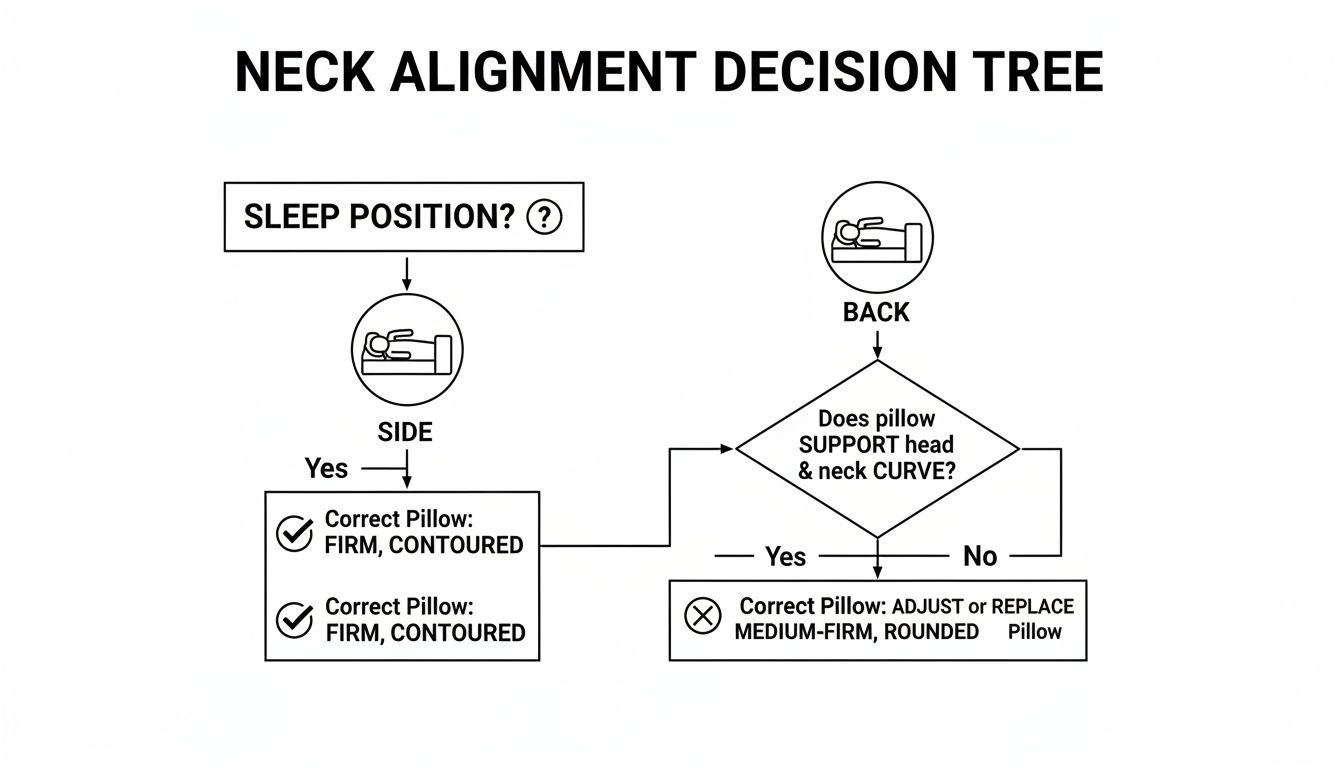
To make things even clearer, this quick-reference table breaks down what you should be looking for based on your go-to sleep style.
Pillow Recommendations by Sleep Position
| Sleep Position | Ideal Pillow Loft | Ideal Firmness | Why It Works |
|---|---|---|---|
| Side Sleeper | High Loft (Thick) | Medium to Firm | Fills the large gap between the ear and shoulder to keep the spine straight. Prevents the head from drooping. |
| Back Sleeper | Medium Loft | Medium | Cradles the natural curve of the neck without pushing the head too far forward. Maintains neutral alignment. |
| Stomach Sleeper | Low Loft (Thin) or No Pillow | Soft | Minimises upward bending of the neck and head, reducing strain caused by twisting the head to the side. |
Let’s dive a little deeper into the why behind each recommendation.
The Best Pillow for Side Sleepers
Side sleeping creates the biggest space between your head and the mattress. Your pillow must be substantial enough to fill that void. For example, if you have broad shoulders, a thin pillow will cause your head to collapse downwards, straining your neck all night.
If you’re a side sleeper, you need a firmer, higher-loft pillow. "Loft" is just a fancy word for height. A high-loft pillow ensures your ear, shoulder, and hips stay in one straight line. We've put together a full guide on the best pillows for side sleepers to help you explore your options.
Ideal Support for Back Sleepers
Back sleepers need a pillow that supports the natural C-curve of their neck without pushing the head too far forward. A medium-loft, medium-firm pillow usually hits the sweet spot.
A pillow that’s too high will force your chin towards your chest—creating the same "tech neck" posture we try to avoid all day. Look for pillows with a contoured design, like a cervical or memory foam pillow, for targeted support.
A Gentle Approach for Stomach Sleepers
Stomach sleeping is the toughest position on your neck, as it forces your head to be twisted to one side. If you can, try to train yourself to sleep on your side or back.
However, if this is the only way you can get comfortable, the right pillow for neck pain is one that does the least harm. You’ll need a very soft, low-loft pillow, or maybe no pillow at all. This stops your head from being propped up at an unnatural angle.
Choosing the Right Pillow Materials and Features
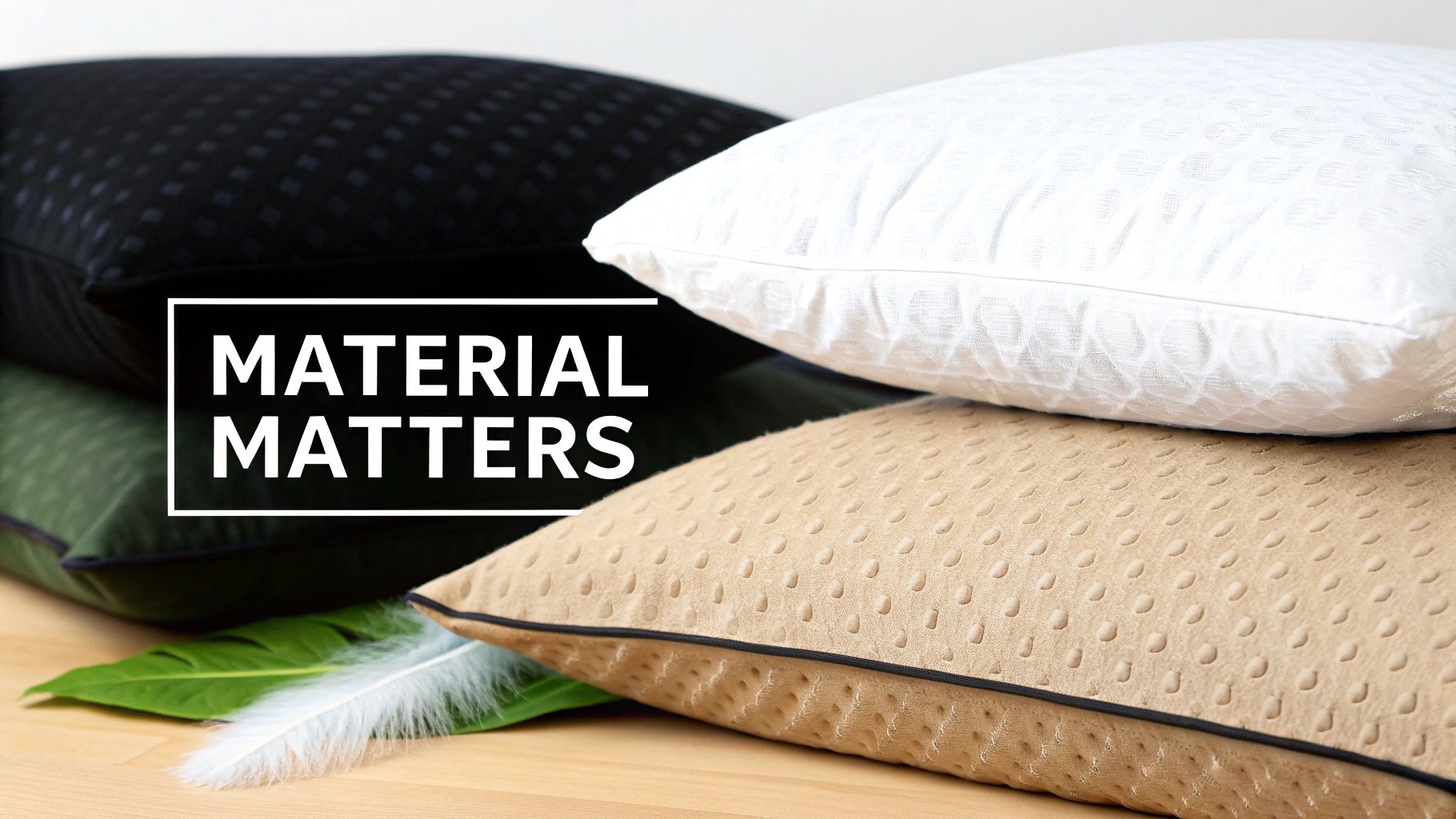
Once you’ve got the height sorted, it's time to look inside. The pillow's fill is a game-changer for comfort and support. Finding the perfect pillow for neck pain means picking a fill that moulds to your unique shape while giving consistent support all night long.
Memory Foam: The Contouring Champion
Memory foam moulds to the exact curves of your head and neck, creating a custom-fit cradle that relieves pressure points. It’s a fantastic choice for side and back sleepers who need firm, unwavering support.
- Pros: Exceptional contouring and pressure relief, great at isolating motion, and incredibly durable.
- Cons: Traditional memory foam can retain heat, but modern versions often have cooling gels or ventilation.
Our guide exploring the advantages of a bamboo memory foam pillow dives deeper into how this combination delivers both support and breathability.
Natural Latex: The Responsive Supporter
Natural latex offers a unique blend of softness and buoyant support. It’s more responsive and springy than memory foam, gently lifting your head and neck into place. This makes it brilliant for anyone who shifts positions during the night.
- Pros: Naturally hypoallergenic, resistant to dust mites and mould, durable, and breathable.
- Cons: High-quality natural latex can come with a higher price tag.
Down and Feather: The Traditional Softness
Down and feather pillows deliver that classic, five-star hotel softness. They are wonderfully malleable, so you can shape them just how you like.
While they feel luxurious, a pure down pillow often won't provide enough consistent support for someone with significant neck pain. A blend of down and feathers usually strikes a much better balance.
- Pros: Exceptionally soft, lightweight, and long-lasting if cared for properly.
- Cons: Need regular fluffing and can compress overnight, causing you to lose support.
Navigating Pillow Shapes and Special Features
Beyond the fill, the pillow's shape plays a huge role. A cervical pillow, often called a contour pillow, has a wave-like shape with a higher curve to support your neck. This design is engineered to maintain the natural curve of your spine, making it an excellent pillow for neck pain.
Another key feature is hypoallergenic materials. Latex and bamboo-derived fibres are naturally antimicrobial, making them a fantastic choice for allergy sufferers. You can dig into these impactful Australian health statistics to learn more about the importance of proactive health choices.
How to Care for Your Pillow and When to Replace It
You’ve found the perfect pillow—now you need to maintain it. Over time, any pillow will compress and lose its supportive magic. A little upkeep goes a long way, not just for support, but for keeping your sleep space clean and healthy.
Keeping Your Pillow in Top Shape
How you clean your pillow depends on its material. Always check the care label first.
- Machine-Washable (Down, Feather, Polyester): Use a gentle cycle with mild detergent. Wash two at a time to keep the machine balanced.
- Non-Washable (Memory Foam, Latex): Spot-clean with a damp cloth and mild soap. You can also vacuum them with an upholstery attachment.
For a more detailed guide, check out our post on how to properly wash a pillow.
Knowing When It's Time for a Replacement
Even a well-cared-for pillow won’t last forever. Once it loses its structural integrity, that old neck pain can creep back.
The Fold Test: Fold your pillow in half. Let go. If it springs back, it's still good. If it stays folded, its supportive core is gone. Time for a new one.
Here’s a general guide to pillow lifespan:
- Polyester: 1 to 2 years.
- Memory Foam: 2 to 3 years.
- Latex: 3 to 4 years.
- Down/Feather: 5+ years with good care.
See your pillow as a health investment that needs regular check-ups.
When Your Neck Pain Needs a Doctor's Touch
A supportive pillow is a fantastic tool, but it's not a magic fix for everything. It's important to know when your body is signaling a more serious issue.
If your neck pain started from an injury, like a car accident or fall, see a professional immediately. Don't just wait for it to go away.
Recognising the Red Flags
Certain symptoms are clear signals that it’s time to see your GP or a physio. Keep a watch for:
- Pain That Won't Quit: Discomfort isn't improving after a week or two of self-care.
- Symptoms on the Move: Numbness, tingling, or weakness that travels down your arms or hands.
- Severe Headaches: Intense headaches, especially if they come with dizziness or nausea.
- Limited Movement: The pain is so bad it’s stopping you from turning your head or doing everyday things.
Think of your pillow as one tool in your wellbeing toolkit. For some people with stubborn muscle knots, treatments like trigger point injections for pain relief can offer targeted help when needed. A healthcare professional should always be your go-to guide when pain sticks around.
Your Questions Answered: Pillows and Neck Pain
Making the switch to a new pillow for neck pain is a big step, so it’s normal to have questions. Let's tackle some of the most common ones.
How Long Does It Take to Get Used to a New Pillow?
Give it anywhere from a few nights to two weeks. Your body needs time to adjust to a new, healthier alignment. This adjustment period is normal, like breaking in a new pair of shoes.
Can a Firm Mattress Cause Neck Pain?
Yes. Your mattress and pillow work as a team. If a mattress is too firm, it can throw your shoulders and spine out of whack, which misaligns your neck—even with a great pillow. They need to work together to keep your entire spine in a straight, neutral line.
Are Expensive Pillows for Neck Pain Worth It?
Often, yes. A higher price usually means better materials and more durable construction. Premium pillows hold their shape and support for much longer. See it as an investment in your daily well-being that can save you from years of discomfort.
What Is the Best Pillow Material for Allergy Sufferers?
Hypoallergenic materials that naturally resist dust mites and mould are best.
- Bamboo-derived fabrics and natural latex are brilliant options. They are naturally antimicrobial and breathable.
- If you love down, ensure it has been sanitised and is enclosed in a dust-mite-proof cover.
If you have other questions, you'll find plenty of answers on our comprehensive FAQs page.
Take the Next Step to a Pain-Free Morning
Choosing the right pillow is one of the most effective steps you can take to combat neck pain and improve your overall sleep quality. By understanding your sleep style and matching it with the right materials and support, you can wake up feeling refreshed and ready to take on the day.
Ready to finally wake up without that nagging neck ache? Find your perfect pillow and invest in better sleep tonight.