

Woken up with a stiff neck again? It’s a frustratingly common story. We blame stress or a bad mattress, but often the real culprit is hiding in plain sight: your pillow. Finding the best pillow for sleeping isn’t a luxury; it's the key to waking up refreshed instead of sore.
Think of your pillow's job: it supports your head and neck for eight hours straight. Its goal is to keep your spine in a neutral, straight line. If it’s too high, your neck bends upwards. Too low, and your head slumps down. This misalignment is a direct cause of pain and restless nights.
The good news? More people are recognising this. A 2023 study by the Sleep Health Foundation found that around 1 in 3 Australian adults struggle with poor sleep, pushing many to seek better sleep solutions. This guide cuts through the confusion, giving you a clear, actionable plan to find a pillow that truly works for you.
We'll walk through the essentials to find your perfect match, covering:
- How your sleep position dictates the pillow you need.
- The pros and cons of different pillow materials, from memory foam to latex.
- Special features that solve common issues like overheating or allergies.
By the end, you'll have a simple roadmap to choosing a pillow that improves how you feel every single day.
How Your Sleep Position Dictates Your Perfect Pillow
Do you sleep on your side, back, or stomach? This one habit is the single biggest clue to finding the right pillow. The goal is always the same: keep your spine in a straight line from your head down to your hips. Your pillow is the bridge that fills the gap between your head and the mattress.
A quick example: Sarah, a dedicated side sleeper, kept buying soft, fluffy pillows but always woke up with shoulder pain. The problem? Her pillows were collapsing overnight, letting her head droop and straining her neck. Switching to a firm, high-loft latex pillow gave her the support she needed, and her morning pain vanished in under a week.
This guide breaks down the key factors—your sleep position, preferred material, and whether you sleep hot or cold—to help you pinpoint your ideal pillow.
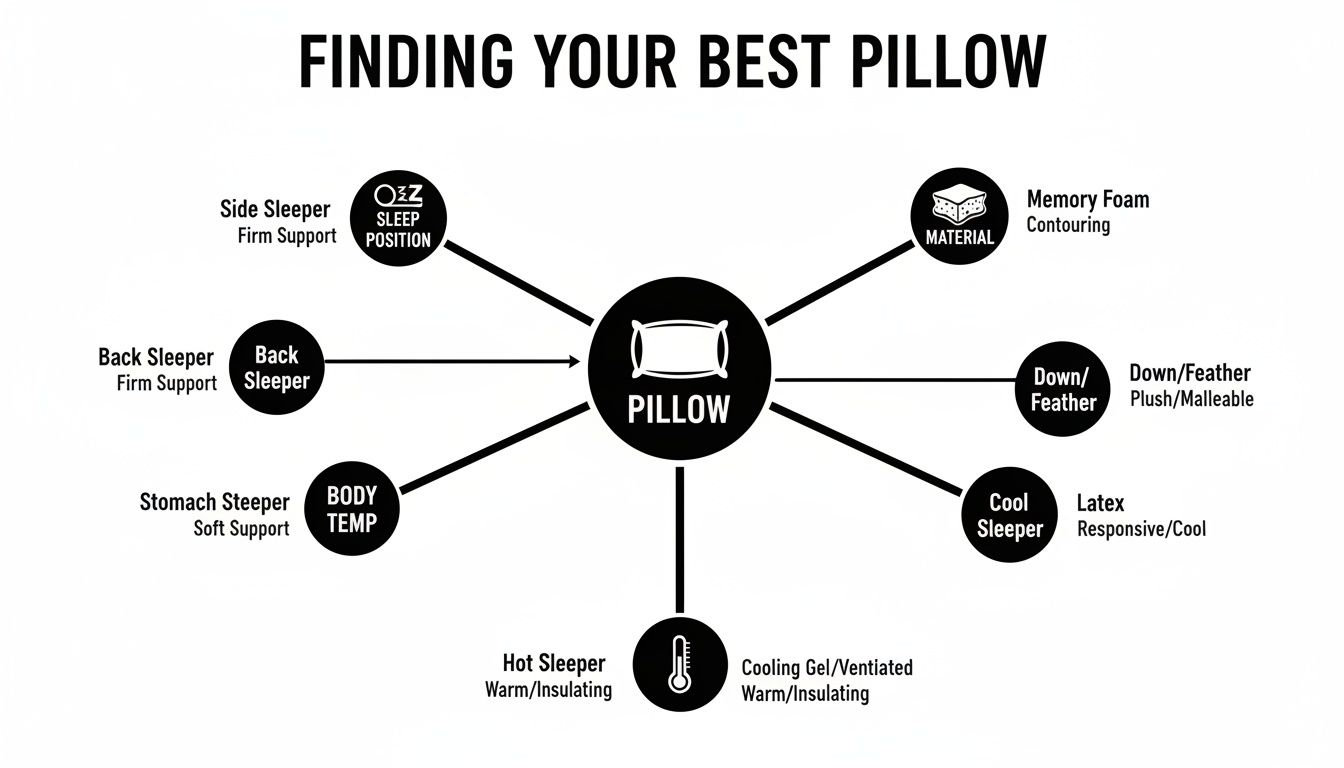
As you can see, figuring out your go-to sleep style is the first step. From there, you can easily narrow down the best materials and features for you. To make it even simpler, here's a quick cheat sheet.
Pillow Recommendations by Sleep Position
| Sleep Position | Ideal Pillow Loft (Height) | Ideal Firmness | Why It Works |
|---|---|---|---|
| Side Sleeper | High Loft | Medium to Firm | Fills the significant gap between your head and shoulder, preventing neck strain. |
| Back Sleeper | Medium Loft | Medium | Cradles the head and supports the natural curve of your neck without pushing it forward. |
| Stomach Sleeper | Low Loft (or no pillow) | Soft | Minimises the upward angle of the head and reduces the twist in your neck. |
This table is a great starting point. Let’s dive a little deeper into why each recommendation works so well.
For Side Sleepers
Side sleeping is the most common position, and it creates the biggest gap between your head and the mattress. Your pillow’s job is to fill that space completely to prevent your head from drooping.
You need two things: high loft and firm support. A thick, firm pillow isn't a luxury; it's a necessity to keep your head level with your spine. A pillow that’s too soft will simply collapse under the weight, causing strain.
For more tailored advice, you can explore our complete guide on the best pillows for side sleepers.
For Back Sleepers
Sleeping on your back is great for spinal alignment, but the wrong pillow can ruin it. Too high, and it pushes your head forward. Too low, and your head tilts back.
A medium-loft, medium-firm pillow is the perfect match. It offers just enough lift to support the natural curve of your neck while letting your head rest comfortably in line with your shoulders. Some back sleepers also find contour pillows provide incredible support.
For Stomach Sleepers
Stomach sleeping is the toughest position on your spine because you have to twist your neck to breathe. The goal here is to keep your head and neck as flat as possible to reduce that awkward angle.
Many stomach sleepers find relief with one of two options:
- A very thin, soft pillow: Look for a low-profile or "slim" pillow. It provides a hint of cushioning without propping your head up.
- No pillow at all: Sometimes, skipping the head pillow and placing a thin one under your hips is the best solution to level out your spine.
A Guide to Pillow Materials: Foam, Latex, and More
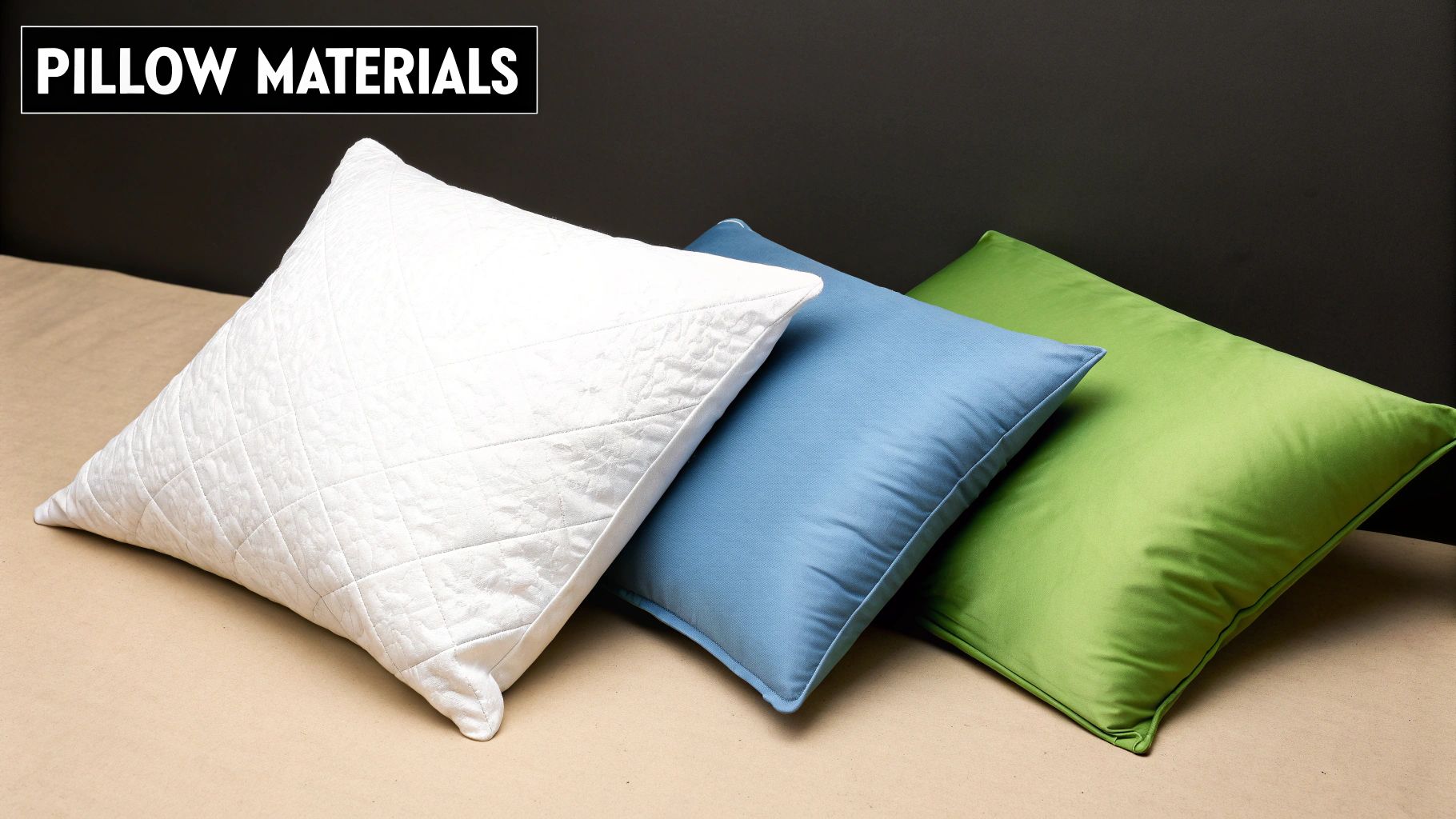
What’s inside your pillow is the biggest factor in how it feels and performs. The fill material dictates its support, breathability, and durability. Let's break down what each type actually does so you can find the one that feels made for you.
Memory Foam: Contouring Support
Memory foam uses your body heat to soften and mould to your unique shape. This creates a personalised cradle for your head and neck, offering phenomenal pressure relief and support.
This contouring action is a game-changer for anyone with neck pain. By filling the gap under your neck, it keeps your head aligned with your spine, preventing the unnatural bend that leads to morning stiffness.
- Best For: Side and back sleepers needing firm, consistent support.
- Feel: Dense and contouring with a classic "sinking in" feeling.
- Considerations: Traditional foam can trap heat. Look for newer versions infused with cooling gel or designed with ventilation for better airflow.
Natural Latex: Responsive and Breathable
If memory foam is a slow hug, natural latex is a light, buoyant lift. It has a uniquely responsive and springy feel, offering fantastic support without the "sinking" sensation.
Thanks to its natural open-cell structure, latex is also incredibly breathable, making it a brilliant choice if you sleep hot. It’s also inherently hypoallergenic and resistant to dust mites, meaning a cleaner sleep surface.
For a deeper dive, check out our detailed guide on latex vs. memory foam pillows.
The Rise of Ergonomic Materials in Australia
Aussies are getting smarter about their bedding. We’re seeing a major shift towards ergonomic pillows, with shoppers actively seeking materials like memory foam and latex. Market studies project steady growth for these types, showing that health-conscious solutions are a top priority. You can discover more insights about Australia's pillow market trends here.
Down and Feather: Traditional Softness
For those who dream of sleeping on a cloud, nothing beats the luxurious softness of down. These pillows are wonderfully mouldable—you can bunch and shape them exactly how you like.
The trade-off? They need daily fluffing to maintain their loft and don't offer enough firm support for most side sleepers.
- Best For: Stomach and some back sleepers who love a soft, adjustable pillow.
- Feel: Luxuriously soft, light, and airy.
- Considerations: Needs daily fluffing and may not suit those needing firm support.
Polyester: Versatile and Hypoallergenic
Polyester, often sold as a "down-alternative," mimics the softness of down at a more accessible price. It’s lightweight, easy to clean, and naturally hypoallergenic, making it a go-to for people with allergies.
While polyester pillows are comfortable, they tend to flatten more quickly than other materials and may need replacing more often to ensure you're still getting the right support.
Special Features to Solve Common Sleep Problems
The right material and shape are a huge win, but special features can take a good night’s sleep and make it truly restorative. The best pillow for sleeping doesn't just hold your head up; it actively works to solve the problems standing between you and deep rest.
For many, the biggest problem is heat. Waking up hot and bothered is a classic sleep-wrecker.
Stay Cool All Night
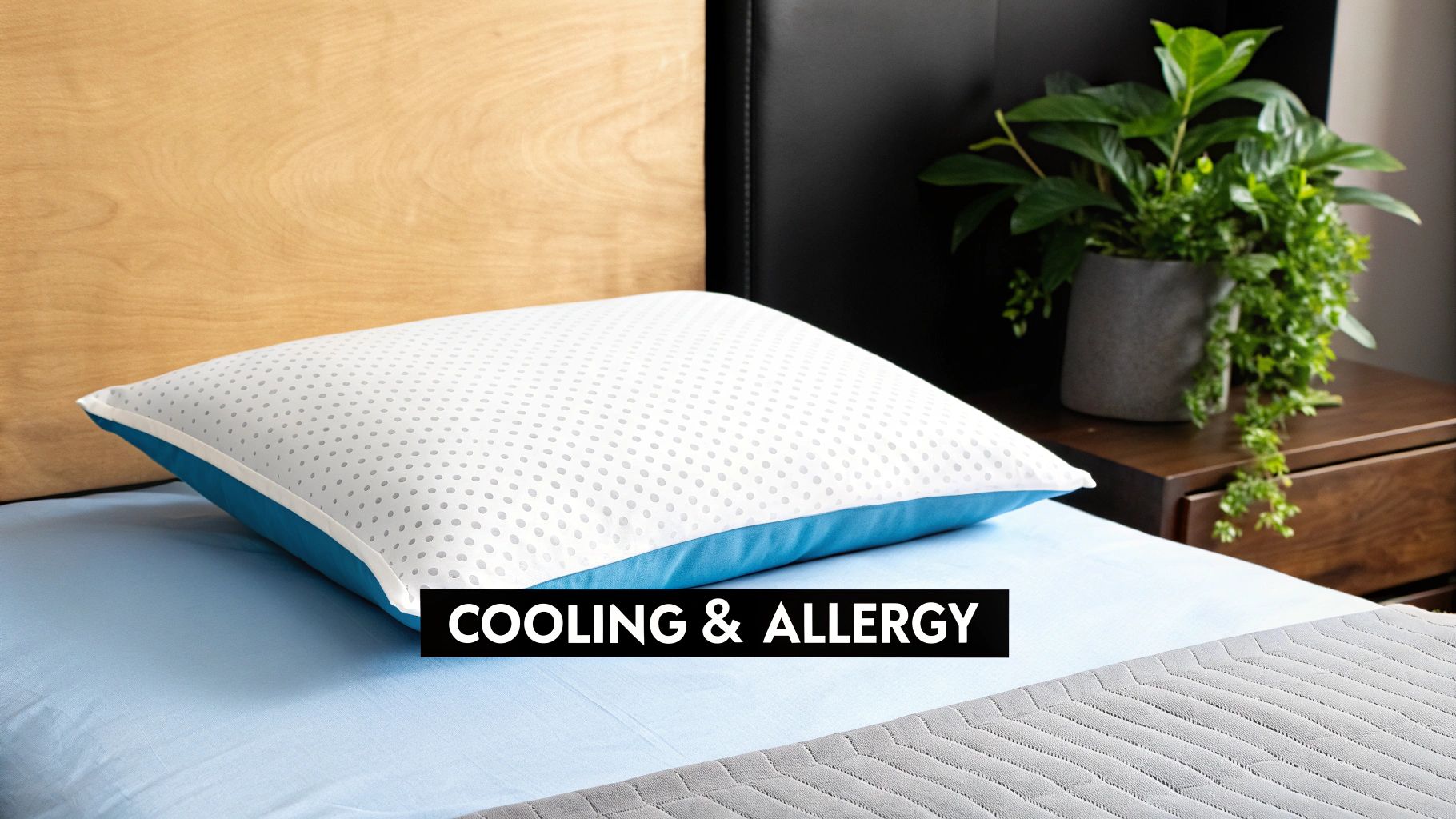
If you run hot, you need a pillow that’s built to breathe. Modern materials have solved the problem of heat retention brilliantly.
- Gel-Infused Foam: Cooling gel is swirled into the memory foam to pull heat away from your head, keeping the pillow surface from feeling too warm.
- Ventilated Designs: Tiny air channels running through the pillow promote constant airflow, stopping heat from building up.
- Breathable Covers: Fabrics like bamboo are fantastic at wicking moisture and heat away from your skin, helping you stay dry and comfortable.
These features help you spend less time flipping your pillow to find the "cool side" and more time in deep, restorative sleep.
Find Relief from Allergies and Snoring
Allergens like dust mites and mould can trigger nightly sneezing and congestion. A hypoallergenic pillow creates a no-go zone for these irritants.
Materials like latex and specialised polyester fills have a dense structure that makes it difficult for dust mites to thrive. The result is simple: you breathe easier all night.
For snoring, a supportive pillow can help by keeping your airways aligned. However, it's important to recognise when snoring might be a sign of a more serious condition like sleep apnea. If you're concerned, it's wise to explore various sleep apnea treatment options with a professional.
Get Customised Support with Adjustable Pillows
Adjustable pillows come with a zippered cover and are filled with shredded foam or microfibre, letting you add or remove fill until the height is perfect for you.
This customisation is a game-changer. It works for any sleep position and adapts if your needs change. If you suffer from neck stiffness, finding the precise height can take the pressure off. A well-chosen pillow for neck and shoulder pain can offer even more targeted relief.
How to Care For Your Pillow and When to Replace It
Finding the perfect pillow is the first step. To keep it fresh and supportive, you need to give it a little care. A pillow protector is your secret weapon, acting as a shield against sweat, oils, and allergens.
Regular cleaning is also key. Pairing this with effective home cleaning strategies for dust control can create a healthier sleep space.
Simple Cleaning for Every Pillow Type
Always check the care tag first, but here are some solid rules of thumb. For a deeper dive, check out our guide on how to wash a pillow.
- Memory Foam & Latex: Do not put these in the washing machine. Spot-clean stains with a damp cloth and mild soap, then let them air dry completely.
- Down, Feather & Polyester: Most of these can go right in the wash. Use a gentle cycle and mild detergent. Tumble dry on low with a couple of clean tennis balls to fluff them back to life.
Knowing When It’s Time for a New Pillow
Even the best pillow has a lifespan. The general rule is to replace your pillow every 1 to 2 years. A flat, worn-out pillow can’t keep your neck and spine aligned, leading to aches and pains.
How can you tell if it's time?
Try the 'fold test'. Fold your pillow in half and let go. If it springs back, it's still good. If it stays folded, its supportive core is gone, and it’s time for an upgrade.
Also, watch for lumps, stubborn stains, or if you're waking up with a stiff neck. Replacing your pillow is a necessity for maintaining the support your body needs.
Your Final Checklist for Choosing the Perfect Pillow
Let’s pull this all together. You can zero in on the perfect choice by answering four simple questions.
Pinpoint Your Pillow Profile
Run through these questions to create a clear blueprint for the support your body needs.
- How do I sleep? Side, back, or stomach? This determines the loft (height) and firmness you need.
- What feel do I prefer? Do you like the soft, cloud-like feel of down or the firm contouring of memory foam?
- What problems am I solving? Are you a hot sleeper, dealing with allergies, or waking up with a stiff neck?
- What size do I need? Getting familiar with standard pillow dimensions in Australia will help you make the right call for your bed size.
With these answers, you’re no longer guessing—you're shopping with purpose.
Your Pillow Questions, Answered
Here are straightforward answers to the questions we hear most often.
What is the best pillow for a sore neck?
For neck pain, the goal is keeping your spine straight. Memory foam and natural latex pillows are often recommended because they contour to your head and neck, offering stable support that prevents your head from drooping at an awkward angle.
We heard from a side sleeper named Chloe, who was waking up with a seriously stiff neck. She swapped her old feather pillow for a high-loft memory foam one and told us her neck pain improved dramatically within the first week. The new pillow perfectly filled the space between her shoulder and head, keeping her spine aligned all night.
How often should I replace my pillow?
Replace your pillow every 1 to 2 years. This is important for both health and support. Over time, the filling breaks down and loses its loft, meaning it can no longer support your head properly.
Here’s a quick check: Fold your pillow in half. If it doesn’t spring back into shape, its support structure is gone. That’s your sign it’s time for a new one.
Can the wrong pillow cause snoring?
Yes, absolutely. If your pillow is too high, it can push your chin towards your chest, narrowing your airway. If it's too flat, your tongue can fall back and partially block your throat. For back sleepers who snore, a medium-loft pillow often helps keep airways open for a quieter night.
Find Your Perfect Pillow Today
Finding the right pillow is an investment in your health and well-being. A great night's sleep affects everything from your mood to your productivity. By understanding your unique needs based on sleep position and personal preference, you can finally find the perfect pillow that leaves you feeling refreshed and ready to take on the day.
Ready to find a pillow that feels like it was made just for you? The team at Sienna Living has brought together a collection of premium pillows for every kind of sleeper. Find your perfect match at Sienna Living today.