

Finding a blood stain on your sheets can feel like a laundry emergency, but don't panic. What you do in the first few moments makes all the difference, and knowing how to remove blood on sheets starts with one golden rule: act fast and always use cold water. This simple step is the most crucial part of stopping a stain from becoming permanent.
Your First Move: Act Within 15 Minutes
We’ve all been there—that sinking feeling when you spot a red mark on your bedding. The goal isn't to scrub furiously, but to gently contain and lift the stain before it sets. When blood meets fabric, it spreads through the fibres in tiny, web-like patterns. The longer you wait, the deeper and more stubbornly that stain settles in.
This flowchart breaks down the critical first decision you'll make when faced with a blood stain.
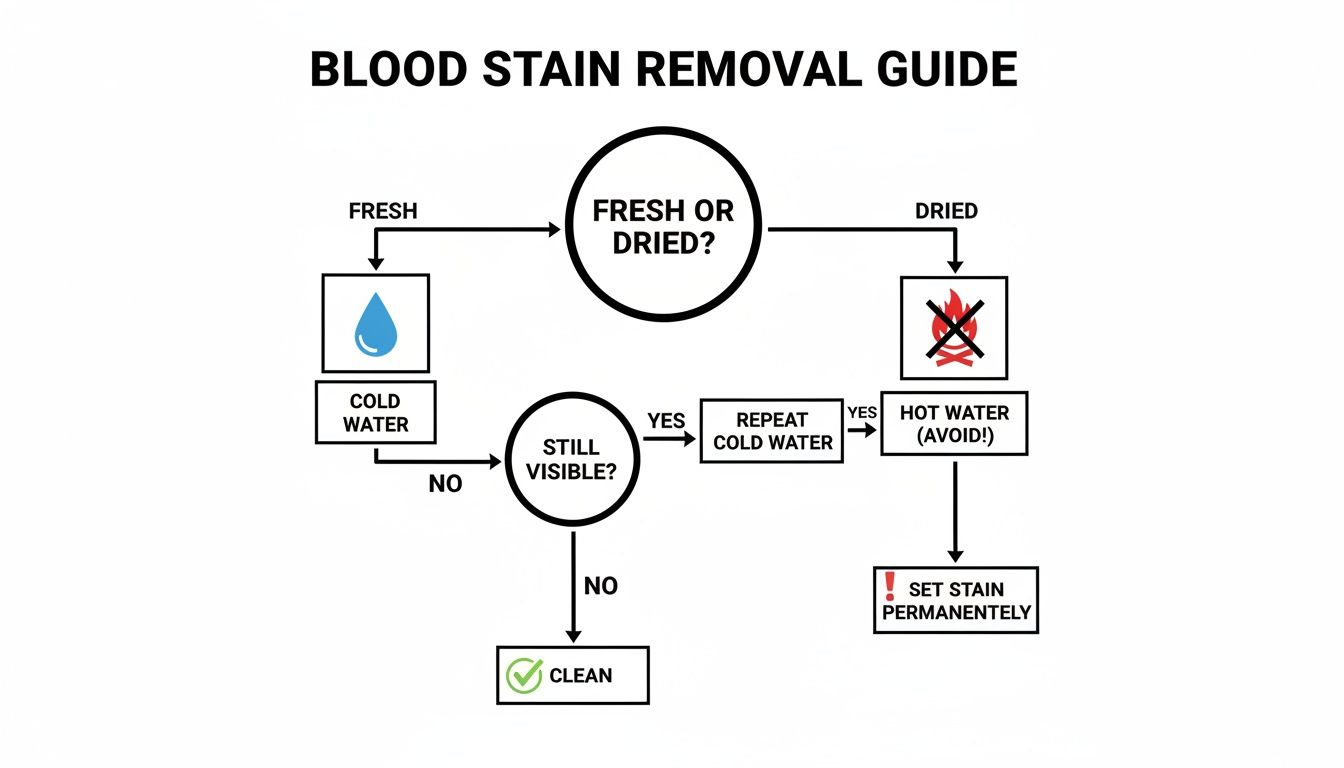
As you can see, reaching for cold water is your best bet for success. Hot water, on the other hand, will permanently set the stain, making it nearly impossible to get out.
The Science: Why Cold Water Is Essential
So, why the obsession with water temperature? It all comes down to science. Blood is a protein-based stain, and when you add heat—from hot or even warm water—you're essentially "cooking" those proteins into the fabric.
This process, called denaturation, causes the proteins to chemically bond with the fabric's fibres. Think of it like frying an egg; once that protein is cooked, there’s no going back. Cold water does the opposite: it helps dissolve and loosen the blood proteins without triggering that chemical bond, making the stain much easier to flush out.
Quick Action Plan for Blood Stains
Follow these crucial first steps immediately after discovering a blood stain to maximise your chances of complete removal.
| Action | Why It Works | What You Need |
|---|---|---|
| Gently Blot | Soaks up excess blood without rubbing it deeper into the fabric's weave. | A clean, dry cloth or paper towel |
| Rinse with Cold Water | Flushes the stain from the back to push it out, not in. | Running cold tap water |
| Apply a Paste | Creates a targeted treatment to start breaking down the stain’s proteins. | Bicarb soda and cold water |
Before you reach for any products, your first instinct should be to grab a clean, dry cloth and head for the cold tap. Don't scrub! Scrubbing only grinds the stain deeper into the sheet’s weave and can make the spot even bigger.
Instead, gently blot the stain, working from the outside in. This soaks up as much fresh blood as possible. For other common bedding mishaps, have a look at our comprehensive guide on how to clean bed stains. This simple blotting action is a crucial first step that stops the stain from worsening.
Simple Fixes for Fresh Blood Stains
You don't need harsh chemicals to figure out how to remove blood from sheets, especially if the stain is fresh. Believe it or not, your kitchen cupboard probably holds everything you need. Acting fast with these simple, natural solutions can stop a small accident from becoming a permanent mark on your favourite bedding.
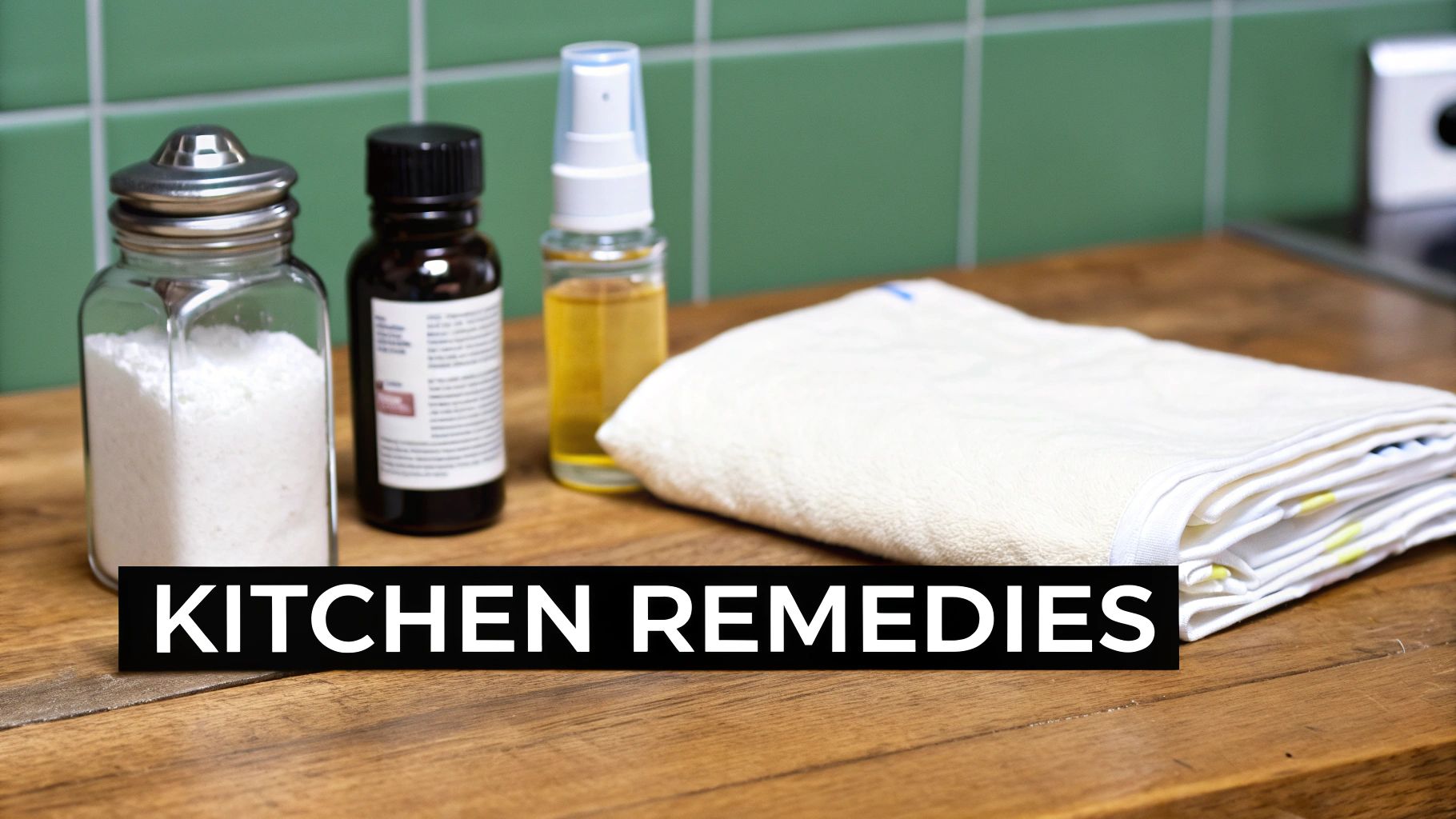
The trick is to use common household items that are tough on proteins but gentle on fabrics. Things like salt, baking soda, and even hydrogen peroxide can work wonders when used correctly, saving you a trip to the shops and protecting your sheets.
Method 1: The Saltwater Soak
One of the oldest tricks in the book is a simple saltwater soak. Salt is a natural dehydrating agent, meaning it pulls moisture—and with it, the blood—right out of the fabric fibres.
Let’s say you’ve just had a small nosebleed on a pillowcase. First, blot away any excess and rinse it under the cold tap. Then, make a powerful stain-lifting soak.
- Mix: Dissolve two tablespoons of table salt in one litre of cold water.
- Soak: Submerge the stained part of the fabric in the solution for at least an hour, or up to three.
- Rinse: After soaking, gently rub the fabric against itself to loosen the stain, then rinse thoroughly under cold running water.
This method is brilliant for delicate materials. For instance, if you're working with bamboo, it's always best to be gentle. You can find more specific advice in our guide on how to wash bamboo sheets, which has plenty of tips for gentle cleaning.
Method 2: Use a Baking Soda Paste
For a more targeted attack, a baking soda paste gives fantastic results. Baking soda is a mild alkali that helps break down proteins in blood, and its gentle abrasive quality lifts the stain without damaging fibres.
Mix two parts baking soda with one part cold water until you have a thick paste. Spread it directly over the stain, making sure it’s completely covered. Let it sit and dry for at least 30 minutes. As the paste dries, it will pull the stain up and out of the material. Once dry, gently scrape off the excess and rinse the area with cold water.
Pro Tip: Don't use a stiff brush to remove the dried paste, as you could damage the fabric. A soft cloth or an old, soft-bristled toothbrush is a much safer bet.
Method 3: Hydrogen Peroxide for White Sheets
Hydrogen peroxide is a mild bleach, making it an amazing option for white or very light-coloured cotton sheets. It works by releasing oxygen, a process that breaks the chemical bonds in blood and makes the stain vanish.
A word of warning is essential: Hydrogen peroxide can discolour coloured fabrics, so you must do a spot test on a hidden area, like an inside hem, first.
If your sheets pass the test, apply a 3% hydrogen peroxide solution directly to the stain. You’ll see it fizz and bubble—that’s the oxidation at work. Let it sit for a few minutes, then blot with a clean cloth and rinse thoroughly with cold water.
How to Tackle Tough Dried Blood Stains
Discovering an old, dried blood stain can be frustrating, but it’s far from a lost cause. With the right strategy and a little patience, you can get that set-in stain out. The trick is knowing what you're up against and choosing the right tool for the job.
Dried blood is stubborn because its proteins have bonded with the fabric fibres. A simple cold-water rinse won't cut it anymore; you need something that can actively dissolve those bonds.
Why Enzyme Cleaners Are Your Best Friend
For a stain that's truly set, your most powerful weapon is an enzyme cleaner. These aren't average detergents. Enzyme cleaners contain specific proteins called proteases, engineered to biologically break down and digest other proteins—like those in blood.
Think of the dried blood as a complex net tangled in your sheets. The enzymes act like tiny scissors, snipping that net into smaller pieces until they can be easily washed away.
Look for a laundry pre-treater that specifically lists protease enzymes on the label. To get the best results:
- Apply the cleaner directly onto the stain until it’s completely saturated.
- Let it sit for at least an hour, or overnight for a very stubborn stain.
- Once it’s had a good soak, move on to a cold-water wash.
Creating a Potent Pre-Soak Solution
If you don't have an enzyme cleaner, you can create a powerful pre-soak with household staples. A long soak helps rehydrate and loosen the stain before you wash.
White vinegar is a fantastic option. Its mild acidity is great for breaking down blood components. Just soak the stained area in undiluted white vinegar for 30 minutes, then rinse with cold water.
Alternatively, a good-quality liquid laundry detergent can create a concentrated pre-soak. Mix a small amount of detergent in a bowl of cold water and let the stained part of the sheet soak for several hours. Research has shown that fabric composition matters; materials like cotton can hang onto blood stains even after a wash, which is why targeted pre-treatment is so crucial.
A Quick Reminder: A stain that has soaked through to your mattress needs a different game plan. We’ve got detailed advice on how to get blood out of a mattress to help you tackle those deeper spots.
Persistence is everything. For particularly difficult blood stains, whether fresh or dried, it helps to have a few tricks up your sleeve. You can explore a guide to removing fresh and dried blood stains on carpet for some extra tips.
The Final Wash for Spotless Sheets
You've pre-treated the stain, and now it's time for the final step: the machine wash. This last wash will lift and rinse away any remaining traces of blood, leaving your bedding pristine.
The number one rule still applies: always use a cold water cycle. Even a little heat at this stage can set any lingering proteins you might have missed. Add your regular mild detergent and run a normal cycle. It's also a good idea to skip fabric softener for this wash, as it can coat the fibres and trap faint stains.
Choosing the Right Washing Cycle
Think about your sheets. Are they tough cotton or delicate bamboo? Choosing the right machine setting is vital for getting them clean without causing damage.
- For durable fabrics like cotton or linen, a normal cold cycle is perfect.
- For delicate materials like bamboo or silk, select the gentle or delicates cycle to preserve the softness of the fibres.
For example, our sturdy Sienna Living cotton sheets are fine on a regular cold wash, but our bamboo sheets need that gentle touch to stay silky smooth.
The Most Important Checkpoint
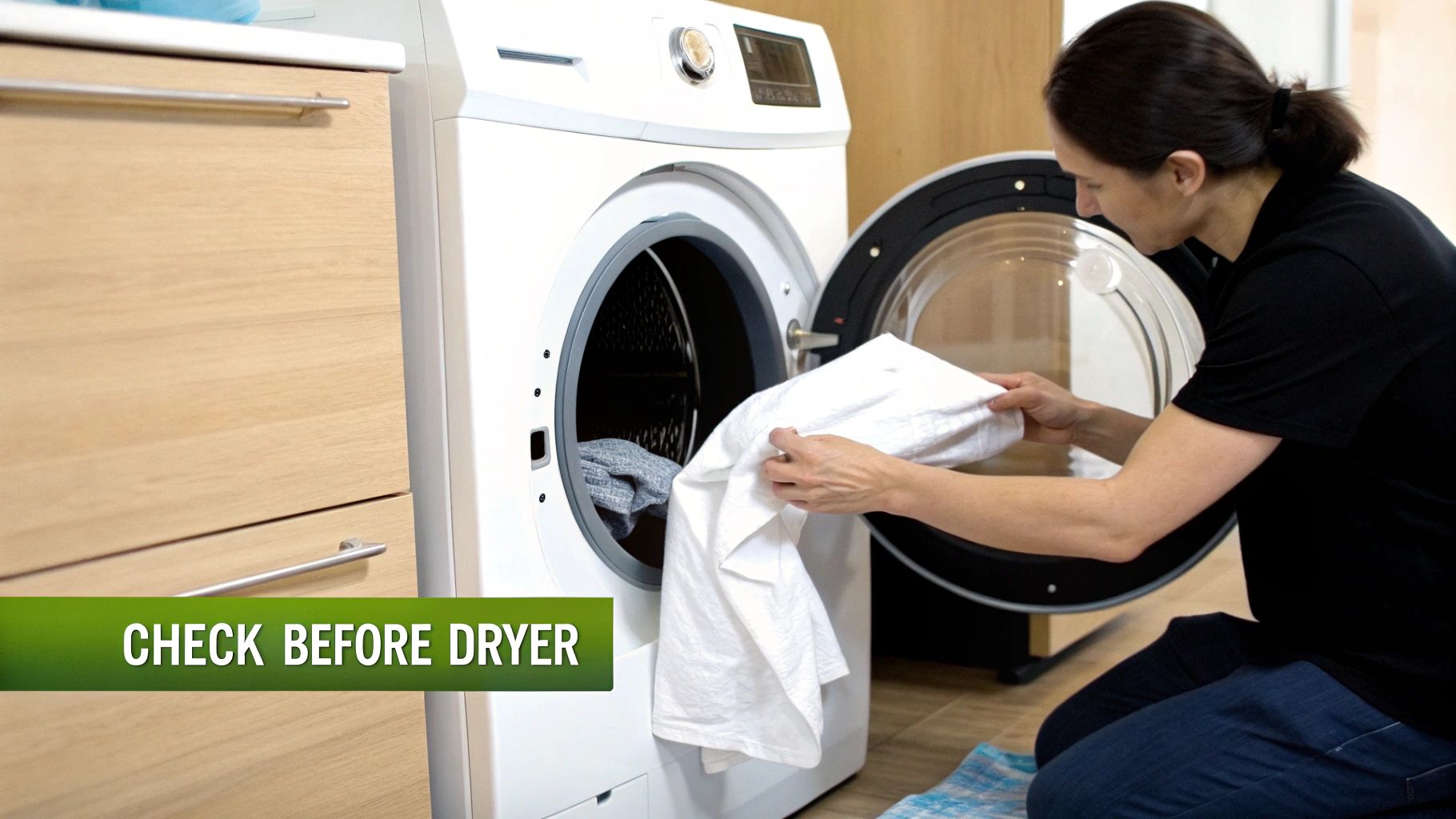
Once the wash cycle is finished, stop. Before you even think about the dryer, this is the most critical moment.
Pull the damp sheet out of the machine and inspect it in a well-lit area. Hold the spot where the stain was up to the light.
Can you see even a faint shadow? If so, do not put it in the dryer. The intense heat from a dryer will permanently bake the stain into the fabric forever.
If you see a lingering mark, just repeat your preferred pre-treatment method and run it through another cold wash. This bit of patience is the key to complete success. This same approach works for other stubborn issues, like yellowing; our guide on how to whiten pillow cases has similar fabric-safe tips.
Common Mistakes That Set Stains Forever
When you discover a blood stain, your first instinct can sometimes be your worst enemy. Knowing what not to do is often the most valuable advice, turning a potential disaster into a simple clean-up.
Mistake #1: Using Hot Water
This is the most frequent and damaging mistake. We associate hot water with powerful cleaning, but for a protein stain like blood, heat is the worst thing you can do. The heat "cooks" the proteins, chemically bonding them to the fabric. Once that happens, the stain is permanent. Always start with cold water.
Mistake #2: Scrubbing Instead of Blotting
Another gut reaction is to scrub the spot furiously. This doesn't lift the stain; it grinds the blood deeper into the fabric's weave and can damage the fibres, leaving the area looking frayed. The right technique is to blot gently with a clean, white cloth, working from the outside in to prevent the spot from spreading. This is especially vital for delicate fabrics, which you can learn more about in our guide on how to wash linen.
Mistake #3: Reaching for the Wrong Cleaner
Using the wrong cleaning agent is just as bad as using the wrong water temperature.
- Chlorine Bleach: While a powerful whitener, chlorine bleach reacts with the proteins in blood, often creating a permanent yellowish stain.
- Coloured Cloths: When blotting, always use a plain white cloth or paper towel. Dyes from a coloured towel can easily transfer to your sheets, creating a brand-new stain.
Quick Guide: Blood Stain Removal Dos and Don'ts
Here’s a simple checklist of the essential rules for removing blood stains correctly every time.
| Do This ✅ | Never Do This ❌ |
|---|---|
| Act as quickly as possible. | Use hot or warm water. |
| Use only cold water. | Scrub or rub the stain. |
| Gently blot the stain. | Use chlorine bleach. |
| Use a clean, white cloth. | Let the stain dry if you can help it. |
A Note on Precision: In medical settings, the careful handling of blood is critical, with wastage kept to just 1.2%. While you're not in a lab, adopting a similarly careful and methodical approach at home will give you the best chance of completely removing the stain.
Your Blood Stain Questions Answered
Even when you follow the steps, some tricky questions can pop up. Let's go through some of the most common queries about getting blood out of sheets.
Can I use bleach on white sheets to remove blood?
The short answer is no, you shouldn't use chlorine bleach. It can react with the proteins in blood, setting the stain permanently and leaving a stubborn yellow mark. A much safer option is an oxygen-based bleach (like a Napisan-style soaker) or spot-treating with a bit of hydrogen peroxide after a successful spot test.
How do I get blood out of my mattress?
You can’t toss a mattress in the wash, so the key is to use as little liquid as possible. First, blot the fresh blood with a clean cloth dampened with cold water.
Next, make a thick paste of baking soda and a tiny bit of cold water. Spread this over the stain and let it dry completely. As it dries, it will draw the stain up and out of the mattress fibres. Once bone dry, vacuum up the dried paste with a hose attachment. For more detail, our guide on how to clean bed stains can help.
Does salt really work on blood stains?
Yes! Salt is an old-school trick that works wonders on fresh stains. It’s a natural dehydrator, so it helps pull the blood out of the fabric. The slight abrasiveness also helps to break down the stain without being rough on your sheets. For a great first-response treatment, mix a thick paste of salt and cold water, apply it to the stain, leave it for an hour, and then rinse with cold water before washing.
What is an enzyme cleaner and why does it work?
Enzyme cleaners are your secret weapon for stubborn, dried-on blood stains. These specialised formulas contain protease enzymes—proteins designed to break down other proteins. They essentially "eat" the stain on a molecular level, dismantling tough messes like blood into smaller particles that your regular wash cycle can easily whisk away. They are a game-changer for set-in stains.
Conclusion: Keep Your Sheets Looking Like New
Dealing with blood on your sheets doesn't have to be a disaster. By acting quickly, using cold water, and choosing the right gentle cleaning methods, you can tackle even tough stains and keep your bedding pristine. Remember the key steps: blot, rinse with cold water, pre-treat, and wash on a cold cycle. With these tips, you're ready to handle any laundry mishap.
If you're looking for bedding that’s both luxurious and wonderfully easy to care for, explore our premium bamboo and cotton sheets. They're designed for ultimate comfort, durability, and a truly restorative night's sleep.