

Spilled coffee, a child's accident, or a mysterious yellow spot—finding a stain on your mattress can feel like a disaster. But don't panic. The secret to how to get stains out of a mattress isn't a miracle product, but a few simple items you probably already have at home.
The golden rule is to act fast. A fresh spill is much easier to tackle than a stain that’s had time to set. Your first move should always be to blot, not rub. Rubbing grinds the stain deeper into the mattress fibres, making it a permanent resident. Grab a clean cloth and gently dab to absorb as much of the spill as possible.
Your Mattress Stain First-Aid Kit
When a spill happens, you don't have time to search for supplies. Keep a simple cleaning kit ready to go. This can be the difference between a stain that vanishes and one that sticks around.
Think of this as your mattress's emergency response team.
Mattress Stain First-Aid Kit
| Item | Purpose | Pro Tip |
|---|---|---|
| Clean White Cloths | Blotting up spills | Always use white so you don't accidentally transfer dye onto the mattress. |
| Cold Water | Rinsing and diluting | Hot water can "cook" protein stains like blood, setting them permanently. |
| Baking Soda | Absorbing moisture & odours | A natural wonder for pulling out lingering dampness and smells. |
| White Vinegar | Breaking down stains | Mix it 50/50 with water in a spray bottle for an all-purpose stain fighter. |
| Mild Dish Soap | Tackling oily stains | A clear, bleach-free soap is best. Just a drop or two is plenty. |
With these items ready, you’re prepared for almost any common spill. Acting within the first few minutes dramatically increases your chance of removing the stain completely.
The Non-Negotiable Spot Test
Before you spray any cleaning solution on a visible stain, you must do a spot test. This simple step can save you from turning a small spot into a giant, discoloured patch.
Pick a small, hidden area to test your cleaner—like the side of the mattress against the wall. Dab a tiny bit of your solution on, wait a few minutes, then blot it dry. If there's no colour change or damage, you’re good to go.
This is especially important for memory foam or hybrid mattresses, as their materials can react to certain chemicals. Taking 60 seconds to test can prevent a world of regret.
Of course, the best way to handle a stain is to prevent it. A top-notch barrier like a bamboo waterproof mattress protector is your best defence, keeping spills from ever reaching the mattress itself.
Tackling Common Mattress Stains With DIY Solutions
When you find a stain, figuring out what caused it is half the battle. Different spills need different cleaning methods. Tailoring your technique to the specific culprit is key to successfully getting stains out of your mattress.
Everyday household items like white vinegar, baking soda, and hydrogen peroxide are surprisingly powerful. For example, vinegar's acidity is brilliant for breaking down alkaline stains like urine, while hydrogen peroxide is a superstar at tackling protein-based stains like blood.
This flowchart gives you a quick visual guide for what to do the moment a spill happens.
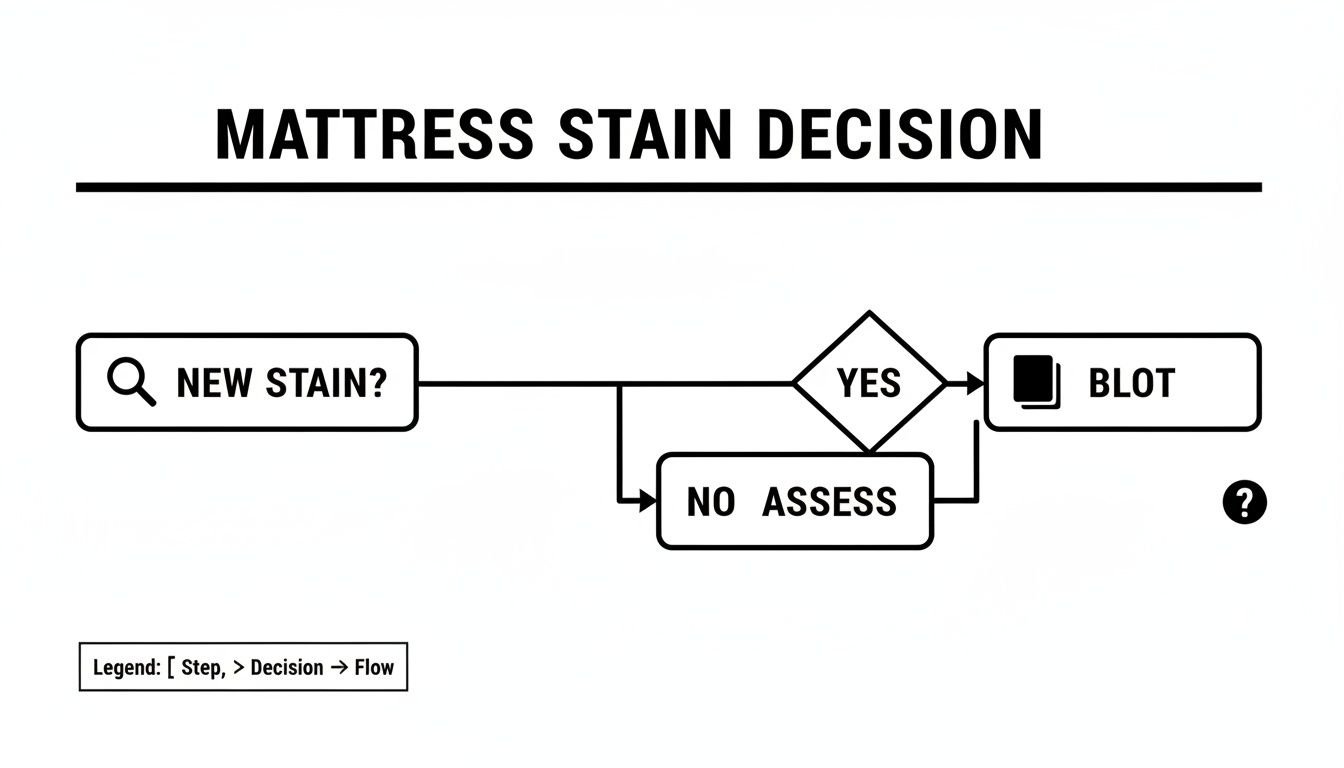
Your first move depends on how old the stain is. This little decision tree points you toward the most effective starting point.
How To Remove Blood Stains
Blood is tricky because heat sets it permanently. The protein in blood "cooks" when heated, essentially gluing it to the fibres. That’s why cold water is non-negotiable.
Start by dabbing the fresh stain with a cloth soaked in cold water. Then, apply a small amount of 3% hydrogen peroxide directly to the spot. It will fizz and bubble as the oxidation process breaks down the blood cells.
Let it sit for a few minutes, then blot firmly with a clean, dry cloth. For a stubborn mark, you may need to repeat the process. If you're facing a tough one, our detailed guide on how to get blood out of a mattress has more expert tips.
How To Remove Urine Stains
For anyone with kids or pets, urine stains are an unfortunate reality. The challenge is two-fold: removing the visible stain and eliminating the lingering ammonia smell.
Your best bet is a 50/50 solution of white vinegar and water in a spray bottle. Lightly mist the area—don't soak it—and let it sit for about 10 minutes. The vinegar's acidity will neutralize the uric acid.
Blot the spot thoroughly with a dry towel. Then, cover the damp area with a generous layer of baking soda and leave it for at least eight hours, or overnight. The baking soda will absorb any leftover moisture and odour. The next day, just vacuum it all up.
How To Remove Sweat and Body Oil Stains
Over time, sweat and body oils leave tell-tale yellow stains. These build up gradually, which can make them tougher to lift than a fresh spill.
A simple DIY paste is incredibly effective here. Mix these ingredients together:
- Three tablespoons of baking soda
- One cup of 3% hydrogen peroxide
- Two drops of clear dishwashing liquid
Stir gently until the baking soda dissolves, then use a clean cloth to apply the paste to the yellowed areas. Let it air dry completely. It will form a crust that you can easily vacuum away later, taking the discolouration with it.
How To Remove Coffee or Wine Stains
That morning coffee or evening glass of red can turn into a panic with one wrong move. Both coffee and wine contain tannins, which are natural dyes that love to stain fabric.
For these spills, speed is key. Blot up as much liquid as you can immediately. Then, use the same 50/50 white vinegar and water solution. Lightly spray the stain and blot repeatedly, always working from the outside in to stop it from spreading.
Real-World Example: Sarah from Sydney spilled a whole mug of black coffee on her new mattress. Panicked, she grabbed paper towels and blotted the excess immediately. She then sprayed a 50/50 vinegar-water mix, blotted again, and finished with a sprinkle of baking soda to draw out the last of the moisture. The next morning, after vacuuming, the stain was completely gone.
The Importance of Acting Fast
Getting stains out of a mattress is all about quick action. For most spills, common household items will do the trick. But you have to be quick—the longer a stain sits, the more it bonds with the fibres.
For tougher stains, Australian cleaning experts often recommend a paste from baking soda and water. Apply it to the spot, let it sit for 30 minutes, and then wipe it away with a damp cloth.
If you want to get truly professional results, you can learn more about how to clean a mattress stain like a pro.
The Complete Mattress Cleaning And Freshening Process
Once you’ve dealt with the spots, it's time to give the entire mattress a proper refresh. This is a crucial step for hygiene that gets rid of the invisible grime that builds up over time.
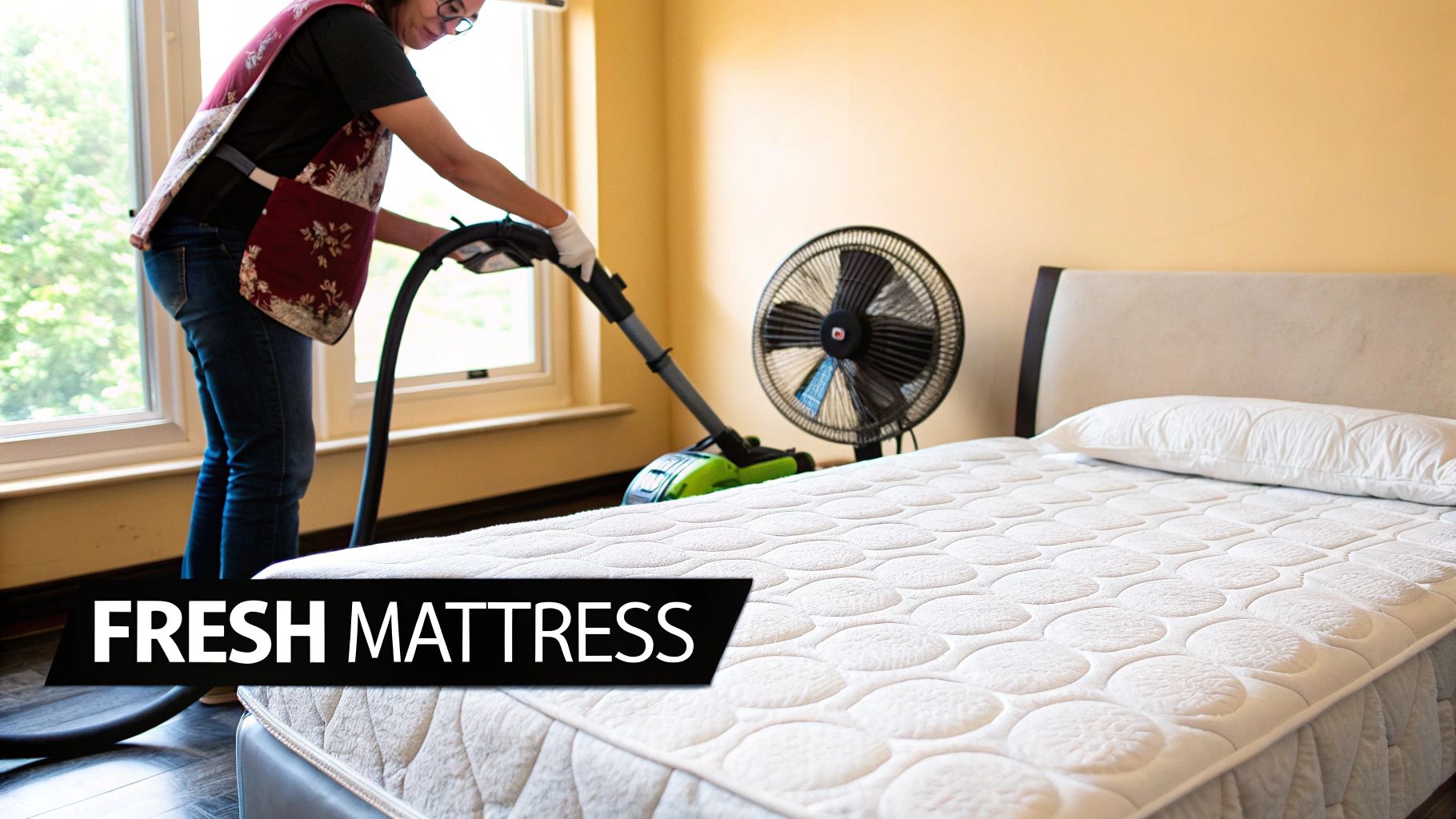
Start With A Deep Vacuum
Your vacuum cleaner is your best friend here. Use the upholstery attachment and go over every inch of the mattress. Get right into the seams and crevices where dust and allergens collect.
This is a non-negotiable health measure. Research shows a typical used mattress can harbour millions of dust mites. The Dyson Global Dust Study found that a shocking 76% of people never vacuum their mattresses, a huge oversight for allergy sufferers. A regular vacuum is a simple way to break that cycle.
Deodorise With Baking Soda
Next, tackle any lingering odours. Baking soda is a natural, cheap, and effective deodoriser.
Sprinkle a generous, even layer over the entire mattress. Using a kitchen sieve helps get a uniform coating.
Let the baking soda sit for at least a few hours. If you can leave it overnight, even better. It gives it plenty of time to absorb stubborn odours from sweat, oils, and cleaning solutions.
Once it's worked its magic, vacuum thoroughly to suck up every last bit. This is also the perfect time to give your mattress cover a wash. If you're not sure how, our guide on how to wash a mattress cover properly can help.
Ensure Proper Drying And Ventilation
This is the most critical step: make sure your mattress is 100% dry before you make the bed. Any trapped moisture is a welcome mat for mould and mildew, which can ruin your mattress.
Effective Drying Techniques:
- Create Airflow: Open the windows and get a fan going. Aim a portable fan across the mattress surface to speed up evaporation.
- Let the Sun Help: If you can, let some sunlight into the room. Sunlight is a natural sanitiser. Just be careful not to leave it in direct, harsh sun for too long, as this can cause some fabrics to yellow.
- Patience is Key: Drying can take a few hours to a full day. Resist remaking the bed until you're absolutely sure it's bone dry to the touch.
Proper drying protects your investment and ensures your clean bed is also a healthy one. For more tips, check out this practical guide on cleaning and freshening your mattress.
How to Prevent Future Mattress Stains
Once your mattress is clean, you’ll want to keep it that way. Prevention is always the best strategy—it saves you effort and helps your mattress last longer.
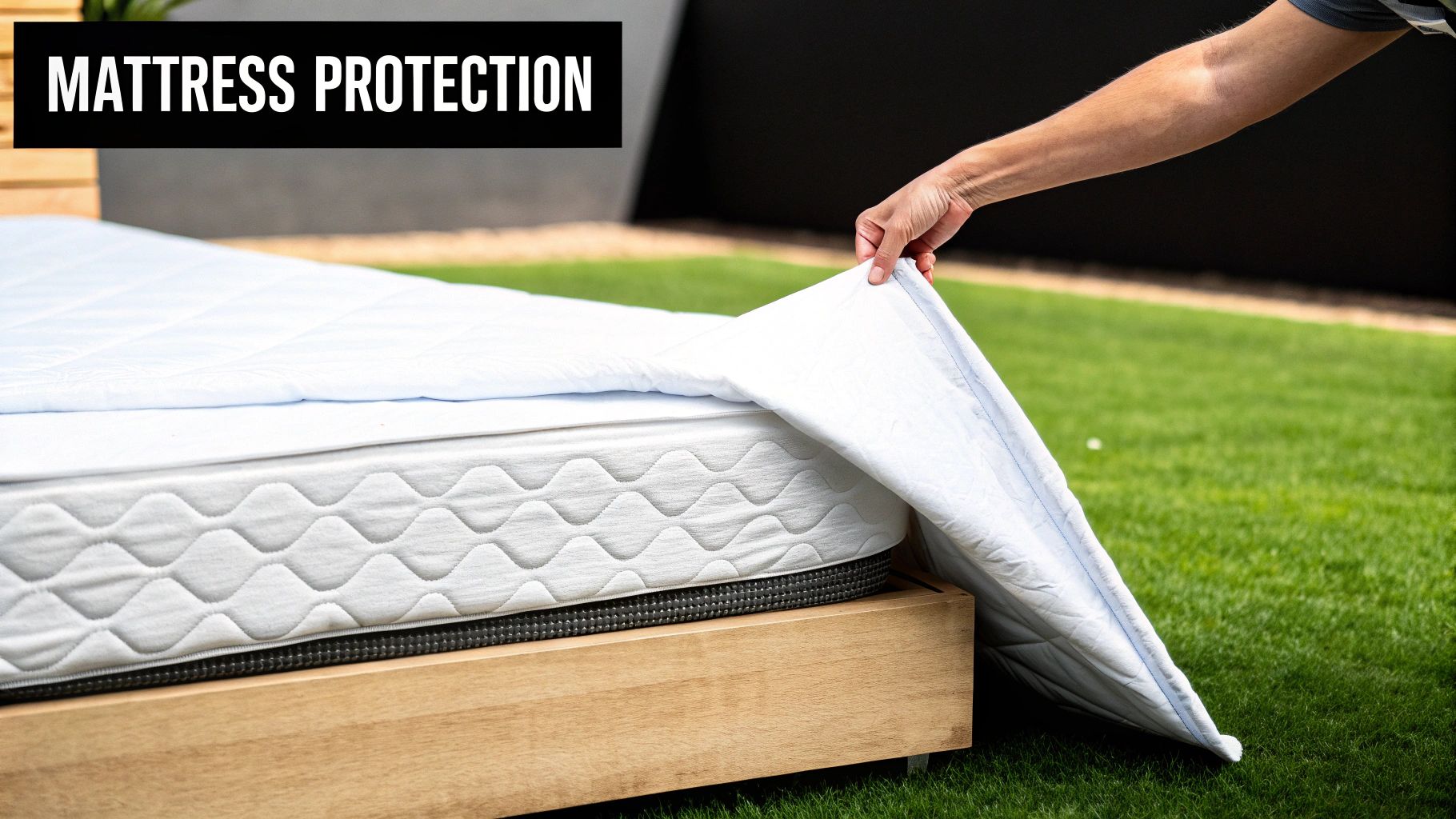
The single most powerful weapon in your stain-fighting arsenal is a high-quality mattress protector. Think of it as insurance for your bed.
Invest in a Quality Mattress Protector
A waterproof mattress protector is a must-have. Modern protectors use advanced, breathable materials that don’t make noise or trap heat.
A bamboo fabric protector, for example, offers a soft, silent surface that naturally wicks away moisture. It creates an impermeable shield against liquids but still allows air to flow, helping you stay cool. Investing in a good king mattress protector is a game-changer for hygiene and sleep quality.
Did you know? Research on mattress hygiene found that an unprotected mattress can nearly double its weight in eight years from a build-up of dead skin cells and dust mites. A protector stops this, creating a far healthier place to sleep.
A protector doesn't just guard against stains; it often protects your mattress warranty, as many manufacturers void coverage if the mattress is stained.
Establish a Consistent Cleaning Routine
Building simple, consistent habits can stop moisture and odours from building up.
Try working these tasks into your routine:
- Wash Bedding Weekly: Wash your sheets, pillowcases, and protector once a week in hot water (if care labels allow) to kill dust mites and bacteria.
- Air Out Your Bed Daily: When you get up, pull the duvet back for at least 30 minutes. This allows moisture from sweat to evaporate instead of being trapped.
- Rotate Your Mattress Regularly: Every three to six months, spin your mattress 180 degrees to promote even wear.
Create Stain-Proof Household Habits
Finally, a few mindful adjustments can dramatically lower the risk of spills.
Consider a "no food or dark drinks in bed" policy. If you love your morning coffee in bed, try enjoying it while sitting on the edge of the mattress.
For pet owners, placing a washable blanket at the foot of the bed is a great way to catch muddy paws and pet hair.
Knowing When to Call in the Pros
You’ve tried the DIY tricks, but that stubborn stain is still there. While home remedies are great for fresh spills, sometimes knowing how to get stains out of a mattress means knowing when to call an expert.
If you're tackling a stain that’s been there for months or dealing with major water damage, a professional has the heavy-duty equipment to handle it safely.
When a Professional Is Your Best Bet
Some situations are beyond spot cleaning. Trying to manage these on your own can push a stain deeper or create a damp environment perfect for mould.
Here are the signs it’s time to call a pro:
- Stubborn, Set-In Stains: If a stain has had weeks to bond with the fibres, household solutions won't have enough power.
- Mystery Stains: A pro can identify the source and apply the right treatment, avoiding risky guesswork.
- Mould or Mildew: This is a health concern. Experts have specialised treatments to kill spores and sanitise the mattress.
- Large-Scale Spills: When a lot of liquid has soaked through, getting it dry at home is nearly impossible.
- Sensitive Materials: Delicate natural latex or memory foam mattresses can be easily damaged by the wrong chemicals.
What to Expect From a Professional Service
When you hire a professional, you're paying for their experience and industrial-grade equipment.
The most common method is hot water extraction (steam cleaning). They inject a hot water and cleaning solution deep into the mattress, then immediately extract it with a high-powered vacuum. This pulls out the stain, dirt, and allergens. For delicate mattresses, they may use low-moisture or dry cleaning methods.
A Quick Insight: Professional cleaning is a full hygiene service. It's like hitting the reset button, removing years of built-up dust mites, dead skin cells, and allergens.
How Much Does a Professional Mattress Clean Cost?
Professional cleaning is often more affordable than you think. In Australia, prices are fairly standard.
Steam cleaning generally costs between $80 and $150 per mattress. A low-moisture or dry cleaning service usually costs between $90 and $170. You can explore professional mattress cleaning prices and methods to get a better idea of your options.
While DIY is your first line of defence, calling a pro for tough jobs is a smart move that protects your investment.
Got Questions About Getting Stains Out?
Even with the best instructions, you might have a few questions. Here are quick answers to the most common ones.
Can I Just Use Bleach to Clean My Mattress?
No. Please step away from the bleach. It’s too harsh for mattress fibres and will do more harm than good.
Bleach can cause permanent yellowing, eat away at the fabric, and damage the foam inside. Stick to gentler options like diluted white vinegar, dish soap, or hydrogen peroxide.
How Long Until My Mattress Is Dry Enough to Sleep On?
Plan for anywhere between 4 and 12 hours. The golden rule is to wait until it's 100% dry to the touch before putting sheets back on. A damp mattress is a perfect breeding ground for mould.
A great tip is to get air moving. Open the windows and point a fan at the damp patch. Before you do, press a thick, clean towel firmly onto the spot to soak up as much excess moisture as possible.
What About Those Old, Stubborn Yellow Stains? Can They Be Removed?
Yes, there's hope! Those yellow stains from sweat and body oils can be tough, but they aren't always permanent.
A fantastic trick is to make a thick paste from baking soda and a little water. Spread it over the stain, let it dry completely, and then vacuum it all up. For stubborn marks, a light spray of one part clear dish soap to two parts hydrogen peroxide can work wonders—just remember to test it on a hidden spot first!
How Often Should I Be Cleaning My Mattress Anyway?
Aim for a full deep clean every six months. This means a good vacuum, a baking soda deodorising treatment, and tackling any spots.
If allergies are a problem, vacuum the mattress monthly when you change the sheets. The best defence, however, is a quality, washable mattress protector.
If you've got more questions, our FAQs page is packed with extra info.
A clean bed is the cornerstone of a restful night’s sleep. At Sienna Living, we know that comfort and hygiene go hand in hand. By tackling stains quickly and protecting your mattress for the long term, you create a healthier space to recharge.
Ready to protect your investment and guarantee a cleaner sleep?
Explore the Sienna Living Collection and Sleep Beautifully Tonight