

Ever slipped into a five-star hotel bed and wondered what makes the sheets feel so incredibly soft and smooth? The secret is likely a sateen bed sheet. But here’s the twist: sateen isn’t a material. It's a special weave—a pattern that transforms high-quality fibres into a fabric with a silky feel and a beautiful, subtle sheen. This guide gives you the essential, fluff-free facts to decide if sateen is your key to a better night's sleep.
The Secret Behind the Sateen Weave
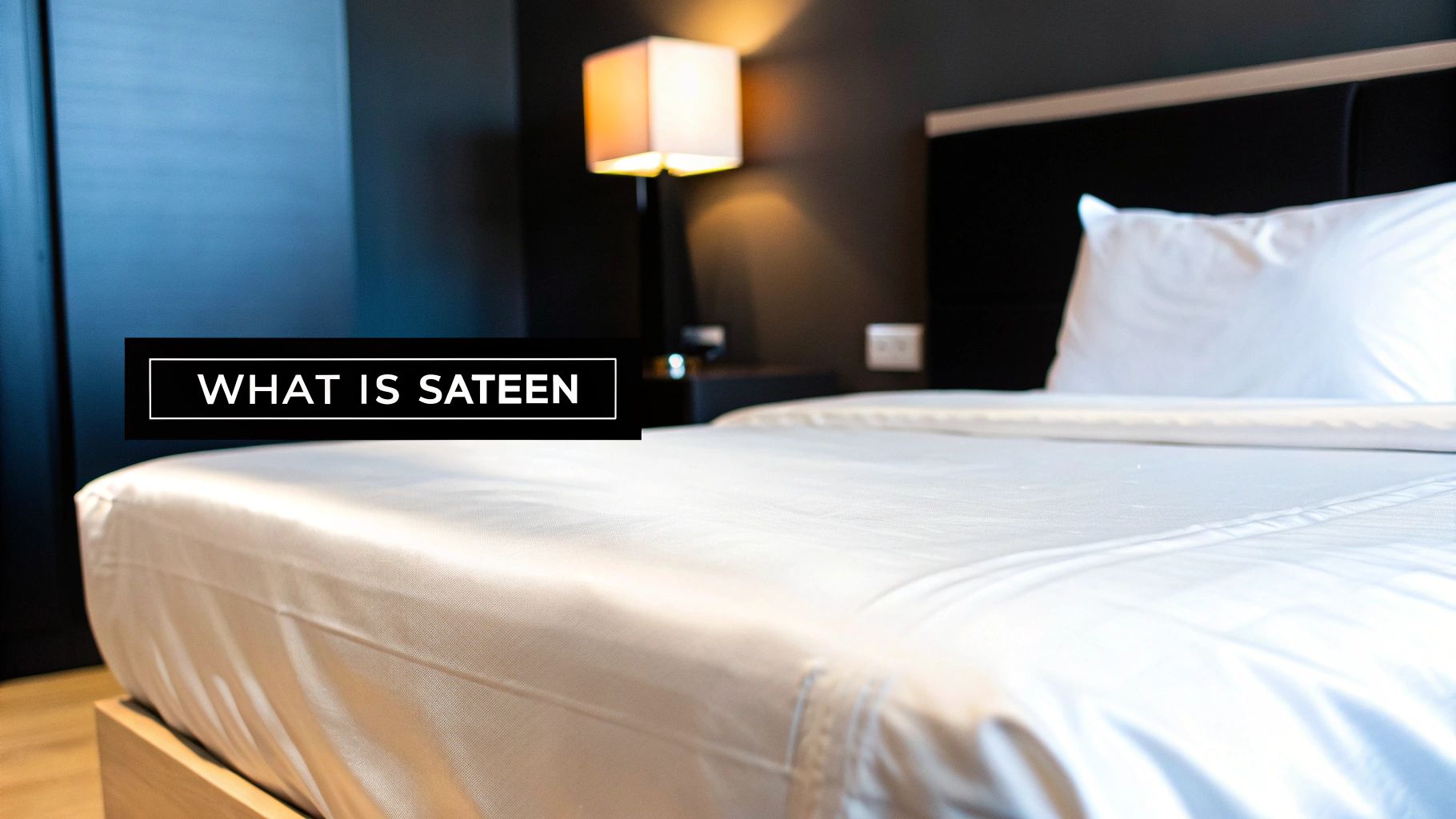
So, what makes sateen different? It all comes down to its unique weave pattern. A standard weave, like percale, uses a simple one-thread-over, one-thread-under rhythm. It’s strong and creates a crisp, matte finish.
Sateen, however, follows a four-over, one-under structure. This means one vertical thread floats over four horizontal threads before tucking under. This small change makes a huge difference.
By exposing more of the thread's surface, the fabric catches the light, creating sateen's signature lustre. It also results in a buttery-smooth surface with fewer bumps, which feels incredible against your skin. It’s not shiny like satin, but has an elegant glow that instantly elevates your bedroom.
Why the Weave Matters
The weave is the blueprint for a fabric, defining its core characteristics.
- Feel: Sateen’s weave creates a soft, silky surface, while a plain weave feels crisp.
- Appearance: The four-over pattern reflects light, giving sateen its gentle sheen.
- Drape: Sateen is typically heavier with a fluid drape that hugs the body, unlike the light, airy feel of other weaves.
You could have two sheet sets made from the exact same long-staple cotton, but if one is a sateen weave and the other is percale, they will offer completely different sleep experiences. Knowing the difference is a key step in our ultimate guide to choosing the right bed sheets.
What Materials Are Used for Sateen?
While the weave creates the sateen finish, the quality comes from the fibres. A sateen weave can't hide poor-quality, short-staple fibres, which will feel rough and pill easily. The best sateen sheets are made from long, smooth natural fibres.
- Cotton: Long-staple cotton like Egyptian or Pima is the traditional choice, prized for softness and durability.
- Bamboo: A sustainable alternative that is naturally hypoallergenic, moisture-wicking, and temperature-regulating, making it a fantastic choice for year-round comfort.
What Does a Sateen Bed Sheet Actually Feel Like?
A sateen bed sheet is all about indulgent comfort. The 'four-over, one-under' weave creates a fabric that is heavier and drapes beautifully, enveloping you in a cosy, secure feeling without feeling restrictive.
If percale is a crisp cotton shirt, sateen is a flowing silk dress. It’s also naturally wrinkle-resistant, which is a major plus if you love a smooth-looking bed but dislike ironing.
The Science of Softness
The incredible softness of sateen isn't magic; it's science. The weave pattern has fewer "intersections," creating a smoother surface that glides against your skin. This minimises friction, making it a great choice for people with sensitive skin.
Of course, this is enhanced by using high-quality materials. In Australia, sateen sheets are often made from premium long-staple cotton or bamboo, typically within the 300 to 600 thread count range—the sweet spot that balances softness with breathability.
Expert Insight: Sateen's signature experience is a trifecta of a fluid drape, gentle weight, and luminous sheen. These three qualities work together to create a feeling of true, indulgent comfort.
How Thread Count Impacts the Feel
While fibre quality is king, thread count plays a supporting role. For sateen, a higher thread count generally means a denser and silkier feel. However, pushing the count too high can make the fabric less breathable.
- 300-400 Thread Count: The ideal range for most. You get all the signature softness and drape while the fabric remains breathable for year-round comfort.
- 500-600 Thread Count: Feels denser and more substantial. It provides a warmer, more luxurious experience, perfect if you tend to sleep cold.
- Above 600: Be cautious. Some manufacturers inflate this number using weaker multi-ply threads, which can compromise the fabric's strength. For a full breakdown, our guide explains why a higher thread count isn't always better.
Sateen’s signature finish comes from a perfect balance: a superior weave, premium long-staple fibres, and an optimal thread count. This combination results in bedding with an unmatched silky-smooth texture you'll look forward to every night.
Sateen vs Percale: Which Is Right for You?
When choosing new sheets, the decision often comes down to sateen vs. percale. Both are typically made from quality cotton, but their weaves create two distinct sleep experiences. Understanding the difference will help you decide if a sateen bed sheet is your perfect match.
Sateen uses a four-over-one-under weave. This creates a silky-smooth surface, a beautiful drape, and a subtle sheen. It feels weightier and cosier, making it a top choice for those who want to wrap themselves in luxury.
Percale uses a classic one-over-one-under grid pattern. This tight weave produces a light, crisp, and highly breathable fabric with a clean, matte finish. It's the classic five-star hotel sheet feel.
This diagram breaks down the three core properties that give sateen its signature, luxurious feel.
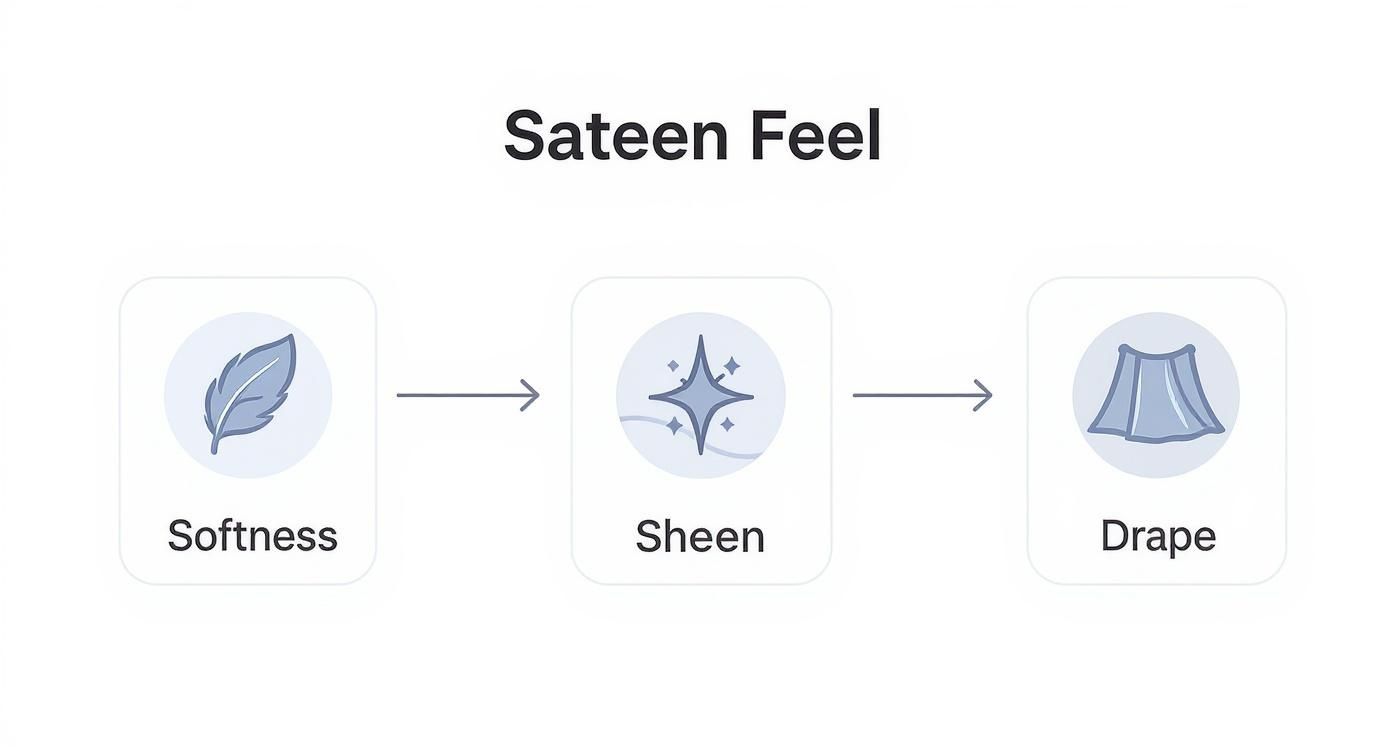
As you can see, it’s the unique combination of softness, sheen, and drape that makes it feel so indulgent against your skin.
Who Should Choose Sateen?
Sateen is ideal for sleepers who prioritize softness and warmth. If you often feel chilly or love being cocooned in silky bedding, sateen is for you. Its smooth surface also has less friction, making it great for sensitive skin. Plus, it’s naturally wrinkle-resistant, keeping your bed looking neat with minimal effort.
Who Should Choose Percale?
If you sleep hot, percale is your best bet. Its simple weave allows for maximum airflow, helping to wick away body heat and keep you cool all night. Studies show that a cooler sleep environment is linked to better rest. While it wrinkles more easily, many find it a worthwhile trade-off for its cool, airy feel. Learn more about what makes percale cotton a fan favourite in our dedicated guide.
Quick Comparison Chart
| Feature | Sateen Weave | Percale Weave |
|---|---|---|
| Feel | Silky-smooth, buttery, and soft | Crisp, cool, and light |
| Finish | Subtle, elegant lustre or sheen | Matte and clean |
| Best For | Cold sleepers and those who love a luxurious, cosy feel | Hot sleepers and those who prefer a cool, airy feel |
| Warmth | Warmer and heavier, with a comforting drape | Cooler and more breathable, ideal for summer |
| Appearance | Naturally wrinkle-resistant, drapes beautifully | Prone to wrinkling, has a classic, structured look |
While sateen and percale are popular, other options exist. For example, Jersey Cotton bed sheets offer stretchy, t-shirt-like comfort. Ultimately, your personal preference for feel and temperature will guide you to the perfect weave for your sleep style.
Is a Sateen Bed Sheet Your Perfect Match?
Choosing the right sheets means matching the fabric to your sleep habits. A sateen bed sheet offers a distinct feel, but is it right for you? Let's identify who benefits most from its silky embrace.
The Ideal Sateen Sleeper
You're likely a perfect match for sateen if any of these sound familiar:
- The Cold Sleeper: If you often reach for an extra blanket, sateen's denser weave and heavier drape provide comforting warmth, trapping just enough body heat to keep you snug.
- The Luxury Seeker: Want that five-star hotel feeling at home? Sateen’s lustrous sheen and buttery-soft feel deliver a high-end experience every night.
- The Sensitive Skin Sufferer: The smooth surface of sateen glides over the skin with less friction, making it a dream for anyone with sensitive skin or eczema.
It’s clear Australians care about the feel of their bedding. In 2022, sheets and mattress covers accounted for 42.02% of all bed linen revenue, showing a strong preference for specific textile qualities. Sateen is a top contender for its unique texture. You can explore more consumer trends in this Australian bed linen market analysis.
When to Consider Other Options
As wonderful as sateen is, it may not be for everyone. The main consideration is temperature.
If you are a hot sleeper who often wakes up overheated, traditional cotton sateen might feel too warm. Its tighter weave retains more heat and allows less airflow than percale.
But this is where the material becomes a game-changer.
Key Insight: Don't write off sateen just because you sleep warm. A bamboo sateen bed sheet offers the best of both worlds: the classic silky sateen feel combined with bamboo's incredible temperature-regulating properties.
Bamboo fibres naturally wick moisture away and are far more breathable than cotton. This makes a bamboo sateen sheet set from Sienna Living a brilliant year-round solution, keeping you warm in winter and cool in summer.
How to Choose the Best Sateen Sheets
Picking the perfect sateen bed sheet is simple when you know what to look for. Focus on fibre quality, not just marketing hype, to find sheets that promise years of silky sleep.
Look Beyond the Thread Count
A high thread count isn't always better. Fibre quality is always more important than fibre quantity. A 400-thread-count sheet made from long-staple cotton will feel softer and last longer than a 1000-thread-count sheet made from short, weak fibres. Short fibres are prone to pilling and create a scratchy texture, no matter how many are used.
Pro Tip: Aim for sateen sheets in the 300-600 thread count range. This is the sweet spot for a silky feel, durability, and breathability. A much higher number can be a red flag for weaker multi-ply threads used to inflate the count.
Choose Your Fibre: Cotton vs. Bamboo
Your next big decision is the material. While cotton has long been the standard, bamboo offers an impressive, sustainable alternative.
The Classic Choice: 100% Cotton
Long-staple cotton like Egyptian or Pima is the traditional foundation for a high-quality sateen bed sheet. It’s known for being soft, strong, and breathable, offering timeless comfort and a subtle sheen.
The Modern Alternative: Bamboo
Bamboo sateen is a game-changer. It takes the signature softness of the sateen weave and enhances it with unique benefits.
- Exceptional Softness: Bamboo fibres are naturally round and smooth, creating a fabric that many find even silkier than high-end cotton.
- Temperature Regulation: Bamboo is highly breathable and wicks moisture away, pulling heat from your body as you sleep. Our guide on the best sheets for hot sleepers explains why this is so effective.
- Hypoallergenic: Bamboo is naturally resistant to dust mites and mould, making it ideal for those with allergies.
- Sustainability: As a fast-growing grass, bamboo is a highly renewable resource that requires less water than cotton and no pesticides.
This shift to sustainable materials is a major force in the bedding industry. The Australian bedsheet market, valued at around USD 2,236.36 million in 2024, shows huge growth driven by eco-conscious consumers. You can explore the full Australian bedsheet market report for more data.
Caring for Your Sateen Bed Sheets
You’ve invested in that luxurious, silky feel, and keeping your sateen bed sheet in top condition is simple. With the right care, you can protect its softness and sheen for years to come.
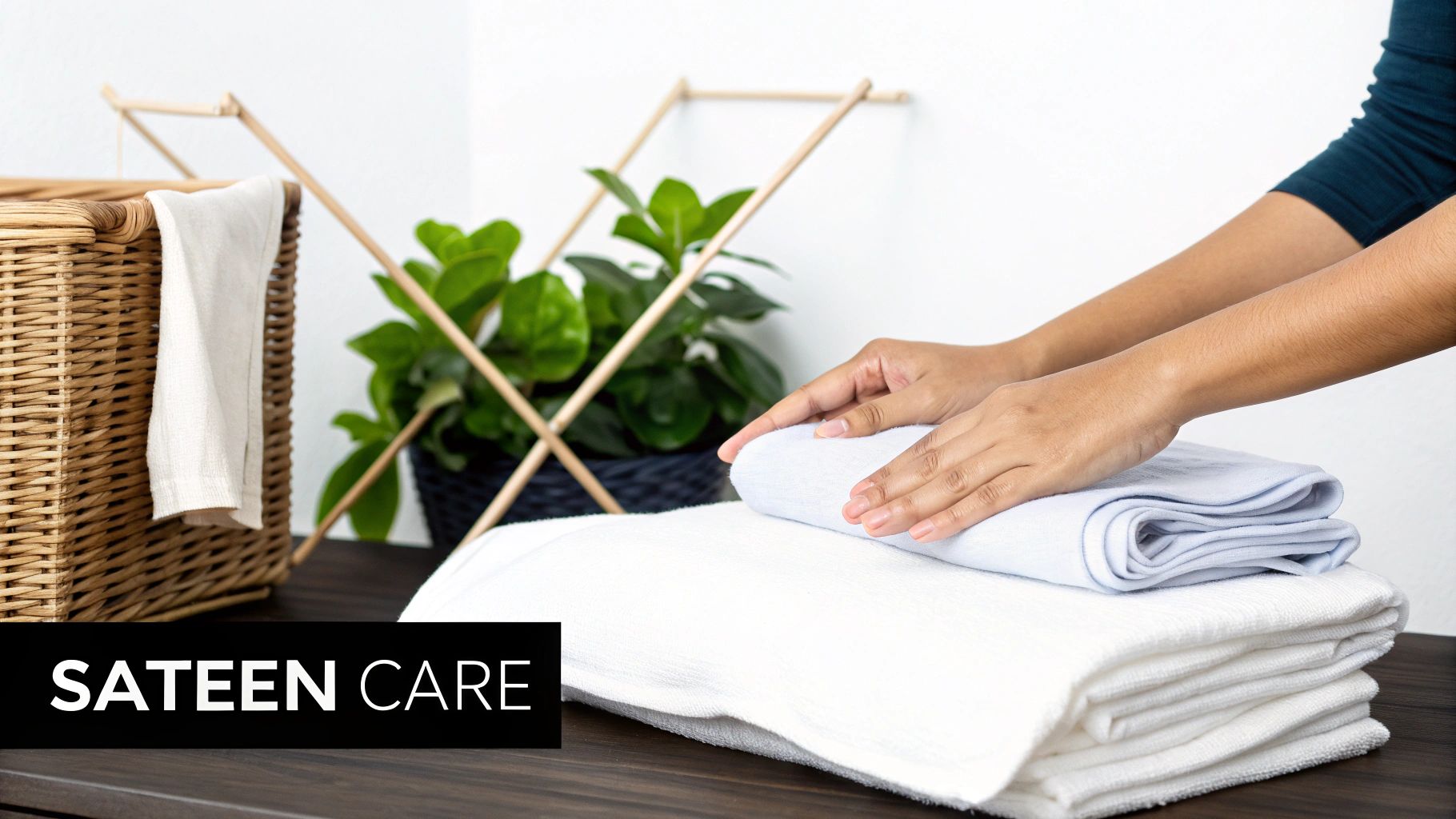
The golden rule is to be gentle. High heat and harsh chemicals are the enemies of sateen's delicate fibres, as they can weaken threads and dull their lustre.
Simple Washing and Drying Steps
To protect the fabric, always wash your sateen sheets on a gentle cycle with cold or lukewarm water. Research suggests washing at 40°C is sufficient to clean them without causing stress on the fibres.
For drying, you have two great options:
- Line Drying: This is the kindest method. Hanging your sheets away from direct sun prevents heat damage and maintains their softness.
- Tumble Drying: If you use a machine, choose a low heat, low tumble setting. Remove them promptly to prevent wrinkles.
Key Tip: Don't overload the washing machine. Wash sheets separately from heavy items like towels or denim to avoid friction and pilling.
Tips for Long-Lasting Softness
To maintain that silky feel, skip fabric softeners. They can leave a residue that reduces the fabric's natural softness and breathability.
Stick with a mild, liquid detergent and avoid chlorine bleach, which is too harsh for sateen. For more specific instructions, our comprehensive bedding care guide has all the information you need.
Your Sateen Sheet Questions Answered
Let's clear up some common questions about sateen sheets so you can choose with confidence.
Do Sateen Sheets Pill?
Pilling—those tiny balls of fluff—is caused by short, weak fibres breaking, not the weave. A well-made sateen bed sheet crafted from long-staple fibres like quality cotton or bamboo is highly resistant to pilling. The strong fibres are anchored securely in the weave, keeping your sheets smooth wash after wash.
Are Sateen Sheets Good for Summer?
While sateen is known for being cosy, its suitability for summer depends on the material. The weave provides the feel, but the fibre provides the performance.
A bamboo sateen sheet is a fantastic year-round option. Bamboo is famous for its natural temperature-regulating abilities, actively wicking heat and moisture away from your body to keep you cool and dry, even on warm nights.
Is Sateen the Same as Satin?
This is a common mix-up, but they are very different. The key distinction is the fibre.
- Sateen: A weave structure used almost exclusively with natural fibres like cotton or bamboo. The result is a buttery-soft feel and a subtle, pearly lustre.
- Satin: A similar weave typically made from synthetic filaments like polyester. This gives it an ultra-shiny, slippery finish that is not very breathable.
Sateen offers a luxurious feel with the breathable comfort of natural materials, while satin’s high-gloss finish often traps heat.
Conclusion: Upgrade Your Sleep with Sateen
Choosing the right bedding can transform your sleep from a necessity into a nightly luxury. A sateen bed sheet offers a unique combination of silky softness, a beautiful drape, and a subtle sheen that feels incredible against the skin. By focusing on high-quality, long-staple fibres like bamboo or premium cotton, you can enjoy that five-star hotel feeling right at home.
Ready to experience the difference for yourself?
Explore our collection and upgrade your sleep today at Sienna Living.