

Ever bought a new set of sheets, only to find they stubbornly pop off the corners of your mattress? You're not alone. Nailing the right single bed sheet size is the first step to a perfectly made bed, and it's simpler than you think. In Australia, a standard single mattress is 92cm x 188cm, but knowing this is just the beginning. Getting the fit right ensures your bed is a sanctuary of comfort, not a nightly wrestling match with your bedding.
Australian Single Bed Sizes at a Glance
Before choosing sheets, you must know your bed's exact size. In Australia, "single" isn't a one-size-fits-all term. It covers a few distinct dimensions, and mixing them up is a common path to frustration. A sheet that's too small will never stay put, while one that's too big will bunch up uncomfortably.
This quick visual guide breaks down the three key single bed sizes you'll encounter.
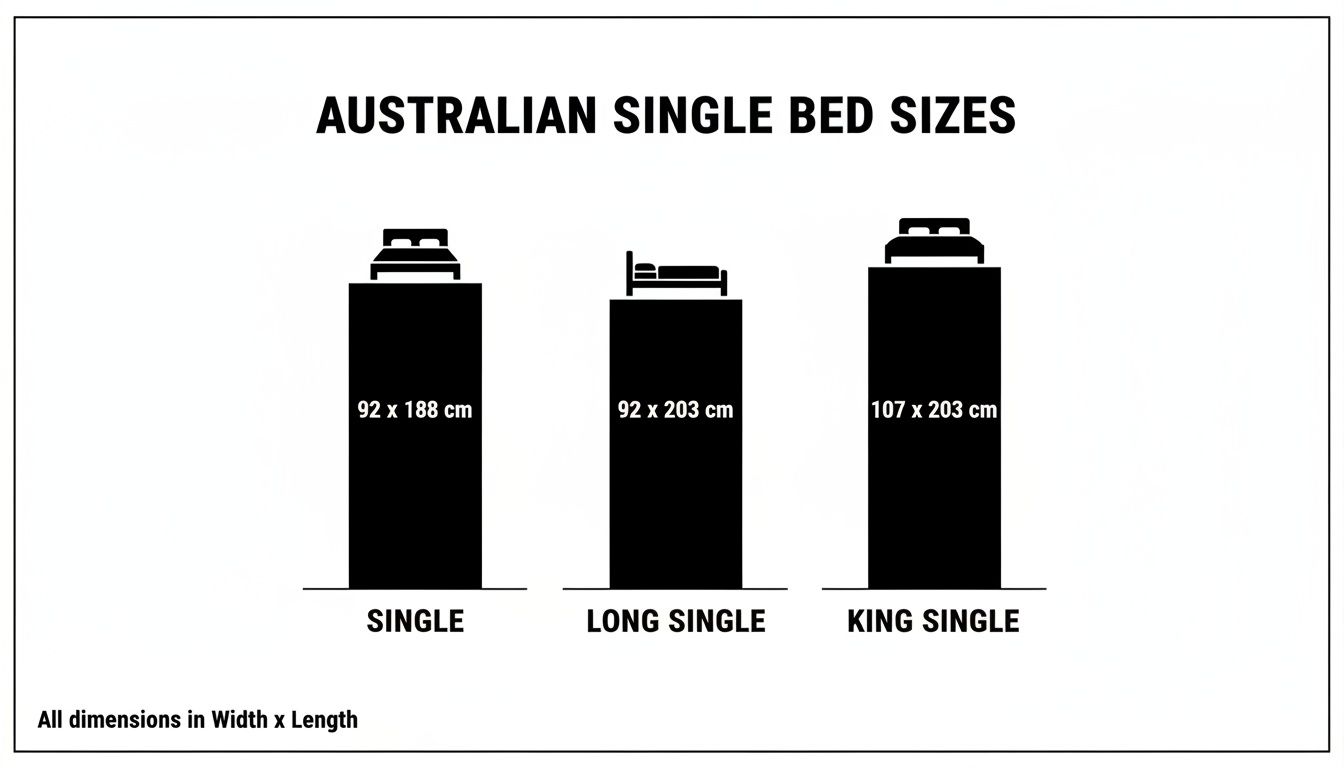
The key difference? A Long Single offers extra length for taller individuals, while a King Single provides more width and length for a roomier sleep.
Cracking the Dimensions Code
The standard single is the go-to for kids' rooms and compact spaces. An Australian single mattress measures 92cm wide by 188cm long. That's why fitted sheets for this size are typically listed as 91cm x 193cm, with a deep wall (like 40cm) to hug the mattress. Flat sheets are much larger, around 180cm x 254cm, giving you plenty of fabric to tuck for a crisp finish.
To see how these compare to larger sizes, view our full bedding size chart for Australia.
A perfectly fitting sheet is the foundation of a comfortable bed. It prevents annoying bunching and slipping, ensuring a smooth, inviting surface that contributes to a more restful night's sleep. Think of it as tailoring a suit—the right fit makes all the difference.
Single vs. King Single: What’s the Real Difference?
When shopping for single bed sheets, the first decision is often standard single or king single. They sound similar, but that "king" makes a significant difference. It’s about choosing the right size for the sleeper, both now and in the future.
A standard single bed is a space-saving champion, perfect for a child’s first bed or a small guest room. But for more room to stretch, the king single is superior, adding valuable width and length for a more comfortable, less restrictive sleep.
Case Study: Choosing for a Growing Teen
Consider a growing teenager who suddenly seems to outgrow everything overnight. A standard single can quickly feel cramped, leading to tangled limbs and restless nights.
The king single provides that crucial extra space to stretch out. The same applies to single adults who want more comfort without committing to a double bed. For a deeper look at how these sizes fit a room, explore the specifics of single mattress dimensions.
Practical Example: Furnishing a Guest Room
Imagine you're setting up a multi-purpose room that doubles as a guest bedroom. You need a bed that can comfortably host anyone, from a young child to an adult friend.
A standard single saves floor space, but it might feel restrictive for some guests. A king single, on the other hand, elevates the space into a genuinely welcoming retreat. This thoughtful choice transforms a simple guest bed into a smart, long-term asset.
Investing in the slightly larger king single often provides better value over time. It accommodates growing kids through their teen years and offers superior comfort for adult guests, making it a more versatile and practical choice for modern homes.
The numbers tell the story. A king single, at 107cm x 203cm, gives you 16% more width than a standard single. Research from the Sleep Health Foundation indicates that adequate sleeping space is a key factor in reducing night-time disturbances, directly impacting sleep quality.
How to Measure Your Mattress for a Perfect Fit
That nightly battle with a fitted sheet that won’t stay put? It’s a common frustration, but the fix is simple. The secret isn't just knowing your single bed sheet size; it's measuring your mattress accurately. A few minutes with a tape measure is the difference between guesswork and guaranteed comfort.
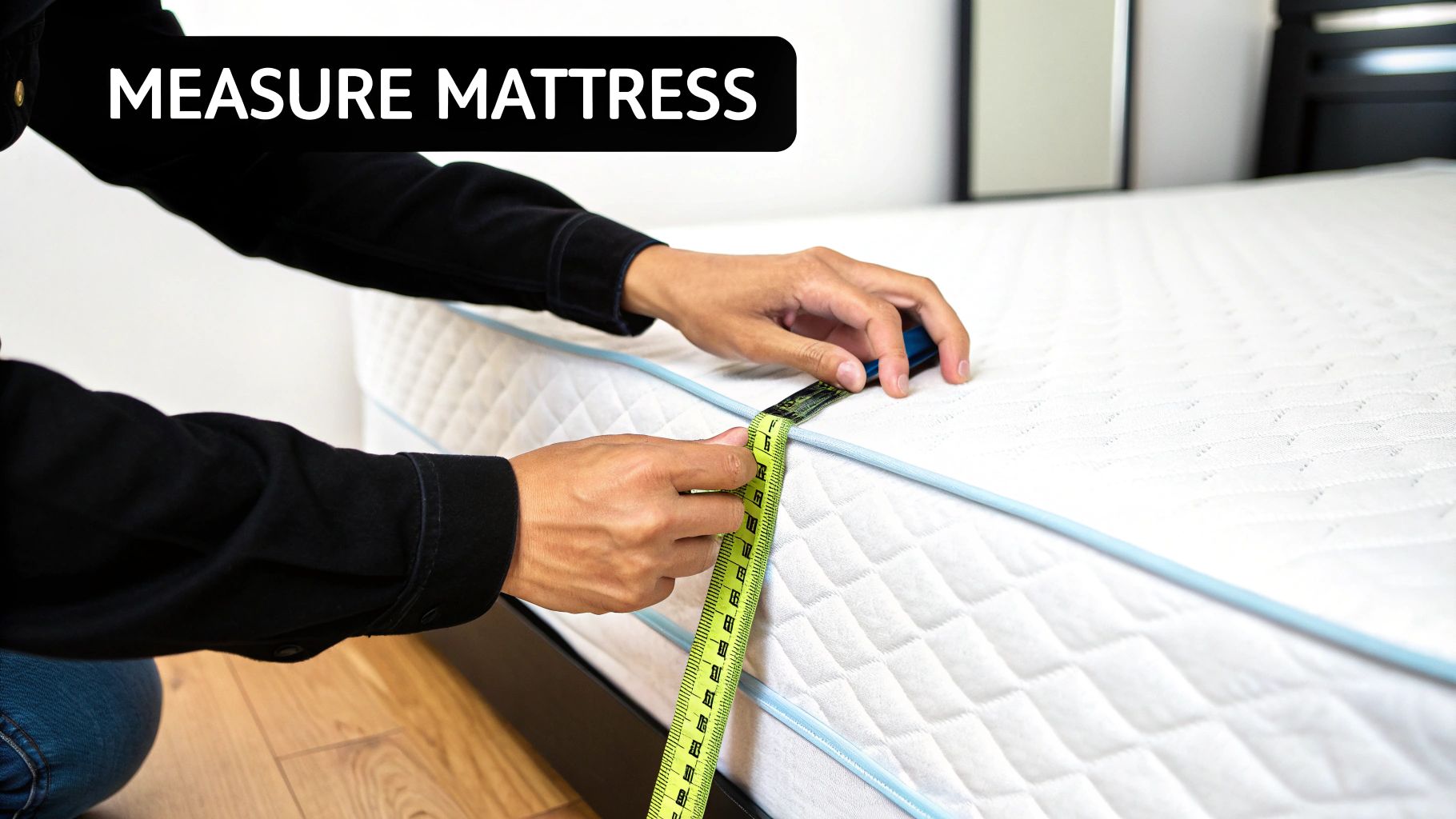
Think of it like buying shoes. You wouldn't just guess your size; you get measured to ensure a perfect fit that won't cause discomfort. The same logic applies to your sheets.
Three Steps to an Accurate Measurement
Getting the right numbers is easy. First, strip your bed completely to measure the bare mattress.
- Measure the Width: Stretch your tape measure across the mattress from left to right.
- Measure the Length: Run the tape measure from the head of the mattress down to the foot.
- Measure the Depth (The Crucial Step): This is the game-changer. Measure from the top seam of a corner straight down to the bottom seam. Don't squash the mattress; you want its natural height.
Why Mattress Depth is Everything
Modern mattresses, especially those with plush pillow tops, are much thicker than older models. A standard fitted sheet often lacks the pocket depth to accommodate them, which is why it constantly pings off the corners.
Knowing your mattress's exact depth is non-negotiable. This principle of a secure fit is also important when choosing a perfect twin floor mattress for kids' rooms.
Pro Tip: When shopping, look for a fitted sheet with a depth at least 5-7 cm deeper than your mattress. This extra fabric allows the sheet to tuck firmly underneath, giving you that snug, hotel-quality fit that won’t budge.
By taking these simple measurements, you can shop with confidence. If you’re still curious about the mechanics, our detailed guide on what a fitted sheet is explains it all.
Fitted vs. Flat Sheets: Do You Need Both?
Ever wondered if you really need both a fitted and a flat sheet? They aren't duplicates; they are a team designed for a more comfortable, hygienic sleep.
The fitted sheet is the hardworking foundation. Its elasticated corners grip your mattress snugly, creating a smooth surface and protecting it from wear and spills. This is vital for keeping your mattress fresh for years.
The Unsung Hero: Why You Shouldn't Skip the Flat Sheet
The flat sheet is your personal comfort layer. It rests between you and your doona, creating a soft, breathable barrier. This feels great against your skin and is a game-changer for hygiene, as washing a flat sheet is far easier than washing a bulky quilt.
In Australia, the single flat sheet is deliberately oversized. This isn't a mistake; it's designed to give you ample fabric to tuck in tightly.
This extra length and width allows you to create crisp ‘hospital corners.’ That neat, hotel-quality tuck not only looks fantastic but also keeps everything securely in place, so you’re not fighting with tangled sheets all night.
A Partnership for Perfect Sleep
Using a fitted and a flat sheet together is a classic for good reason. The fitted sheet locks in the base, and the flat sheet provides a clean, cosy layer you can adjust.
Recent data shows that 85% of Australian single bed owners stick with sets that include both. Using a flat sheet can even reduce that initial chill when you get into bed in winter by up to 15%. You can find more details on standard sizes in this guide to Australian bed sizing standards. This dynamic duo turns your bed into a clean, inviting sanctuary.
Why the Right Fabric Is as Important as Size
Once you’ve nailed the perfect single bed sheet size, the next step is choosing a material that feels great. The fabric of your sheets is just as critical as the dimensions; it directly influences your comfort, temperature regulation, and even skin health. It's the difference between an okay sleep and a truly restorative one.
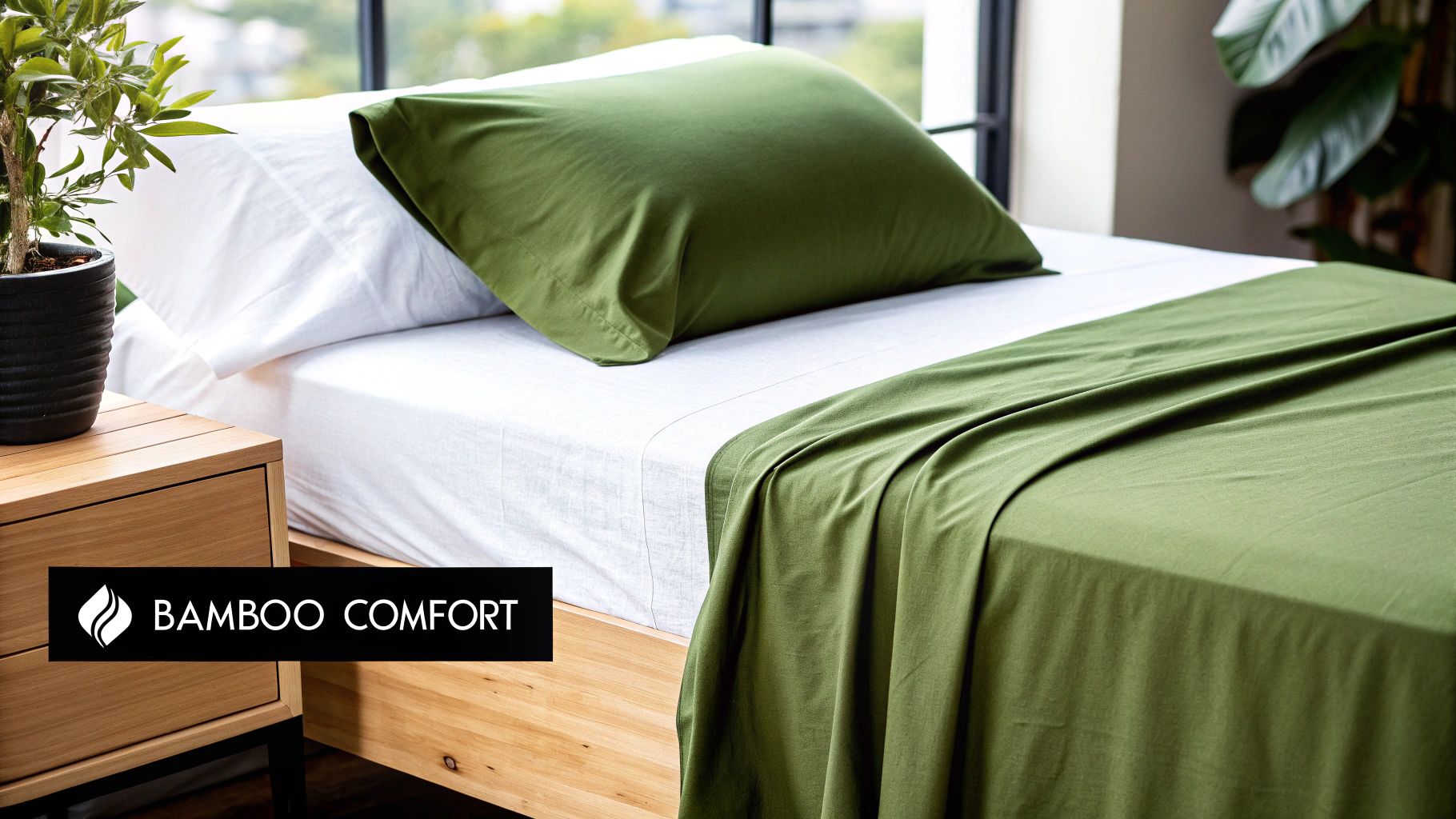
This is especially true for kids or anyone with sensitive skin, where a scratchy, non-breathable fabric can cause irritation. This is where a material like bamboo stands out.
The Unmatched Comfort of Bamboo
Bamboo isn't just another bedding option; it's a high-performance material perfected by nature. While synthetic fibres can trap heat, bamboo is celebrated for being supremely soft and breathable.
Here's why that matters for your sleep:
- Hypoallergenic: Bamboo fibres naturally resist dust mites and mould, making them ideal for allergy or asthma sufferers.
- Antimicrobial: The fabric contains a natural bio-agent that helps prevent odour-causing bacteria, keeping sheets fresher for longer.
- Thermoregulating: This is bamboo's superpower. It wicks moisture away, keeping you cool and dry in summer, while acting as an excellent insulator to keep you warm in winter.
Learn more about how materials impact rest in our article on why breathable fabrics improve sleep quality.
A Real-World Scenario
Imagine a child who constantly kicks off their covers because they get too hot, waking everyone up. Swapping their sheets for bamboo can be a game-changer. The fabric's natural temperature regulation helps them stay comfortable, preventing overheating so they can sleep soundly.
This is the power of pairing the right size with the right fabric. It’s a simple change that delivers a tangible improvement in sleep quality.
For specific needs requiring frequent changes, options like multi-layer disposable waterproof fitted sheets can be practical. But for everyday luxury and comfort, bamboo is hard to beat.
Making Your Single Bed Sheets Last Longer
When you invest in quality sheets, you want that luxurious feel to last. The good news is, extending the life of your bedding is easy. With a few simple habits, your favourite single bed sheets can stay soft and vibrant for years.
Natural fibres like bamboo benefit from a gentle approach, as harsh chemicals and high heat can damage their delicate structure and strip away their signature softness.
Simple Steps for Lasting Softness
Looking after your sheets shouldn't be a chore. A few small tweaks to your laundry routine can make all the difference.
- Wash in Cool Water: Hot water can cause natural fibres to shrink and fade. A cool or lukewarm cycle (around 30°C) is much kinder.
- Use a Mild Detergent: Opt for a gentle, pH-neutral liquid detergent. Harsh powders can be abrasive and break down fibres over time.
- Skip the Fabric Softener: Fabric softener can coat bamboo fibres with a chemical residue, reducing their natural softness and moisture-wicking ability.
For more tips, check out these six simple ways to make your bedding last longer.
A study on textile longevity found that line-drying laundry can extend the life of linens by up to 50% compared to consistently using a high-heat tumble dryer. The gentle airflow and UV light naturally freshen fabrics without the stress of high temperatures.
Drying Done Right
How you dry your sheets is just as important as how you wash them. The best method is line-drying. The fresh air is a natural deodoriser.
If you must use a dryer, always choose the lowest heat setting or a 'cool air' cycle. High heat is the number one cause of shrunken sheets. Pull them out as soon as the cycle finishes to prevent deep wrinkles from setting in.
Common Questions About Single Bed Sheet Sizes
Even with all the details sorted, a few questions might linger. To clear up any final confusion, here are quick answers to the most common queries we receive.
Can I Use Single Sheets on a Long Single Bed?
It's a classic mistake. A standard single fitted sheet is made for a 188cm long mattress, while a long single is 203cm. There’s no stretching it that far; the corners will constantly pop off. For a secure fit, you must buy sheets specifically designed for a long single bed.
Are International Sheet Sizes the Same as Australian?
No, and this is crucial for online shoppers. International sizes differ significantly. For instance, a US Twin is wider and longer than an Australian single. Using sheets from another country will almost always result in a poor fit. Stick with trusted Australian bedding brands that design products for local mattress sizes.
What Does Pocket Depth Mean on a Fitted Sheet?
Pocket depth refers to how deep a mattress a fitted sheet can accommodate. This detail is vital, as modern mattresses with pillow-tops are much thicker than they used to be.
A shallow pocket on a deep mattress is the number one reason why fitted sheets slip off during the night. Our sheets are designed with a generous 40cm pocket depth, making sure they can handle those thicker, more luxurious mattresses without a fight.
Why Do My Sheets Sometimes Shrink?
Shrinkage is almost always caused by heat. Washing natural fibres like cotton or bamboo in hot water or using a high-heat dryer can cause the fibres to contract.
To prevent this, our care guide recommends a cool wash and line-drying. Quality fabrics, like our 100% organic bamboo sheets, are also pre-treated to minimise shrinkage, helping them maintain a perfect fit for longer.
Find Your Perfect Fit Today
Choosing the right single bed sheet size is the first step toward transforming your bed into a haven of comfort. By understanding Australian dimensions, measuring your mattress correctly, and selecting a quality fabric like bamboo, you can guarantee a better night's sleep.
At Sienna Living, we believe the perfect fit is non-negotiable. Explore our collection of premium bamboo bedding, designed with generous sizing and deep pockets to fit Australian beds flawlessly. Shop the collection today and feel the difference.