

Ever wondered what makes premium bedding feel like you're sleeping on a cloud? The secret lies in the remarkable natural structure of down feather fill, which delivers an unbeatable mix of lightweight warmth and plush softness. Understanding the difference between down and feather is the first step to choosing bedding that promises truly restorative sleep. For example, knowing that "down" provides the warmth while "feathers" add structure helps you immediately spot a quality quilt.
Your Guide to Luxurious Down and Feather Comfort
The path to a better night's sleep starts with your bedding. High-quality down and feather products aren't just a luxury—they are a direct investment in your wellbeing.
Unlike synthetic alternatives that often feel heavy and trap heat, down provides incredible insulation by trapping air in millions of tiny pockets. Feathers, on the other hand, add just the right amount of gentle structure and support. It's this natural partnership that creates a sleep environment that's both incredibly cosy and wonderfully breathable.
The magic of down and feather is its ability to regulate temperature. Research shows that natural fills are superior at wicking moisture away, preventing that clammy feeling that often disrupts sleep. This makes them a perfect match for the Australian climate, keeping you warm on winter nights and comfortably cool in summer.
Why Natural Fill Makes All the Difference
The bedding you choose directly impacts your sleep quality. Here’s a quick look at why a natural down and feather fill is a superior choice:
- Unmatched Warmth-to-Weight Ratio: Down is nature's best insulator. It delivers exceptional warmth with barely any bulk, so you get all the cosiness without feeling weighed down.
- Superior Breathability: The natural fibres let air move freely, helping to regulate your body temperature and stop you from overheating.
- Long-Lasting Durability: With proper care, a quality down and feather quilt or pillow can last well over a decade, making it a smart and cost-effective choice.
Actionable Insight: The best bedding works with your body. Down and feather adapts to your needs, creating a personal microclimate that promotes deeper, more restful sleep.
For those chasing the pinnacle of comfort, explore different natural fills. Our detailed look at goose down pillows in Australia offers deeper insights. To complete your sleep setup, consider pairing your quilt with luxury linen bedding for another layer of natural comfort.
Understanding Down Versus Feather: What Matters Most
When it comes to natural bedding, the most important thing to understand is the difference between down and feather. They come from the same bird, but they feel and perform very differently. Getting this right is the key to finding a high-quality quilt or pillow.
Think of a down cluster as a tiny, three-dimensional ball of fluff, like a dandelion head. It’s found under the bird's tougher outer feathers and is nature's perfect insulator. Crucially, it has no stiff quill, which is why it feels incredibly soft, light, and is fantastic at trapping air.
A feather, on the other hand, has a flat structure with a firm quill running down the middle. While feathers add weight and structure to bedding, they don't have the same insulating magic or weightless feel of pure down.
The Anatomy of Comfort
The difference is all in the structure. A down cluster is a complex puff with thousands of soft filaments creating countless tiny air pockets that trap heat. A feather is a much simpler design, and its central quill can sometimes poke through fabric.
This is why products with a higher ratio of down to feathers deliver a far more luxurious sleep. You get exceptional warmth without the weight, creating that feeling of being cocooned in a light, breathable cloud.
If you're curious how these natural fills stack up against synthetics, we break it all down in our guide on down versus alternative down.
This diagram gives a great visual summary of the key benefits you get from a well-made down and feather product.
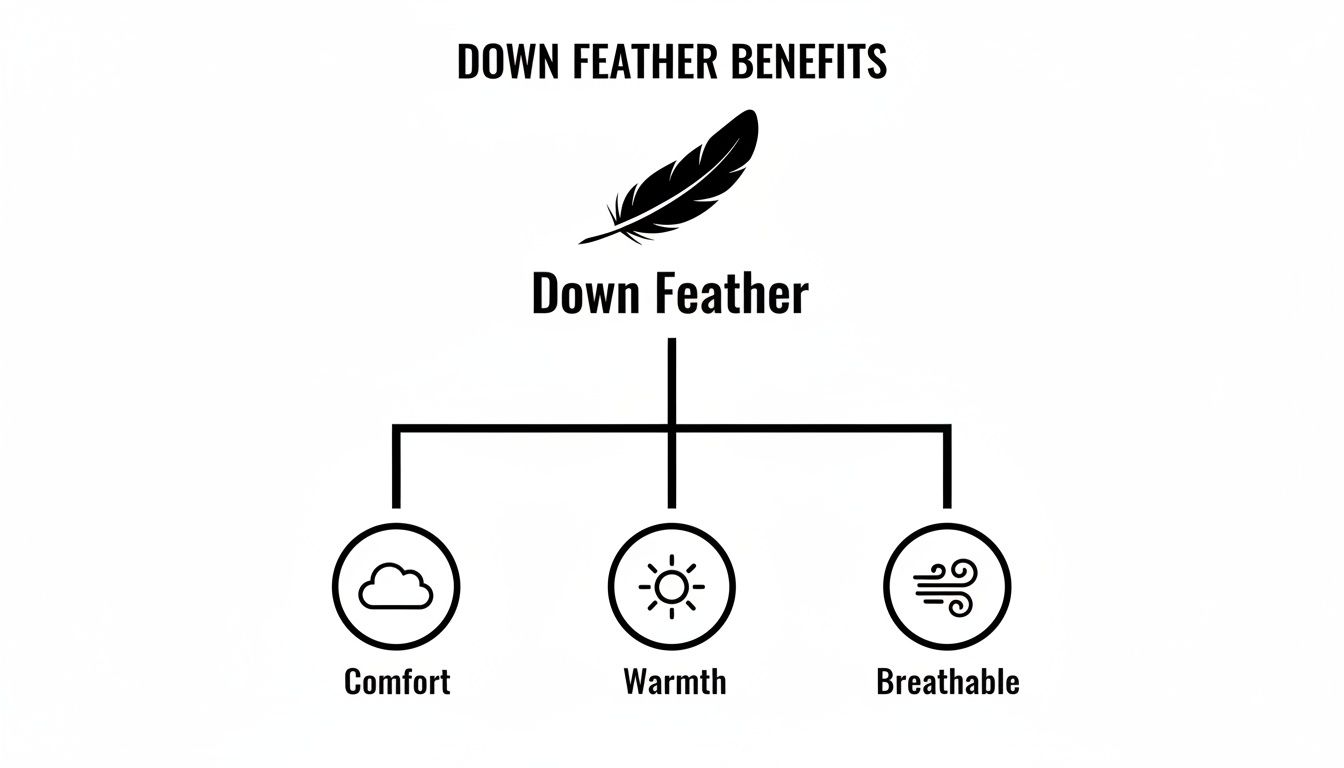
As you can see, it's the unique natural structure of down that gives luxury bedding its signature comfort, warmth, and breathability.
Down vs. Feather at a Glance
To make it clearer, here’s a quick comparison highlighting the unique roles that down clusters and feathers play in your bedding.
| Characteristic | Down Cluster | Feather |
|---|---|---|
| Structure | 3D, spherical, with soft fibres | 2D, flat, with a central quill |
| Primary Role | Insulation and loft (fluffiness) | Structure and fill volume |
| Feel | Incredibly soft and weightless | Firmer, with noticeable substance |
| Warmth | Exceptional at trapping air | Minimal insulating properties |
| Quill | No quill, cannot poke through | Has a quill that may poke |
This table sums it up: down is the powerhouse for warmth and softness, while feathers are a supporting act.
How This Affects Your Choice
How does this translate to your shopping decision? When you see a quilt labelled "down and feather," the ratio is everything. A higher percentage of down equals better performance.
Actionable Insight: Remember this simple rule: down insulates, while feathers add bulk. For a light, warm, and luxurious feel, always look for a product with a high percentage of down.
For example, a quilt made with 85% down and 15% feather will feel dramatically lighter, softer, and warmer than one with a 50/50 blend. Armed with this knowledge, you can see past the labels and choose bedding that will genuinely deliver.
Fill Power: The Secret to Lightweight Warmth
Have you ever looked at the tag on a down feather quilt and wondered what the numbers mean? One of the most important is fill power, the true measure of a down product's quality. Think of it as a fluffiness rating.
Fill power measures how much space one ounce of down occupies. The higher the number, the larger and loftier the down clusters are. These bigger clusters are more efficient at trapping air, which is what keeps you warm.
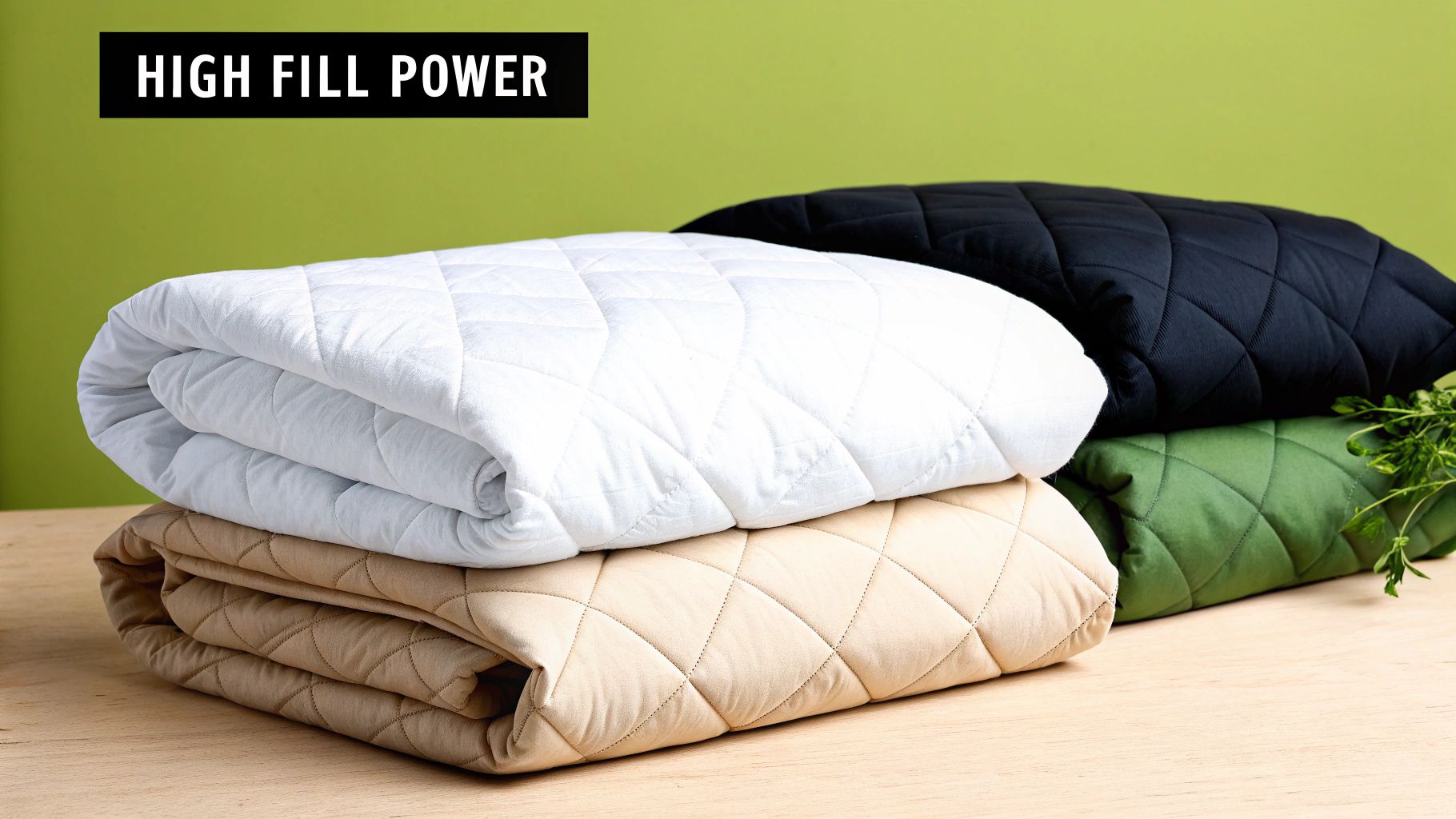
What Fill Power Feels Like
This technical detail makes a world of difference. Let’s say you have two quilts of the same weight. One has 600-fill-power down, and the other has 800-fill-power down. The 800-fill quilt will be noticeably warmer because its larger down clusters create more insulating air pockets with less material.
This is why top-tier down products feel so light yet perform so well. You get all the warmth without the weight. A 2018 study in the Textile Research Journal confirmed that higher fill power directly correlates to greater thermal insulation, giving scientific backing to that "sleeping on a cloud" feeling.
Why High Fill Power Matters
When you choose a product with a high fill power, you're investing in a better sleep experience. Here’s what it means for you:
- More Warmth, Less Weight: Stay perfectly cosy without feeling trapped or weighed down.
- Superior Loft: The quilt looks and feels plusher, fuller, and more inviting.
- Long-Lasting Performance: Larger down clusters are more resilient, holding their shape and insulating power for years.
Actionable Insight: Don't mistake fill power for jargon. It's a direct promise of lighter, warmer, and more luxurious comfort. A quilt with 750+ fill power is an excellent benchmark for premium quality.
At Sienna Living, we select high-fill-power down because we know it delivers the best warmth-to-weight ratio. For more tips, our guide to choosing a feather quilt is a great place to start.
The Truth About Down and Feather Allergies
It's a common myth: you get a new quilt, start sneezing, and blame the down and feather fill. This assumption sends many people toward synthetic alternatives, but the real story is often much simpler.
The truth is, a genuine allergy to down or feathers is exceptionally rare. The real culprits are tiny impurities trapped in low-quality, poorly processed fill—like dust mites, mould, and other organic particles. It's these microscopic stowaways that trigger allergy symptoms.
Finding the Real Source of Sniffles
High-quality down and feathers go through an intensive, multi-step washing and rinsing cycle. This process removes any dust, dander, and other potential irritants, ensuring the final fill is clean, pure, and hypoallergenic.
Actionable Insight: A "down allergy" is almost always a reaction to dust and impurities, not the feathers themselves. You can avoid this by choosing a high-quality, properly cleaned product.
What Allergy Sufferers Should Do
If you’re prone to allergies, you don't have to give up on the comfort of a down quilt. By choosing the right product and adopting simple habits, you can create a sniffle-free sleep haven.
Here are practical steps to take:
- Choose Quality: Always buy from a trusted brand that labels its products as hypoallergenic. This is your assurance that the fill has been properly sterilised.
- Use a Protective Cover: A tightly woven quilt cover acts as a physical barrier, preventing dust mites from settling in your quilt.
- Follow Care Instructions: Regular airing and proper, gentle cleaning will keep your quilt fresh and free from irritants.
For more tips on creating a healthy sleep space, check out our guide to sustainable bedding for allergy relief.
Choosing Ethically Sourced and Sustainable Bedding
When investing in premium bedding, you want peace of mind. Knowing where your down and feather fill comes from is a huge part of feeling good about your purchase. Choosing ethically sourced products means you can rest easy, knowing your quilt supports animal welfare.
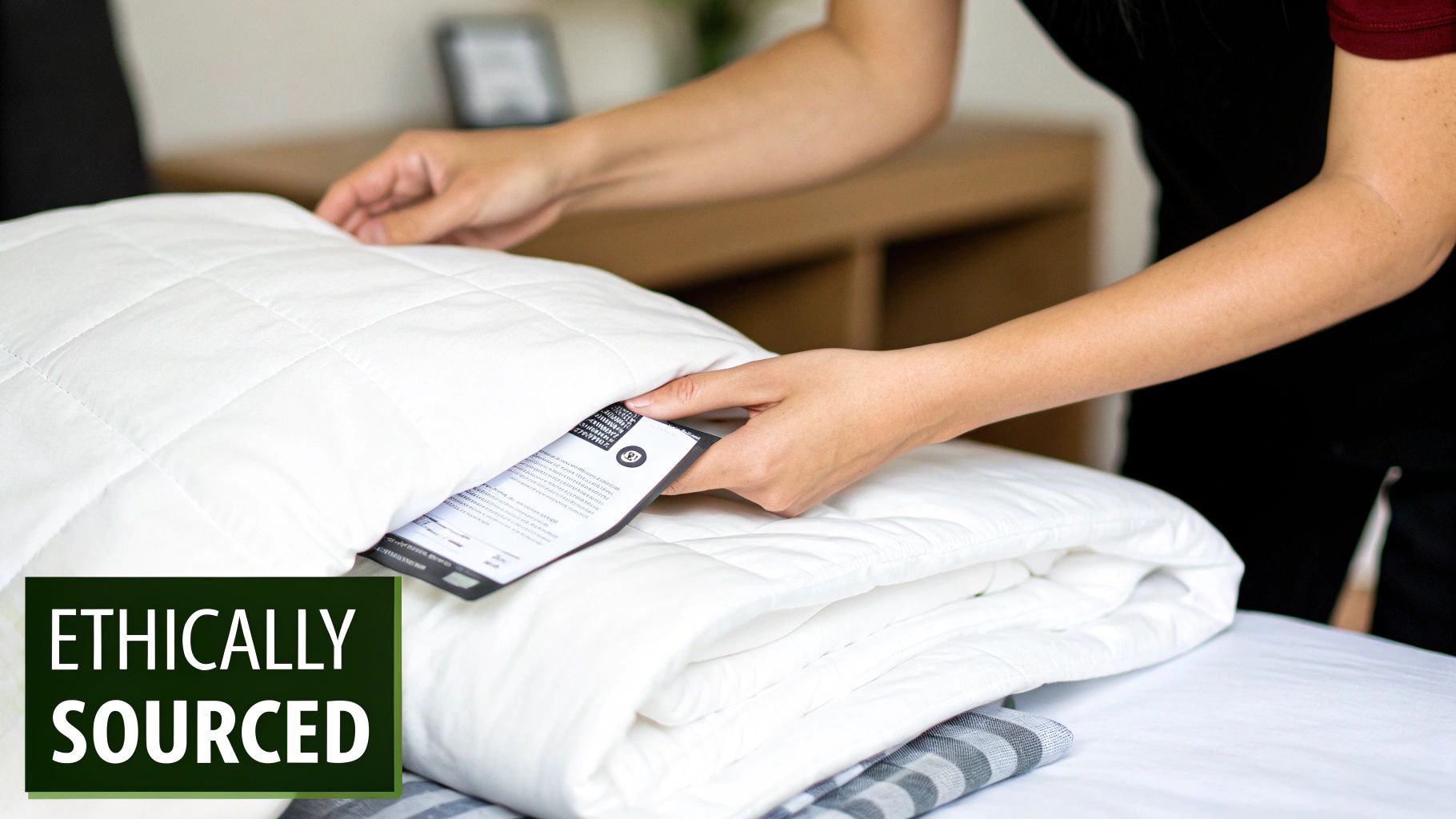
The best way to be sure is to look for globally recognised certifications. These standards create a clear, traceable path from the farm to your bedroom.
Look for Key Certifications
The most respected certification is the Responsible Down Standard (RDS). The RDS logo guarantees that the down and feathers were sourced from birds treated humanely. This specifically prohibits harmful practices like live-plucking and force-feeding. You can read more about this in our guide to feather quilts.
Actionable Insight: When shopping, actively look for the RDS logo. This is the simplest way to support a system that prioritises animal welfare and provides full supply chain transparency.
The Natural Sustainability of Down
Beyond ethics, down is also an inherently sustainable material. It's a natural byproduct of the food industry, which means we’re using a resource that might otherwise go to waste.
Unlike synthetic fills made from petroleum, down is completely biodegradable. When your quilt reaches the end of its long life, it will return to the earth without leaving a harmful trace.
Australia is a notable exporter of high-quality bird feathers, ranking among the top 25 globally. This highlights our role in supplying premium, ethically sourced materials to the world. You can explore the data on Australia's role in the global feather trade. For more insights, compare materials in our article on down vs alternative down fills.
Keeping Your Down Bedding in Top Shape
Looking after your down and feather quilt is the secret to making it last for a decade or more. The good news? It’s surprisingly simple.
The single best thing you can do is shake it each morning. As you make your bed, a quick, vigorous fluff-up redistributes the fill and brings back that airy loft.
Washing and Drying Your Quilt
Every now and then, your quilt will need a proper wash. Cleaning it at home is manageable if you follow a few key guidelines.
- Use a Front-Loader: Avoid top-loading machines with an agitator, which can be too rough. A large, front-loading machine on a gentle cycle is best.
- Use Gentle Soap: Choose a specialised down wash or a mild liquid detergent, and use only a small amount.
- Double Rinse: Run an extra rinse cycle to remove all soap residue, which can cause clumping.
Actionable Insight: The most crucial step is ensuring your quilt is 100% dry. Even a little dampness can lead to mould. Tossing two or three clean tennis balls into the dryer will break up clumps and speed up the drying process.
When drying, use a large-capacity dryer on a low-heat setting. It can take a few hours, but patience is key to avoiding damage. For a complete walkthrough, see our post on how to wash and care for down quilts.
Got Questions? We've Got Answers
It’s natural to have questions when choosing the perfect bedding. Here are straightforward answers to the most common queries.
How do I pick the right quilt for Australia's climate?
The key is finding a quilt that can handle varied temperatures. Look for a high fill power (700+) for warmth without weight and a baffle box design to prevent cold spots. For most of Australia, an 'all-seasons' quilt offers the perfect balance of warmth and breathability.
Is down and feather bedding really worth the money?
Absolutely. A premium down and feather quilt costs more upfront, but its durability and performance make it a smart long-term investment. With proper care, a quality quilt can easily last over a decade, making its cost-per-night very low.
Can I use down bedding if I have sensitive skin?
Yes. High-quality down is put through an intensive cleaning process that removes allergens, making it hypoallergenic. Its natural breathability also wicks moisture away, preventing the dampness that can cause skin irritation.
Conclusion: Invest in Your Best Sleep
Understanding the essentials of down feather bedding—from the difference between down and feathers to the importance of fill power and ethical sourcing—empowers you to make a choice that transforms your sleep. By investing in quality, you're not just buying a quilt; you're investing in years of restorative rest.
Ready to feel the difference that luxurious bedding can make? Shop our full range of down and feather bedding today and turn your bedroom into the ultimate sanctuary.