

Waking up tired after a full eight hours? Your pillow is the likely culprit. Knowing how to choose a pillow is more than just grabbing the fluffiest one; it's about finding the right support to align your spine, prevent neck pain, and unlock truly deep sleep. This single decision might be the most important one you make for your sleep health.
Why Your Pillow Is the Key to Waking Up Refreshed
Think of your pillow as essential sleep equipment. A runner wouldn’t use the wrong shoes and expect to avoid injury, and the same logic applies here. Your pillow's job is to support your head and neck correctly all night long.
Without that support, your muscles stay tense, trying to compensate. This leads to that familiar stiffness, morning headaches, and a groggy feeling that just won’t shift.
The goal is to maintain a neutral spine, where your head, neck, and back form a straight line. The right pillow simply fills the gap between your head and the mattress, preventing your neck from bending at an unnatural angle. Getting this right is the foundation of waking up pain-free and full of energy.
The Science Behind Supportive Sleep
Research from the University of Rochester Medical Center confirms that a pillow supporting the natural curve of the neck promotes proper spine alignment and reduces muscle tension. This isn't just about comfort; it's about allowing your body to fully repair itself overnight. A bad pillow actively works against this process.
Consider Sarah, a side sleeper who endured nagging shoulder pain for months. She was using a soft, flat pillow that let her head dip downwards, straining her neck all night. After switching to a firmer, high-loft pillow designed for her sleep style, her pain vanished in less than a week. The only thing that changed was her spinal alignment.
In this guide, we'll walk through the practical steps to find your perfect match:
- How your sleep position dictates your pillow choice.
- Matching pillow loft (height) and firmness for perfect alignment.
- Choosing the best fill material for your needs, from memory foam to hypoallergenic bamboo.
Of course, choosing the right pillow is just one piece of the puzzle. To really get the most out of your sleep, it’s worth looking at the bigger picture. Learning how to improve sleep quality naturally will complement the work your new pillow is doing. For even more tips, check out our own guide on how to improve sleep quality.
How to Choose a Pillow Based on Your Sleep Style

Before looking at materials, start with the most important factor: how you sleep. Your primary sleeping position is the single biggest clue to what your head and neck need. Get this wrong, and you’re setting yourself up for a stiff neck.
Think of it like this: your pillow is there to perfectly fill the space between your head and the mattress. Each position demands a completely different kind of support to achieve a neutral, pain-free posture.
For Side Sleepers
If you sleep on your side, your main goal is to find a pillow that stops your head from drooping down towards the mattress. This puts a huge strain on your neck and the shoulder you’re lying on.
You’ll need a firmer and higher pillow to keep your spine in a straight line from your hips to your head. A thin, squishy pillow won't work; it will force your head to bend at an awkward angle all night.
We’ve put together a more detailed guide on this, which you can find right here: best pillows for side sleepers.
For Back Sleepers
Sleeping on your back is great for spinal alignment, but you still need the right pillow. The key is to support the natural curve of your neck without propping your head up too high.
A pillow with a medium loft and medium firmness is usually the perfect balance. It should be just thick enough to cradle your neck and fill the small space between you and the mattress. If it’s too high, your chin will be tucked into your chest. Too flat, and your head will tilt back.
For Stomach Sleepers
Lying on your stomach can be tough on your body, often leading to a sore neck and lower back because your head is twisted to one side for hours. To reduce that stress, you need a pillow that’s nearly flat.
Look for a soft, low-loft pillow—or you might find that no pillow at all is the most comfortable option. A thick, fluffy pillow is your worst enemy here, as it will crank your head upwards at a painful angle.
For Combination Sleepers
If you change positions all night, your best bet is a versatile, medium-loft pillow that can adapt. A pillow with a mouldable fill, like shredded memory foam or feather and down, is often a great choice because you can bunch it up or flatten it out as needed.
Choosing the Perfect Pillow Fill Material
What’s inside your pillow determines its comfort, breathability, and lifespan. Learning how to choose a pillow means getting familiar with the fill, as it impacts everything from allergy relief to how easily you can shape it at 2 AM.
The right choice is personal. Some people want the classic, sink-in softness, while others need a material that helps them stay cool. Let's look at the most common options.
Traditional Fills: Feather and Down
For many, nothing compares to the luxury of a feather and down pillow. These natural fills are incredibly soft, light, and easy to shape. Down provides plush loft, while feathers add substance and support. This combination is breathable, long-lasting, and feels decadent. In fact, feather and down pillows are a top revenue-generating segment in Australia, showing just how much we love their natural comfort. You can see more on pillow market trends in Australia on grandviewresearch.com.
Modern Alternatives for Allergy and Heat Concerns
If you sleep hot or struggle with allergies, look at modern materials like bamboo or high-quality microfibre. These are engineered to solve common sleep problems.
-
Bamboo: A game-changer for hot sleepers. Bamboo is known for its breathability and moisture-wicking properties. It’s also naturally hypoallergenic, making it a brilliant choice for sensitive skin.
-
Microfibre/Down Alternative: High-quality microfibre mimics the plush feel of real down without the potential allergens. It’s budget-friendly and easy to care for, delivering a soft and supportive sleep.
-
Memory Foam and Latex: These materials offer structured, contouring support by moulding to your head and neck, which is fantastic for pressure relief. The only catch is that some types can retain heat. If you're stuck between these two, our guide comparing latex vs memory foam pillows is a great resource.
Pillow Fill Material Comparison
Here's a quick rundown to help you choose. Is your top priority cloud-like softness, firm support, or cooling relief?
| Material | Key Benefit | Best For | Care Level |
|---|---|---|---|
| Feather & Down | Luxurious softness, mouldable | All sleepers who love a plush, traditional feel | High (Often requires dry cleaning) |
| Bamboo | Cooling, hypoallergenic, breathable | Hot sleepers, allergy sufferers, eco-conscious buyers | Low (Usually machine-washable) |
| Microfibre | Soft, affordable, allergen-free | Budget-conscious shoppers, allergy sufferers | Low (Machine-washable) |
| Memory Foam | Contouring pressure relief, support | Back and side sleepers needing neck alignment | Medium (Spot clean or cover only) |
| Latex | Responsive support, durable, breathable | Sleepers who want support without the "sinking" feel | Medium (Spot clean or cover only) |
So, Which Material Is Best for You?
It all comes down to your biggest sleep priority. A side sleeper who loves a fluffy pillow will probably adore feather and down. Someone who constantly wakes up hot and stuffy would find instant relief with a cool-to-the-touch bamboo pillow.
Think of Mark, a back sleeper who struggled with dust mite allergies. A classic down pillow felt comfortable but left him congested. After switching to a bamboo pillow, he got the medium support his neck needed and woke up breathing clearly. Your pillow’s filling should solve your problems, not create them.
Getting Loft and Firmness Just Right
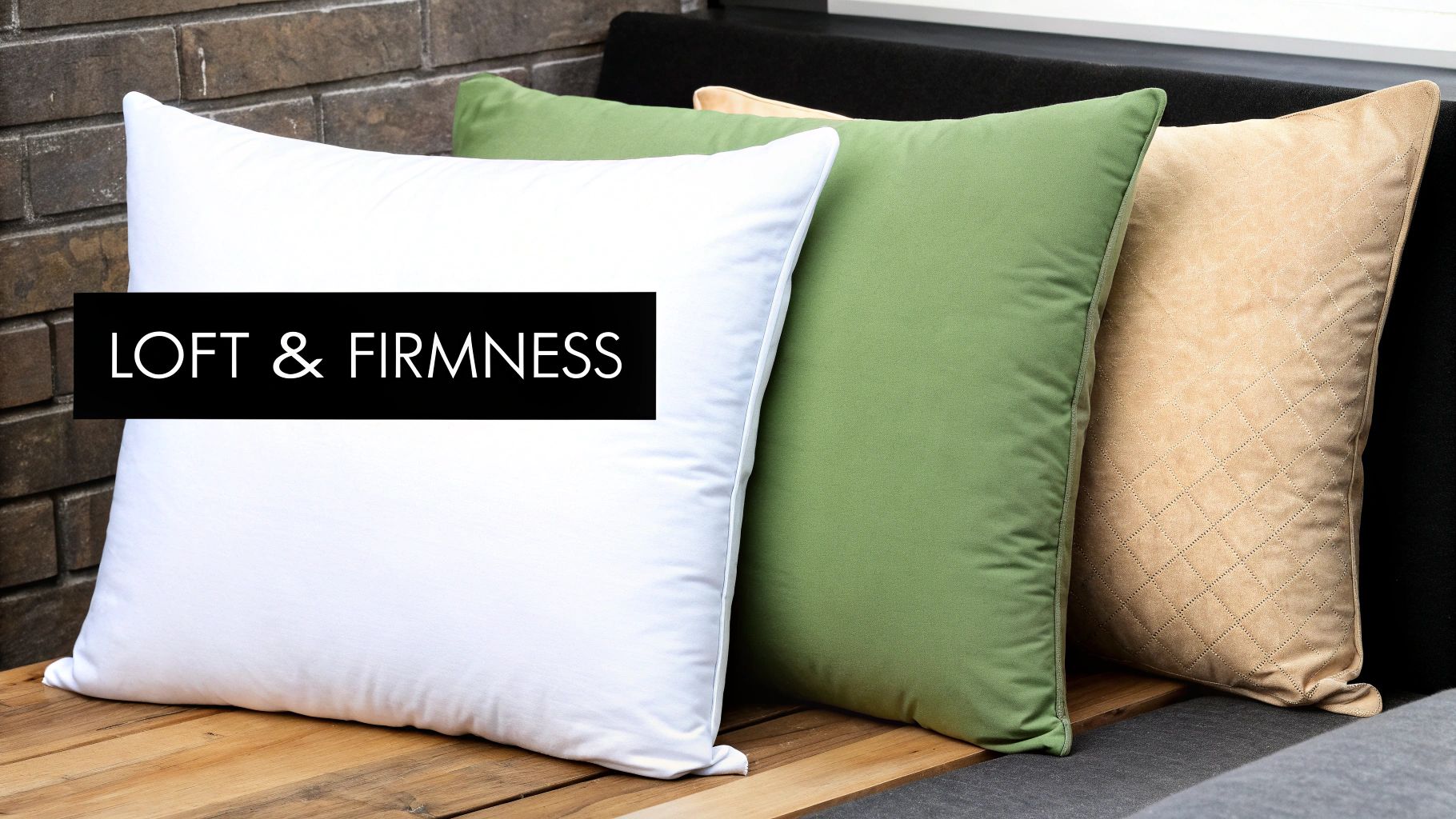
When figuring out how to choose a pillow, two words matter most: loft and firmness. Loft is the pillow's height, and firmness is its level of support. Get these right, and you'll wake up refreshed. Get them wrong, and you're stuck with a stiff neck.
It all comes down to keeping your spine in a neutral line. If your pillow is too high or too low, your neck is forced into an awkward position for hours, straining muscles and ruining your rest.
Finding Your Ideal Pillow Loft
Pillow loft is personal and depends on your body shape, sleeping position, and even your mattress.
A side sleeper with broad shoulders has a large gap to fill between their ear and the mattress. A high-loft pillow is essential to bridge that space. If they used a thin, low-loft pillow, their head would sag downwards, creating a painful bend in their neck.
Your mattress matters, too. A soft mattress that you sink into requires a lower-loft pillow because the mattress is already doing some of the work. A firm mattress needs a higher-loft pillow to fill the larger gap.
Quick At-Home Test: Lie in your normal sleeping position and have someone take a photo from the side. Is your neck bending up or down? If it isn't in a straight line with your spine, your pillow's loft is off.
Determining the Right Firmness Level
Firmness is about support, not just softness. It’s what keeps your head from sinking too far or being propped up too high. A pillow that’s too soft offers no support, while one that’s too firm creates pressure points.
Here’s a simple breakdown by sleeping style:
- Soft pillows work best for stomach sleepers. They keep the head as low as possible.
- Medium-firm pillows are the sweet spot for back sleepers, supporting the natural curve of the neck.
- Firm pillows are a must for side sleepers, offering robust support to keep the head and neck aligned.
If you constantly wake up with a sore neck or shoulders, it's a huge red flag that your pillow’s firmness is wrong. Finding the right pillow for neck and shoulder pain can make a world of difference. The right combination of loft and firmness will feel custom-made for you, allowing your muscles to fully relax.
Allergies, Care, and Keeping Your Pillow Fresh
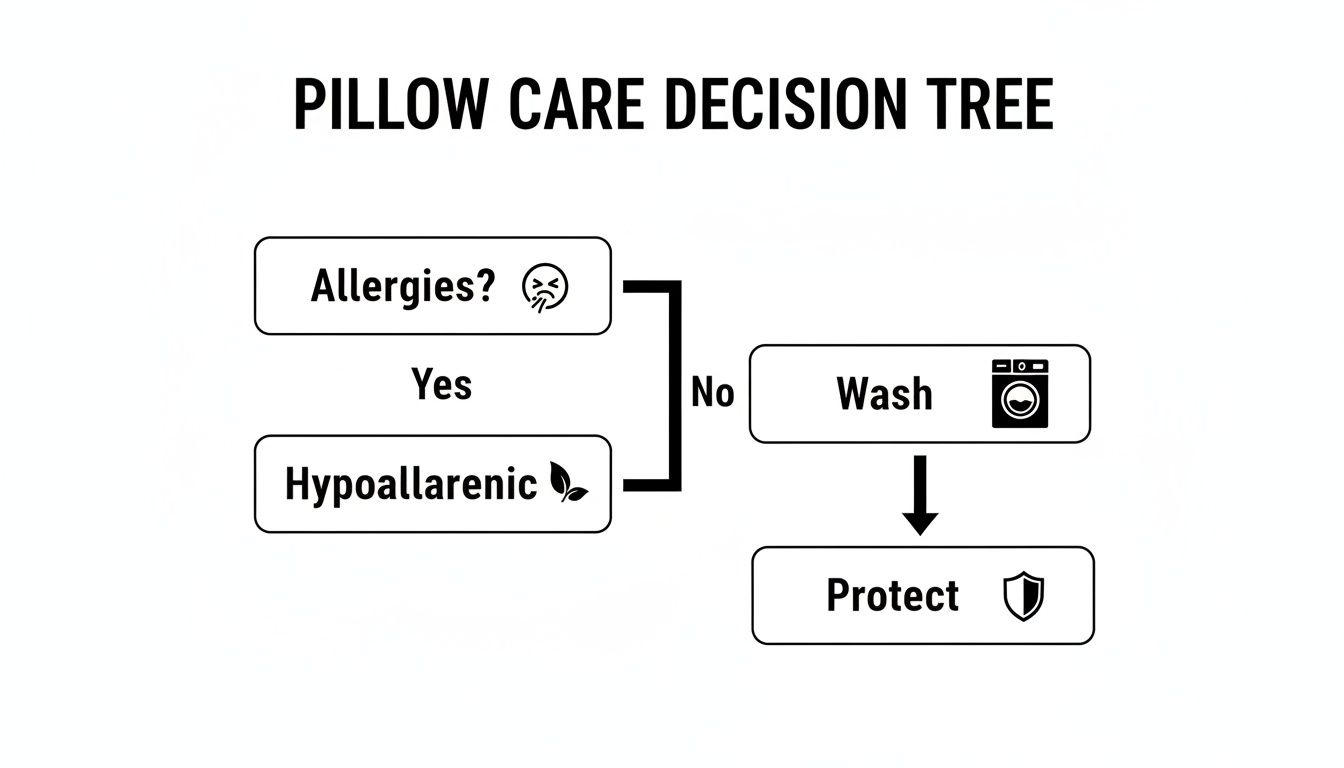
Finding the right pillow goes beyond comfort. If you've ever woken up stuffy or sneezy, you know your pillow can impact your health, especially if you have allergies. The wrong pillow can become a haven for dust mites and mould.
For anyone with allergies, the fill material is your first line of defence. Options like bamboo are naturally hypoallergenic and antimicrobial, actively fighting against allergens. This small choice can help you breathe easier all night.
A Little Maintenance Goes a Long Way
Even the best pillow needs some care. Over time, every pillow accumulates skin cells, oils, and moisture. A good cleaning routine is essential for your health.
Many modern pillows are designed for easy care. Materials like bamboo and microfibre can often be machine washed, which makes keeping your sleep space fresh simple.
Quick Tip: Always check the care label first. Feather and down pillows often need dry cleaning to prevent clumping. Memory foam is usually spot-clean only.
Your Pillow's Best Friend: The Protector
One of the easiest and most effective things you can do is use a pillow protector. It’s a zippered case that fits under your regular pillowcase, creating a barrier against sweat, spills, and allergens.
A protector keeps your pillow pristine and makes laundry easy—you can just wash the protector far more often than the entire pillow.
Simple Habits for a Healthy Pillow
Keeping your pillow in top shape is simple with a few habits.
- Regular Washing: Wash your pillows every 3 to 6 months, depending on the fill.
- Dry Completely: Moisture is the enemy. Make sure your pillow is completely dry after washing to prevent mould. For feather pillows, throw two clean tennis balls in the dryer on low heat to break up clumps.
- Daily Fluffing: A quick fluff each morning helps your pillow keep its shape and loft for consistent support.
For more in-depth tips, check out our ultimate guide to hypoallergenic bedding care.
Conclusion: Making Your Final Choice
You now have the knowledge to connect your body’s needs with the right support. Knowing how to choose a pillow is about understanding your sleep style and material preferences to make a decision that will genuinely improve your sleep. A pillow is an investment in your health and daily energy.
Your Final Pillow Checklist
Before you buy, run through this quick checklist to ensure you've covered the critical factors.
- Sleep Position Priority: Does the pillow's loft and firmness match your main sleeping style? (Firm/high for side, medium for back, soft/low for stomach).
- Material Match: Is the fill right for you? Consider hypoallergenic options like bamboo for allergies or feather and down for a plush feel.
- Spinal Alignment Check: Does the pillow keep your head, neck, and spine in a neutral line? This is key to preventing aches.
As you weigh these factors, you might find extra insights in our comprehensive guide on how to choose the perfect pillow for a deeper dive.
Trust the Trial Period
No matter how much research you do, the real test is sleeping on it. A trial period is non-negotiable, as it removes the risk and lets you see how the pillow feels in your own bed.
Your body sometimes needs a week or two to adjust to new support. A generous trial period gives you the time you need to be sure you’ve found the right one. By focusing on alignment, materials, and support, you’re setting yourself up for years of restorative sleep.
Ready to feel the difference a perfect pillow can make? Explore the Sienna Living collection to find a match for your unique sleep style. With our focus on quality and risk-free trials, your best night's sleep is just a click away.