

That sinking feeling when you discover a wet spot on the mattress is something every parent or pet owner knows well. Whether it’s from a potty-training toddler or a new puppy, your first move is critical. Acting fast is the key to preventing a permanent stain and a lingering odour. The most important thing is to blot the area immediately to soak up as much liquid as possible before it sets.
This guide will show you exactly how to clean the mattress urine using simple, effective methods. We'll start with the most crucial steps, so you can get to work right away.
Why You Must Clean Mattress Urine Immediately
As soon as you spot a urine stain, the clock starts ticking. The problem goes deeper than an ugly yellow patch on your mattress. What you can't see is where the real trouble brews. Urine is made of water, salts, and uric acid. If left untreated, it can cause serious, long-term damage.
The Science Behind the Stain and Smell
Here’s what happens when urine soaks into your mattress. The water eventually evaporates, but it leaves behind sharp uric acid crystals. These crystals are the culprits behind that pungent, ammonia-like smell that gets stronger on humid days. They don't just smell awful; they create an unhygienic sleep environment.
Worse, the moisture and organic material in urine are a perfect breeding ground for bacteria and mould. According to a study in the Journal of Allergy and Clinical Immunology, mattresses can harbour significant levels of allergens, which can be exacerbated by moisture. Before you know it, your bed can become a hotspot for allergens that impact your breathing and general health.
Protecting Your Mattress and Your Health
In Australia, mattress accidents are a fact of life, especially with young kids or pets. If you don't tackle it properly, urine can seep into the comfort layers of your mattress, creating the perfect environment for microbes.
As a real-world example, a customer named Sarah recently told us about an old pet stain on her son's mattress. She had tried masking the smell with sprays, but on warm nights, the odour returned, and her son's allergies seemed worse. Only after she used a deep-cleaning enzyme treatment did the smell disappear for good, and his nighttime sniffles improved. This shows why knowing how to clean the mattress urine properly is a game-changer for your family's health.
Cleaning up quickly does more than just get rid of a stain. It protects the investment you made in a quality mattress, stops the materials from breaking down, and looks after the health of everyone sleeping on it.
Your Essential Cleaning Toolkit for Urine Stains
Before you start cleaning, get your gear ready. Having everything on hand makes the process faster and less stressful. The best part? You probably have most of these items in your pantry already.
Acting quickly is key. The sooner you get to a fresh stain, the better your chances of removing it completely and stopping odours before they settle deep into your mattress.
The Power Players in Your Cleaning Kit
Your basic toolkit is simple but effective. Each item plays a crucial part in lifting the stain and killing the smell. Think of it as your mattress first-aid kit.
Here’s what you’ll want to grab:
- Paper Towels or Clean Cloths: For your initial blotting. The goal is to soak up as much urine as possible before you apply any cleaning solution. Remember to blot gently, never scrub.
- Bicarbonate of Soda (Baking Soda): A hero for absorbing moisture and odours. As it dries, it pulls the leftover urine and cleaning solution out of the mattress fibres.
- Distilled White Vinegar: A brilliant natural disinfectant. The acetic acid in vinegar is fantastic at breaking down the uric acid in urine, which causes that lingering ammonia smell.
- A Spray Bottle: For applying your vinegar solution. A light, even mist is what you're after—saturating the mattress can lead to mould.
- A Vacuum Cleaner: You’ll need the hose attachment to suck up the dried bicarb soda once it has worked its magic.
It's just as important to know what to avoid. Harsh chemicals like bleach or ammonia-based cleaners can wreck your mattress fabric and leave discoloured patches. They can also react with the urine and make the smell worse.
Don't forget the bedding. If the accident soaked through, your sheets and mattress cover need a proper wash. We have detailed steps in our guide on how to wash your mattress cover to help you out.
DIY vs. Commercial Cleaners for Urine Stains
While the DIY vinegar and bicarb method is a classic, sometimes you need more punch. That’s where commercial enzyme cleaners come in. They are formulated to tackle the organic proteins in stains like urine, making them incredibly effective.
Not sure which one is right for you? Let's break it down.
| Cleaning Agent | Best For | How It Works | Pros | Cons |
|---|---|---|---|---|
| DIY Vinegar Solution | Fresh, minor stains | The acetic acid neutralises ammonia and disinfects the area. | Inexpensive, non-toxic, and you probably already have it. | Might not be strong enough for old, set-in stains. |
| Commercial Enzyme Cleaner | Old, stubborn stains | Enzymes break down uric acid crystals and odour-causing bacteria. | Extremely effective on tough odours and stains. | More expensive and requires a trip to the shops. |
For a fresh accident, your pantry supplies will likely do the trick. But if you're dealing with an old, stubborn stain, investing in a good quality enzyme cleaner is worth it. For more general tips, check our post on how to clean mattress stains.
Cleaning Fresh Urine Stains from Your Mattress
When you find a fresh accident, time is everything. The faster you act, the better your chances of getting the stain out completely and stopping that lingering smell.
First things first: blot, don’t rub. Grab a thick wad of paper towels or a clean, dry cloth and press down firmly on the wet area. The idea is to soak up as much liquid as you can before it seeps deeper.
Neutralise the Odour with a Simple DIY Mix
After you've blotted up as much as possible, it's time to deal with the uric acid. You don’t need harsh chemicals; a simple homemade solution works wonders.
Just mix equal parts distilled white vinegar and water in a spray bottle. Lightly spray the stained area. You're aiming for a fine mist, not to soak the mattress. A gentle spritz is all it takes for the vinegar's acetic acid to start breaking down those smelly compounds.
This basic process—blot, neutralise, and absorb—is the core of good mattress cleaning.
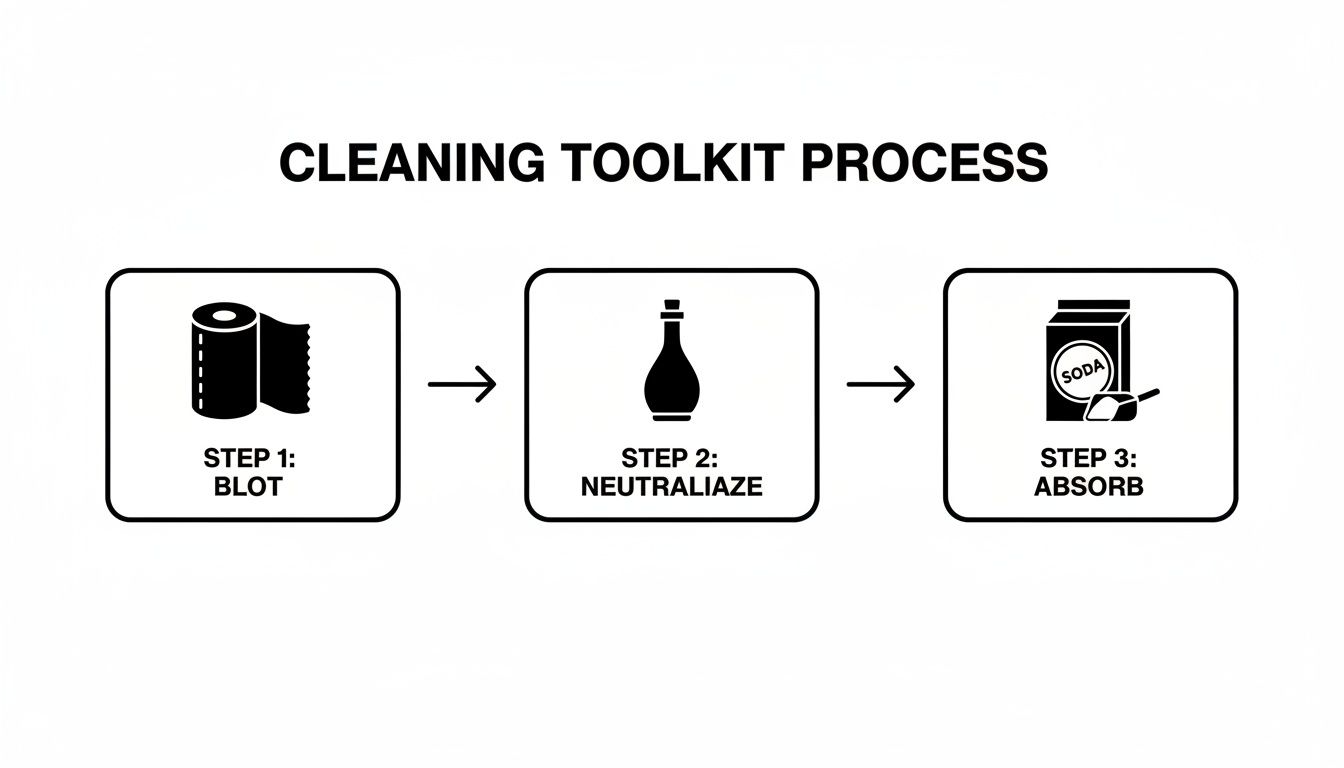
Each of these steps is crucial for ensuring both the stain and the odour are completely gone.
Use Bicarb Soda to Absorb and Deodorise
Let the vinegar and water solution sit for about 10-15 minutes, then give the area another quick blot with a fresh, dry cloth. Now for the magic ingredient: bicarbonate of soda (baking soda). This pantry staple is a champion at pulling out moisture and neutralising smells.
Don’t be shy with the bicarb soda. Pile on a thick, generous layer that completely covers the entire damp spot.
Let the bicarb soda sit for at least 8-10 hours. Overnight is even better. This gives it plenty of time to absorb everything. You’ll know it has worked when the powder is dry and has formed a crust.
The Final Clean-Up
Once the bicarb is bone dry, grab your vacuum cleaner. Using the upholstery attachment, go over the area thoroughly to suck up all the powder. Vacuum from a few different angles to make sure you get every last bit. The spot should now be clean, dry, and smell fresh.
For a closer look at getting rid of all sorts of spills, our complete guide on how to clean bed stains has you covered.
Tackling Old Urine Stains and Lingering Odours
Finding an old, dried urine stain on a mattress is tough, but it's not a lost cause. The real problem with old stains is the uric acid. Over time, it crystallises and bonds to the mattress fibres, creating that stubborn smell.
To beat an old stain, you need to break down those hardened uric acid crystals at a molecular level.
Unleash the Power of Enzyme Cleaners
When you're up against a set-in stain, an enzyme cleaner is your best friend. These cleaners contain specific enzymes that digest the organic proteins in urine, completely breaking down the source of the stain and odour. Think of it as sending in a microscopic clean-up crew.
Using one is simple, but it requires patience.
- First, lightly dampen the stained area with a cloth and cool water. This helps the cleaner penetrate the fibres.
- Next, spray the enzyme cleaner generously all over the stain.
- Now, let it sit. The enzymes need time to work, which can mean several hours or overnight. Always check the instructions on the bottle.
- Once the time is up, blot the area dry with a fresh, clean cloth and let the mattress air-dry completely.
For a really stubborn smell, you might need a second pass or a more advanced approach to permanently eliminate urine odor.
A Stronger DIY Solution for Old Stains
If you prefer a homemade route, a hydrogen peroxide solution can work wonders. Warning: hydrogen peroxide is a mild bleach. You must test it on a small, hidden spot first to ensure it doesn’t cause discolouration.
Here’s a powerful DIY mix:
- In a spray bottle, combine 240 ml of 3% hydrogen peroxide, three tablespoons of bicarb soda, and two drops of clear dish soap.
- Gently swirl the bottle to mix.
- Spray this solution onto the old stain and leave it until it's totally dry. You’ll see a white residue form on top.
- Once dry, vacuum up all the powdery residue.
How to Protect Your Mattress from Future Accidents
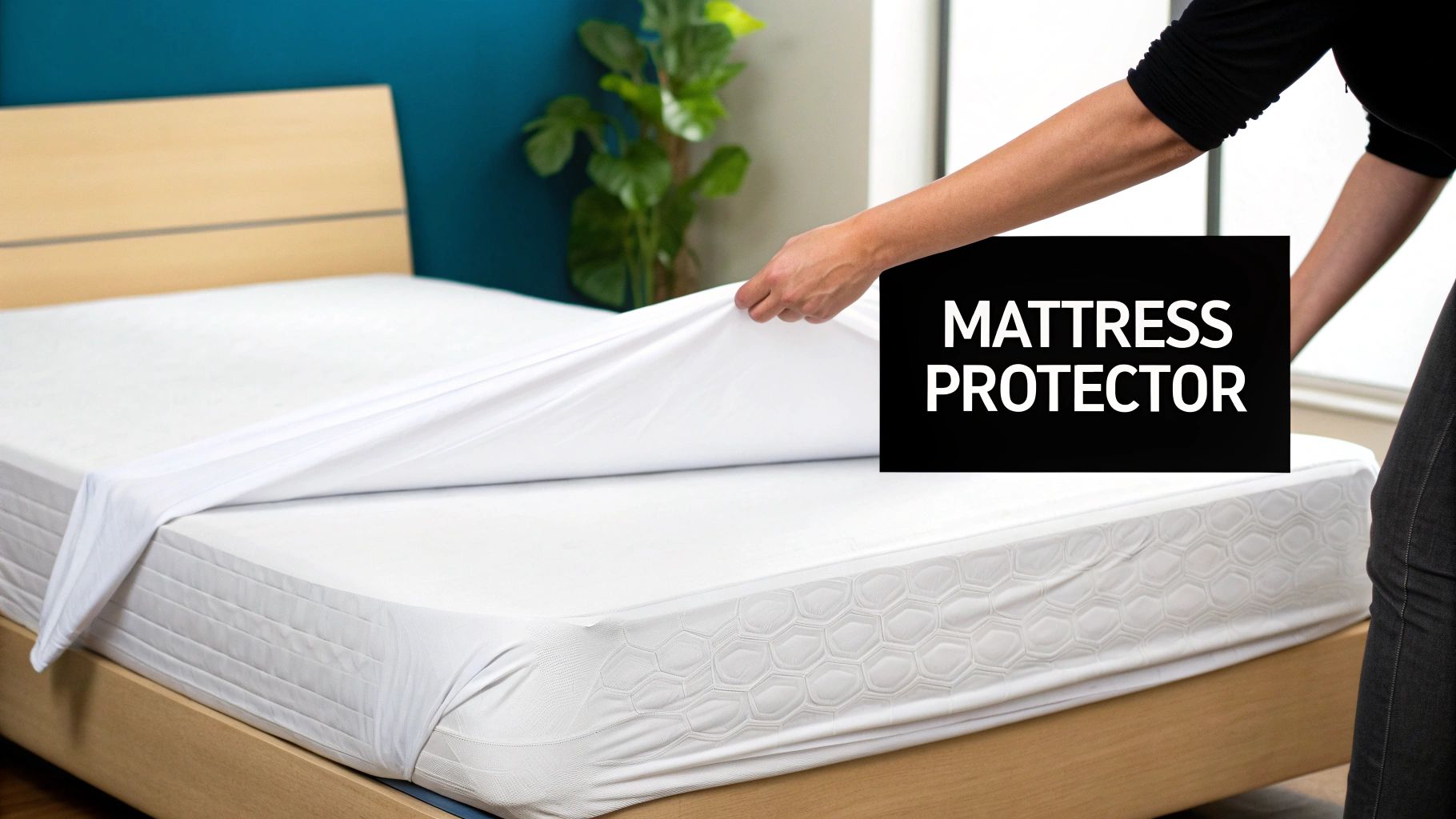
While it's great to know how to tackle a urine stain, prevention is always better. It will save you time and stress, not to mention prolong the life of your bed.
The single most effective tool is a high-quality waterproof mattress protector.
Think of it as an insurance policy for your mattress. A good protector forms a shield against liquids, stopping them before they can seep into the foam. The best ones are also breathable, so you get protection without feeling like you're sleeping on a plastic sheet.
Invest in a Quality Mattress Protector
The right protector can turn a potential catastrophe into a minor inconvenience. Instead of scrubbing a stain, you just whip off the protector and toss it in the wash.
For a solution that doesn’t sacrifice comfort, consider a bamboo waterproof mattress protector. They offer a perfect blend of softness and serious protection, keeping your bed clean and healthy.
A quality mattress is a significant investment. Protecting it from accidents isn't just about hygiene; it’s about preserving its value and ensuring you get years of comfortable use.
Lifestyle Adjustments to Prevent Accidents
Beyond physical barriers, a few simple habit changes can make a huge difference, especially with kids or pets.
- Manage Bedtime Drinks: For young children, limit liquids for an hour or two before bed. A final trip to the toilet right before lights out is a classic for a reason.
- Reinforce Pet Training: If a pet is the culprit, it might be time for a refresher on their house training. Ensure they have easy access to their litter box or the doggy door.
- Scheduled Bathroom Breaks: For older family members, a quiet alarm for a bathroom break in the middle of the night can be an effective preventative step.
Common Questions About Cleaning Mattress Urine
Even after you've cleaned a urine stain, a few questions can linger. Let’s walk through some of the most common queries.
How Long Does a Mattress Take to Dry?
Drying time can vary from 8 to 24 hours. It depends on how much cleaning solution you used, the type of mattress, and the airflow in the room. A dense memory foam mattress will hold moisture longer than an innerspring model.
To speed things along:
- Open windows to create a cross-breeze.
- Point a fan directly at the damp area.
- Run a dehumidifier to pull moisture out of the air.
The mattress must be 100% dry to the touch before you put sheets back on. A damp mattress is a perfect breeding ground for mould and mildew, which is a much bigger problem than the original stain.
What If the Vinegar Smell Lingers?
It’s normal for a faint vinegar smell to hang around for a bit. Don't worry—it will disappear as the mattress airs out. Good ventilation is your best friend here.
If the spot is dry but you still catch a slight whiff, sprinkle another light layer of bicarb soda over the area. Let it sit for an hour, then vacuum it up thoroughly.
Can I Use a Steam Cleaner on a Urine Stain?
My advice is a firm no. The intense heat from a steam cleaner can "cook" the proteins in the urine, permanently setting the stain and making the odour impossible to remove.
Steam also introduces a huge amount of moisture that can soak deep into the mattress core, risking mould growth. Stick to the cold-cleaning methods we've covered for this particular problem. Proper mattress care is a continuous effort. For general hygiene tips, you can read about how often to clean your mattress and box spring.
A Clean Mattress for a Better Sleep
Knowing how to clean urine from a mattress protects your investment and ensures a healthy sleeping environment for your family. By acting quickly with the right tools and techniques, you can tackle any accident effectively. For the ultimate peace of mind, prevention is key. A quality waterproof protector is the best defence against future spills and stains.
At Sienna Living, we believe a clean bed is the foundation of restorative sleep. Explore our premium bedding collections today and give your mattress the protection it deserves.
Visit us at https://www.siennaliving.com.au.