

Spilled your morning coffee in bed? Don't panic. Learning how to get out mattress stains is easier than you think, and it's your first step towards a healthier, cleaner sleep. With just a few household staples and the right technique, you can tackle almost any spot and restore your bed to its former glory.
This guide cuts straight to the chase, giving you the most important information first so you can act fast and get the best results.
How to Get Out Mattress Stains: The Most Important Info First
When a spill happens, time is everything. The faster you act, the better your chances of removing the stain completely. Here’s the essential action plan:
- Blot, Don't Rub: Immediately grab a clean, dry cloth and gently blot the fresh spill. Rubbing pushes the stain deeper into the mattress fibres.
- Use Cold Water: For unknown stains or protein-based stains like blood, always start with cold water. Hot water can set the stain permanently.
- Grab Your Toolkit: Most stains can be tackled with a simple paste of bicarb soda and water, or a spray of equal parts white vinegar and water.
- Dry Thoroughly: Never leave your mattress damp. After cleaning, cover the area with bicarb soda to draw out moisture, let it sit for 8+ hours, then vacuum it up. Use fans to speed up drying.
Ignoring stains does more than just look bad. A study from Ohio State University found that a used mattress can have between 100,000 and 10 million dust mites inside. Stains create a damp environment where these allergens, along with mould and mildew, can thrive, directly impacting your health and how to improve sleep quality.
Your Essential Stain Removal Toolkit
Before you tackle any stain, get your supplies ready. Having this simple kit on hand means you can act fast, which is the key to success. You don’t need harsh chemicals; these pantry items work wonders.
Core Cleaning Agents
These three items are your stain-fighting dream team. Each one serves a specific purpose.
- Bicarb Soda (Baking Soda): This is your go-to for absorbing liquids and neutralising odours. Think of it as a sponge that pulls moisture out of the mattress.
- Distilled White Vinegar: A natural disinfectant, vinegar’s acidity is perfect for breaking down common stains like urine and sweat. It's surprisingly versatile; check out these not so commonly known cleaning uses of vinegar.
- 3% Hydrogen Peroxide: This is for tough organic stains like blood. It works by releasing oxygen, which breaks down the stain. Use the common 3% solution from any chemist—anything stronger is too harsh.
Essential Application Tools
The right tools prevent you from making the stain worse.
- Clean, light-coloured cloths or towels
- An empty spray bottle for even application
- A vacuum cleaner with a hose attachment
- A small bowl for mixing
Pro Tip: Always test your cleaning solution on a small, hidden spot first (like a side seam) to ensure it doesn't cause discolouration. Remember the golden rule: always blot, never scrub. Blotting lifts the stain out; scrubbing grinds it in.
Don't forget to clean your mattress cover too. Our guide on how to wash your mattress cover shows you how to do it safely.
Step-by-Step Guides for Common Stains
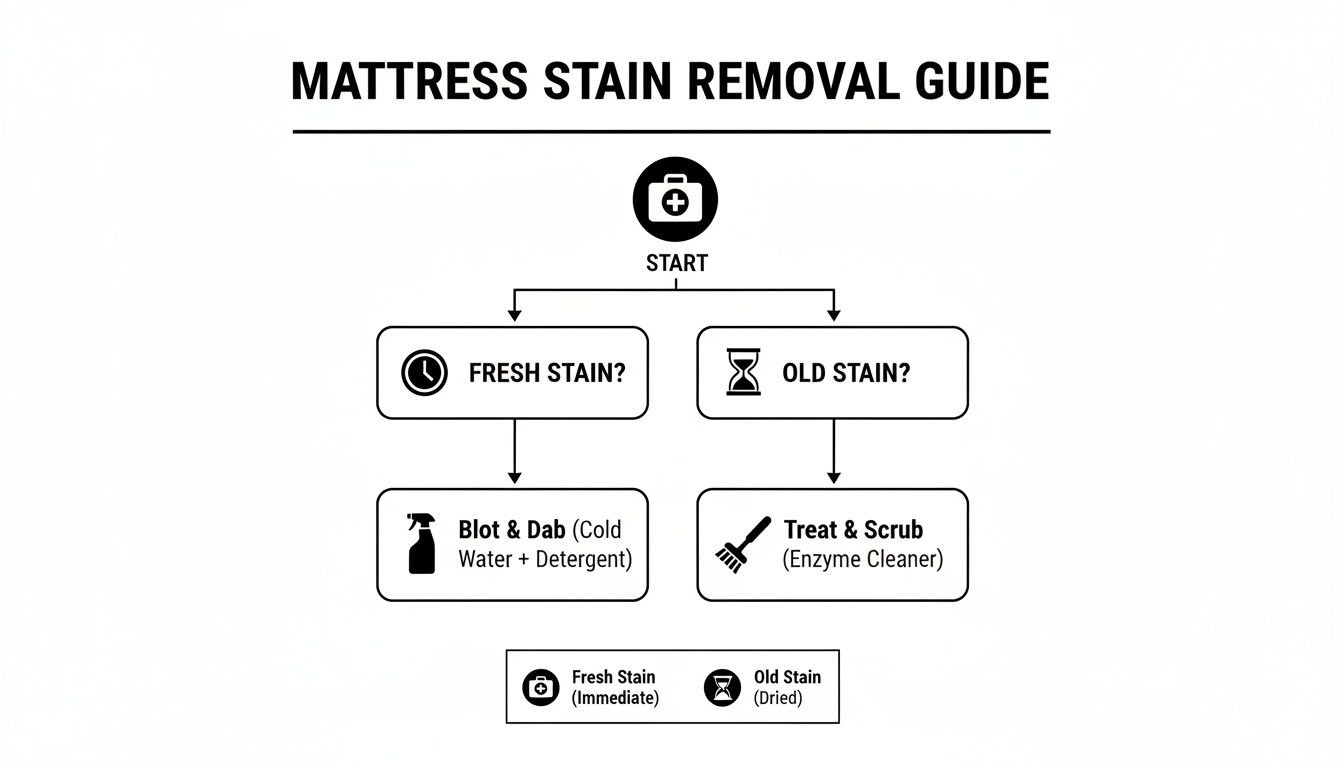
Life is messy. Whether it's a child's accident or a spilled drink, different stains need different approaches. This quick-reference table is your cheat sheet.
Your Quick Guide to Mattress Stain Solutions
| Stain Type | Primary Cleaning Agent | Key Action | Important Tip |
|---|---|---|---|
| Blood | Cold Water & Bicarb Soda | Blot, never scrub. | Always use cold water; hot water sets the stain. |
| Urine | White Vinegar & Bicarb Soda | Neutralise the acid and deodorise. | Let the bicarb soda sit for at least 8-10 hours. |
| Sweat | White Vinegar Solution | Break down oils and neutralise odour. | Blot well and use bicarb soda to dry and deodorise. |
| Vomit | Enzyme Cleaner or Vinegar | Break down organic proteins. | Scrape off solids first, then treat the liquid stain. |
| Oil/Grease | Bicarb Soda & Dish Soap | Absorb the oil, then cut the grease. | Let bicarb soda sit on the oil spot first to absorb it. |
How to Get Blood Stains Out of a Mattress
For a nosebleed or small cut, the number one rule is cold water. Hot water will cook the protein in blood, setting the stain permanently.
Start by blotting the fresh stain with a cloth dipped in cold water. To add cleaning power, mix bicarb soda and a little cold water into a paste. Apply it to the stain, let it sit for 30 minutes, then wipe it away with a clean, damp cloth. For more detailed steps, see our guide on how to get blood out of a mattress.
For a stubborn stain, 3% hydrogen peroxide is very effective. Pour a small amount directly on the stain and let it fizz. Blot away the residue with a clean cloth.
Tackling Urine and Sweat Stains
Urine and sweat are acidic and can leave behind a strong odour if not treated properly.
Mix a 50/50 solution of white vinegar and water in a spray bottle. Lightly spray the stained area (don't soak it). Blot firmly with a clean towel to lift the moisture and the stain.
Next, generously cover the damp area with bicarb soda. This is the crucial step for drawing out deep-down moisture and neutralising the smell. Let it sit for at least 8-10 hours (overnight is best), then vacuum it all up. This one-two punch of vinegar and bicarb soda is a lifesaver for these common stains. For persistent smells, you'll find more tips in our guide on how to get urine smell out of a mattress.
Removing Oily or Greasy Stains
Accidentally dropped a piece of pizza in bed? Don't stress.
First, sprinkle bicarb soda directly onto the oil spot to absorb as much grease as possible. Let it sit for an hour, then vacuum it up.
Next, mix a few drops of dish soap with warm water. Dip a clean cloth in the soapy water, wring it out, and gently dab the stain. The soap will break down the remaining grease. "Rinse" by blotting with a new cloth dampened with plain water to remove any soap residue.
The Crucial Last Step: Drying and Deodorising
You've removed the stain, but you're not done. Ensuring your mattress is completely dry is non-negotiable. Trapped moisture is a recipe for mould and mildew, which can start growing in just 24-48 hours.
Create Maximum Airflow
To dry your mattress safely and effectively, get the air moving.
- Open Windows: Let fresh air circulate through the room.
- Use Fans: Aim a fan directly at the damp spot to speed up evaporation.
- Try a Dehumidifier: In humid climates, a dehumidifier is excellent for pulling moisture out of the air and your mattress.
Important: Never use a hairdryer or heater to dry your mattress. Direct heat can damage the foam and fibres inside. Patience and airflow are your best friends here.
The Finishing Touch: Bicarb Soda
Once the spot feels mostly dry, sprinkle a thick layer of bicarb soda over the entire cleaned area. This will absorb any final traces of moisture and deodorise the fabric. Leave it for at least 8 hours, or overnight.
When ready, use your vacuum's upholstery attachment to suck up all the powder. Your mattress will be fresh, clean, and ready for a set of new Sienna Living bamboo sheets.
How to Prevent Mattress Stains in the First Place
The easiest way to deal with stains is to prevent them from ever happening. A little proactive care saves you a lot of effort later.
Invest in a Quality Mattress Protector
The single best thing you can do for your mattress is use a waterproof protector. Think of it as an insurance policy for your bed. Modern protectors create a barrier against spills, sweat, and allergens without feeling hot or crinkly.
A bamboo waterproof mattress protector is a great choice as it's both waterproof and breathable, ensuring you stay comfortable while your mattress stays pristine. When an accident happens, you simply remove the protector and put it in the wash.
Simple Habits for a Pristine Mattress
A few small habits can make a big difference.
- Act Fast: When a spill happens, deal with it immediately. A stain left for 24 hours can soak much deeper into the mattress fibres, making it harder to remove.
- Air it Out: Pull your duvet back every morning for an hour. This allows moisture from perspiration to evaporate, preventing odour build-up. For more ideas, check out these essential mattress care tips.
- Wash Bedding Regularly: Wash your sheets, pillowcases, and mattress protector every 1-2 weeks to remove body oils and dirt that can seep into your mattress over time.
Common Mattress Cleaning Questions
Here are quick answers to some frequently asked questions.
Can I use a steam cleaner on my mattress?
It's best to avoid it. Steam cleaners force hot moisture deep into the mattress, which is very difficult to dry and can lead to mould growth. Stick to the spot-cleaning methods described above.
How do I get old, set-in stains out?
Old stains are tougher but not impossible. For biological stains like old blood or urine, an enzyme cleaner (often found in the pet aisle) is your best bet. It contains enzymes that break down the proteins in the stain. You may need to repeat the treatment a few times.
Is it safe to use bleach on a mattress stain?
No. Chlorine bleach is too harsh for the delicate fibres and foams in a mattress. It can cause permanent yellowing and damage the materials. Stick to gentler cleaners like vinegar, bicarb soda, and 3% hydrogen peroxide.
When should I give up and replace my mattress?
If a stain is huge or you've tried everything and a strong odour remains, it might be time to call a professional cleaner. However, if your mattress is over 7-10 years old, sagging, or shows signs of widespread mould, it’s healthier to replace it.
A clean mattress is the cornerstone of great sleep. At Sienna Living, we design our premium bedding to help you create the perfect sleep environment. A waterproof protector and luxurious sheets not only feel amazing but also safeguard your investment for years to come.
Ready to upgrade your sleep?