

Waking up to a blood stain on your favourite sheets is frustrating, but it doesn’t have to mean they're ruined. Knowing how to remove blood from sheets is simple when you act fast and use the right methods. The most critical rule is to always start with cold water. Heat will permanently set the stain, so avoiding it is your first and most important step to keeping your bedding pristine.
First Steps: What to Do Immediately
The first hour is crucial. Your quick actions can prevent a minor accident from becoming a permanent mark on your bedding. The goal is to lift the stain out, not push it deeper into the fabric.
The biggest mistake people make is using hot water or scrubbing too hard, which unfortunately makes the stain worse. Let's get it right from the start.
The Golden Rule: Always Use Cold Water
Here is the single most important thing to remember: never use hot or even warm water on a blood stain. Blood is a protein-based stain, and heat essentially "cooks" the proteins into the fabric fibres, leaving a stubborn brownish mark that's almost impossible to remove.
Think of it like cooking an egg—once it's cooked, you can't reverse it. Cold water, however, helps dissolve and loosen the blood, flushing it out of the fibres. Always start by holding the stained area under a running cold water tap. Let the water hit the back of the stain to push it out of the fabric, not through it.
Master the Blotting Technique
Your first instinct might be to scrub the stain furiously. Don't do it. Scrubbing grinds the blood deeper into the sheet's weave and spreads it, turning a small spot into a larger problem.
Instead, use a gentle blotting motion. Grab a clean, damp cloth or paper towel and press firmly onto the stain. This action wicks the blood up and out of the sheet. Keep dabbing with a fresh section of the cloth until you've lifted as much of the excess blood as you can.
This flowchart is a handy guide for deciding what to do based on whether the stain is fresh or has already set.
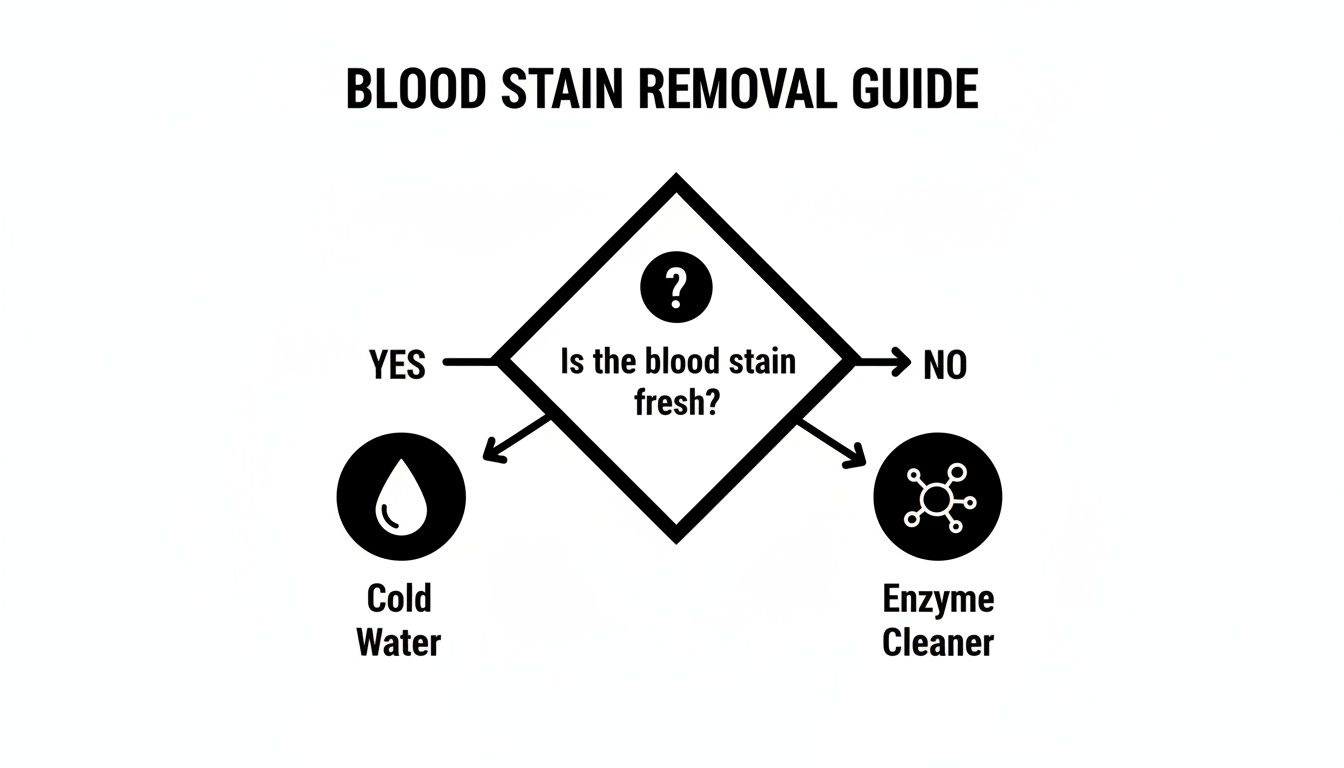
As you can see, cold water is your first line of attack for any fresh stain. You'll only need stronger treatments if you're dealing with an older, dried mark.
Immediate Action Plan for Fresh Blood Stains
| Action | Tool or Ingredient | Why It Works |
|---|---|---|
| Flush Immediately | Cold running water | Pushes the stain out from the back of the fabric before it sets. |
| Blot, Don't Rub | Clean cloth or paper towel | Lifts the blood up and out instead of spreading it or grinding it in. |
| Apply Gentle Pressure | Your hands | Helps the blotting cloth absorb as much of the stain as possible. |
| Repeat Blotting | Fresh sections of the cloth | Prevents re-transferring the stain back onto the sheet. |
These initial steps are often enough to handle a fresh stain completely, setting you up for success before you even think about washing the sheets.
Create a Simple Pre-Treatment Paste
After blotting, a simple pre-treatment paste can work wonders. You probably already have what you need in your kitchen pantry.
- Salt: Its dehydrating properties are great for drawing moisture and blood out of the fibres. Mix salt with a little cold water to form a thick paste, apply it to the stain, and let it sit for about an hour before rinsing with cold water.
- Baking Soda: Works similarly to salt. Create a paste with baking soda and cold water, spread it over the area, and let it dry completely before brushing off the residue.
These methods are effective yet gentle enough for most fabrics. Still, always check your bedding’s specific care instructions. You can find everything you need in our detailed Sienna Living Care Guide.
How to Remove Fresh Blood Stains With Household Items
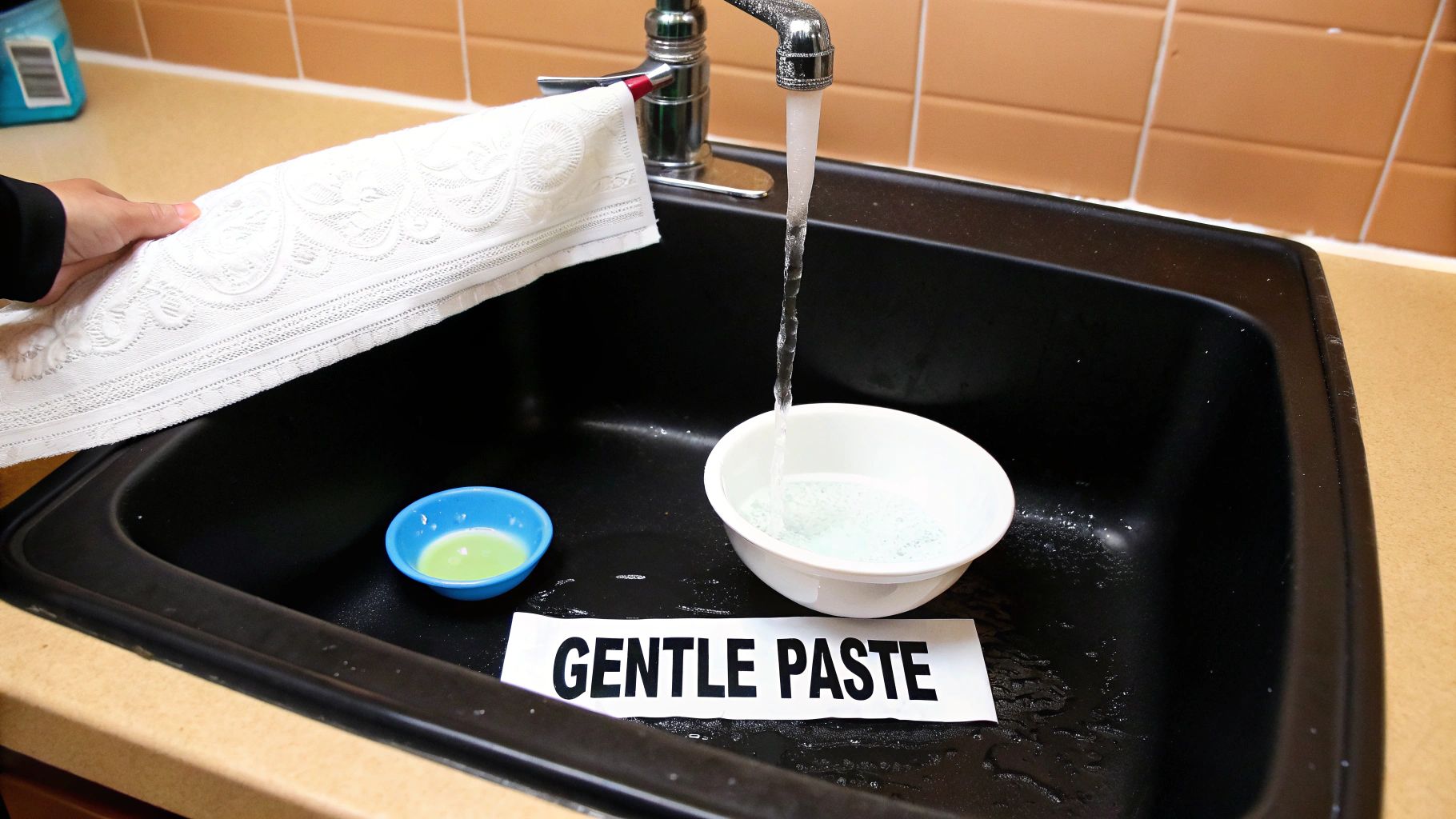
You've flushed the area with cold water and blotted away the excess. Now it's time to deal with what’s left. You don’t need a specialised cleaner; the most effective tools are likely already in your kitchen or bathroom.
We're going to use gentle but powerful household staples to create a simple paste. This lets the active ingredients sit on the stain, giving them time to break down the blood before the final wash.
Whip Up a Gentle Cleaning Paste
Hydrogen peroxide is a champion stain fighter, particularly on white or light-coloured sheets. It acts as a mild oxidising agent, breaking down the components of the blood.
To make it safer and more effective, mix it with baking soda. This creates a slightly gritty paste that treats the stain while gently lifting it from the fibres.
- The Recipe: Mix two parts baking soda with one part 3% hydrogen peroxide.
- Get the Right Consistency: Aim for a toothpaste-like texture—thick enough so it won't run off the fabric.
- How to Apply: Use a spoon or a soft-bristled toothbrush to gently spread the paste over the entire stain.
A Quick Word of Caution: While 3% hydrogen peroxide is generally safe, always do a quick spot test. Dab a tiny bit of the paste on a hidden area, like an inside seam, and let it sit for a few minutes to ensure it won't cause discolouration.
Let the Paste Do Its Magic
Once you’ve applied the paste, just wait. Let it sit on the stain for at least 30 minutes, or up to an hour for a more stubborn spot.
You might notice some light bubbling. That’s a great sign! It’s the hydrogen peroxide reacting with an enzyme in the blood called catalase, which means the solution is actively breaking down the stain. As the paste sits, it will dry and harden, helping the baking soda absorb the loosened stain particles.
Rinse and Check Your Work
When the time is up, gently scrape off any dried paste. Then, hold that section of the sheet under cold running water again, rinsing it thoroughly.
Now, inspect the area closely. For most fresh stains, this process will have worked perfectly. If a faint shadow remains, repeat the paste application before washing.
Whatever you do, don't put the sheet in the dryer until you are 100% sure the stain is gone. The dryer's heat will set that stain permanently. This paste method is also a great starting point for other common issues, which you can read about in our guide on how to clean bed stains.
How to Tackle Stubborn Dried Blood Stains
Discovering an old, dried blood stain can feel like a lost cause. While fresh stains are easier to handle, you can still remove a set-in blood stain with the right technique.
The challenge with dried blood is that its proteins have bonded with the fabric fibres like glue. A fresh stain can be flushed out, but a set-in one needs to be chemically broken down first. This is where a specific type of cleaner becomes your secret weapon.
The Power of Enzyme Cleaners
When facing tough organic stains like blood, your everyday laundry detergent often isn't enough. You need an enzymatic cleaner. These specialised formulas contain enzymes—specifically protease—designed to target and dismantle protein-based messes.
Think of it this way: the blood protein is a long chain. The protease enzyme acts like tiny scissors, snipping that chain into smaller pieces that can be easily washed away. A 2018 study in the Journal of Surfactants and Detergents confirmed that detergents with protease enzymes show significantly higher efficiency in removing blood stains compared to those without.
- Read the Label: Look for "enzymes," "enzymatic action," or "protease."
- Check Fabric Safety: Ensure the product is safe for your bedding with a quick spot test.
- Follow the Directions: Always read the instructions on the bottle for the best results.
First, Rehydrate the Stain with a Pre-Soak
Before applying a cleaner, you must rehydrate the stain. A dry stain can’t absorb the cleaning solution effectively. A long pre-soak in cold water is non-negotiable.
Place the stained part of the sheet in a bucket of cold water. Let it sit for a few hours, or even overnight for a very old stain. This step loosens the blood's grip and makes it receptive to treatment.
A critical mistake is skipping the soak. Trying to treat a dry, set-in stain is like trying to scrub dried mud off a car with a dry sponge—you just won't get anywhere. Patience here pays off.
Once it's soaked, wring out the excess water. Apply your enzyme cleaner directly onto the damp stain, work it in gently, and let it sit for at least 30 minutes.
The Final Wash and the All-Important Check
After the enzyme cleaner has worked its magic, it’s time to wash the sheet. Place it in the washing machine on its own and run a cold cycle with a gentle detergent.
This next part is crucial. When the cycle finishes, inspect the stain closely while the sheet is still wet. Is it completely 100% gone? If you see even the faintest shadow, do not put it in the dryer.
The dryer's high heat will permanently set any leftover stain particles. If you see any trace, repeat the enzyme treatment and wash it again. Even what looks clean might not be. In fact, Australian forensic tests have shown that detectable traces of blood can remain after cleaning, proving how stubborn these stains are. You can learn more about these forensic findings to see why a thorough approach is vital.
This method is also helpful if a stain has seeped through to your bed. If that happens, we have a complete guide on how to clean mattress stains.
Special Care for Bamboo and Delicate Fabrics
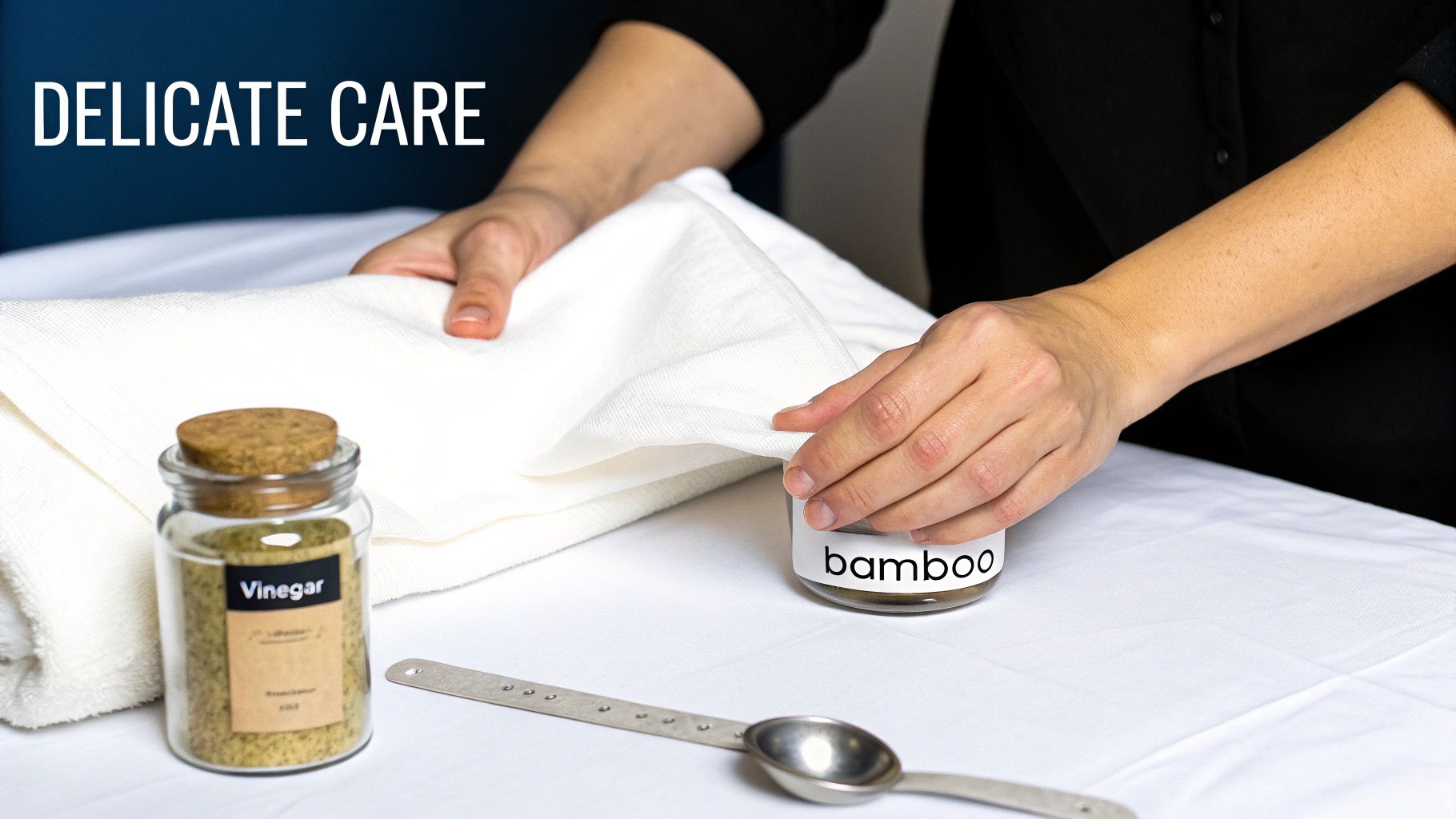
Luxurious materials like bamboo, silk, or high-thread-count cotton need a gentler touch. Aggressive tactics can damage these delicate fibres. Removing blood from special materials is all about patience and a light hand.
Harsh chemicals and rough handling are the biggest enemies. Chlorine bleach, for instance, can weaken natural fibres and cause yellowing. Scrubbing too hard can fray the threads that give these sheets their silky-smooth feel.
Gentle, Natural Stain Removal Recipes
Before reaching for a commercial stain remover, check your kitchen pantry for safer, effective solutions. A simple paste made from cornstarch or bicarb soda works wonders.
Mix the powder with a little cold water to a toothpaste consistency. Spread it over the stain, let it air dry completely, then gently scrape it off and rinse the spot with cold water.
Plain white vinegar is another fantastic option. Its mild acidity helps break down the proteins in blood.
- Application: Pour a small amount of white vinegar directly onto the stain.
- Wait Time: Let it sit for about 15-30 minutes.
- Rinse: Rinse the area thoroughly with cold water before washing the sheets.
These natural methods are much kinder to your bedding and the planet, proving you don’t need harsh chemicals for a powerful clean.
Key Takeaway: The unique structure of delicate fibres like bamboo is what makes them so soft. Harsh chemicals and vigorous scrubbing can permanently damage this structure, ruining the texture and shortening the lifespan of your sheets.
Specific Advice for Bamboo Sheets
Bamboo-derived sheets are known for their buttery softness and strength, but they require care. The long, smooth fibres can be damaged by abrasive cleaners or high heat.
When dealing with a blood stain on bamboo sheets, a pre-soak in cold water is the best first move. After soaking, the cornstarch paste method is an excellent, gentle approach.
If a faint discolouration remains, try a very diluted hydrogen peroxide solution (one part 3% peroxide to ten parts water). Dab it on carefully with a cloth, but always do a spot test on a hidden area first.
Proper washing is just as crucial as stain removal. For a complete rundown, check out our guide on how to wash bamboo sheets.
Aftercare and Preserving Your Bedding
Once the stain has vanished, correct washing and drying will preserve the feel of your premium bedding.
Washing Instructions
| Setting | Recommendation | Why It's Important |
|---|---|---|
| Water Temperature | Cold Water Only | Protects fibres and stops any leftover stain particles from setting. |
| Cycle Type | Gentle or Delicate | Minimises stress on the fabric, preventing pilling and stretching. |
| Detergent | Mild, pH-neutral | Avoids harsh chemicals that can strip the natural softness from the fibres. |
Finally, avoid high heat when drying. Line drying out of direct sunlight is best. If you must use a machine, select the lowest heat or an air-fluff setting to protect the fabric’s integrity.
What Not to Do When Cleaning Blood Stains
Knowing the right way to remove blood from a sheet is half the battle; knowing what not to do is the other. One wrong move can lock in a bloodstain for good.
The biggest mistake is reaching for hot water. Blood is a protein stain, and heat cooks the proteins into the fabric. This process creates a stubborn, yellowish-brown mark that’s almost impossible to shift. Always start with cold water.
Ditch the Harsh Scrubbing and Chlorine Bleach
When you see a spill, your instinct might be to scrub it away. Fight that urge! Scrubbing a wet bloodstain just grinds the particles deeper into the fabric's weave and spreads the stain.
Instead, gently blot the area with a clean, damp cloth to lift the stain up and away from the sheet.
Another common misstep is using chlorine bleach. While it seems like the ultimate weapon for white sheets, it can weaken natural fibres and react with the iron in blood to create a new, ugly yellow stain.
A much safer alternative for brightening is an oxygen-based bleach. If you’re dealing with general yellowing, we have gentler methods you can try in our guide on how to whiten pillow cases.
Don't Let It Near the Dryer
Putting a sheet in the clothes dryer before the stain is completely gone is the point of no return. The intense heat will permanently set any lingering blood particles.
After washing, always inspect the stained area while the sheet is still damp. If you see even a faint shadow, repeat your stain treatment and wash it again. Only toss it in the dryer when you're 100% sure the stain has vanished.
While you're mastering these techniques, it also pays to be aware of common washing machine mishaps that could undo all your hard work.
Got a Question About Removing Blood Stains?
Even when you know the basic steps, blood stains can be tricky. Here are answers to some common questions.
Can I Just Use Bleach on White Sheets?
It’s tempting, but it's best to avoid chlorine bleach. It's harsh and can weaken natural fibres like bamboo. More importantly, it can react with blood to set the protein, leaving a permanent yellow-ish mark.
A much better approach is to use an oxygen-based bleach or a standard 3% hydrogen peroxide solution. These are far gentler but still pack enough punch to lift the stain.
What's the Best Stain Remover I Can Buy?
For a dried, set-in blood stain, your best bet is an enzyme-based stain remover. These formulas contain enzymes, like protease, that are specifically designed to break down the complex proteins found in organic stains like blood.
Look for a product that states it’s "enzymatic" or lists "protease" in the ingredients. Always read the label and do a small spot test on an inconspicuous area first.
How Do I Clean Blood Off a Mattress or Pillow?
You can't throw your mattress in the wash, so the key is to use as little liquid as possible to prevent mould and mildew.
Your secret weapon is a paste made from baking soda and a bit of cold water. Apply this thick paste directly onto the stain and let it dry completely, which usually takes about 30 minutes. Scrape and vacuum away the residue. If a faint mark remains, gently dab it with a cloth dampened with a little cold water or hydrogen peroxide.
This paste method works well on other items you can't easily wash. For more tips, check out our guides for caring for high-quality quilts, pillows and mattress toppers.
Is the Old Salt Trick Legit for Fresh Stains?
Absolutely. Salt is a fantastic first-aid treatment for a fresh blood stain. It’s mildly abrasive and it's a desiccant, meaning it draws out moisture. When you make a paste with cold water, the salt helps scrub the blood out of the fibres while pulling the liquid out of the stain. It can dramatically reduce the stain before you treat it more thoroughly.
At Sienna Living, we know a great night's sleep starts with fresh, clean sheets. If a stain has gotten the better of your bedding, or if you're ready for an upgrade, explore our range of beautiful bamboo-derived sheets. They’re designed for incredible comfort and simple, real-world care. See the full collection at https://www.siennaliving.com.au.