

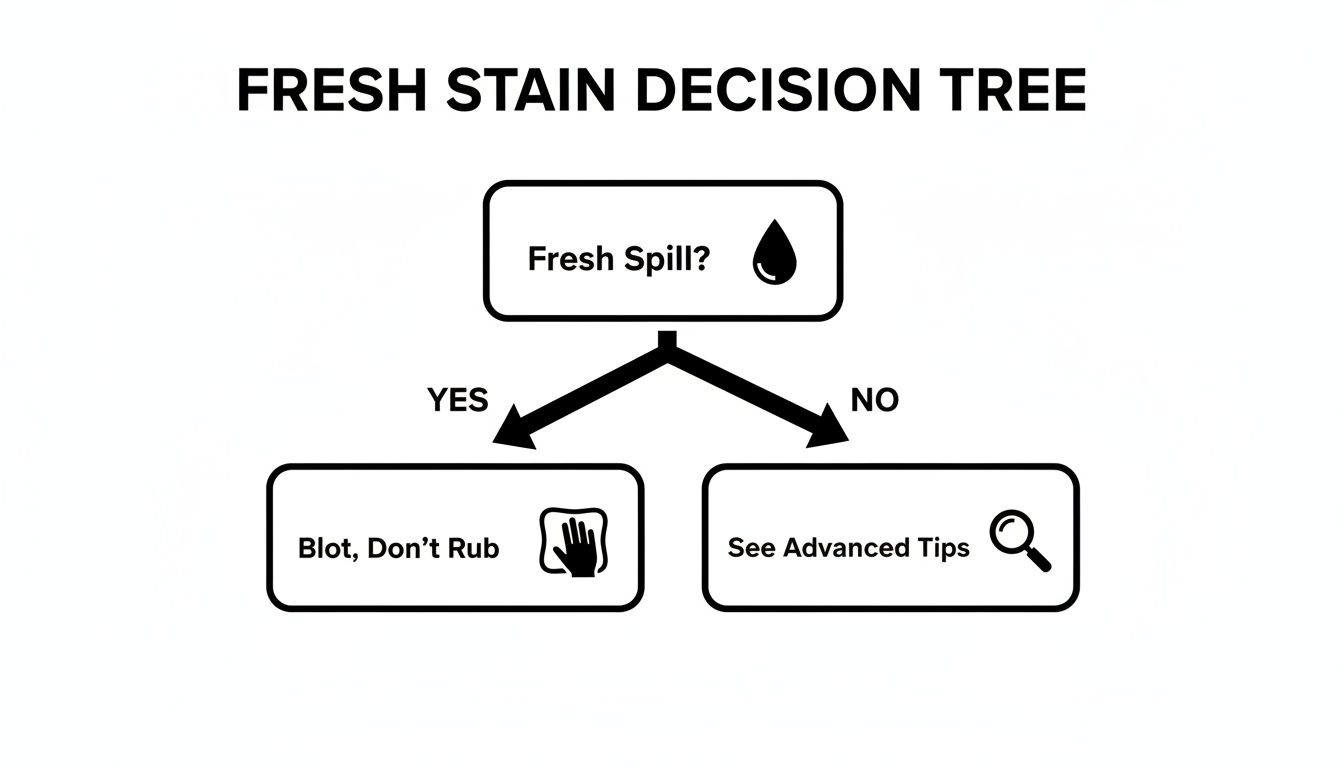
That sinking feeling when a drink spills on your mattress is all too familiar. But what you do in the next 60 seconds is the most critical part of stain removal. The number one rule is simple but essential: act fast and blot, never rub. This guide offers a practical, no-fluff approach to using a mattress stains remover you can make at home, ensuring your bed stays fresh and clean.
Rubbing a spill forces the liquid deeper into the mattress fibres, making a permanent stain almost inevitable. Instead, grab a clean, dry cloth and blot firmly. This simple action lifts the liquid out of the fabric, setting you up for success.
Your First Move: How to Tackle Fresh Spills Immediately
When an accident happens—be it coffee, wine, or a pet mishap—your immediate reaction matters most. Panic-scrubbing is the worst thing you can do. The key is to act like a stain removal first responder: contain the spill and absorb as much liquid as possible before it soaks in.
Assemble Your Emergency Stain Kit
You don't need a shelf full of expensive cleaners. Most effective mattress stain removers can be made from items you already have. Keep these basics in a caddy for quick access:
- Microfibre Cloths: Essential for blotting up spills effectively.
- Baking Soda: A natural absorbent and brilliant deodoriser that pulls out moisture.
- Spray Bottle with Cold Water: For lightly misting the area after blotting.
- White Vinegar: A gentle acid that breaks down common stains without harsh chemicals.
Real-World Example: A customer once told us they spilled a full mug of black coffee on their brand-new mattress. By immediately stripping the sheets and blotting with a thick towel, they absorbed over 80% of the liquid. A sprinkle of baking soda left for 30 minutes lifted the rest, and the stain vanished completely.
This quick-response strategy is your foundation for handling any spill. For specific messes like urine, which require extra attention to odour, see our guide on how to clean a mattress with pee.
How to Treat Different Types of Mattress Stains
Not all stains are created equal. A coffee spill requires a different approach than a bloodstain, and using the wrong cleaner can set a stain permanently. The key is to identify the type of stain first, then choose the right method.
Quick Guide to Common Mattress Stains
| Stain Type | Effective Cleaning Agent | Key Action |
|---|---|---|
| Urine, Sweat | White Vinegar & Water (1:1 ratio) | Spritz lightly, let sit 10-15 mins, then blot. Breaks down proteins. |
| Blood | 3% Hydrogen Peroxide & cold water | Apply directly, let it fizz, then blot the foam away. Never use hot water! |
| Coffee, Wine | Salt & Cold Water Paste / Dish Soap | Blot fresh liquid, then apply a paste or diluted soap solution. |
| Oil, Grease | Bicarb Soda or Cornflour | Sprinkle on to absorb oil, let sit for an hour, then vacuum. |
Tackling Sweat and Urine Stains
Organic stains from sweat or urine are protein-based. To remove them, you need a solution that breaks down those proteins. A simple mix of equal parts white vinegar and water in a spray bottle works wonders.
Lightly mist the stained area—you want it damp, not soaked—and let it sit for 10-15 minutes. The vinegar’s acidity dissolves the stain and neutralises odours. After, blot the area thoroughly with a clean, dry cloth. If you have safety concerns, this article on Is Urine a Biohazard? provides useful context.
Dealing with Tough Blood Stains
Blood is one of the most challenging stains because it sets quickly. Hydrogen peroxide is the secret weapon here, but you must be careful.
Pro Tip: Always use cold water on bloodstains. Hot water will "cook" the protein, causing it to bond with the fabric fibres permanently.
Dab a small amount of 3% hydrogen peroxide directly onto the stain. It will fizz as it breaks down the blood. Gently blot the foam away with a clean cloth. Repeat if necessary until the stain lifts. For a full walkthrough, check our guide on how to get blood out of a mattress.
Removing Food, Drink, and Oil Marks
For red wine or coffee, blot up as much liquid as you can immediately. Then, cover the area with a thick paste of salt and cold water to draw the remaining stain out of the fabric.
Oily stains from lotions or food respond best to an absorbent powder.
- Sprinkle bicarb soda or cornflour generously over the oily spot.
- Let it sit for at least 30-60 minutes to pull the grease from the fabric.
- Vacuum up the powder thoroughly.
- If a mark remains, gently blot it with a small amount of mild dish soap mixed with water.
Creating Your Own DIY Mattress Stain Removers
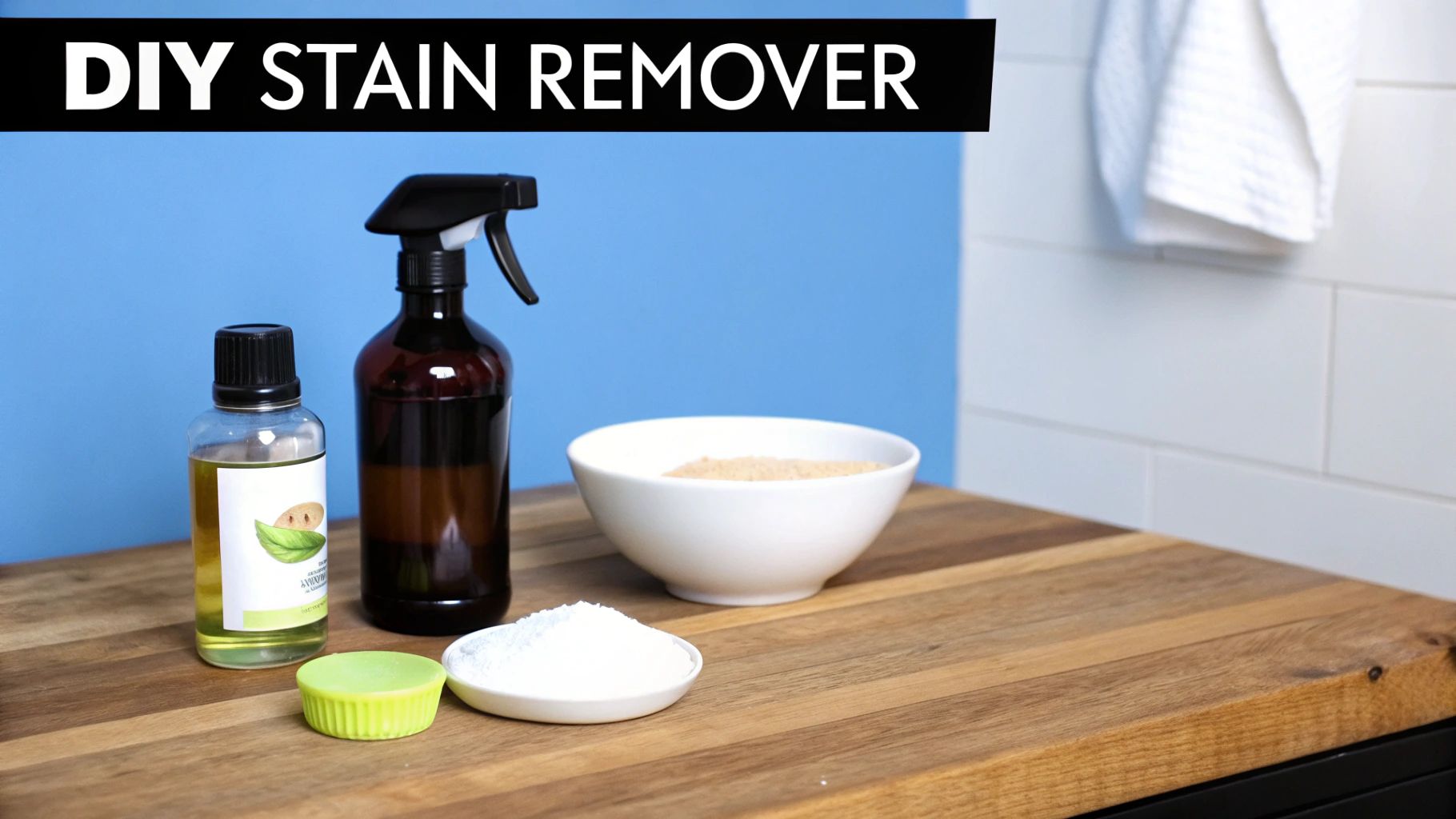
You don’t need harsh chemicals to tackle mattress stains. Your kitchen pantry likely holds everything you need for a powerful, eco-friendly mattress stains remover. This DIY approach is cheaper and gives you full control over what goes on your mattress.
The All-Purpose Cleaning Paste
A simple paste of bicarb soda and water is one of the most reliable DIY cleaners. It works well on surface-level marks from sweat, grime, and light food spills.
Mix three parts bicarb soda to one part water to create a thick paste. Gently dab it onto the stain and let it dry for at least 30 minutes. As it dries, the bicarb soda lifts stain particles from the mattress fibres. Once dry, scrape off the excess and vacuum the area. Bicarb soda also acts as a natural deodoriser.
A Powerful Deodorising Spray
For lingering odours or general freshening up, a white vinegar spray is your go-to solution.
- The Recipe: Mix equal parts white vinegar and water in a spray bottle.
- Add a Scent (Optional): Add 5-10 drops of lavender or eucalyptus essential oil for a calming aroma.
- How to Use: Lightly mist the mattress surface. Let it air dry completely before making the bed.
Safety First: Important Reminders
Even with gentle DIY solutions, always spot-test any cleaning mix on a small, hidden area of your mattress first. Crucially, never mix vinegar with hydrogen peroxide or bleach, as this can create toxic gases. For more specific strategies, see our guide on how to clean bed stains.
Proper Drying and Deodorising After Cleaning
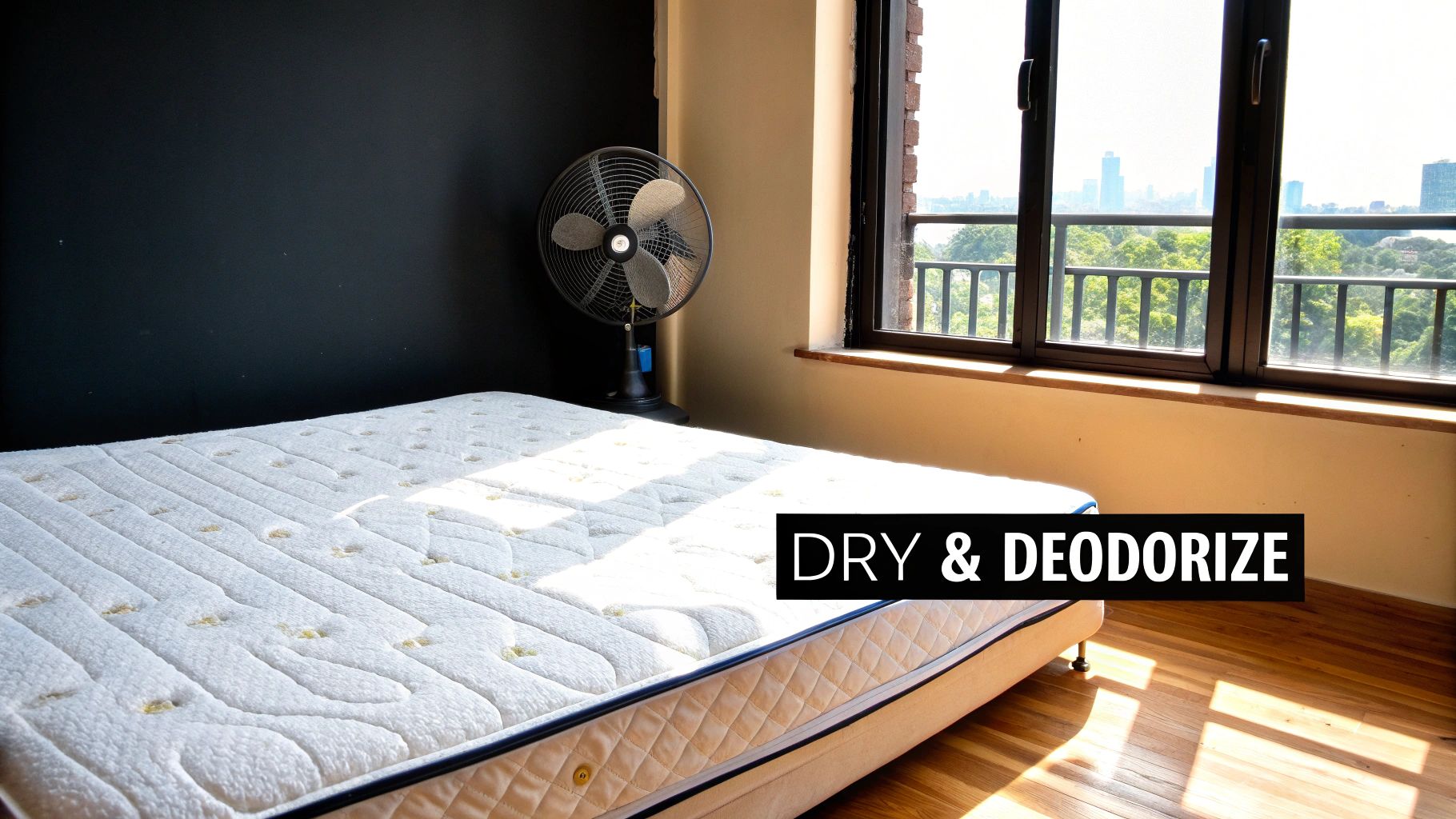
Once the stain is gone, the final step is drying. Leaving your mattress damp is an invitation for mould, mildew, and musty smells. This stage is non-negotiable for a truly clean and healthy bed. The mattress must be 100% dry to the touch before you remake it.
Speeding Up the Drying Process
Air circulation is your best friend. Here’s how to speed things up:
- Open the windows: Fresh air and sunlight are natural sanitisers.
- Use a fan: Aim a fan directly at the damp spot to keep air moving.
- Try a hairdryer: Use a hairdryer on its cool setting, keeping it moving to avoid heat damage.
The Final Touch for a Fresh Finish
Once the mattress is almost dry, it’s time to deodorise. Baking soda is perfect for this. It draws out the last traces of moisture while absorbing any remaining odour-causing particles.
Sprinkle a generous layer of baking soda over the cleaned area. Let it sit for a few hours, or overnight for the best results. Finally, vacuum it all up using the upholstery attachment. This simple step ensures your mattress is not only clean but also smells completely fresh. And remember, your mattress cover needs its own cleaning process, which you can find in our guide on how to wash a mattress cover.
Protecting Specialty Bedding Materials
Premium materials like memory foam, latex, or bamboo require a gentle touch. Using the wrong cleaner can cause permanent damage, so a careful approach is key.
The golden rule for memory foam and latex is to use as little liquid as possible. Think of them as dense sponges—too much moisture can break down their structure and lead to mildew.
Caring for Memory Foam and Latex
For memory foam or latex, spot-cleaning is the only safe option. The mantra is damp, not wet.
First, blot the stain with a dry cloth to absorb the initial spill. Then, mix a few drops of gentle dish soap in a cup of lukewarm water.
- Dip a clean microfibre cloth into the soapy water and wring it out until it’s barely damp.
- Gently dab the stain, working from the outside in to prevent spreading.
- "Rinse" by dabbing the area with a separate cloth dampened with plain water.
- Press a dry towel firmly onto the spot to absorb excess moisture.
Finally, let it air dry completely. Never use direct heat like a hairdryer, as it can damage the foam's structure.
Cleaning Natural Fibres like Bamboo and Tencel
Bedding made from bamboo or Tencel is prized for its softness. Harsh chemicals can easily ruin these delicate fibres.
Use gentle, pH-neutral cleaners like a diluted white vinegar solution or a mild, eco-friendly laundry detergent. Apply sparingly with a cloth and blot gently—never scrub, as this can cause pilling. The best way to avoid stains is with a quality bamboo waterproof mattress protector.
When to Call a Professional Cleaner
Sometimes, a DIY mattress stains remover isn't enough. For deep-set stains or persistent odours, calling a professional is the smartest move. They have industrial-grade equipment and specialised cleaning agents that can restore your mattress when home remedies fall short.
When to Bring in the Experts
It's time to call a professional if you face these issues:
- The stain has soaked deep into the mattress. This creates a risk of internal mould and mildew.
- A nasty odour won't go away. Persistent smells often mean the source is trapped deep within the fibres.
- You're dealing with old, set-in stains. The longer a stain sits, the harder it is to remove with household solutions.
While professional cleaning costs can range from $70 to $200 in Australia, it's a worthwhile investment compared to the price of a new mattress. If you've tried everything and the stain or smell persists, an expert can provide a deep, hygienic clean that protects your investment. You can find more details on mattress cleaning costs in Australia.
Your Top Mattress Stain Questions Answered
Here are answers to some of the most common questions about cleaning mattress stains.
Can I Use Bleach on a Mattress Stain?
No. Bleach is too aggressive for mattress fabrics and foams. It can cause permanent yellowing, damage the fibres, and will likely void your warranty. Stick to gentler solutions like diluted vinegar or an enzyme cleaner.
How Long Does a Mattress Take to Dry After Cleaning?
Drying can take anywhere from a few hours to a full 24 hours, depending on how much solution was used and the airflow in the room. Open windows and use a fan to speed up the process. The mattress must be 100% dry before you put sheets back on to prevent mould growth.
Will These DIY Methods Work on Old Stains?
While fresh stains are easier to remove, these methods can still significantly improve old, set-in stains. It may require more patience and multiple applications. An enzyme cleaner is particularly effective on old organic stains, as it works to break down the proteins over several hours. For recurring pet accidents, understanding why cats spray and how to stop it can help prevent future issues.
Ready to enjoy a truly clean and comfortable bed? A fresh mattress is the foundation of a great night's sleep. Explore our collection of premium, naturally hypoallergenic bedding to complete your perfect sleep sanctuary.