

Spotting a wet patch on your mattress can feel like a disaster, but don't panic. Knowing how to clean a mattress with pee effectively comes down to one thing: acting fast. A quick response is the difference between a simple cleanup and a lasting stain.
The mission is simple: strip the bedding, blot the liquid, and treat the area before stains and odours take hold. Getting this right in the first few minutes is your best defence against a ruined mattress. Research from the Royal Children’s Hospital Melbourne shows that around 30% of 4-year-olds wet the bed, so it's a far more common problem than you might think.
Your Immediate Action Plan for Mattress Accidents
Discovering a pee stain is a moment no one enjoys. Whether it’s from a child, a pet, or an adult, the secret to avoiding a permanent mark and a lingering smell is to act immediately. The longer urine sits, the deeper it soaks into the mattress fibres. This allows uric acid crystals to bond with the fabric, leading to stubborn odours and discolouration that are much harder to remove later.
Right now, your focus is on two things: containment and removal. The biggest mistake is scrubbing frantically, which only pushes the liquid deeper. You need to lift it out, not grind it in.
First Steps: Blot, Don't Rub
Before reaching for any cleaning spray, your number one job is to remove the excess moisture.
- Strip the Bed Immediately: Pull everything off—sheets, blankets, and your how to wash a mattress cover. Get them straight into the washing machine.
- Grab Absorbent Towels: Use clean, dry towels or a thick wad of paper towels to gently blot the area.
- Apply Firm Pressure: Press down firmly with a fresh towel, lift, and repeat with a clean, dry section. Continue until the towel comes away dry. This single step removes most of the urine before it becomes a real problem.
This simple graphic breaks down the entire process into its three core actions.
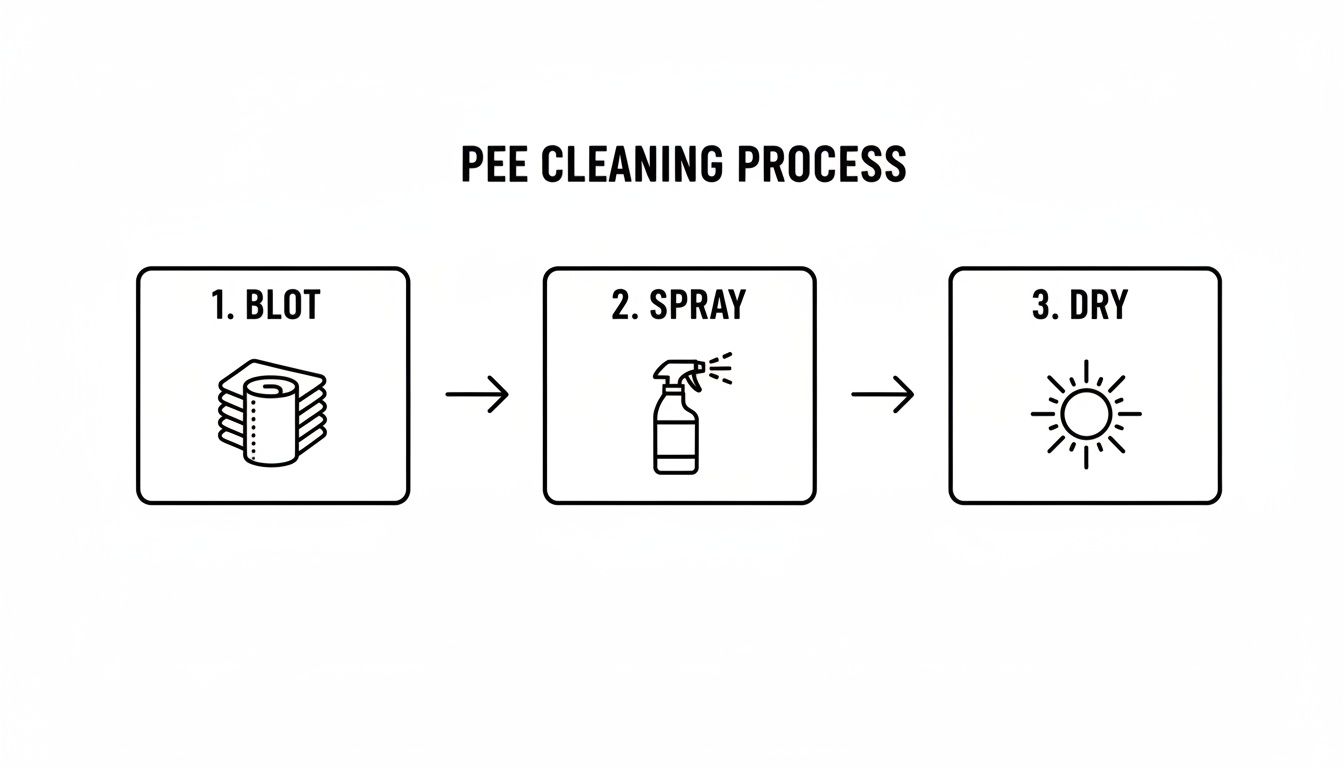
As the image shows, an effective clean starts with physical removal (blotting), moves to chemical treatment (spraying the right solution), and finishes with thorough drying.
Why Quick Action Matters
Urine contains compounds like urea and uric acid. As it dries, bacteria break down the urea, creating that sharp ammonia smell. Worse, the uric acid crystals don't dissolve easily in water and bond tightly to fibres, making them incredibly difficult to remove once set.
Quick blotting is non-negotiable. By soaking up the liquid before it penetrates the deeper layers of your mattress, you're stopping the chemical process that leads to permanent stains and odours right in its tracks.
Learning to deal with different spills is just part of looking after a mattress. For more general advice, have a look at our guide on how to clean a mattress stain. By following this immediate action plan, you're setting yourself up for success.
Creating DIY Cleaning Solutions That Actually Work
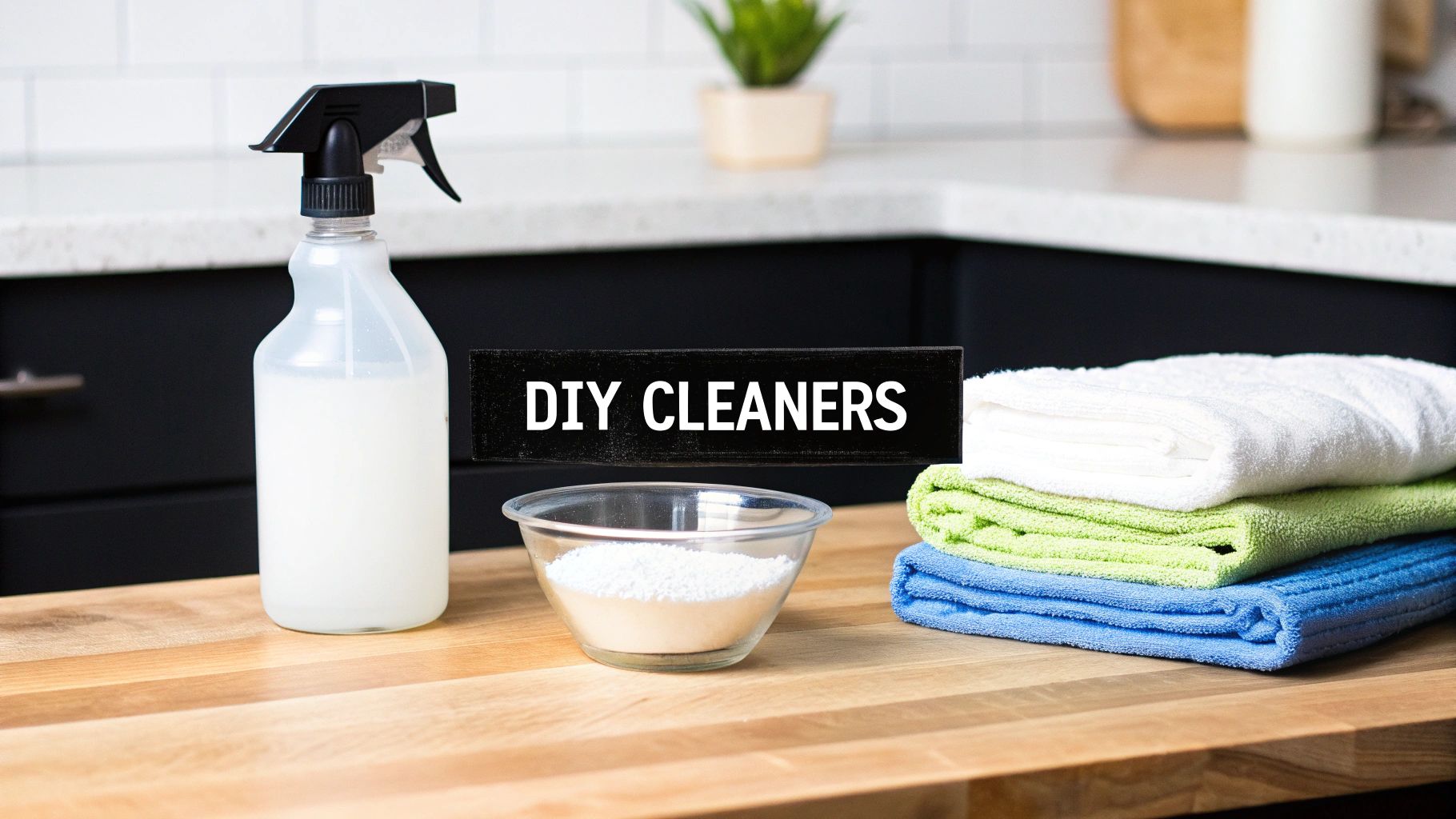
Before you reach for harsh chemicals, look in your pantry. You likely already have the most effective cleaners for a urine-stained mattress. These DIY solutions are budget-friendly and target the specific compounds in urine that cause stains and smells.
The trick is knowing which ingredients to use and in what order. A simple vinegar solution is brilliant for the sharp ammonia smell, while bicarb soda is a champion at absorbing moisture and neutralising odours. Let’s walk through a few proven recipes.
The Go-To Vinegar and Water Spray
This is always my first line of defence for fresh accidents. White vinegar is a fantastic natural cleaner; its acidity breaks down the uric acid crystals in urine. This is the crucial step that stops that musty smell from settling in.
Here’s the simple mix:
- Combine: In a clean spray bottle, mix equal parts white vinegar and cool water.
- Apply: Lightly mist the stained area. The goal is to dampen it, not soak it.
- Let It Work: Leave the solution to sit for about 10-15 minutes. This gives the vinegar time to neutralise the ammonia.
- Blot Again: Grab a fresh, dry cloth and firmly blot the area to lift out the solution and remaining moisture.
Case Study: A child has a small accident overnight. After you’ve blotted the initial spot, a quick spritz of this vinegar spray is the perfect follow-up to ensure you don’t wake up to a lingering odour.
The Bicarb Soda Paste for Deeper Cleaning
For more stubborn stains or if you’re worried about trapped odours, a bicarb soda paste offers extra lifting power. Bicarb soda is amazing at absorbing both moisture and smells, drawing them out from deep within the mattress fibres.
Making the paste is easy. Mix a generous amount of bicarbonate of soda with a small amount of water in a bowl until you have a thick, spreadable consistency, like toothpaste.
Slather this paste onto the stain, ensuring it’s completely covered. As the paste dries over the next few hours, it will pull the stain and odour to the surface. Once it’s completely dry and crusty, vacuum it away.
Safety First: Always do a quick patch test on a small, hidden part of your mattress before using any cleaning solution. This is vital for memory foam or latex, which can be sensitive to moisture.
The Disinfecting Hydrogen Peroxide Mix
When you’re up against older, dried stains, you need something with more oomph. A hydrogen peroxide solution can be incredibly effective, acting as a mild bleach and disinfectant. A word of caution: it's stronger, so handle it carefully.
Mix this solution in a spray bottle right before you use it, as it loses its power quickly once combined.
Recipe for Tough Stains:
- 240ml of 3% hydrogen peroxide
- 3 tablespoons of bicarbonate of soda
- A few drops of clear liquid dish soap
Gently swirl the bottle to mix—don’t shake it. Spray it over the stain and let it sit. As it dries, it will form a powdery residue. Once completely dry, vacuum it all up thoroughly. This is my favourite method for lifting yellowed stains that have already set.
While these DIY options are powerful, some situations (especially with pet urine) might call for a specialised product. If you're curious, learning what is an enzymatic cleaner and how it works can shed light on how they chemically obliterate urine compounds.
Tackling Set-In Stains and Lingering Odours
Sometimes a homemade solution won't cut it, especially with an old, set-in stain. If you're staring down a yellowed mark or a musty smell that refuses to budge, it’s time for a stronger approach. Understanding how to clean a mattress with pee that's already dried is different because the urine's chemical makeup has changed.
Old stains are stubborn because the uric acid has crystallised and bonded with the mattress fibres. Typical cleaners might mask the smell, but those crystals remain, ready to release that familiar odour on a humid day. This is where a specialised cleaner becomes your new best friend.
Why You Need an Enzymatic Cleaner
When vinegar and bicarb soda don't work, an enzymatic cleaner is the next step. These are not everyday sprays; they are powerful, bio-based solutions filled with beneficial bacteria that produce enzymes.
Think of these enzymes as microscopic Pac-Men programmed to hunt down and devour the organic compounds in urine. They break down complex proteins and uric acid crystals into simple, odourless elements like carbon dioxide and water. Instead of just covering up the smell, they eliminate the source for good.
This is a big deal for hygiene. While fresh urine is sterile, it quickly creates a breeding ground for bacteria. Standard detergents often can't touch the uric acid crystals. It’s worth noting that Australian healthcare standards demand furnishings like mattresses be completely stain and odour-free to stop infections. You can learn more about professional urine removal standards and why they matter.
How to Use an Enzymatic Cleaner for Maximum Effect
Using an enzymatic cleaner correctly is the secret to success. Just spritzing and wiping won't do much. The enzymes need time and the right conditions to work.
Here’s a practical guide:
- Saturate the Area: Don't just mist it. Apply the cleaner liberally so it penetrates as deeply as the urine did. Be generous, especially around the edges of the stain.
- Give It Time (Dwell Time): This is the most crucial part. The enzymes need time to work. Cover the damp spot with plastic wrap to keep it from drying out, and let it sit for at least 12-24 hours. This "dwell time" allows the enzymes to fully break down the uric acid crystals.
- Blot and Air Dry: After the dwell time, remove the plastic and firmly blot the area with clean, dry towels to absorb excess moisture. Then, let the mattress air dry completely. This might take a day or two, but patience is vital to prevent mould.
The most common mistake is rushing the process. If you don't give the cleaner enough time to work, you'll get disappointing results. Let the enzymes do the heavy lifting for you.
When dealing with tough, set-in accidents, it pays to have different methods. For a broader look at tackling various blemishes, you might find our guide on how to get stains out of a mattress helpful.
How to Properly Dry and Sanitise Your Mattress
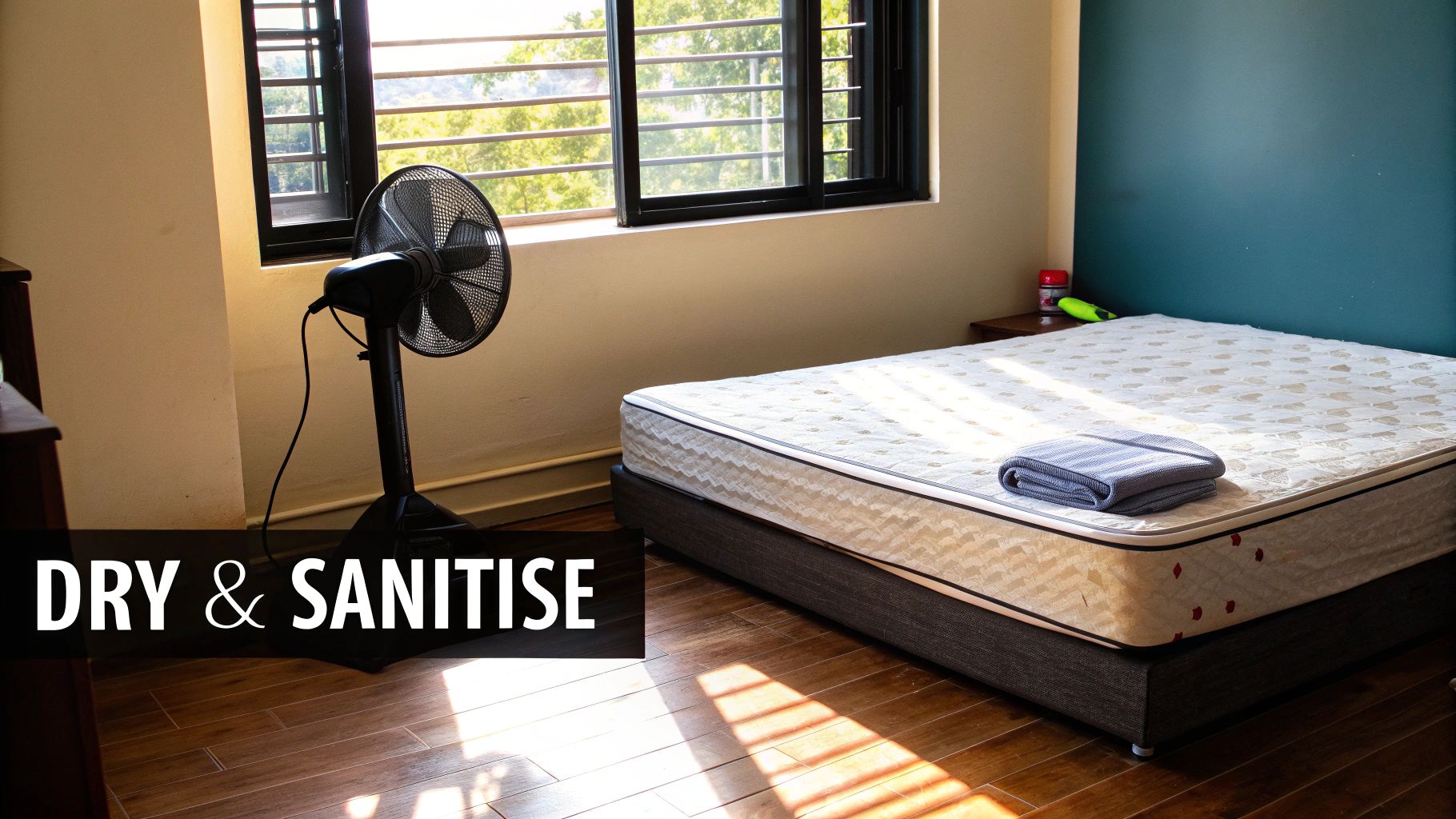
Getting the stain out is a great first step, but the job isn't done. The drying and sanitising stage is crucial for winning the battle against musty smells, mould, and mildew. If you don't dry a mattress properly, you’ll trap moisture deep inside, creating the perfect breeding ground for bacteria.
Many people remake the bed the moment the surface feels dry, but moisture can linger in the foam for days. Following a thorough drying process is essential for a genuinely clean mattress.
Mastering the Art of Air Circulation
The best tool for drying a mattress is air. Your goal is to get as much airflow circulating around the damp spot as possible to pull the moisture out.
Real-World Example: After cleaning a child's bedwetting accident, throw the windows open to create a cross-breeze. Point a fan directly at the damp patch to speed things up. If you can, prop the mattress on its side against a wall to expose more surface area and cut drying time significantly. If you live in a humid climate, running a dehumidifier can be a lifesaver.
Harnessing the Power of the Sun
If you have space on a sunny day, the sun is your most powerful ally. It’s a natural disinfectant, and its UV rays are brilliant at killing off lingering bacteria.
When the weather is on your side, take the mattress outside to a clean, sunny spot. Lean it against a wall so both sides can get sun and air. A few hours in direct sunlight will dry, deodorise, and leave your mattress smelling incredibly fresh.
Key Takeaway: Don't underestimate the sun's sanitising power. Just a few hours of UV exposure can eliminate a huge amount of bacteria, giving your mattress a final, natural clean that no chemical spray can replicate.
Final Steps to Sanitise and Protect
Once your mattress is 100% dry, a final sanitising step provides total peace of mind.
Here’s a simple method:
- Make a Sanitising Mist: In a spray bottle, mix a solution of 50% isopropyl alcohol and 50% water. Isopropyl alcohol kills germs and evaporates quickly.
- Give It a Light Spray: Lightly mist the entire mattress surface. The key word is mist—you're not trying to soak it again.
- Let It Air Out: Leave the mattress to air dry for another hour or two until the faint alcohol smell is gone.
By taking the time to dry and sanitise properly, you’ve not only learned how to clean a mattress with pee but also restored it to a fresh and healthy state.
Preventing Future Accidents and Protecting Your Investment
You’ve just spent time getting that stain out, and the last thing you want is a repeat. Knowing how to clean a mattress with pee is a great skill, but preventing the accident is much easier. A proactive approach is the smartest way to protect your mattress and ensure it lasts.
This is about creating a sleep setup shielded from life's mishaps. A few smart choices now can save you a world of scrubbing and stress later. The goal is simple: create a barrier that stops liquids before they reach your mattress.
The Modern Mattress Protector: A Non-Negotiable
If you're picturing stiff, crinkly plastic sheets, think again. Today’s waterproof mattress protectors are different. High-quality designs use advanced materials that are 100% waterproof, whisper-quiet, soft, and breathable.
A good protector feels like another comfortable layer. It lets air flow so you don't overheat, but it provides a complete shield against spills. It’s the single most effective thing you can do to protect your mattress.
Think of it as affordable insurance. When an accident happens, you just whip the protector off and throw it in the wash. Your mattress underneath stays completely untouched. You can explore the benefits of a bamboo waterproof mattress protector to see how you don't have to sacrifice comfort for protection.
Creating a Hygienic Sleep Environment
A waterproof protector is your first line of defence, but your bedding choices add another layer of hygiene. An unprotected mattress can become home to between 100,000 and 10 million dust mites in Australia. These critters, along with mould and bacteria, thrive in moisture. You can discover more insights about mattress hygiene on ecocleanchemdry.com.au.
This is where your bedding makes a real difference. Here’s a quick look at how different protection methods stack up.
Mattress Protection Options Comparison
Choosing the right layers for your bed makes a huge difference in hygiene and longevity. This table breaks down common options to help you decide.
| Protection Method | Pros | Cons | Best For |
|---|---|---|---|
| Waterproof Protector | A complete liquid barrier; easy to wash; protects the mattress warranty. | Has an initial cost; must be fitted properly to work effectively. | Everyone. An absolute essential for households with kids, pets, or people who enjoy breakfast in bed. |
| Antimicrobial Sheets | Naturally repel bacteria; wick moisture away from the body; add comfort. | Not waterproof; only offers surface-level protection from moisture. | Hot sleepers, people with sensitive skin, or anyone wanting an extra layer of freshness. |
| Fitted Sheet Only | Acts as a basic dust cover; very easy to change and wash. | Offers zero protection against liquids, allergens, or deep-set grime. | Minimalist setups where spills and accidents are extremely unlikely. |
By pairing a waterproof protector with high-quality, breathable bedding like our Sienna Living Bamboo Sheets, you get the best of both worlds. The sheets keep you comfortable, while the protector provides a foolproof barrier, helping you maintain a healthier, cleaner place to sleep.
Frequently Asked Mattress Cleaning Questions
Even with the best instructions, tricky situations arise. When figuring out how to clean a mattress with pee, a few questions always pop up. Here are the answers to the most common queries.
Can I Just Steam Clean the Urine Stain?
It sounds logical, but a steam cleaner can be your worst enemy for urine stains. The intense heat can "cook" the protein in urine, permanently bonding it to the mattress fibres. It also pushes a huge amount of moisture deep into the mattress, creating a breeding ground for mould and mildew. It’s a classic case of the cure being worse than the disease.
Is Cleaning a Memory Foam Mattress Different?
Yes, absolutely. Memory foam is like a giant sponge—it will soak up any liquid and hold onto it.
When cleaning memory foam, remember these points:
- Go Easy on the Liquid: Use your cleaning solution very sparingly. A light mist is all you need; never drench the spot.
- Blot, Don’t Scrub: Press gently with a clean cloth. Rubbing can tear the delicate foam structure.
- Air it Out, Then Air it Out Some More: Be patient. Memory foam takes much longer to dry. Point a fan at the area and open a window, but plan for an extended drying time.
Expert Tip: I'd strongly advise against using hydrogen peroxide on memory foam without testing it on a hidden spot first, as it can cause discolouration and degrade the foam over time.
Why Does That Pee Smell Come Back on Rainy Days?
You’re not imagining it. This is due to uric acid crystals left behind. Standard cleaners might remove the liquid and colour but leave these microscopic crystals. They lie dormant until exposed to moisture from the air on a humid day. The moisture reactivates them, and they release that tell-tale odour again. This is why an enzyme cleaner is the only true long-term fix; it breaks down the crystals, eliminating the source of the smell for good.
What About Using Bleach? Is That a Good Idea?
In a word: no. Please step away from the bleach bottle. It’s far too aggressive for mattress fabrics and foams. Bleach will eat away at the fibres, cause irreversible yellowing, and degrade the foam. Worse, the chemical fumes can linger, creating a hazardous sleeping environment. There are so many safer, more effective methods—leave the bleach for the bathroom tiles. For more general advice, have a look at our main frequently asked questions page.
When Is It Time to Call It Quits and Replace the Mattress?
We're all for saving a mattress, but sometimes you have to admit defeat. If a large area is soiled or the urine has soaked deep into the core, it’s almost impossible to sanitise it properly at home. The biggest red flag is a powerful, lingering smell that won't go away. That’s a sign the problem is deep within the mattress, and at that point, replacing it is the healthiest and most hygienic choice.
At Sienna Living, we know a clean, healthy mattress is non-negotiable for restorative sleep. By using these tips and protecting your investment with a quality mattress protector and breathable bedding, you can keep your sleep sanctuary fresh and comfortable. Explore our full range of luxury bedding today and take the next step toward a better night's sleep. Visit us at https://www.siennaliving.com.au.