

Waking up to itchy, red welts is a nightmare. With bed bug infestations on the rise, knowing how to protect your bed has never been more critical. So, do mattress protectors stop bed bugs? The answer is a definite yes—but only if you use the right kind. A standard protector won't cut it. For true protection, you need a full mattress encasement that zips shut, sealing your entire mattress in an impenetrable fortress.
Your First Line Of Defence Against Bed Bugs
A high-quality mattress encasement is the single most important tool in your arsenal, whether you're preventing an infestation or managing an existing one. It's the best place to start.
If you have an active problem, an encasement traps any bugs already in your mattress, cutting them off from their food source—you. Without access to you, they and their eggs will eventually starve. This simple move neutralises the biggest bed bug hideout in your bedroom.
Why Your Mattress Is Ground Zero
Bed bugs are sneaky but prefer to live close to their next meal, making your mattress prime real estate. Its seams, tufts, and inner springs offer endless dark spots for them to hide and breed.
This is a bigger issue than many realise. According to a University of Sydney study, bed bug infestations in Australia have increased by a shocking 4,500% in recent years. With up to 90% of bugs in an infested home living on or near the mattress, protecting it is the most critical step you can take.
Real-World Mistake: A client once told us they bought a thick, expensive mattress protector, thinking it would solve their bed bug issue. But it only covered the top and sides. The bugs simply moved to the unprotected bottom of the mattress and continued to thrive. Only a full, six-sided encasement offers true protection.
Taking The First Step Towards Protection
Securing your mattress is a proactive step that offers immediate peace of mind. A proper encasement works in three ways:
- Prevention: It physically blocks new bed bugs from getting inside your mattress.
- Containment: It traps any bed bugs already living inside, stopping them from biting you.
- Detection: Its smooth, light-coloured surface makes spotting the early signs of bed bugs much easier.
Before trying other pest control methods, sealing off their main habitat is the most effective action. Explore our collection of high-quality mattress protectors and encasements to see your options.
Protector vs. Encasement: Understanding the Critical Difference
When fighting bed bugs, mistaking a standard mattress protector for a full encasement is a costly error. While both protect your mattress, they play very different roles in pest control.
A standard protector is like a fitted sheet with a waterproof top layer. It's great against spills and allergens but offers almost no defence against bed bugs, leaving the bottom and sides exposed.
An encasement, however, is a 360-degree shield that zips your entire mattress inside. This design creates an impenetrable barrier, preventing new bugs from getting in and trapping any already inside to starve.
The Anatomy of Bed Bug Defence
The crucial difference is construction. A protector slips over the top with an elastic skirt. An encasement is a pouch that your mattress slides into, sealed with a specialised zipper.
The secret weapon of a proper bed bug encasement is the zipper. These aren't normal zips; they have micro-teeth that close so tightly there are no gaps for even the tiniest baby bed bugs (nymphs) to slip through. A locking mechanism at the end stops the zipper from accidentally opening, sealing the last escape route.
This simple guide illustrates how you move from a vulnerable mattress to a fully secured one.
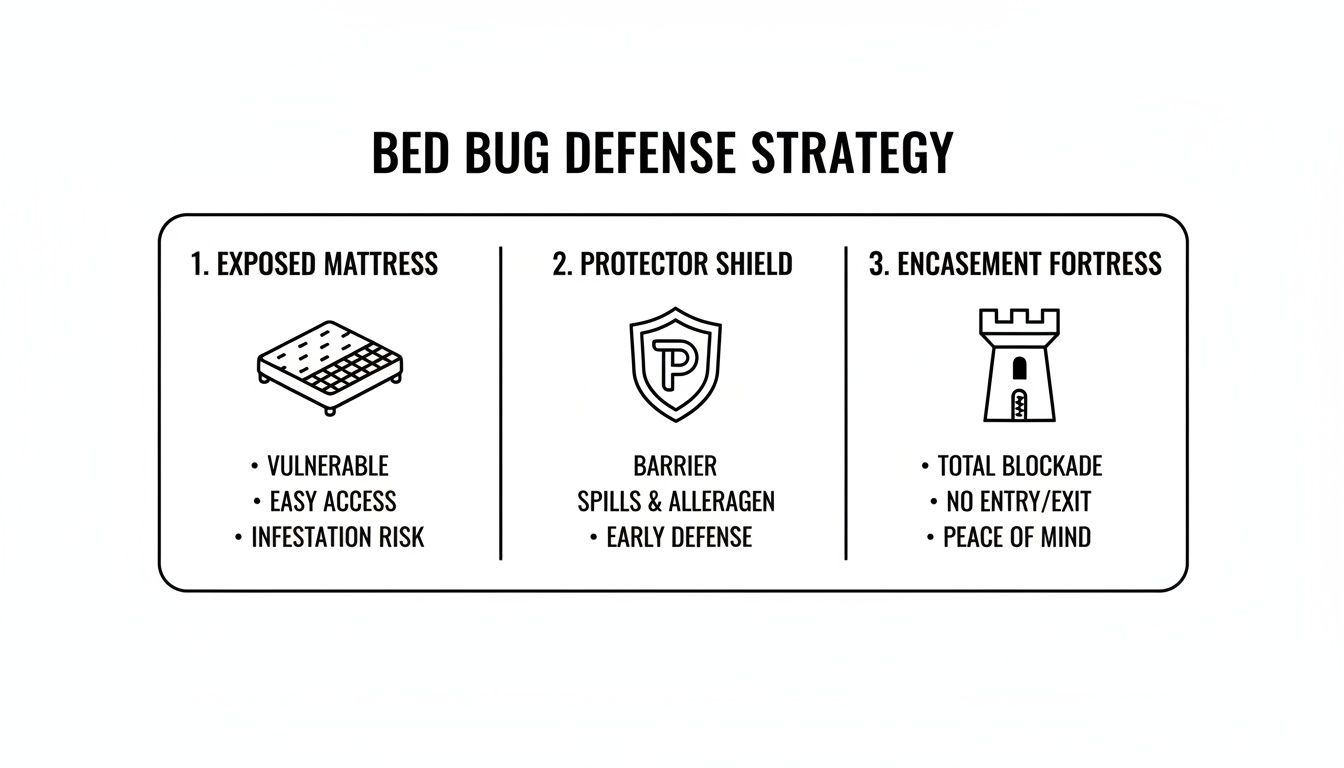
As you can see, an unprotected mattress is an open invitation. A standard protector offers some cover, but only a full encasement creates a true pest-proof fortress.
Mattress Protector vs. Full Encasement for Bed Bug Defence
| Feature | Standard Mattress Protector | Full Mattress Encasement |
|---|---|---|
| Coverage | Top surface only (five-sided) | All six sides of the mattress |
| Closure | Elasticated skirt, like a fitted sheet | Specialised, bug-proof zip with a lock |
| Bed Bug Prevention | Ineffective. Bugs can easily access the bottom and sides. | Highly Effective. Creates a complete barrier. |
| Bed Bug Containment | None. Bugs already inside can escape to feed. | Highly Effective. Traps existing bugs inside to die. |
| Installation | Easy to put on and take off | More involved; requires lifting the mattress |
| Primary Use | Liquid, allergen, and dust mite protection | Bed bug prevention, containment, and infestation management |
In short, while both have their place, only a full encasement is designed to handle the specific challenge that bed bugs present.
Why Partial Protection Just Doesn’t Work
Relying on a standard protector for bed bugs is like locking your front door but leaving all the windows open. Bed bugs will simply crawl under the elastic edge to infest the unprotected sides and bottom of your mattress.
This leads to a false sense of security while an infestation grows right underneath you. A full encasement eliminates this risk by sealing off every possible entry point.
Getting the right fit is crucial for larger beds. Learn more in our guide on selecting the perfect king mattress protector and apply the same principles to finding an encasement.
What to Look For in a Bed Bug Mattress Encasement
Not just any mattress cover will do the job. To get reliable protection, you need to know which features make a real difference. Think of it as a high-security vault for your mattress.
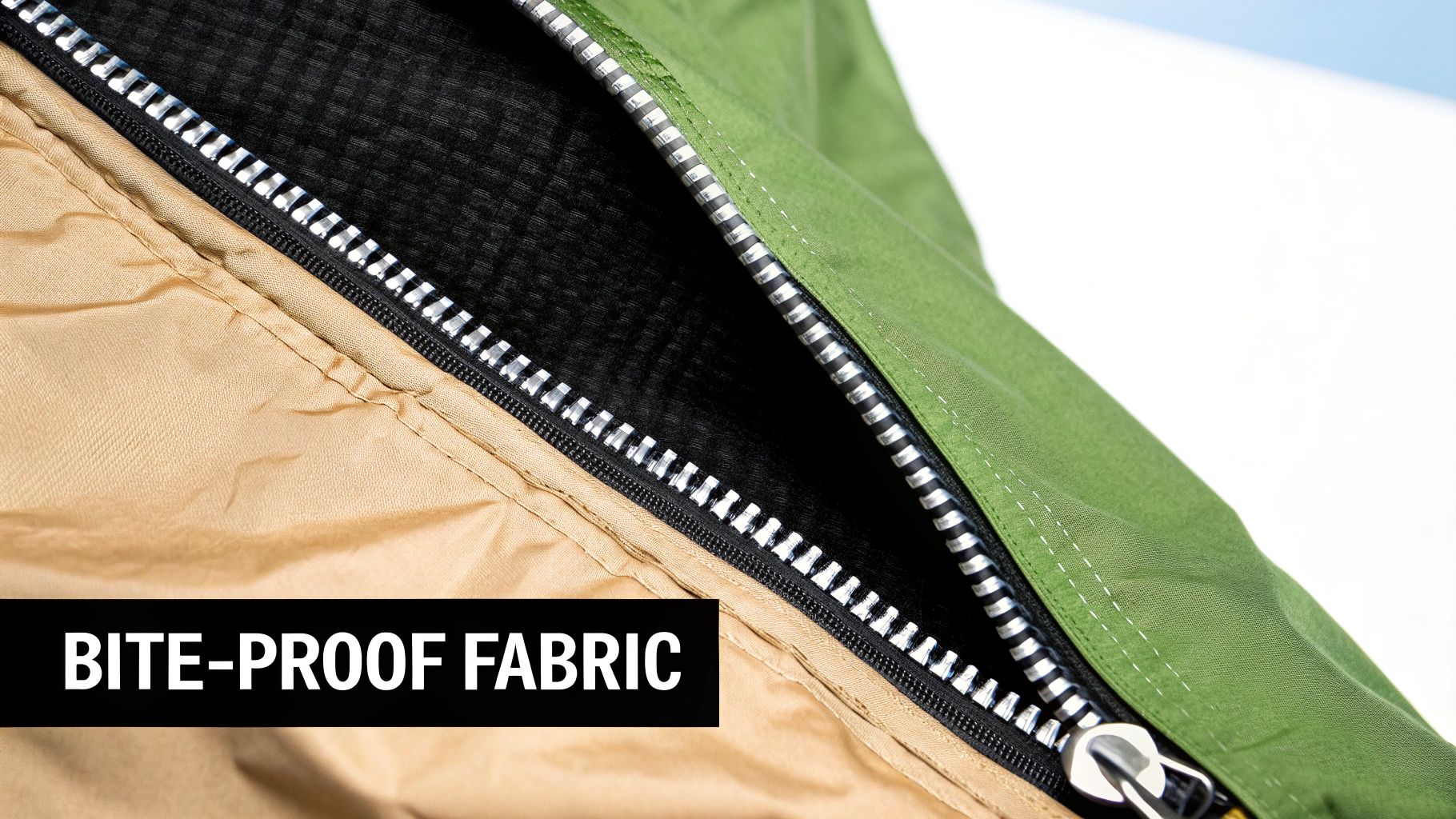
Bite-Proof and Tear-Resistant Fabric
The material is your first line of defence. It must be tough enough to stop a bed bug from biting through it and durable enough to resist tears. Even a pin-sized hole is an open door for a bed bug.
Look for fabrics with a very tight weave, like high-quality polyester or premium bamboo blends. The goal is a material that’s tough on pests but soft and quiet to sleep on.
Key Takeaway: The encasement must be made from a non-porous, bite-proof material. If a bed bug can still feed through the fabric, the encasement has failed at its most important job: starving out trapped bugs.
The Zipper: The Most Critical Component
If the fabric is the fortress wall, the zipper is the gate. This is the most common failure point on cheap encasements. A standard zipper has gaps between its teeth that are large enough for a baby bed bug to squeeze through.
A truly bed-bug-proof encasement must have:
- Micro-Zipper Teeth: These tiny, interlocking teeth close with no space between them, creating a solid seal.
- A Secure Locking Mechanism: A quality encasement will have a clasp or Velcro flap to cover the zipper's end, preventing it from accidentally opening.
Checking the zipper is essential if you're serious about using mattress protectors for bed bugs.
Breathability and Waterproofing
While stopping bed bugs is the main goal, you still need a comfortable night's sleep. The best encasements are both waterproof and breathable. They use a special membrane that allows air to circulate, keeping you cool, while blocking liquids.
This dual function protects your mattress from spills and sweat, and also prevents mould from growing inside the sealed environment. Our own bamboo mattress protector is designed with this breathable, hypoallergenic comfort in mind.
How To Correctly Install And Maintain Your Encasement
A top-notch encasement is only as good as its installation. A single tear or an unsealed zipper can render it useless. Let's walk through how to do it right.
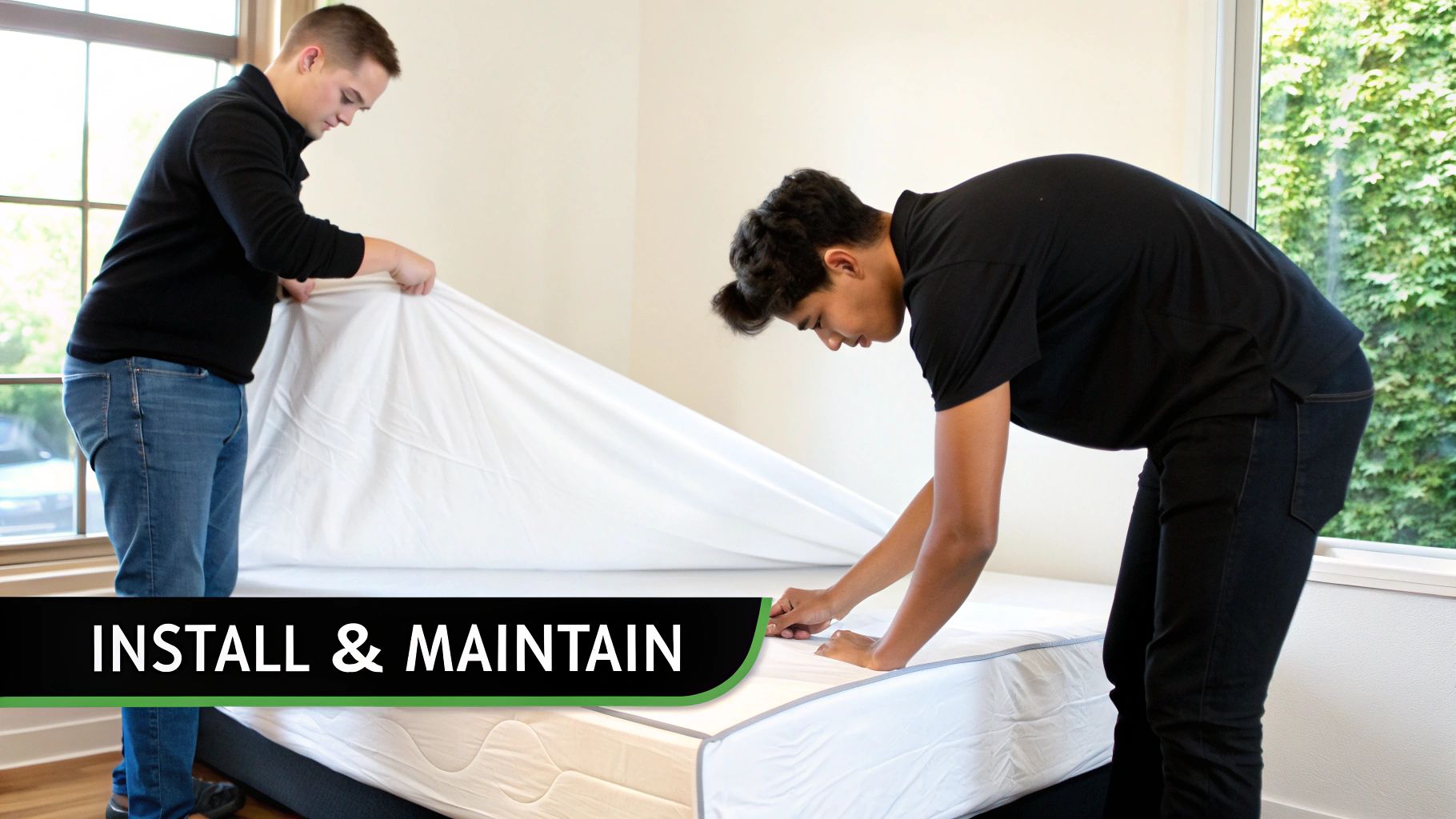
First, prep your mattress. If you have an active infestation, vacuum the entire mattress thoroughly, paying close attention to seams and tufts where bed bugs hide.
A Step-By-Step Installation Guide
Putting on an encasement requires care. Rushing can cause a rip. For any mattress larger than a single, you’ll want a second person to help.
- Prepare the Bed: Strip the mattress and stand it on its side against a wall. This gives you clear access.
- Unpack Carefully: Open the package without using scissors or a knife to avoid accidentally cutting the fabric.
- Slide It On: With a person on each side, gently guide the encasement over the mattress. Work slowly and evenly, like putting on a giant sock.
- Zip and Lock: Once covered, slowly pull the zipper closed, ensuring you don't snag fabric. Crucially, secure the zipper lock. This is usually a Velcro tab or clip that seals the final escape route.
A Cautionary Tale: A family bought encasements after a bed bug scare but forgot to secure the Velcro flap on their child's bed. Weeks later, the bites returned. A few bugs had squeezed through the tiny gap by the zipper. That small oversight meant their problem dragged on, showing how vital that final step is.
Ongoing Maintenance And Care
Your encasement is a permanent fixture, so regular care is key. Inspect it for damage every time you change your sheets. Look for any new stains, holes, or rips, especially around the seams.
Most encasements are machine washable, but always check the label. A hot wash cycle will kill any bugs or eggs on the exterior. Our guide on how to wash a mattress cover provides detailed instructions. Wash it every few months, or immediately if you see any pest activity.
Beyond The Mattress: A Complete Bed Bug Defence Strategy
Sealing your mattress is a fantastic first step, but it's the cornerstone of your defence, not the entire fortress. Bed bugs are resourceful. If they can't infest your mattress, they'll move to your bed frame, skirting boards, or bedside tables.
To truly reclaim your bedroom, you need a whole-room strategy to eliminate all potential hiding spots.
Creating A Hostile Environment For Bed Bugs
The goal is to make your entire bedroom an unwelcome place for pests. This involves combining several tactics to disrupt their lifecycle, an approach known as Integrated Pest Management (IPM).
Here are practical steps you can take right away:
- Declutter Your Space: Piles of clothes or boxes near the bed provide perfect hiding spots. Clear them out.
- Isolate Your Bed: Pull your bed a few centimetres away from the wall and other furniture to make it harder for bugs to climb on.
- Use Interceptor Traps: Place these special dishes under each leg of your bed frame. They trap bugs trying to climb up and act as an early warning system.
The Power Of Heat And Regular Cleaning
Bed bugs hate high temperatures, making your washer and dryer powerful allies.
A hot wash followed by a high-heat dryer cycle is lethal to bed bugs at every life stage. Washing all your bedding regularly is one of the most effective ways to keep the area around you pest-free.
Get into a routine of washing sheets, pillowcases, and duvet covers. Our guide on how often to wash sheets can help you set a schedule. Also, wash other fabric items like curtains and clothes that could hide pests.
While your encasement is the hero, a complete defence includes other areas. Understanding the role of carpet cleaning in pest control is vital, as carpets can be a major refuge.
Knowing When To Call The Professionals
Your encasement is a powerful tool, but it's not a substitute for professional pest control if you have an active infestation.
If you've encased your mattress, deep-cleaned your room, and still see live bugs, it’s time to call an expert. Professionals have access to treatments to handle the entire room. Your encasement will then play a crucial role in protecting your mattress from being re-infested, working alongside the professional treatment for a lasting solution.
Wrapping Up: How to Secure Your Sanctuary For Good
Dealing with the threat of bed bugs can be stressful, but the right strategy can protect your sleep space. Let's review the most critical points from our guide on using mattress protectors for bed bugs.
A full, six-sided encasement is the cornerstone of your pest-control plan. It not only traps any existing pests but also creates a fortress to prevent new ones from making your mattress their home.
Final Checks for Lasting Peace of Mind
Before buying an encasement, focus on two key features that determine its effectiveness:
- A Locking Zipper: This tiny detail prevents the zipper from accidentally sliding open, sealing a common weak point.
- Bite-Proof Fabric: The material must be woven tightly enough that trapped bugs cannot bite through it, cutting off their food supply.
Remember, an encasement is part of a bigger picture. It needs support.
Think of your mattress encasement as your frontline defence. It's most effective when supported by smart habits like regular cleaning, decluttering, and calling in pros for an active infestation. Together, these layers create a truly secure defence.
Reclaim Your Bedroom and Your Sleep
By investing in a high-quality protector, you are reclaiming your peace of mind and ensuring your bed remains a sanctuary. It’s a proactive step toward protecting your family’s health and your investment in a great night's sleep.
Ready to create your pest-free haven? Explore our complete collection of mattress protectors and secure your sleep today.
Your Top Questions About Bed Bug Protectors Answered
When you're dealing with bed bugs, or just want to prevent them, a lot of questions pop up. It's totally normal. Getting the right information is the first step towards feeling secure and sleeping soundly, so let's clear up a few of the most common things people ask.
Can Bed Bugs Live On Top Of An Encasement?
Yes, they can walk across the surface, but here's the crucial part: they can't make a home there. A good encasement is designed with a smooth, non-porous surface. This gives them absolutely nowhere to burrow, hide, or lay their eggs.
So while a lone bug might wander across the top, it's completely exposed. You'll easily spot and get rid of it when you change your sheets. The encasement's real job is cutting off their access to the mattress itself—their favourite place to breed. A regular hot wash of your bedding takes care of any stragglers on the surface.
How Long Does The Encasement Need to Stay On?
If you're certain you've got bed bugs trapped inside, the encasement needs to stay on, completely sealed, for at least 12 to 18 months. It sounds like a long time, but these pests are unbelievably tough. An adult bed bug can survive more than a year without a single meal under the right conditions.
Take it off any earlier, and you risk the whole infestation starting over. Honestly, the best approach is to zip it on and just leave it. Think of it as a permanent new skin for your mattress.
Will An Encasement Make My Bed Hot And Noisy?
That's a really common worry, and it used to be a real problem. Thankfully, we've moved past the days of those awful, crinkly plastic sheets that felt like sleeping on a bag of chips. High-quality modern encasements are a world away from that.
Look for protectors with a soft, breathable surface like bamboo fabric. These are specifically designed to be whisper-quiet and allow air to flow freely, which stops heat from getting trapped. You get a completely bite-proof and waterproof barrier without giving up a cool, comfortable, and silent night's sleep.
A huge mistake we see people make is grabbing the cheapest vinyl protector they can find. It might block bugs, sure, but it almost always leads to a hot, sweaty night. Before long, they get fed up and take it off, which defeats the whole purpose. Spending a little more on a breathable fabric is one of the most important things you can do for long-term success.
Can I Put A Regular Mattress Protector Over An Encasement?
Absolutely—in fact, it's a brilliant idea. Putting a standard five-sided protector over your full six-sided encasement gives you an extra, easily washable layer to catch everyday spills, sweat, and stains.
This smart layering system means you can just pop the top protector in the wash each week and you never have to unzip or disturb the main bed bug encasement. It’s a trick used by pros everywhere. To see how this applies on a larger scale, just look at how top hotels focus on maintaining hotel room cleanliness; they often use a multi-layered bedding strategy for the best hygiene and protection.
Keeping your bed a clean, pest-free sanctuary is a huge part of your overall well-being. At Sienna Living, we're all about creating premium, incredibly comfortable bedding that gives you that priceless peace of mind.
Ready to make your mattress impenetrable? Explore our complete collection of mattress protectors and secure your sleep today.