

Waking up to a blood stain on your favourite sheets can be frustrating, but don't throw them in the "rag pile" just yet. Before you do anything else, know this one critical rule: always use cold water. This simple tip is the single most important factor in successfully learning how do i remove blood from sheets.
Why is cold water so crucial? Heat acts like a glue for blood stains. It cooks the proteins in the blood, causing them to bind permanently to the fabric's fibres. Think of it like cooking an egg—once it's set, you can't undo it. Cold water, on the other hand, keeps those proteins loose and helps dissolve the stain, making it much easier to lift away completely. This guide will walk you through the most effective methods, starting with the most important information first.
Your Immediate Action Plan for Fresh Blood Stains
The moment you spot a blood stain, the clock starts ticking. The quicker you act, the higher your chance of total success. Your first few moments are about damage control, not deep cleaning. The goal is to get as much fresh blood off the fabric as possible without making it worse.
For example, imagine you get a small cut on your leg overnight. In the morning, you see a fresh, damp spot on your white cotton sheets. The first instinct might be to scrub it vigorously. Resist this urge. Frantic scrubbing only grinds the stain deeper into the weave and spreads it over a larger area. Instead, gently blot the stain with a cold, damp cloth, working from the outside in to contain the mess.
First Response Actions for Blood Stains
The first few minutes are crucial. This quick reference chart breaks down the essential first steps for treating a fresh blood stain on your sheets. Follow these actions immediately to stop the stain from setting in.
| Action | Why It's Important | Pro Tip |
|---|---|---|
| Act Immediately | Prevents the blood from drying and bonding with the fabric fibres, which makes removal much harder. | Strip the sheets off the bed as soon as you notice the stain to prevent it from soaking through to the mattress protector or mattress itself. |
| Use Cold Water Only | Cold water helps to break down and dissolve fresh blood without setting the protein-based stain. | Run the stained area under a cold tap from the back of the fabric. This pushes the stain out, rather than through the material. |
| Blot, Don't Rub | Blotting lifts the stain out, while rubbing pushes it deeper into the fabric's weave and can damage the fibres. | Use a white cloth or paper towel to blot so you can see how much blood you're lifting and avoid any potential colour transfer from the cloth. |
These initial steps are your best defence against a permanent mark.
The First Response Protocol
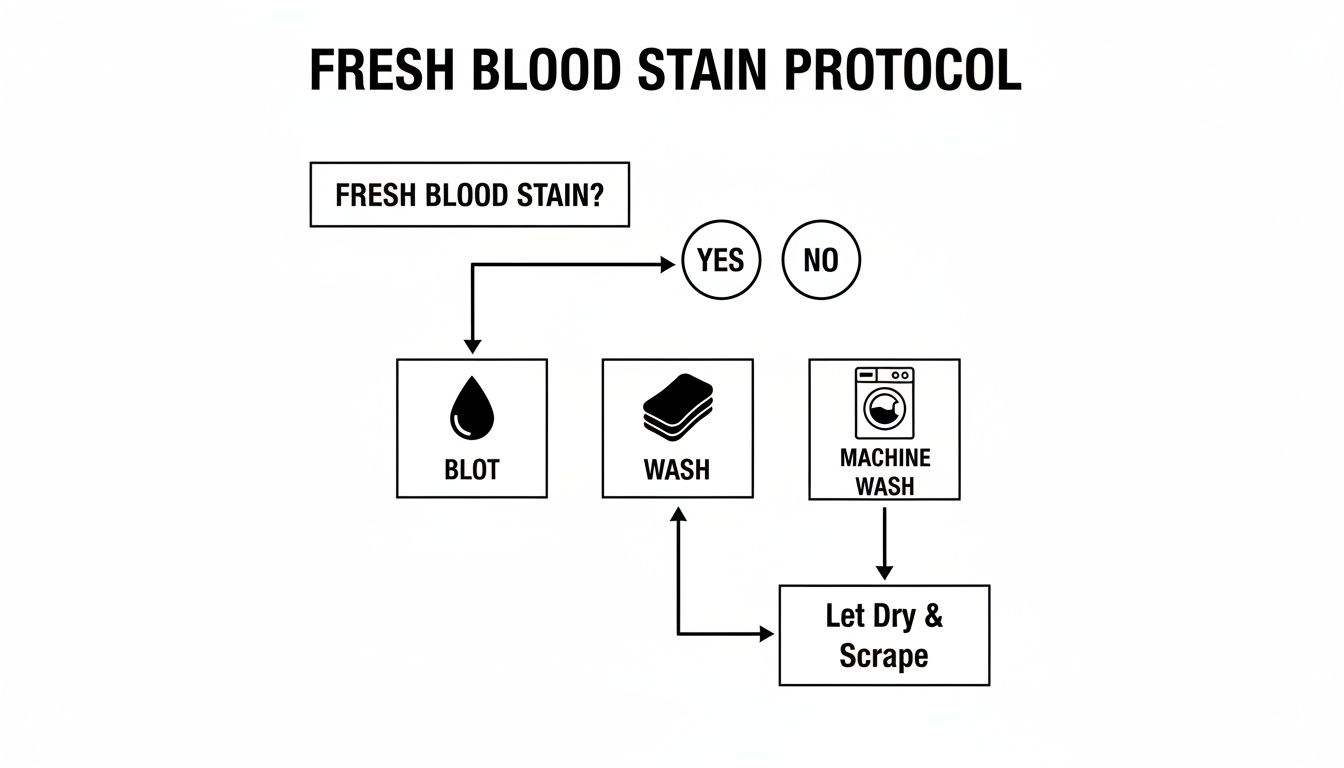
Your immediate actions should be simple and focused. This flowchart gives you a clear visual guide for what to do the moment you spot a stain.
The science behind blood's stubbornness is fascinating. Research from Lifeblood reveals that a significant number of Australians live with conditions requiring regular blood draws, leading to an estimated 73,000 bags of discarded therapeutic blood in 2022-23. This highlights just how common blood-related laundry issues can be. You can discover more about these findings from Lifeblood research here.
Key Takeaway: Heat is the enemy. The single most important thing to remember is to keep hot water away from a blood stain. Cold water is your best friend here, as it stops the blood proteins from latching onto the fabric.
Once you’ve blotted away the excess and rinsed with cold water, you're ready to move on to more specific treatments. Nailing this initial containment really sets you up for success. For more general advice, our guide on how to clean bed stains has some extra tips that work well alongside these first steps.
How to Remove Blood from Sheets with Household Items
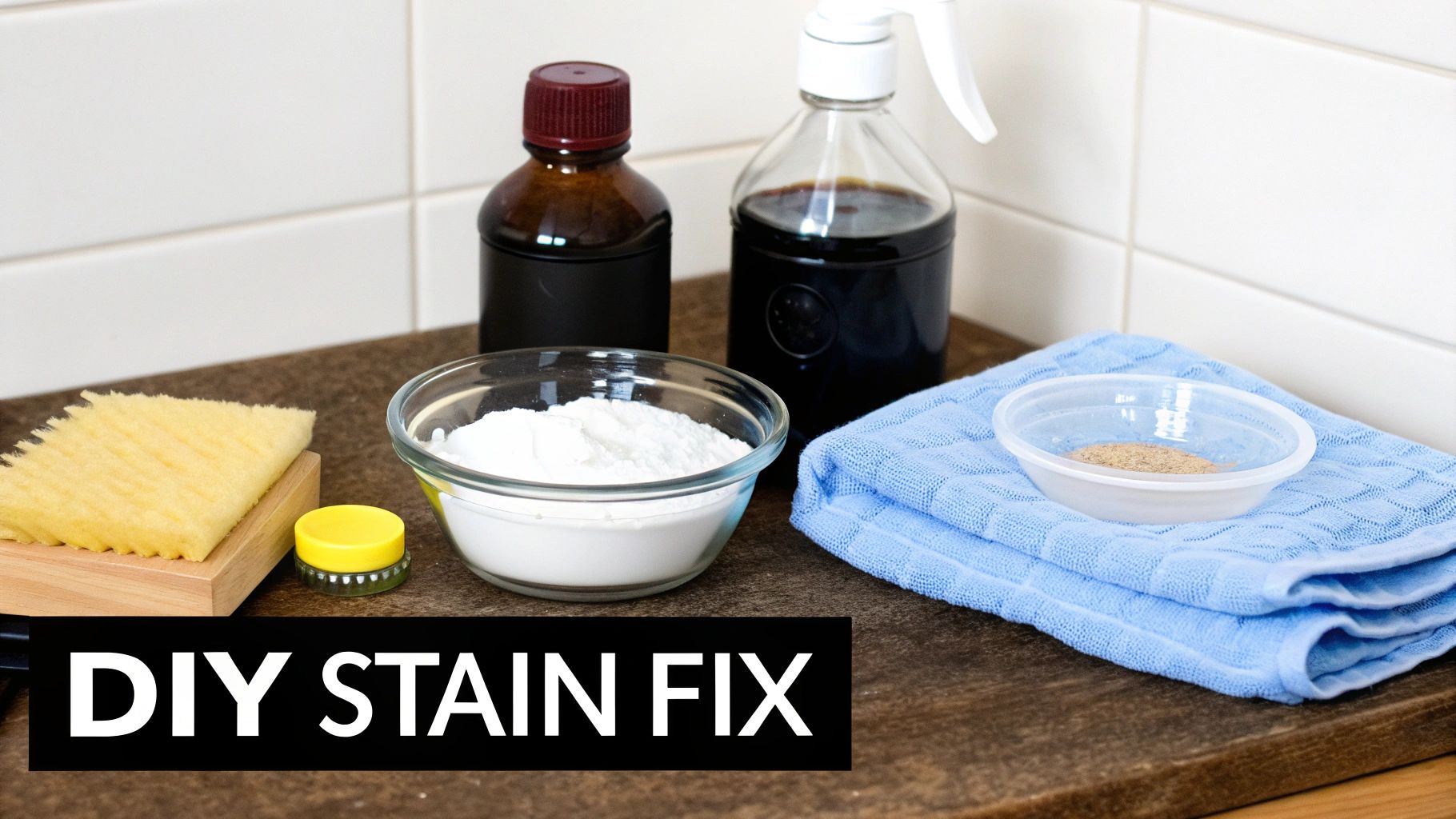
You don’t need to rush out for expensive, specialised chemicals. A quick look in your kitchen or bathroom cabinet will often provide everything you need to tackle a blood stain.
Common items like hydrogen peroxide, baking soda, and vinegar are surprisingly effective because they work to break down the proteins in blood, making it easier to wash away. The key is knowing which one to use and how to apply it correctly.
Hydrogen Peroxide for White or Light-Coloured Sheets
Hydrogen peroxide is a classic stain-fighter for a reason. That standard 3% solution from the chemist is an excellent oxidising agent. You’ll know it’s working when you see it fizz—that’s the peroxide reacting with an enzyme in the blood, breaking the stain apart at a molecular level.
For white or light-coloured sheets, pour a small amount of peroxide directly onto the stain. Let it bubble for a few minutes, then gently blot the area with a clean, cold-water cloth. Repeat this process until the stain is nearly gone.
A Word of Caution: Always do a spot test first! Dab a tiny bit on a hidden area, like an inside seam, to ensure it won’t bleach your fabric. While it's generally safe for whites, it can lift colour from darker materials.
Baking Soda Paste for Delicate Fabrics
If you're working with delicate fabrics like bamboo or coloured sheets where peroxide is too risky, a simple paste is your best bet. Baking soda is brilliant at drawing the stain up and out of the fibres as it dries.
Here’s the method:
- Mix two parts baking soda with one part cold water to form a thick, spreadable paste.
- Gently apply the paste over the entire stain, ensuring it's completely covered.
- Let it sit and dry completely, which usually takes at least 30-60 minutes.
- Once dry and cakey, scrape or brush off the powder. The stain should be significantly lighter.
If a stain has soaked through, don't panic. Our guide on how to get blood out of a mattress uses similar principles.
White Vinegar as a Pre-Soak Solution
Good old white vinegar is another pantry hero. Its acetic acid is fantastic for breaking down blood. Pour the vinegar directly onto the stain and let it soak for about 10-15 minutes.
After it’s had time to work, blot the spot with a cold, damp cloth to lift what you can. Then, rinse the area thoroughly with more cold water before washing. This pre-soak gives your laundry detergent a huge head start.
How to Tackle Stubborn and Dried Blood Stains
Finding a blood stain that’s already dried can feel defeating, but it doesn’t mean your favourite bedding is ruined. It just requires more patience and a more powerful approach to break down the proteins that have bonded with the fabric.
The secret is moving beyond simple lifting agents to solutions designed to dissolve complex, dried proteins. With the right products, you can restore your sheets.
The Power of an Enzyme Pre-Soak
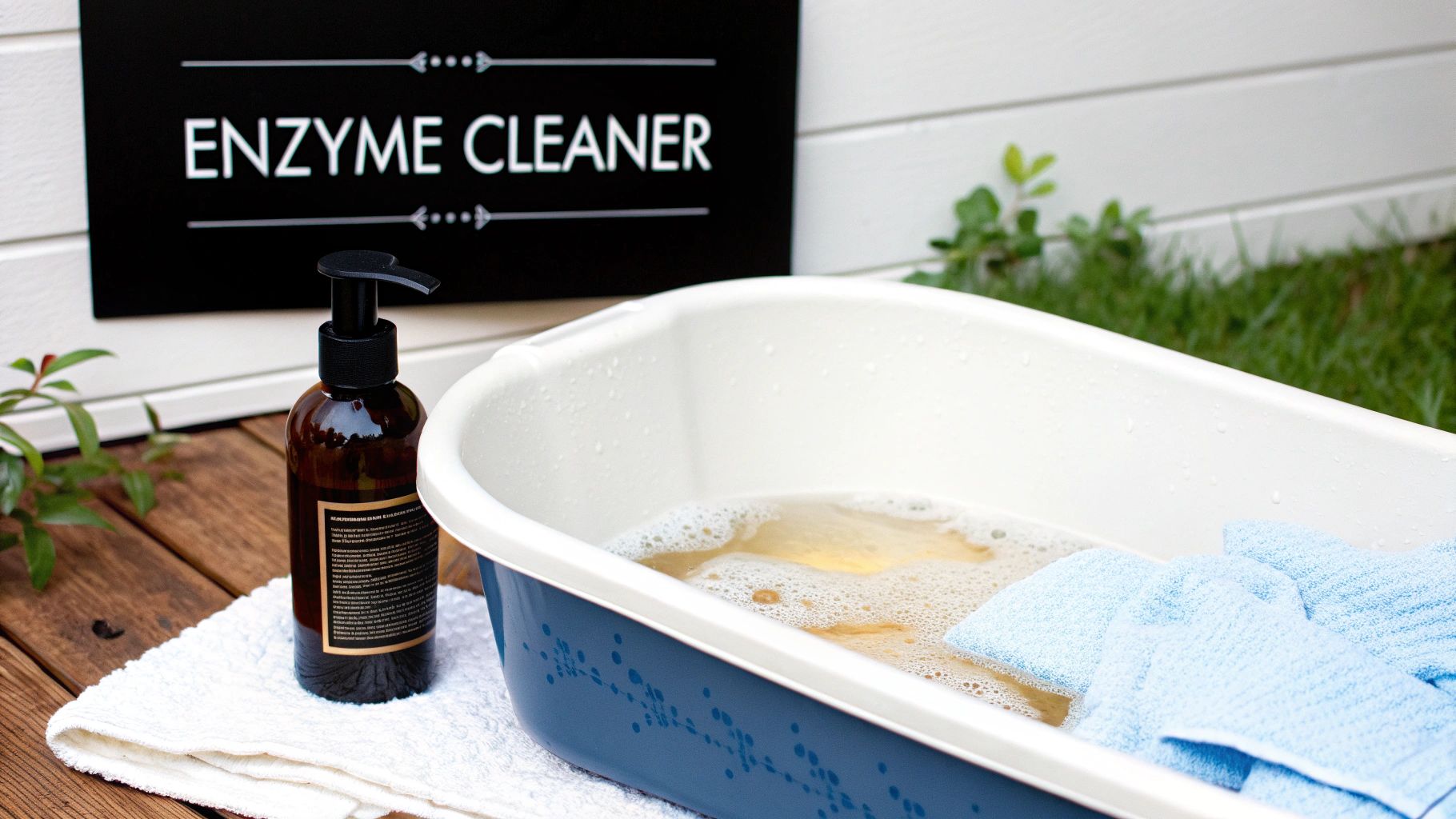
For a tough, set-in stain, start with a long pre-soak. This gives a specialised cleaner enough time to work its magic. This is where enzyme-based cleaners are your best friend.
Enzymatic cleaners contain proteases—special enzymes that specifically target and dissolve protein-based stains like blood, grass, or sweat. The enzymes break down the dried blood, turning it into something water-soluble that can be easily washed away.
Fill a tub with cold water, add your enzyme cleaner as per the package instructions, and submerge the stained part of the sheet. Let it soak for at least a few hours; for very old stains, an overnight soak is even better.
Choosing the Right Commercial Stain Remover
After a long soak, you might need extra help from a commercial stain remover.
-
Oxygen-Based Bleach: Products like Napisan or Vanish are fantastic. Unlike harsh chlorine bleach, which can weaken fabric fibres, oxygen bleaches are colour-safe and gentler. They release tiny oxygen bubbles that help lift the stain away.
-
Application is Key: After soaking, apply the oxygen bleach directly to the still-damp stain. If using a powder, make a paste and gently work it into the fabric. Let it sit for at least another hour before laundering.
Forensic research drives home how persistent blood can be. Even after a thorough wash, detectable traces can remain. This tells us a powerful cleaner is essential for removing every visible trace.
Pro Tip: Never mix different cleaning chemicals. For example, combining an ammonia-based product with chlorine bleach creates toxic gas. Stick to one powerful solution at a time for safety and effectiveness.
Many of these strategies work on other household fabrics. For similar techniques, check out these tips on removing blood stains on carpet.
Tailoring Your Method for Different Fabric Types
Not all sheets are created equal. What works on sturdy cotton could ruin delicate silk. Using the wrong cleaner can lead to permanent damage, so it’s crucial to know your fabric. The question isn't just "how do I remove blood from sheets," but how to do it without harming the material.
The secret is adapting your method. Tough materials can handle robust treatments, while luxury fabrics need a gentler touch.
For Sturdy Cottons and Linens
Cotton and linen are durable and relatively easy to clean. For these sheets, you can confidently use more powerful household solutions.
Hydrogen peroxide is a great option for white or light-coloured cotton. A baking soda paste is another excellent choice, as is a pre-soak in white vinegar. Even with these resilient materials, it's always smart to do a quick spot test first.
For Delicate Silks and Satins
With silk or satin sheets, you need to be far more careful. Their smooth fibres are easily damaged by harsh chemicals. Stay away from hydrogen peroxide or vinegar—they are too aggressive and can strip colour or even dissolve the delicate material.
Key Takeaway: For silk, stick to pH-neutral solutions. A gentle soak in cold salt water is a classic trick; the salt helps lift the stain without being abrasive. A tiny amount of mild, pH-neutral laundry liquid dabbed onto the stain and gently blotted is another safe bet.
For Bamboo and Other Speciality Fabrics
Bamboo-derived fabrics are loved for their softness but are delicate, especially when wet. Much like silk, they need gentle treatment. Harsh chemicals can damage the fine fibres, causing pilling or loss of their silky feel.
A simple paste of baking soda and cold water is one of the best methods for bamboo sheets. Apply it to the stain, let it dry completely, and then gently brush it off before washing. For a complete rundown, our guide on how to wash bamboo sheets has all the care instructions you'll need.
The Final Wash: Securing a Spotless Finish
Once you've treated the stain, the final wash is your victory lap. This step washes away any last traces, leaving your sheets looking and feeling brand new.
The golden rule remains: use a cold water setting on your machine. Hot water can set any faint, lingering proteins from the stain. For extra cleaning power, use an enzyme-based detergent specifically formulated to break down protein stains like blood.
Don't Skip the Pre-Dryer Inspection
Before you toss those sheets in the dryer, stop. This step is critical. Carefully inspect the area where the stain was, holding the sheet up to a light if needed.
The intense heat of a dryer will bake any remaining stain residue into the fabric forever. Once a stain is heat-set, it's nearly impossible to remove. If you spot even a hint of the original mark, repeat your pre-treatment and run the sheets through another cold wash.
I can't stress this enough: that one simple check is the difference between perfectly restored sheets and a permanently marked set.
To ensure your hard work pays off, also avoid a few common laundry mistakes. Overloading the machine or using too much detergent can prevent water and cleaners from circulating properly.
Blood Stain Removal Dos and Don'ts
Here’s a quick rundown of the core principles for success. Sticking to these will save you a lot of frustration.
| Do | Don't |
|---|---|
| Act fast – treat the stain as soon as possible. | Use hot water at any stage of the process. |
| Always use cold water for rinsing and washing. | Rub or scrub the stain harshly. |
| Blot the stain gently with a clean cloth. | Put the sheets in a hot dryer until you're certain the stain is gone. |
| Perform a final inspection before drying. | Use chlorine bleach on blood stains. |
| Air-dry when possible to avoid heat-setting a stain. | Overload your washing machine during the final wash. |
Think of this table as your go-to cheat sheet for a perfect result every time.
Drying Your Sheets Safely
Once you're confident the stain is gone, it's time to dry. The safest option is to air-dry your sheets on an outdoor line or an indoor rack. This is gentle and eliminates the risk of accidentally heat-setting a faint stain you missed.
If you must use a machine, choose a no-heat tumble-dry or an air-fluff setting. Once they are completely dry, you can give them one last look-over with total peace of mind.
These same principles also work wonders when you need to whiten pillow cases that have picked up stubborn marks over time.
Your Blood Stain Questions, Answered
Even with the right steps, stubborn stains can be tricky. Here are some of the most common questions we get asked.
Can I Just Use Normal Bleach on Blood Stains?
The short answer is no. Standard household bleach is chlorine-based, and it reacts with the protein in blood. Instead of lifting the stain, it 'cooks' it into the fabric, causing a permanent yellow or brown mark that's even harder to remove.
Always opt for an oxygen-based bleach, like the kind in products such as Napisan. It works by releasing tiny oxygen bubbles that gently lift the stain particles without causing discolouration, making it a much safer choice for both white and coloured sheets.
What Do I Do If Blood Gets on My Mattress or Pillow?
When a stain soaks through to something you can't put in the wash, use as little moisture as possible to avoid mould and mildew.
Here’s a reliable method for mattresses and pillows:
- Blot, Don't Rub: Immediately blot the fresh stain with a clean, damp cloth to lift as much liquid as possible.
- Make a Baking Soda Paste: Mix baking soda with a small amount of cold water to form a thick paste.
- Apply and Let It Dry: Gently cover the stain with the paste and let it sit until completely dry, which may take a few hours.
- Vacuum It Up: Once the paste is dry and crusty, use your vacuum's upholstery attachment to clear away the powder.
This technique draws the stain up and out of the fibres. For more stubborn spots, our full guide on how to clean mattress stains has more detailed advice.
Does the Old Salt Trick Actually Work on Blood?
Yes, it does! Salt is surprisingly effective on blood stains, especially when they're fresh or on delicate fabrics like silk. It works through osmosis, helping to pull the blood out of the fabric.
Mix a thick paste of salt and a splash of cold water, apply it to the stain, and let it sit for about an hour. Then, rinse it away with more cold water. It's a fantastic first response, but older stains may still need an enzyme cleaner to finish the job.
Expert Tip: Home remedies like salt and baking soda work by physically drawing stains out, without the harsh chemical reactions of stronger cleaners. This makes them a perfect first line of defence.
At Sienna Living, we believe a perfect night's sleep starts with clean, comfortable bedding. While these tips will guide you through any laundry mishap, starting with high-quality, easy-care sheets makes all the difference. Discover the difference for yourself.