

Ever wonder if you're sleeping on the right sheets? In the great linen vs cotton debate, the best choice isn't about which is fancier—it's about what you need for a good night's sleep. If you're a hot sleeper who loves bedding that gets softer over time, linen is a game-changer. But if you crave that smooth, crisp feel from night one and need a budget-friendly option, classic cotton has you covered.
This guide cuts through the noise. We'll give you clear, actionable insights to help you decide.
Linen vs Cotton: An Honest Bedding Comparison
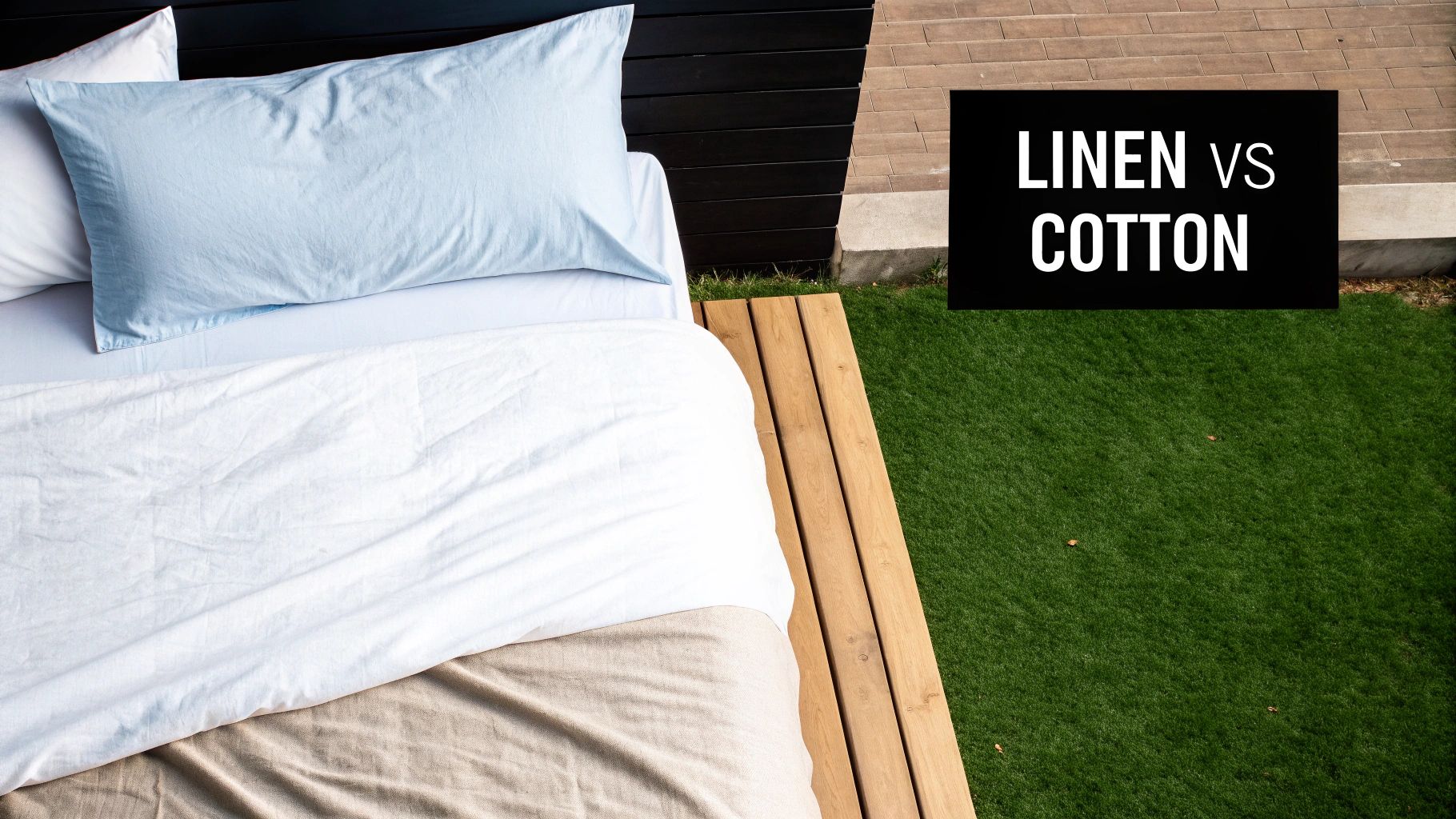
Choosing between linen and cotton is one of the most important decisions for your bedroom. It directly impacts your sleep quality. This isn't about which fabric is "better," but which is better for you.
Do you want sheets that feel like a long-term investment, getting softer with every wash? Or do you prefer the instant comfort and crisp look of hotel-style cotton?
Let’s start with the most important information first so you can quickly see the key differences.
Linen vs Cotton at a Glance
Sometimes, you just need a quick cheat sheet. This table lays out the core differences to help you make a fast, informed choice. Understanding these fundamentals is a great first step in our ultimate guide to choosing the right bed sheets.
| Feature | Linen | Cotton |
|---|---|---|
| Feel & Texture | Initially crisp, it becomes incredibly soft with every wash. Known for its textured, relaxed feel. | Soft and smooth right away. Available in different weaves, from crisp percale to silky-smooth sateen. |
| Breathability | Excellent. Hollow fibres and a loose weave create amazing airflow, making it perfect for hot sleepers. | Good. Breathability depends on the weave—percale is light and airy, while sateen is a bit warmer. |
| Durability | Extremely high. Linen fibres are much stronger than cotton and can last for decades if cared for properly. | Good to high. Durability hinges on the fibre length (think Egyptian cotton) and the quality of the weave. |
| Moisture Wicking | Excellent. It actively draws moisture away from your skin, helping you stay dry all night. | Moderate. Cotton absorbs moisture well but can feel a bit damp as it holds onto it longer than linen. |
| Cost | A higher upfront investment because the production process is more complex and labour-intensive. | Generally more affordable, with a wide range of price points to suit any budget. |
| Best For | Hot sleepers, anyone looking for long-term value, and those who love a natural, relaxed aesthetic. | People on a budget, those who want instant softness, and anyone who prefers a classic, crisp look. |
Now that you have the basics, let's explore where these fabrics come from and how that affects their performance.
Where Do They Come From? Understanding the Plants Behind the Sheets
To really understand the linen vs cotton difference, you have to go to the source: the plants. The journey from field to fabric is what gives each material its unique personality.
Cotton: The World’s Go-To Textile
Cotton is the dependable workhorse of fabrics. It grows in fluffy bolls on shrubs in warm climates. The key to cotton quality is its staple length—the length of the individual fibres.
Short fibres create everyday cotton. But longer fibres, like those in Egyptian or Pima cotton, produce incredibly soft and strong fabrics. This versatility allows for different weaves, like cool, crisp percale or silky sateen. Our guide on what percale cotton is explains this in more detail.
Practical Takeaway: If you want that luxury hotel feel at home, choose long-staple cotton like Egyptian cotton. It's much softer and more durable than standard cotton.
Linen: An Age-Old Luxury
Linen comes from the flax plant, known for its lovely blue flowers. The fibres are hidden inside the plant's woody stalk, and getting them out is a lot of work. The process involves retting (partial decomposition), breaking, and scutching to separate the long, strong fibres.
This labour-intensive process is why linen costs more. The resulting fibres are naturally thicker and stronger than cotton, giving linen its famous durability and unique texture that softens beautifully over time. For more on premium linen, this deep dive into Libeco Linen is a great read.
Comparing Performance for Better Sleep
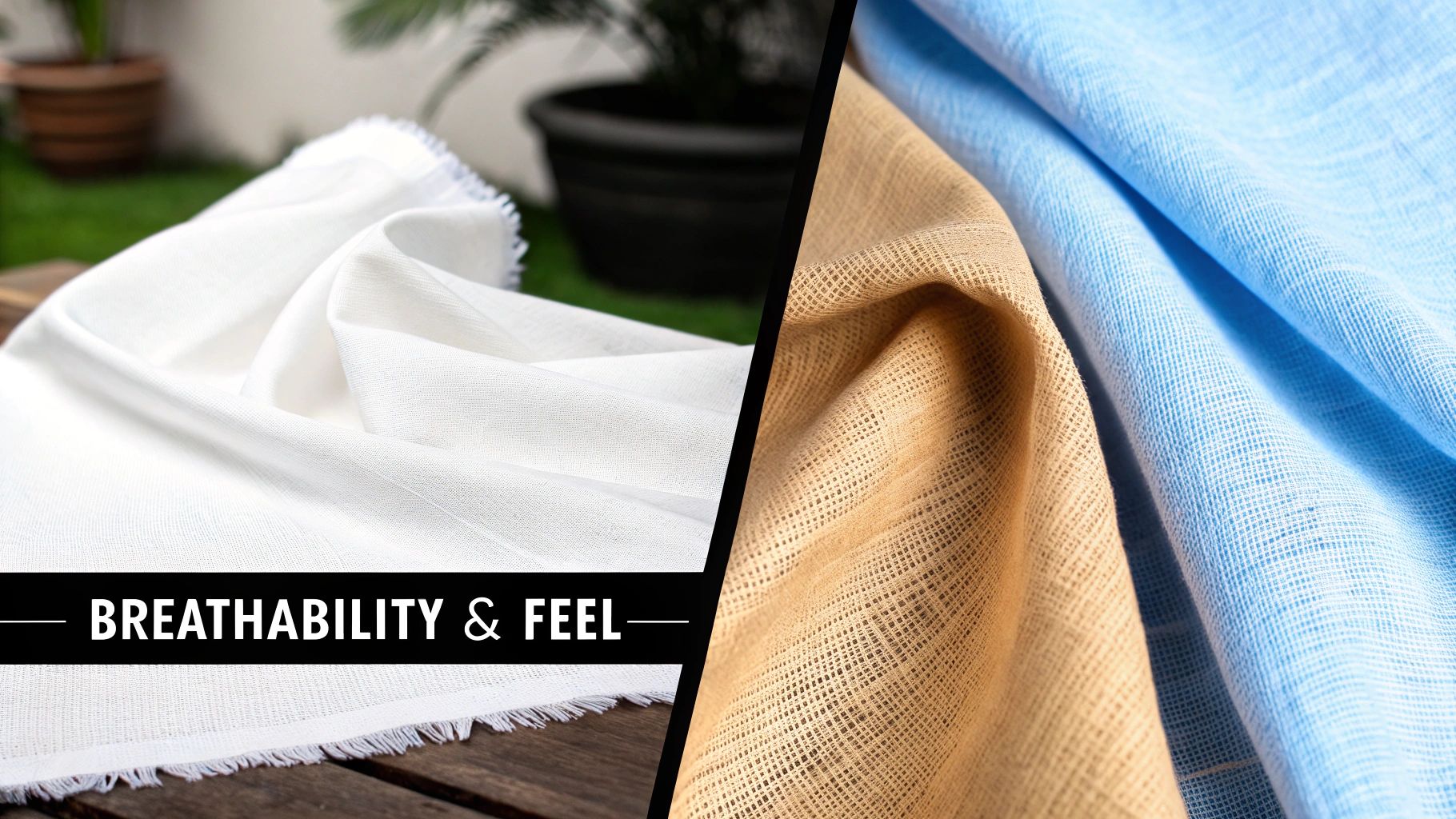
Now for what really matters: how these fabrics perform in the bedroom. This is where the linen vs cotton debate gets personal and affects how well you sleep.
Breathability and Temperature Regulation
If you constantly kick off the covers or flip your pillow to find the cool side, this section is for you.
Linen is the undisputed champion for staying cool. Its hollow flax fibres and loose weave create a natural ventilation system. This allows air to circulate freely, wicking moisture away from your body and preventing that clammy feeling on warm nights.
Cotton's performance depends on its weave. A crisp percale weave is great for summer, while a denser sateen weave is warmer. Cotton is breathable, but it holds onto moisture longer than linen, which can be less comfortable if you sweat. Learn more about why breathable fabrics improve sleep quality.
Texture and Feel Against Your Skin
How sheets feel against your skin is just as crucial as temperature control.
Cotton offers instant gratification. Straight out of the package, quality cotton sheets feel soft and smooth. This is a huge plus if you have sensitive skin or just love that classic, cosy feel from day one.
Linen is more of a journey. It starts out crisp and textured, but with every wash, the fibres relax and soften beautifully. It develops a supple, lived-in quality that is completely unique.
Real-World Example: Imagine a couple where one person sleeps hot and the other is always cold. Linen is a perfect compromise. Its incredible temperature regulation keeps the hot sleeper cool without making the cold sleeper shiver. It adapts to both.
Sleep Quality Performance Breakdown
This table shows how each fabric's properties translate to real-world comfort.
| Performance Metric | Linen | Cotton | Best For |
|---|---|---|---|
| Temperature Regulation | Excellent. Hollow fibres and a loose weave provide amazing airflow. Great for all seasons, but it truly shines in the heat. | Good to Very Good. Entirely dependent on the weave. Percale is cool and crisp, while sateen and flannel are much warmer. | Linen for hot sleepers and couples with different temperature needs. Cotton for people who like to swap their sheets with the seasons. |
| Moisture Management | Excellent. It actively pulls moisture away from the skin and dries very quickly, keeping you feeling fresh all night. | Good. Absorbs moisture well but can feel damp as it takes longer to dry than linen. | Linen is the clear winner for anyone who experiences night sweats. |
| Initial Feel | Crisp & Textured. Has a substantial, slightly coarse feel at first. | Soft & Smooth. Feels gentle and inviting from the very first night. | Cotton for those who prioritise immediate softness and have sensitive skin. |
| Long-Term Texture | Transforms. Becomes exceptionally soft and supple with every wash. It genuinely gets better with age. | Consistent. Largely maintains its original texture over time, though high-quality cotton may soften slightly. | Linen for those who love the idea of bedding that evolves and becomes a personal heirloom. |
Durability and Long-Term Value

When you invest in bedding, you want it to last. In the durability showdown between linen and cotton, linen is the clear winner. Its reputation for strength is well-earned.
The secret is in the flax fibres, which are much longer and thicker than cotton's. In fact, research shows linen is one of the world's strongest natural fibres, making it roughly 30% stronger than cotton. This means linen sheets are far less likely to tear or wear thin over time.
The Long-Term Strength of Linen
Linen doesn't just last; it gets better with age. While cotton can grow fragile, linen becomes softer with every wash. Your initial investment pays you back with superior comfort for years, even decades.
Think of it like breaking in quality leather boots. They start stiff but mould to you perfectly over time. Linen has a similar journey, transforming from crisp to incredibly soft while staying strong.
Maximising the Lifespan of Cotton
With cotton, durability depends on fibre length, or staple length. Long-staple cottons like Egyptian or Pima are much stronger than standard cotton. Their long fibres resist breaking, which prevents pilling (those annoying little fabric balls).
The weave also matters. A tight percale or sateen weave lasts longer than a loose one. Still, even the best cotton will eventually show wear. To get the most from your sheets, check out these 6 ways to make your bedding last longer.
Actionable Tip: To prevent your cotton sheets from pilling, wash them on a cool, gentle cycle and avoid overcrowding the machine. This reduces friction and protects the fibres.
So, while high-quality cotton offers good value, linen is the champion for long-term investment.
Health And Sustainability Impacts
Choosing between linen and cotton also affects your health and the planet. Let's look at the environmental footprint and wellness benefits of each fabric.
The Environmental Angle
Linen is often seen as the more sustainable choice. It's made from the flax plant, which is incredibly hardy. Flax generally needs far less water and fewer pesticides to grow compared to conventional cotton.
But don't count cotton out. Certified organic cotton is a fantastic sustainable alternative. It's grown without harsh chemicals and with better water management, making it a much more eco-friendly option.
Wellness And Allergen Considerations
If you have allergies or sensitive skin, your sheets can make a huge difference.
Linen has a natural advantage here. It's inherently hypoallergenic and antibacterial. Because it wicks away moisture so well, it creates an environment where dust mites and bacteria can't thrive. This makes it a brilliant choice for anyone with allergies or asthma.
High-quality, tightly woven cotton is also gentle on the skin. The only downside is that it holds moisture longer, which can be an issue for allergens if you don't wash your sheets frequently. Our guide to the top 8 eco-friendly bedding materials for 2025 offers more sustainable choices.
Case Study: A family with a child prone to eczema switched from standard cotton sheets to linen. They noticed a significant reduction in skin irritation. The hypoallergenic and moisture-wicking properties of linen helped create a healthier, less aggravating sleep environment.
In Australia, the cotton industry has made huge sustainability gains, reducing emissions and improving water efficiency. You can Discover more insights about Australian cotton production.
Which Fabric Best Suits Your Lifestyle?
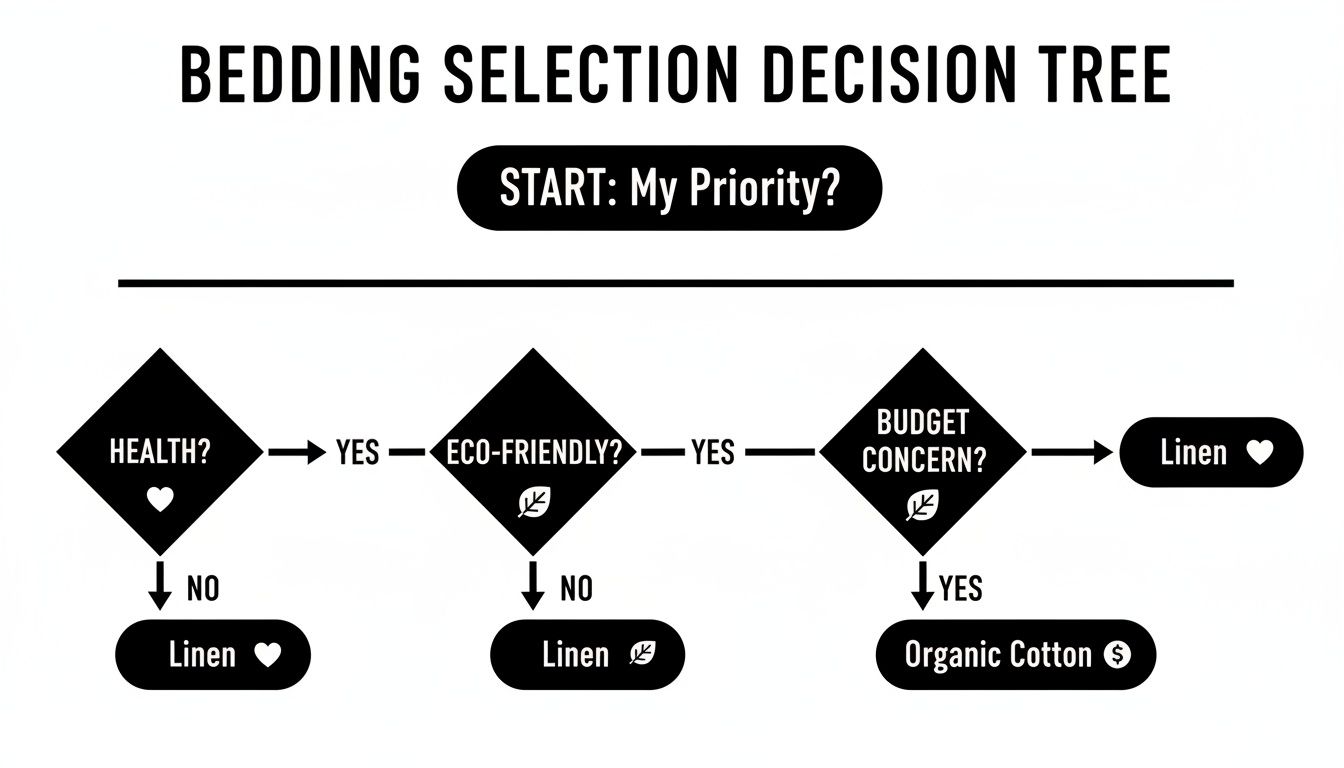
So, how do you choose? The best bedding in the linen vs cotton showdown comes down to your sleep habits, budget, and personal style. Let's break it down into real-world scenarios.
For the Hot Sleeper
If you’re always kicking off the covers, linen is your best friend. Its natural breathability works like a built-in air conditioner, keeping you cool and dry all night long. A crisp cotton percale is a good alternative, but nothing beats linen on a humid night.
For the Budget-Conscious Buyer
When value is key, high-quality cotton is tough to beat. It offers a huge range of prices and delivers that soft, familiar feel right out of the package. While linen is a long-term investment, cotton provides excellent comfort for a friendlier price.
The Australian cotton industry's growth—from 17,000 bales in 1934 to 1.1 million by 1985—shows its accessibility and affordability. You can learn more about the history of Australian cotton.
For the Luxury Seeker
If you want to create a premium sleep sanctuary, it's about the kind of luxury you prefer.
For an earthy, effortlessly elegant feel, choose high-end Belgian or French flax linen. It has a beautiful, textural quality that only gets softer with time.
If you dream of a five-star hotel experience, a long-staple Egyptian cotton is your ticket. It provides a silky, polished smoothness from day one.
For the Eco-Conscious Consumer
If sustainability is your top priority, you have two great options. Linen is a natural frontrunner because the flax plant requires little water or pesticides.
However, GOTS-certified organic cotton is an excellent choice too. This certification guarantees it was grown without harsh chemicals and with smart water management. For more ideas, check our list of the top 8 eco-friendly bedding materials for 2025.
The Verdict: Your Perfect Match Awaits
Ultimately, the choice between linen and cotton is deeply personal. There’s no single "best" fabric—only the one that’s best for you.
- Choose Linen if: You're a hot sleeper, value long-term durability, and love a relaxed, natural aesthetic that gets softer with every wash.
- Choose Cotton if: You want instant softness, prefer a crisp and smooth feel, and need a high-quality option that fits a tighter budget.
Ready to find your perfect night's sleep? At Sienna Living, we know that exceptional bedding is the cornerstone of truly restorative rest. Whether you're leaning towards the timeless appeal of cotton or the eco-luxe feel of other natural fibres, our curated collection is here to elevate your sleep experience.